0000930236DEF 14AFALSEiso4217:USDxbrli:pure00009302362025-01-012025-12-3100009302362024-01-012024-12-3100009302362023-01-012023-12-3100009302362022-01-012022-12-3100009302362021-01-012021-12-310000930236ecd:EqtyAwrdsInSummryCompstnTblForAplblYrMemberecd:PeoMember2025-01-012025-12-310000930236ecd:YrEndFrValOfEqtyAwrdsGrntdInCvrdYrOutsdngAndUnvstdMemberecd:PeoMember2025-01-012025-12-310000930236ecd:ChngInFrValOfOutsdngAndUnvstdEqtyAwrdsGrntdInPrrYrsMemberecd:PeoMember2025-01-012025-12-310000930236ecd:ChngInFrValAsOfVstngDtOfPrrYrEqtyAwrdsVstdInCvrdYrMemberecd:PeoMember2025-01-012025-12-310000930236ecd:DvddsOrOthrErngsPdOnEqtyAwrdsNtOthrwsRflctdInTtlCompForCvrdYrMemberecd:PeoMember2025-01-012025-12-310000930236ecd:EqtyAwrdsInSummryCompstnTblForAplblYrMemberecd:NonPeoNeoMember2025-01-012025-12-310000930236ecd:YrEndFrValOfEqtyAwrdsGrntdInCvrdYrOutsdngAndUnvstdMemberecd:NonPeoNeoMember2025-01-012025-12-310000930236ecd:ChngInFrValOfOutsdngAndUnvstdEqtyAwrdsGrntdInPrrYrsMemberecd:NonPeoNeoMember2025-01-012025-12-310000930236ecd:ChngInFrValAsOfVstngDtOfPrrYrEqtyAwrdsVstdInCvrdYrMemberecd:NonPeoNeoMember2025-01-012025-12-310000930236ecd:DvddsOrOthrErngsPdOnEqtyAwrdsNtOthrwsRflctdInTtlCompForCvrdYrMemberecd:NonPeoNeoMember2025-01-012025-12-31000093023612025-01-012025-12-31000093023652025-01-012025-12-31000093023622025-01-012025-12-31000093023632025-01-012025-12-31000093023642025-01-012025-12-31
UNITED STATES
SECURITIES AND EXCHANGE COMMISSION
Washington, D.C. 20549
SCHEDULE 14A
(RULE 14a-101)
SCHEDULE 14A INFORMATION
Proxy Statement Pursuant to Section 14(a) of the
Securities Exchange Act of 1934
| | | | | |
| Filed by the Registrant: | ý |
| Filed by a Party other than the Registrant: | o |
Check the appropriate box:
| | | | | | | | |
| o | Preliminary Proxy Statement |
| | | | | | | | |
| o | Confidential, for Use of the Commission Only (as Permitted by Rule 14a-6(e)(2)) |
| | | | | | | | |
| x | Definitive Proxy Statement |
| | | | | | | | |
| o | Definitive Additional Materials |
| | | | | | | | |
| o | Soliciting Material under §240.14a-12 |
REDWOOD TRUST, INC.
| | |
(Name of Registrant as Specified in Its Charter) |
(Name of Person(s) Filing Proxy Statement, if other than the Registrant) |
Payment of Filing Fee (Check the appropriate box): | | | | | | | | | | | |
| | | |
| ý | No fee required. |
| | | |
| o | Fee paid previously with preliminary materials. |
| | | |
| o | Fee computed on table in exhibit required by Item 25(b) per Exchange Act Rules 14a-6(i)(1) and 0-11. |
REDWOOD TRUST, INC.
One Belvedere Place, Suite 300
Mill Valley, California 94941
(415) 389-7373
NOTICE OF 2026 ANNUAL MEETING OF STOCKHOLDERS
To the Stockholders of Redwood Trust, Inc.:
You are cordially invited to attend the Annual Meeting of Stockholders of Redwood Trust, Inc., a Maryland corporation, to be held on May 19, 2026 at 8:30 a.m., Pacific time, at the Company’s office, at One Belvedere Place, Mill Valley, California 94941 (the “Annual Meeting”), for the following purposes:
1.To consider and vote upon the election of Greg H. Kubicek, Christopher J. Abate, Doneene K. Damon, Armando Falcon, Douglas B. Hansen, Debora D. Horvath, Dashiell I. Robinson, and Faith A. Schwartz to serve as directors until the annual meeting of stockholders in 2027 and until their successors are duly elected and qualify;
2.To consider and vote upon the ratification of the appointment of Grant Thornton LLP as our independent registered public accounting firm for 2026;
3.To consider and vote upon a non-binding advisory resolution to approve named executive officer compensation;
4.To vote on an amendment to our Second Amended and Restated 2014 Incentive Award Plan; and
5.To transact such other business as may properly come before the Annual Meeting or any adjournment or postponement of the Annual Meeting.
We have elected to use the Internet as our primary means of providing our proxy materials to stockholders. Consequently, stockholders will not receive paper copies of our proxy materials unless they specifically request them. We will send a Notice of Internet Availability of Proxy Materials (the “Notice”) on or about April 9, 2026 to our stockholders of record as of the close of business on March 27, 2026. We are also providing access to our proxy materials over the Internet beginning on or about April 9, 2026. Electronic delivery of our proxy materials will reduce printing and mailing costs, as well as associated waste, relating to our Annual Meeting.
The Notice contains instructions for accessing the proxy materials, including the Proxy Statement and our annual report, and provides information on how stockholders may obtain paper copies free of charge. The Notice also provides the date and time of the Annual Meeting; the matters to be acted upon at the Annual Meeting and the Board of Directors' recommendation with regard to each matter to be acted upon; information about voting procedures; and information on how to attend the Annual Meeting.
Our Board of Directors has fixed the close of business on March 27, 2026 as the record date for determination of stockholders entitled to notice of, and to vote at, the Annual Meeting and any adjournment or postponement of the Annual Meeting.
| | |
| YOUR VOTE IS IMPORTANT. |
| PLEASE PROMPTLY AUTHORIZE A PROXY TO CAST YOUR VOTES THROUGH THE INTERNET FOLLOWING THE VOTING PROCEDURES DESCRIBED IN THE NOTICE OR, IF YOU HAVE REQUESTED AND RECEIVED PAPER COPIES OF THE PROXY MATERIALS, BY TELEPHONE OR BY SIGNING, DATING AND RETURNING THE PROXY CARD SENT TO YOU. |
We would like your shares to be represented at the Annual Meeting. Whether or not you plan to attend the Annual Meeting, we respectfully request that you authorize your proxy over the Internet following the voting procedures described in the Notice. In addition, if you have requested or received a paper or e-mail copy of the proxy materials, you can authorize your proxy over the telephone or by signing, dating and returning the proxy card sent to you. We encourage you to authorize your proxy by any of these methods even if you currently plan to attend the Annual Meeting. By doing so, you will ensure that your shares are represented and voted at the Annual Meeting.
By Order of the Board of Directors,
/s/ Andrew P. Stone
Secretary
March 31, 2026
TABLE OF CONTENTS
| | | | | |
| |
| |
| |
| |
| |
| |
| |
| |
| |
| |
| |
| |
| |
| |
| |
| |
| |
| |
| |
| |
| |
| |
| |
| |
| |
| |
| |
| |
| |
| |
| |
| |
| |
| |
| |
| |
| |
| |
| |
| |
| |
| |
| |
| |
| |
| |
| |
| A-1 |
| B-1 |
Annex C — Redwood Trust, Inc. Second Amended and Restated 2014 Incentive Award Plan, As Amended by the Amendment | C-1 |
REDWOOD TRUST, INC.
One Belvedere Place, Suite 300
Mill Valley, California 94941
(415) 389-7373
PROXY STATEMENT
ANNUAL MEETING OF STOCKHOLDERS
TO BE HELD ON MAY 19, 2026
INTRODUCTION
This Proxy Statement is being furnished in connection with the solicitation of proxies by the Board of Directors of Redwood Trust, Inc., a Maryland corporation (“Redwood,” the “Company,” “we,” or “us”), for exercise at the Annual Meeting of Stockholders (the “Annual Meeting”) to be held on May 19, 2026 at 8:30 a.m., Pacific time, at the Company’s office, at One Belvedere Place, Mill Valley, California 94941, and at any adjournment or postponement thereof.
We have elected to provide access to our proxy materials over the Internet. Accordingly, we are sending a Notice of Internet Availability of Proxy Materials (the “Notice”) to our stockholders of record, while brokers and other nominees who hold shares on behalf of beneficial owners will be sending their own similar notice of internet availability of proxy materials. All stockholders will have the ability to access proxy materials on the website referred to in the Notice or request to receive a printed set of the proxy materials. Instructions on how to request a printed copy by mail or electronically may be found on the Notice and on the website referred to in the Notice, including an option to request paper copies on an ongoing basis. We intend to make this Proxy Statement available on the Internet on or about April 9, 2026 and to mail the Notice to all stockholders entitled to vote at the Annual Meeting on or about April 9, 2026. We intend to mail this Proxy Statement, together with a proxy card, to those stockholders entitled to vote at the Annual Meeting who have properly requested paper copies of such materials on or about April 9, 2026 or within three business days of such request.
The address and telephone number of our principal executive office are as set forth above and our website is www.redwoodtrust.com. Information on our website is not a part of this Proxy Statement.
INFORMATION ABOUT THE ANNUAL MEETING
Who May Attend the Annual Meeting
Only stockholders who own our common stock as of the close of business on March 27, 2026, the record date for the Annual Meeting, will be entitled to attend the Annual Meeting. In the discretion of management, we may permit certain other individuals to attend the Annual Meeting, including members of the media and our employees.
Who May Vote
Each share of our common stock outstanding on the record date for the Annual Meeting entitles the holder thereof to one vote. The record date for determining stockholders entitled to notice of, and to vote at, the Annual Meeting is the close of business on March 27, 2026. As of March 27, 2026, there were 124,994,931 shares of common stock issued and outstanding. You can vote in person at the Annual Meeting or by proxy. You may authorize your proxy through the Internet by following the voting procedures described in the Notice or, if you have requested and received paper copies of the proxy materials, by telephone or by signing, dating, and returning the proxy card sent to you. To use a particular voting procedure, follow the instructions on the Notice or the proxy card that you request and receive by mail or e-mail.
If your shares are held in the name of a bank, broker, or other holder of record, you will receive instructions from the holder of record that you must follow in order for your shares to be voted. If your shares are not registered in your own name and you plan to cast your votes at the Annual Meeting, you should contact your broker or agent to obtain a broker’s proxy card and bring it to the Annual Meeting in order to vote.
Voting by Proxy; Board of Directors’ Voting Recommendations
You may authorize your proxy over the Internet or, if you request and receive a proxy card by mail or e-mail, over the phone or by signing, dating and returning the proxy card sent to you. If you vote by proxy, the individuals named on the proxy, or their substitutes, will cast your votes in the manner you indicate. If you date, sign, and return a proxy card without marking your voting instructions, your votes will be cast in accordance with the recommendations of Redwood’s Board of Directors, as follows:
•For the election of each of the eight nominees to serve as directors until the annual meeting of stockholders in 2027 and until their successors are duly elected and qualify;
•For the ratification of the appointment of Grant Thornton LLP as our independent registered public accounting firm for 2026;
•For the approval of the non-binding advisory resolution approving the compensation of our named executive officers;
•For the approval of the amendment to the Second Amended and Restated 2014 Incentive Award Plan; and
•In the discretion of the proxy holder on any other matter that properly comes before the Annual Meeting.
You may revoke or change your proxy at any time before it is exercised by submitting a new proxy through the Internet or by telephone, delivering to us a signed proxy with a date later than your previously delivered proxy, by voting in person at the Annual Meeting, or by sending a written revocation of your proxy addressed to Redwood’s Secretary at our principal executive office.
Why did I receive a one-page notice in the mail regarding the Internet availability of proxy materials instead of a full set of proxy materials?
Under rules adopted by the Securities and Exchange Commission (“SEC”), we have elected to provide access to our proxy materials over the Internet. Accordingly, we are sending the Notice to our stockholders. All stockholders will have the ability to access the proxy materials on the website referred to in the Notice or request to receive a printed set of the materials. Instructions on how to access the proxy materials over the Internet or to request a printed copy may be found in the Notice. In addition, stockholders may request to receive proxy materials in printed form by mail or electronically by e-mail on an ongoing basis. We encourage stockholders to take advantage of the availability of the proxy materials on the Internet to help reduce printing and mailing costs, as well as associated waste, relating to our Annual Meeting.
Quorum Requirement
The presence, by attendance at the Annual Meeting or by proxy, of stockholders entitled to cast a majority of all the votes entitled to be cast at the Annual Meeting constitutes a quorum for the transaction of business. Abstentions and broker non-votes are counted as present for purposes of establishing a quorum. A broker non-vote occurs when a nominee holding shares for a beneficial owner has not received instructions from the beneficial owner and does not have discretionary authority to vote the shares.
Other Matters
Our Board of Directors knows of no other matters that may be presented for stockholder action at the Annual Meeting. If other matters properly come before the Annual Meeting, however, it is intended that the persons named in the proxies will vote on those matters in their discretion.
Information About the Proxy Statement and the Solicitation of Proxies
Your proxy is solicited by our Board of Directors, and we will bear the costs of this solicitation. Proxy solicitations will be made by mail, and also may be made by our directors, officers, and employees in person or by telephone, facsimile transmission, e-mail, or other means of communication. Banks, brokerage houses, nominees, and other fiduciaries will be requested to forward the proxy soliciting material to the beneficial owners of shares of our common stock entitled to be voted at the Annual Meeting and to obtain authorization for the execution of proxies on behalf of beneficial owners. We will, upon request, reimburse those parties for their reasonable expenses in forwarding proxy materials to their beneficial owners.
In addition, we have retained MacKenzie Partners, Inc., 7 Penn Plaza, Suite 530, New York, NY 10001, to aid in the solicitation of proxies by mail, telephone, facsimile, e-mail and personal solicitation and to contact brokerage houses and other nominees, fiduciaries and custodians to request that such entities forward soliciting materials to beneficial owners of our common stock. For these services, we will pay MacKenzie Partners, Inc. a fee not expected to exceed $24,000, plus expenses.
Annual Report
Our 2025 Annual Report, consisting of our Annual Report on Form 10-K for the year ended December 31, 2025, is being made available to stockholders together with this Proxy Statement and contains financial and other information about Redwood, including audited financial statements for our fiscal year ended December 31, 2025. Certain sections of our 2025 Annual Report are incorporated into this Proxy Statement by reference, as described in more detail under “Information Incorporated by Reference” at the end of this Proxy Statement. Our 2025 Annual Report is also available on our website.
Householding
We have adopted a procedure approved by the SEC called “householding.” Under this procedure, stockholders who have the same address and last name may receive only one copy of the Notice, unless one or more of these stockholders provide notice that they wish to continue receiving individual copies. This procedure reduces our printing and mailing costs, as well as associated waste.
Householding will not in any way affect dividend check mailings.
If you are eligible for householding, but you and other stockholders of record with whom you share an address currently receive multiple copies of the Notice, or if you hold stock in more than one account, and in either case you wish to receive only a single copy of this document for your household, please contact your bank or broker.
If you participate in householding and wish to receive a separate copy of the Notice, or if you do not wish to participate in householding and prefer to receive separate copies of this document in the future, please contact your bank or broker.
Beneficial owners can request additional information about householding from their banks or brokers.
CORPORATE GOVERNANCE
Corporate Governance Standards
Our Board of Directors has adopted Corporate Governance Standards (“Governance Standards”). Our Governance Standards are available on our website as well as in print at the written request of any stockholder addressed to Redwood’s Secretary at our principal executive office. The Governance Standards contain general principles regarding the composition and functions of our Board of Directors and its committees.
Process for Nominating Potential Director Candidates
Identifying and Evaluating Nominees for Directors. Our Board of Directors nominates director candidates for election by stockholders at each annual meeting and elects new directors to fill vacancies on our Board of Directors between annual meetings of the stockholders. Our Board of Directors has delegated the selection and initial evaluation of potential director nominees to the Governance and Nominating Committee with input from the Chief Executive Officer and President. The Governance and Nominating Committee makes the final recommendation of candidates to our Board of Directors for nomination. Our Board of Directors, taking into consideration the assessment of the Governance and Nominating Committee, also determines whether a nominee would be an independent director.
Stockholders’ Nominees. Our Bylaws permit stockholders to nominate a candidate for election as a director at an annual meeting of the stockholders subject to compliance with certain notice and informational requirements, as more fully described below in this Proxy Statement under “Stockholder Proposals for the 2027 Annual Meeting.” A copy of the full text of our current Bylaws may be obtained by any stockholder upon written request addressed to Redwood’s Secretary at our principal executive office. Among other matters required under our Bylaws, any stockholder nominations should include the nominee’s name and qualifications for Board membership and should be addressed to Redwood’s Secretary at our principal executive office.
The policy of the Governance and Nominating Committee is to consider properly submitted stockholder nominations for candidates for election to our Board of Directors. The Governance and Nominating Committee evaluates stockholder nominations in connection with its responsibilities set forth in its written charter and applies the qualification criteria set forth in the Governance Standards.
Director Qualifications. Our Governance Standards contain Board membership criteria that apply to nominees for our Board of Directors. Each member of our Board of Directors must exhibit high standards of integrity, commitment, and independence of thought and judgment, and must be committed to promoting the best interests of Redwood. In addition, each director must devote the time and effort necessary to be a responsible and productive member of our Board of Directors. This includes developing knowledge about Redwood’s business operations and doing the work necessary to participate actively and effectively in Board and committee meetings.
Our Governance Standards also contain criteria that are intended to guide our Governance and Nominating Committee’s considerations of diversity in identifying nominees for our Board of Directors. In particular, our Governance Standards provide that the members of our Board of Directors should collectively possess a broad range of talent, skill, expertise, background, and life experience useful to effective oversight of our business and affairs and sufficient to provide sound and prudent guidance with respect to our operations and interests. Our Board of Directors considers diversity as broadly construed to mean a variety of perspectives, personal and professional experiences and backgrounds/identities. The self-assessments that are conducted each year by our Board of Directors and our Governance and Nominating Committee include an assessment of whether the Board’s then current composition represents the broad range of talent, skill, expertise, background, and life experience that is called for by our Governance Standards.
One of our current directors, Georganne C. Proctor, is retiring from the Board of Directors, effective upon the conclusion of the Company’s 2026 Annual Meeting, at which time the Board of Directors will be reduced from nine to eight members.
We believe our directors collectively have a well-rounded variety of talents, skills, qualifications and experience, and represent an effective mix of deep company knowledge and outside perspectives. Additional information regarding the mix of experience, qualifications, attributes and skills of our directors is included under Item 1—Election of Directors on pages 18 - 24 of this Proxy Statement.
Director Independence
As required under Section 303A of the New York Stock Exchange (“NYSE”) Listed Company Manual and our Governance Standards, on February 26, 2026 our Board of Directors affirmatively determined that none of the following directors have a material relationship (either directly or as a partner, stockholder, or officer of an organization that has a relationship) with us and that each of them qualifies as “independent” under Section 303A: Greg H. Kubicek, Doneene K. Damon, Armando Falcon, Douglas B. Hansen, Debora D. Horvath, Georganne C. Proctor, and Faith A. Schwartz. The Board of Directors’ determinations were made after consideration of, among other things, the matters described below under “Additional Information About Directors and Executive Officers — Certain Relationships and Related Party Transactions” on page 107 of this Proxy Statement. Two members of our Board of Directors, Mr. Abate and Mr. Robinson, do not qualify as “independent” under Section 303A of the NYSE Listed Company Manual or our Governance Standards because they are Redwood’s Chief Executive Officer and President, respectively.
Board Leadership Structure
At Redwood, there is a separation between the chair of the Board (“Board Chair”) and chief executive officer roles. Redwood’s Board Chair presides over meetings of the Board and serves as a liaison between the Board and management of Redwood. In addition, Redwood’s Board Chair provides input regarding Board agendas, materials, and areas of focus, and may represent Redwood to external constituencies such as investors, governmental representatives, and business counterparties. The Board Chair is currently Greg H. Kubicek, who was elected Chair in May 2022 and who has served as an independent director of Redwood since 2002.
In addition, under the Governance Standards, each of the Audit Committee, Compensation Committee, and Governance and Nominating Committee of Redwood’s Board of Directors is comprised solely of independent directors.
The Board believes this leadership structure is appropriate for Redwood, as it provides for the Board to be led by, and its standing committees to be comprised of, independent directors. As an independent Board Chair, Mr. Kubicek brings two decades of experience of serving on Redwood’s Board along with the important perspective of an independent director to this leadership position.
Executive Sessions
Pursuant to our Governance Standards, our non-employee directors (i.e., the seven of our nine current directors who are not Redwood employees) meet in executive session at each regularly scheduled quarterly meeting of our Board of Directors and at such other times as determined by the Board Chair. In addition, if any non-employee director is not also an independent director, then, under our Governance Standards, our independent directors meet at least annually in executive session without any such non-independent directors.
Board of Directors’ Role in Risk Oversight
The Board of Directors takes a primary role in risk oversight. At its regular meetings, the Board of Directors reviews Redwood’s business and investment strategies and plans and seeks an understanding of the related risks as well as management’s approach to identifying and managing those risks. In carrying out its role in risk oversight, the Board of Directors receives and discusses quarterly reports from the Chief Executive Officer (and other officers of Redwood) and the Audit Committee, which also carries out a risk oversight function delegated by the Board of Directors.
Under its charter, the Audit Committee is specifically charged with (i) inquiring of management and Redwood’s independent registered public accounting firm about significant risks or exposures with respect to corporate accounting, reporting practices of Redwood, the quality and integrity of the financial reports and controls of Redwood, regulatory and accounting initiatives, and any off balance sheet structures and (ii) assessing the steps management has taken to monitor or minimize such risks. In addition, the Audit Committee is specifically charged with regularly discussing with management Redwood’s policies with respect to risk assessment and risk management, including identification of Redwood’s major financial and operational risk exposures and the steps management has taken to monitor or control those exposures. For example, the Audit Committee receives quarterly reports from management regarding various financial risk management topics (such as credit risk, interest rate risk, liquidity risk, and financial covenant compliance), and various operational risk management topics (such as cybersecurity, operations and regulatory compliance) and regularly discusses with management Redwood's exposure to, and management of, financial and operational risks.
The Audit Committee carries out this function by, among other things, receiving a quarterly risk management report from Redwood’s Chief Executive Officer and other Redwood officers, and a quarterly internal audit report from Redwood’s head of internal audit, reviewing these reports, and discussing them by asking questions and providing direction to management. In addition, as noted below under “Audit Committee Matters – Audit Committee Report,” the Audit Committee also receives and discusses regular and required communications from Redwood’s independent registered public accounting firm regarding, among other things, Redwood’s internal controls. In addition to discussion of these reports during Audit Committee meetings, as circumstances merit, the Audit Committee holds separate executive sessions with one or more of the Chief Executive Officer, Chief Financial Officer, Redwood’s head of internal audit, and representatives of Redwood’s independent registered public accounting firm to discuss any matters that the Audit Committee or these persons believe should be discussed in the absence of other members of management. Redwood's Chief Financial Officer and head of internal audit each also regularly communicate with the Chair of the Audit Committee between Audit Committee meetings.
Oversight of Cybersecurity Risk. As part of its risk oversight function, the Board of Directors, including through delegation to the Audit Committee, regularly receives risk management reporting from various officers of the Company responsible for cybersecurity and information technology (“IT”) risk, and oversees management’s administration of Redwood’s cybersecurity risk management program. For example, officers within Redwood’s IT department provide periodic (generally at least once per quarter) reports from management to the Audit Committee related to cybersecurity, Redwood’s cybersecurity risk management program and related risks, with copies of these reports also provided to our full Board. These reports supplement materials and presentations from outside experts that are also provided to members of the Board of Directors from time to time as part of the Board’s and Audit Committee’s continuing education on risk oversight topics such as cybersecurity that impact companies in our industry and, more generally, publicly-traded companies. In addition, management has policies and procedures in place to provide event-driven updates on a timely basis to the Audit Committee and the Board of Directors regarding any material cybersecurity incidents and, as appropriate, any incidents with lesser impact potential. Additional discussion of Redwood’s Cybersecurity Risk Management and Strategy, as well as Cybersecurity Governance at Redwood is included within Part I, Item 1C of the Company’s Annual Report on Form 10-K for the year ended December 31, 2025 filed on February 27, 2026.
In addition, when appropriate, the Board of Directors may delegate to the Compensation Committee and Governance and Nominating Committee risk oversight responsibilities with respect to certain matters or request that other committees review certain risk oversight matters. For example, the Compensation Committee has been delegated the responsibility for determining, on an annual basis, whether Redwood’s compensation policies and
practices are reasonably likely to have a material adverse effect on Redwood. As another example, the Governance and Nominating Committee reports to the Board of Directors the results of its analysis of potential risks related to board leadership and composition, board structure, and executive succession planning.
The Board of Directors believes that this manner of administering the risk oversight function effectively integrates oversight into the Board of Directors’ leadership structure, because the risk oversight function is carried out both at the Board level as well as through delegation to the Audit Committee, which consists solely of independent directors, and, when appropriate, to the Compensation Committee and Governance and Nominating Committee, which also consist solely of independent directors.
Board of Directors’ Self-Evaluation Process
The Board believes it is important to periodically assess its own performance and effectiveness in carrying out its strategic and oversight role with respect to the Company. The Board evaluates its performance through annual self-assessments at the Board and Committee levels, as well as through annual individual director self-assessments that include one-on-one meetings conducted by the Board Chair with each of the other directors (and with respect to the Board Chair, the Chair of the Governance and Nominating Committee). These self-assessments include analysis of the effectiveness of the Board, its Committees and its directors, how they are functioning and areas of potential improvement. The results of these self-assessments are also considered, among other things, by the Governance and Nominating Committee and the Board when considering whether to recommend a director for re-election and whether to consider new director candidates.
Board Tenure and Refreshment; Mandatory Retirement
Consistent with our Governance Standards, the Board is mindful that the composition of the Board, from a tenure and refreshment perspective, should reflect an appropriate mix of individuals with significant experience as a member of Redwood’s Board, together with individuals who are newer to service on Redwood’s Board, who bring fresh viewpoints and additional expertise and perspectives. For example, given Redwood’s business model, which includes engaging in mortgage banking activities, investing in long-term mortgage loan obligations and regularly accessing the mortgage loan finance markets, directors who have served on Redwood’s Board through multiple economic and financial market cycles are valued for the continuity and long-term perspectives they provide to other Board members and to management. At the same time, the business environment in which Redwood operates is constantly evolving – including from human capital and technological perspectives – and, therefore, Board refreshment is important to the continued effectiveness of the Board in the oversight of these and other evolving matters of importance to Redwood.
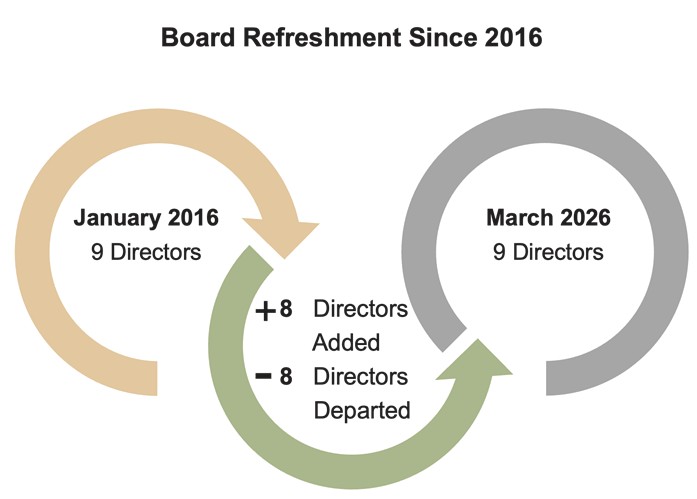
At Redwood, refreshment of the composition of Redwood’s Board regularly occurs, for a variety of reasons, including the following:
•Director Retirement / Departure. Director departures and retirements, including in accordance with the mandatory retirement age set forth in our Governance Standards, prompt refreshment.
◦For example, in 2023, one director retired from the Board of Directors at age 69.
◦As another example, effective as of the 2026 Annual Meeting of Stockholders, Ms. Proctor will be retiring from the Board of Directors at age 69 after more than 20 years of service on the Board.
•Mandatory Retirement. Under our Governance Standards, an individual, including an incumbent director, is generally ineligible to stand for election or re-election to the Board following the earlier of (i) 15 annual periods of Board service or (ii) after reaching age 75; provided, that the 15 annual period limitation on Board service began accruing upon adoption of this policy in 2024 for then-incumbent Directors.
◦For example, in 2022, two directors retired from the Board of Directors in accordance with the mandatory retirement provisions of our Governance Standards.
•Board Expansion / Contraction. Redwood is permitted under its Charter to increase or decrease the size of the Board of Directors; expanding the size of the Board when merited enables Redwood to add new Board members to address emerging needs for Board-level expertise.
◦For example, in November 2023, Redwood increased the size of the Board from eight to nine directors, and Ms. Damon was elected to serve on the Board.
◦As another example, following the retirement of Ms. Proctor in May 2026, Redwood expects to decrease the size of the Board from nine to eight.
•Board’s Succession Planning / Self-Evaluation Process. The Board’s collective and individual self-assessment process (described further above under the heading “Board of Directors’ Self-Evaluation Process”) provides perspectives on Board composition that can prompt refreshment. In addition, Board refreshment results from the Board’s ongoing succession planning efforts to attract new directors to replace directors who are expected to retire or otherwise depart from the Board.
Refreshment of Board leadership positions is another area of focus that the Board believes is important to its continued effectiveness over the long-term. Redwood’s Governance Standards include guidelines regarding the rotation of Board leadership positions, including that the Board Chair position will rotate at least once every eight years, and the Committee Chair positions for each of the Board’s standing committees will rotate at least once every six years, in each case beginning from the date of adoption of these guidelines in 2024. For example, in May 2025, Ms. Damon rotated into the Compensation Committee Chair position, succeeding to that position from Ms. Proctor. Exceptions to these guidelines may be approved so that no more than one Committee Chair position rotates per year, or for other reasons, at the Board’s discretion, if it is determined to be in the best interests of the Company.
The Board’s refreshment schedule for Board Chair and Committee Chair positions is set forth below.
Communications with the Board of Directors
Stockholders and other interested parties may communicate with our Board of Directors by e-mail addressed to boardofdirectors@redwoodtrust.com. The Board Chair has access to this e-mail address and provides access to other directors as appropriate. Communications that are intended specifically for non-employee directors should be addressed to the Board Chair.
Director Attendance at Annual Meetings of Stockholders
Pursuant to our Governance Standards, Redwood’s directors are expected to attend annual meetings of stockholders. All of Redwood’s directors nominated for election in 2025 attended the 2025 annual meeting of stockholders. We currently expect all directors nominated for election to attend this year's Annual Meeting via videoconference.
Code of Ethics; Insider Trading Policy
The Board of Directors has adopted a Code of Ethics that applies to all of Redwood’s directors, officers, and employees. The Code of Ethics is available on our website as well as in print at the written request of any stockholder addressed to Redwood’s Secretary at our principal executive office. We intend to post on our website and disclose in a Current Report on Form 8-K, to the extent required by applicable regulations, any change to the provisions of Redwood’s Code of Ethics and any waiver of a provision of the Code of Ethics.
We have adopted an Insider Trading Policy and related procedures governing the purchase, sale, and/or other dispositions of our securities by directors, officers, employees and other covered persons that we believe are reasonably designed to promote compliance with insider trading laws, rules and regulations, and the listing requirements of the NYSE. This policy imposes regular blackout periods during which certain individuals may not transact in our securities and pre-clearance procedures for transactions by certain specified individuals, including, among others, the members of our Board and our executive officers. In addition, this policy prohibits certain transactions that we have determined are higher risk or for which there is a heightened appearance of potential improper or inappropriate conduct, including short sales of our securities, options trading in puts, calls or other derivative securities involving our securities, hedging transactions, and use of margin accounts and pledging of our securities. We regularly review our Insider Trading Policy with our Board and management. A copy of our Insider Trading Policy is filed as Exhibit 19.1 to Redwood’s Annual Report on Form 10-K for the year ended December 31, 2025 filed on February 27, 2026.
STOCK OWNERSHIP REQUIREMENTS
Required Stock Ownership by Directors
Pursuant to our Governance Standards, non-employee directors are required to purchase from their own funds at least $50,000 of our common stock within three years from the date of commencement of their Board membership. Vested deferred stock units (“DSUs”) acquired by a director through the voluntary deferral of cash compensation that otherwise would have been paid to that director are counted towards this requirement. Any director whose status has changed from being an employee director to being a non-employee director is not subject to this requirement if that director held at least $50,000 of our common stock at the time of that change in status.
Additionally, non-employee directors are required to own common stock, including vested DSUs acquired through both voluntary and involuntary deferred compensation, equal to at least five times the annual cash retainer payable to non-employee directors (i.e., at least $500,000 in common stock/DSUs based on the current annual cash retainer in effect as of the date of this Proxy Statement) within five years from the date of commencement of their Board membership. Common stock and DSUs acquired with respect to the $50,000 stock purchase requirement count toward the attainment of this additional ownership requirement. Compliance with these ownership requirements is measured on a purchase/acquisition cost basis for shares of common stock, and on grant date value for vested DSUs.
As of the date of this Proxy Statement, all of our non-employee directors were in compliance with these requirements either due to ownership of the requisite number of shares of common stock and vested DSUs, or because the director was within the time period permitted to attain the required level of ownership.
Required Stock Ownership by Executive Officers
The Compensation Committee of our Board of Directors has set the following executive stock ownership requirements with respect to our executive officers:
•Each executive officer is required to own common stock with a value at least equal to (i) 6.25 times current salary for the Chief Executive Officer, (ii) 3.25 times current salary for the President, and (iii) 3.0 times current salary for the other executive officers;
•Five years are allowed to initially attain the required level of ownership and five years are allowed to acquire additional incremental shares if promoted to a position with a higher requirement or when a salary increase results in a higher requirement (if not in compliance at the indicated times, then the executive officer is required to retain net after-tax shares of common stock delivered as compensation or from the 2014 Incentive Plan or the Executive Deferred Compensation Plan until compliance is achieved);
•All shares of common stock owned outright are counted, including those held in trust for the executive officer and his or her immediate family, as well as vested and unvested DSUs and any other vested shares of common stock held pursuant to other employee plans; and
•Compliance with these requirements is measured on a purchase/acquisition cost basis for shares of common stock, and on grant date value for vested and unvested DSUs.
Redwood’s executive officers are currently the following individuals: Chief Executive Officer – Christopher J. Abate; President – Dashiell I. Robinson; Chief Financial Officer and Executive Vice President – Brooke E. Carillo; Executive Vice President, Chief Legal Officer and Secretary – Andrew P. Stone; and Chief Human Resource Officer – Sasha G. Macomber. All of Redwood’s executive officers were in compliance with these stock ownership requirements either due to ownership of the requisite number of shares and vested and unvested DSUs, or because he or she was within the time period permitted to attain the required level of ownership. The chart below illustrates compliance relative to the applicable requirement for each of our executive officers as of March 27, 2026.
Further information about each of Redwood’s executive officers is included within “Information About Our Executive Officers” on page 30 of this Proxy Statement.
ITEM 1 — ELECTION OF DIRECTORS
The nominees for the eight director positions are set forth below. In the event we are advised prior to the Annual Meeting that any nominee will be unable to serve or for good cause will not serve as a director if elected at the Annual Meeting, the proxies will cast votes for any person who shall be nominated by the present Board of Directors to fill such directorship. The nominees listed below are currently serving as directors of Redwood.
Note: One of our current directors, Georganne C. Proctor, is retiring from the Board of Directors, effective upon the conclusion of the Company’s 2026 Annual Meeting, at which time the Board of Directors will be reduced from nine to eight.
Vote Required
If a quorum is present, the election of each nominee as a director requires a majority of the votes cast with respect to such nominee at the Annual Meeting. For purposes of the election of directors, a majority of the votes cast means that the number of votes cast “for” a nominee for election as a director exceeds the number of votes cast “against” that nominee. Cumulative voting in the election of directors is not permitted. Abstentions and broker non-votes will not be counted as votes cast and will have no effect on the results of the vote in the election of directors.
In accordance with Redwood’s Bylaws and its Policy Regarding Majority Voting, any incumbent nominee for director must offer to resign from the Board if he or she fails to receive the required number of votes for re-election. The Governance and Nominating Committee will consider any such offer of resignation and will recommend to the Board whether to accept the offer to resign. The Board will decide whether to accept any such offer to resign and will publicly disclose its decision.
Nominees to Board of Directors
| | | | | | | | |
| Name | | Current Position with Redwood |
| Greg H. Kubicek | | Chair of the Board |
| Christopher J. Abate | | Director and Chief Executive Officer |
| Doneene K. Damon | | Director |
| Armando Falcon | | Director |
| Douglas B. Hansen | | Director |
| Debora D. Horvath | | Director |
| Dashiell I. Robinson | | Director and President |
| Faith A. Schwartz | | Director |
THE BOARD OF DIRECTORS UNANIMOUSLY RECOMMENDS A VOTE FOR THE NOMINEES IDENTIFIED ABOVE.
Set forth below are summaries of the experience, qualifications, attributes and skills of each of the nominees for election at the Annual Meeting, as well as certain biographical information regarding each of these individuals.
Directors have acquired such experience, qualifications, attributes and skills reflected in the matrix through:
•Education and experience in one or more full-time professional positions that involve the performance of such matters or similar functions;
•Experience actively supervising a person performing such matters or similar functions;
•Experience overseeing or assessing the performance of a company’s internal business unit, function, or division with respect to such matters; or
•Other relevant experience
For each nominee for election as a director, set forth below and on the following pages is biographical information regarding the nominee, as well as factors supporting the Board of Directors’ conclusion to nominate the nominee for election to continue to serve as a director.
| | | | | |
| Greg H. Kubicek, age 69, is Chair of the Board, having previously served as Vice Chair of the Board from December 2020 to May 2022. Mr. Kubicek has been a director of Redwood since 2002. After serving as Founder and CEO of The Holt Group, Inc. for 41 years, Mr. Kubicek was appointed CEO of GHK Enterprises, Inc. following Sekisui House’s acquisition of The Holt Group, Inc., a real estate company and its associated funds that purchase, develop, own, and |
manage real estate properties. Mr. Kubicek has also served as Chair of the Board of Cascade Corporation, an international manufacturing corporation. Mr. Kubicek holds an A.B. in Economics from Harvard College.
|
The Board of Directors concluded that Mr. Kubicek should be nominated to continue to serve as a director on account of, among other things, the following experience, qualifications, attributes, and skills: •Leadership attributes •Management and entrepreneurial experience •Expertise and experience in the real estate development industry •Experience and expertise in the property management business •Professional and educational background |
| | | | | |
| Christopher J. Abate, age 46, has served as Chief Executive Officer since May 2018 and as a Director since December 2017. Mr. Abate has been employed with Redwood since April 2006, previously serving as Redwood’s President from July 2016 to May 2018, Chief Financial Officer from March 2012 to August 2017, and Controller from January 2009 to March 2013. In August 2025, Mr. Abate was named as a member of the Board of Directors of Heritage Commerce Corp. |
(Nasdaq: HTBK) where he serves as a member of HTBK Board’s Audit Committee and its Personnel and Compensation Committee. From October 2019 to December 2021, Mr. Abate served as Chair of the Board of the Structured Finance Association. Before joining Redwood, Mr. Abate was employed by PricewaterhouseCoopers LLP. He holds a B.A. in accounting and finance from Western Michigan University, and an M.B.A. from the University of California at Berkeley and Columbia University.
|
The Board of Directors concluded that Mr. Abate should be nominated to continue to serve as a director on account of, among other things, the following experience, qualifications, attributes, and skills: •Leadership attributes and management experience, including experience as Chief Executive Officer, President, Chief Financial Officer, and Controller of Redwood •Skill and experience in managing balance sheet exposures and managing risks •Skill and experience in executing capital markets transactions •Finance and accounting expertise and experience •Professional and educational background |
| | | | | |
| Doneene K. Damon, age 58, has been a Director of Redwood since November 2023. Ms. Damon is a practicing attorney as a Director of Richards, Layton & Finger, P.A. (“RLF”), a multidisciplinary law firm based in Wilmington, Delaware, which she joined in 1992. Ms. Damon served as the President of RLF from 2019 to 2022, and currently serves as Chair of the firm’s Corporate Trust and Agency Services Group. Ms. Damon also currently serves on the Board of |
Directors of Brown Advisory Delaware Trust Company and as Board Chair of the Structured Finance Association. Ms. Damon’s commitment to public service and nonprofit organizations includes current or past service as a member of Delaware’s Judicial Nominating Commission, the Delaware Compensation Commission, and the Delaware Prosperity Partnership. Ms. Damon previously served as the Chair of the Board of Directors of Christiana Care Health System, Inc. and Health Services, Inc., and she currently serves on the Board of Directors of St. Joseph’s University and is a member of the Board of Visitors of Temple University’s Beasley School of Law. Ms. Damon holds a B.S. in Accounting from St. Joseph’s University in Philadelphia and a J.D. from Temple University’s School of Law.
|
The Board of Directors concluded that Ms. Damon should be nominated to continue to serve as a director on account of, among other things, the following experience, qualifications, attributes, and skills: •Leadership attributes and management experience •Skill and experience in structured finance transactions •Expertise and experience in legal and regulatory matters •Expertise and experience relating to corporate and institutional governance •Professional and educational background |
| | | | | |
| Armando Falcon, age 65, has been a Director of Redwood since March 2021. Mr. Falcon is CEO of Falcon Capital Advisors LLC, a management consulting firm based in Washington, DC, that provides strategic advice and technical assistance to financial services companies, mortgage industry companies, and government agencies on matters involving process reengineering, project management, regulatory compliance, and data analytics, which he founded in 2007. He previously |
served as the Director of the Office of Federal Housing Enterprise Oversight, and as the General Counsel for the Committee on Banking and Financial Services of the U.S. House of Representatives. Mr. Falcon currently serves as Vice Chairman of the Structured Finance Association Board. Mr. Falcon holds a B.A. from St. Mary’s University, an M.P.P. from Harvard University, and a J.D. from the University of Texas.
|
The Board of Directors concluded that Mr. Falcon should be nominated to continue to serve as a director on account of, among other things, the following experience, qualifications, attributes, and skills: •Leadership attributes and management experience •Experience in government service and financial regulation •Expertise and experience in the real estate finance and financial services industries •Expertise and experience relating to corporate and institutional governance •Professional and educational background |
| | | | | |
| Douglas B. Hansen, age 68, is a founder of Redwood, and served as Redwood’s President from 1994 through 2008. Mr. Hansen retired from his position as President of Redwood at the end of 2008. Mr. Hansen has been a Director of Redwood since 1994. Mr. Hansen serves as Chairman of the Board of Directors of Four Corners Property Trust, Inc., a publicly traded real estate investment trust. Mr. Hansen also serves on the board of River of Knowledge, a not-for-profit institution.
|
| Mr. Hansen holds an A.B. in Economics from Harvard College and an M.B.A. from Harvard Business School. |
The Board of Directors concluded that Mr. Hansen should be nominated to continue to serve as a director on account of, among other things, the following experience, qualifications, attributes, and skills: •Leadership attributes and management experience, including experience as Redwood’s President from its founding in 1994 through 2008 •Skill and experience in investing in real estate-related assets and managing portfolios of such investments •Skill and experience in managing balance sheet exposures and managing risks •Skill and experience in executing capital markets transactions •Experience in finance and accounting matters •Professional and educational background |
| | | | | |
| Debora D. Horvath, age 71, has been a Director of Redwood since 2016. Ms. Horvath is Principal of Horvath Consulting LLC, which she founded in 2010. Ms. Horvath served as an Executive Vice President for JP Morgan Chase & Co. from 2008 to 2010. Ms. Horvath served as an Executive Vice President and Chief Information Officer for Washington Mutual, Inc. (“WaMu”) from 2004 to 2008. In addition to being the technology leader at WaMu, Ms. Horvath was responsible for the |
| Enterprise Project Office and was Chair of WaMu’s Environmental Council. Ms. Horvath, a 25-year veteran from General Electric Company (“GE”), served 12 years as a Senior Vice President and Chief Information Officer for the GE insurance businesses. Ms. Horvath has been a Director of StanCorp Financial Group, Inc. since 2013. She was a director of the Federal Home Loan Bank of Seattle from 2012 to January 2014. Ms. Horvath holds a B.A. in Business Administration from Baldwin Wallace University and is a graduate of GE’s Financial Management Program (FMP). |
The Board of Directors concluded that Ms. Horvath should be nominated to continue to serve as a director on account of, among other things, the following experience, qualifications, attributes, and skills: •Leadership attributes and management experience •Experience as a chief information officer •Expertise and experience relating to information technology and technology risk management •Accounting and finance experience •Expertise and experience relating to institutional governance •Professional and educational background |
| | | | | |
| Dashiell I. Robinson, age 46, has served as Redwood’s President since December 2017 and as a Director since August 2021. Prior to joining Redwood in September 2017, Mr. Robinson was employed at Wells Fargo Securities, serving as the Head of Mortgage Finance within the Asset-Backed Finance Group. In that role, Mr. Robinson led a team of banking professionals responsible for financing and distributing an array of residential mortgage products and serving a broad suite |
of the firm's operating and investing clients. Prior to his employment at Wells Fargo, Mr. Robinson was employed within the Structured Credit Products Group at Wachovia Capital Markets from 2001 to 2008, serving in banking, structuring and risk mitigation roles. Beyond his work at Redwood, Mr. Robinson is actively engaged in housing policy as a member of the Housing Policy Council, where he advocates for policies that ensure access to affordable, stable housing across income levels. He focuses on promoting a well-functioning mortgage market that balances consumer protection with the fair operation of private industry within a robust regulatory framework. Mr. Robinson is also a member of the Corporate Board of Governors for the National Association of Hispanic Real Estate Professionals (“NAHREP”) and serves as a member of the Board of Directors of the Jewish Community Center of San Francisco. Mr. Robinson holds a B.A. in English from Georgetown University.
|
The Board of Directors concluded that Mr. Robinson should be nominated to continue to serve as a director on account of, among other things, the following experience, qualifications, attributes, and skills: •Leadership attributes and management experience, including experience as President and Executive Vice President of Redwood •Expertise and experience in the real estate finance and financial services industries •Skill and experience investing in mortgages and other real estate-related assets and managing portfolios of such investments •Skill and experience in executing capital markets and structured finance transactions •Professional and educational background |
| | | | | |
| Faith A. Schwartz, age 65, has been a Director of Redwood since March 2021. Ms. Schwartz is the Founder and CEO of Housing Finance Strategies, LLC, a professional services and advisory practice focusing on capital markets, rating agencies, and mortgage modernization and innovation, which she founded in 2016. Ms. Schwartz currently serves on the boards of several privately held mortgage industry-focused companies, including Class Valuation LLC. From June 2019 to June |
2024, Ms. Schwartz served on the Board of Directors of Gateway First Bank. From 2013 to 2016, Ms. Schwartz served as Senior Vice President of Federal Practice of CoreLogic, Inc., a provider of property information, insight, analytics and data-enabled solutions. She is also the founder of HOPE NOW Alliance, a public-private initiative launched in 2007 to seek solutions for American families facing foreclosure during the Great Recession. Ms. Schwartz also previously served as Senior Vice President of Government, Housing, and Industry at Option One Mortgage Corporation, a subsidiary of H&R Block, from 2003 to 2007 and as Director of Alternative Markets and Director of National Sales at Freddie Mac between 1997 and 2003. From October 2021 to October 2023, Ms. Schwartz served on the Consumer Advisory Board for the Consumer Finance Protection Bureau (CFPB). She also previously served on the Federal Reserve Board’s Consumer Advisory Council. In 2010, Ms. Schwartz founded HOPE LoanPort, a technology non-profit organization that helps families reach and sustain their goal of homeownership. She started her career at Dominion Bancshares Mortgage Company as Vice President of Capital Markets and Wholesale Lending. Ms. Schwartz holds a B.S. from Shippensburg State College and an M.B.A. from the University of Pittsburgh.
|
The Board of Directors concluded that Ms. Schwartz should be nominated to continue to serve as a director on account of, among other things, the following experience, qualifications, attributes, and skills: •Leadership attributes and management experience •Expertise and experience in the real estate finance industry and the use of technology within this industry •Expertise and experience in the banking and financial services industries •Professional and educational background |
* * *
Current Director - Retiring on May 19, 2026 / Not Standing for Re-Election
| | | | | |
| Georganne C. Proctor, age 69, has been a Director of Redwood since March 2006. Ms. Proctor is the former Chief Financial Officer of TIAA-CREF, and served in that position from June 2006 to July 2010. Additionally, Ms. Proctor served jointly as Chief Financial Officer and Executive Vice President for Enterprise Integration at TIAA-CREF from January 2010 to July 2010. From July 2010 to October 2010, she continued to serve as Executive Vice President for Enterprise Integration |
Integration at TIAA-CREF. From 2003 to 2005, Ms. Proctor was Executive Vice President of Golden West Financial Corporation, a thrift institution. From 1994 to 1997, Ms. Proctor was Vice President of Bechtel Group, a global engineering firm, and also served as its Senior Vice President and Chief Financial Officer from 1997 to 2002 and as a director from 1999 to 2002. From 1991 to 1994, Ms. Proctor served as finance director of certain divisions of The Walt Disney Company, a diversified worldwide entertainment company. Ms. Proctor previously served as Chair of Avantax Inc.’s Board of Directors from July 2019 to November 2023. She also served on the Board of Directors of Sculptor Capital Management, Inc. from 2011-2021, Kaiser Aluminum Corporation from 2006 to 2009 and SunEdison, Inc. from 2013 to 2017. Ms. Proctor holds a B.S. in Business Management from the University of South Dakota and an M.B.A. from California State University East Bay.
|
|
MEETINGS AND COMMITTEES OF THE BOARD OF DIRECTORS
Our Board of Directors currently consists of nine directors. On February 26, 2026, Georganne C. Proctor notified the Board of Directors that she is retiring from the Board of Directors, effective upon the conclusion of the 2026 Annual Meeting of Stockholders. Following the conclusion of the Annual Meeting, our Board of Directors will be reduced from nine directors to eight directors.
Our Board of Directors has established three standing committees of the Board: the Audit Committee, the Compensation Committee, and the Governance and Nominating Committee. The membership of each Committee and the function of each Committee are described below. Each of the Committees has adopted a charter and the charters of all Committees are available on our website and in print at the written request of any stockholder addressed to Redwood’s Secretary at our principal executive office.
Our Board of Directors held a total of ten meetings during 2025. The non-employee directors of Redwood met in executive session at four meetings during 2025. Mr. Kubicek presided at executive sessions of the non-employee directors during 2025, all of whom qualified as “independent” under Section 303A of the NYSE Listed Company Manual. No director attended fewer than 75% of the meetings of the Board of Directors and the Committees on which he or she served and all of our directors attended last year’s annual meeting of stockholders in person.
Audit Committee. Redwood has a separately designated Audit Committee established in accordance with Section 3(a)(58)(A) of the Securities Exchange Act of 1934, as amended. The Audit Committee’s function includes providing oversight regarding accounting, auditing, risk management, and financial reporting practices of Redwood. The Audit Committee consists solely of non-employee directors, all of whom our Board of Directors has determined are independent within the meaning of the listing standards of the NYSE and the rules of the SEC. Our Board of Directors has determined that all members of the Audit Committee are “financially literate” within the meaning of the applicable regulations and standards and has designated each of Ms. Horvath and Ms. Proctor as an “audit committee financial expert” within the meaning of the applicable regulations and standards. The Audit Committee met eight times in 2025 in order to carry out its responsibilities, including as discussed below under “Audit Committee Matters — Audit Committee Report.”
Compensation Committee. The Compensation Committee’s function includes reviewing and approving Redwood’s compensation philosophy, reviewing the competitiveness of Redwood’s compensation practices, as well as risks that may arise from those practices, determining and approving the annual base salaries and incentive compensation paid to our executive officers, approving the terms and conditions of proposed incentive plans applicable to our executive officers and other employees, approving and overseeing the administration of Redwood’s employee benefit plans, and reviewing and approving hiring and severance arrangements for our executive officers. The Compensation Committee also oversees risk and opportunity related to human capital matters, which at Redwood includes, among other things, matters such as workforce trends, employee engagement efforts, and workforce succession planning. The Compensation Committee consists solely of non-employee directors, each of whom our Board of Directors has determined is independent within the meaning of the listing standards of the NYSE and are “non-employee directors” within the meaning of the rules of the SEC. In fulfilling its responsibilities, the Compensation Committee may delegate any or all of its responsibilities to a subcommittee of the Compensation Committee, to the extent consistent with Redwood’s Articles of Incorporation, Bylaws, Governance Standards and applicable law and stock exchange rules. The Compensation Committee met five times in 2025 in order to carry out its responsibilities, as discussed below under “Executive Compensation — Compensation Discussion and Analysis.”
Governance and Nominating Committee. The Governance and Nominating Committee’s function includes reviewing and considering corporate governance guidelines and principles, evaluating potential director candidates and recommending qualified candidates to the full Board, reviewing executive succession planning, and evaluating executives in connection with succession planning, and overseeing the self-assessment of the Board of Directors. The Governance and Nominating Committee also carries out responsibilities related to the receipt, retention, and treatment of reported concerns related to potential violations of Redwood’s Code of Ethics. The Governance and Nominating Committee consists solely of non-employee directors, each of whom our Board of Directors has determined is independent within the meaning of the listing standards of the NYSE. The Governance and Nominating Committee met four times in 2025 in order to carry out its responsibilities.
Committee Members
The current members of each of the three standing committees are listed below, with the Chair appearing first.
| | | | | | | | | | | | | | |
| Audit | | Compensation | | Governance and Nominating |
| Debora D. Horvath | | Doneene K. Damon | | Armando Falcon |
| Armando Falcon | | Debora D. Horvath | | Doneene K. Damon |
| Georganne C. Proctor | | Greg H. Kubicek | | Greg H. Kubicek |
| Faith A. Schwartz | | Georganne C. Proctor | | Faith A. Schwartz |
| | | | |
DIRECTOR COMPENSATION
Information on our non-employee director cash compensation paid (or currently scheduled to be paid) during the annual periods commencing in May 2024, May 2025, and May 2026, is set forth in the tables below. Non-employee director cash compensation is paid quarterly, in arrears.
| | | | | | | | | | | | | | | | | | | | | | | |
| | Non-Employee Director Cash Compensation | |
| | | | Annual Period Commencing May 1, | |
| | | | 2024 | | 2025 and 2026 | |
| | Annual Retainer * | | $ | 90,000 | | | $ | 100,000 | | |
| | Retainer for Service as a Committee Member (per Committee)** | | $ | 12,500 | | | $ | 12,500 | | |
| | ———— | | | |
| * | The Chairs of the Audit Committee and the Governance and Nominating Committee each receive an additional annual cash retainer of $20,000. The Chair of the Compensation Committee receives an additional annual cash retainer of $30,000. The Chair of the Board of Directors receives an additional cash retainer of $135,000. | |
| ** | Non-employee directors who are members of Board Committees receive a retainer for their service on each Committee and do not receive Committee meeting attendance fees. In cases where a non-employee director is formally invited to participate in a Committee meeting of which he or she is not a member, he or she will be paid $2,000 per meeting for in-person attendance and $1,000 per meeting for telephonic attendance. | |
After submission of appropriate documentation on a timely basis, non-employee directors are also reimbursed for reasonable out-of-pocket expenses incurred in attending Board and committee meetings, as well as for their and, in some cases, their guests’ attendance at other Redwood-related meetings or events. Non-employee directors may also be reimbursed for out-of-pocket expenses incurred in attending conferences or educational seminars that relate to their Board service and are approved by the Chair of the Governance and Nominating Committee.
Non-employee directors are also granted deferred stock units (“DSUs”), or comparable equity-based awards, each year at the time of the annual meeting of stockholders. The number of DSUs granted is determined by dividing the dollar value of the grant by the closing price of Redwood’s common stock on the NYSE on the day of grant (and rounding to the nearest whole share amount). In May 2025, non-employee directors received an annual DSU award with a grant date value of $130,000.
On the 2026 Annual Meeting date, non-employee directors who are re-elected will receive an annual grant of vested DSUs for the May 2026 to May 2027 annual period determined by dividing $130,000 by the closing price of Redwood’s common stock on the meeting date. Non-employee directors may also be granted equity-based awards upon their initial election to the Board. These initial and annual DSU grants are fully vested upon grant, and they are generally subject to a mandatory three-year holding period. Dividend equivalent rights on DSUs are generally paid in cash to directors on each dividend distribution date.
In February 2026, following a review of director compensation by the Compensation Committee and Governance and Nominating Committee, with the assistance of the Compensation Committee’s independent compensation consultant, Semler Brossy Consulting Group, LLC (“Semler Brossy”), the Board of Directors reviewed the compensation program for non-employee directors and determined to maintain the current compensation program with no changes for the May 2026 to May 2027 annual compensation cycle. In connection with this review, Semler Brossy conducted an independent review of Redwood’s non-employee director compensation program at the request of the Compensation Committee. The review conducted by Semler Brossy included a comparison against non-employee director compensation at the companies that comprise Redwood's executive compensation peer group. The non-employee director compensation program is intended to maintain Redwood’s total average annual compensation for non-employee directors at or near the compensation peer group median. Further detail regarding the executive compensation peer group is provided on pages 60 - 61 of this Proxy Statement under the heading “Executive Compensation in 2025 — Compensation Peer Group for 2025.” In
particular, the Board approved the existing compensation program: an annual cash retainer for Board service of $100,000; an annual equity award grant for Board service of $130,000; an annual cash retainer for service as a Committee member of $12,500 (per Committee); an annual cash retainer for service as Audit Committee Chair of $20,000; an annual cash retainer for service as Governance and Nominating Committee Chair of $20,000; an annual cash retainer for service as Compensation Committee Chair of $30,000; and an annual cash retainer for service as Board Chair of $135,000.
Each director may elect to defer receipt of cash compensation or dividend equivalent rights through Redwood’s Executive Deferred Compensation Plan. Cash balances in the Executive Deferred Compensation Plan are unsecured liabilities of Redwood and are utilized by Redwood as available capital to fund investments and operations. Based on each director’s election, deferred compensation can either be deferred into a cash account and earn a rate of return that is equivalent to 120% of the applicable long-term federal rate published by the IRS compounded monthly or be deferred into deferred stock units which will, among other things, entitle them to receive dividend equivalent rights related to those units.
Each year the Compensation Committee and Governance and Nominating Committee review Redwood’s compensation of non-employee directors with the assistance of the Compensation Committee’s independent compensation consultant. Any changes to non-employee director compensation recommended by these Committees are subject to review and approval by the Board. These Committees intend to complete their annual review of Redwood’s non-employee director compensation prior to year-end in 2026, when updated comparative compensation data will be available. Any changes to non-employee director compensation that are approved by the Board following this 2026 review may increase or decrease non-employee director compensation for the May 2026 to May 2027 annual period and/or May 2027 to May 2028 annual period from the amounts set forth in the “Non-Employee Director Cash Compensation” table on the preceding page.
The following table provides information on non-employee director compensation for the 2025 calendar year. Director compensation is set by the Board and is subject to change. Directors who are employed by Redwood do not receive any compensation for their Board activities and do not appear in the following table.
Non-Employee Director Compensation — 2025
| | | | | | | | | | | | | | | | | | | | | | | | | | |
| Current Non-Employee Directors | | Fees Earned or Paid in Cash ($)(1) | | Stock Awards ($)(2)(3) | | All Other
Compensation
($) | | Total
($) |
| Doneene K. Damon | | $ | 139,399 | | | $ | 129,998 | | | — | | $ | 269,397 | |
| Armando Falcon | | $ | 141,102 | | | $ | 129,998 | | | — | | $ | 271,100 | |
| Douglas B. Hansen | | $ | 104,102 | | | $ | 129,998 | | | — | | $ | 234,100 | |
| Debora D. Horvath | | $ | 141,102 | | | $ | 129,998 | | | — | | $ | 271,100 | |
| Greg H. Kubicek | | $ | 250,255 | | | $ | 129,998 | | | — | | $ | 380,253 | |
| Georganne C. Proctor | | $ | 132,805 | | | $ | 129,998 | | | — | | $ | 262,803 | |
| Faith A. Schwartz | | $ | 121,102 | | | $ | 129,998 | | | — | | $ | 251,100 | |
_____________________________
(1)Fees earned are based on the non-employee director compensation policy in place for 2025: (i) annual cash retainer of $100,000; (ii) additional annual retainer for the Chair of the Board of $135,000; (iii) additional annual cash retainer for Audit Committee Chair and Governance and Nominating Committee Chair of $20,000 and for Compensation Committee Chair of $30,000; (iv) invitational committee fees of $2,000 (in person) and $1,000 (telephonic); and (v) an annual committee retainer of $12,500 per committee.
(2)Stock awards consisted of grants of vested DSUs. The value of DSUs awarded was determined in accordance with FASB Accounting Standards Codification Topic 718. Information regarding the assumptions used to value grants of DSUs is provided in Note 22 to our consolidated financial statements included in Redwood’s Annual Report on Form 10-K filed on February 27, 2026. The value of dividend equivalent rights associated with DSUs was taken into account in establishing the value of these DSUs and previously granted DSUs. Therefore, dividend equivalent rights payments made during 2025 to non-employee directors are not considered compensation or other amounts reported in the table above.
(3)As of December 31, 2025, the aggregate number of stock awards/DSUs outstanding for each then-serving non-employee director was as follows: Doneene K. Damon had 58,189 vested DSUs, Armando Falcon had 63,566 vested DSUs, Douglas B. Hansen had 63,566 vested DSUs; Debora D. Horvath had 126,245 vested DSUs; Greg H. Kubicek had 553,837 vested DSUs; Georganne C. Proctor had 267,463 vested DSUs; and Faith A. Schwartz had 63,566 vested DSUs. Additional information regarding ownership of shares of common stock/DSUs by non-employee directors is set forth on page 31 of this Proxy Statement.
The following table provides information on deferred stock unit distributions in the form of common stock to non-employee directors from our Executive Deferred Compensation Plan in 2025. Deferred stock units distributed represent compensation previously granted or deferred in prior years and were reported as director compensation in those prior years.
| | | | | | | | | | | | | | | | | |
| Current Non-Employee Directors | | DSUs Distributed in 2025 (#)(1) | | Aggregate Value of DSUs Distributed in 2025 ($)(2) |
| Doneene Damon | | 2,480 | | $ | 14,459 | |
| Armando Falcon | | 15,012 | | $ | 82,066 | |
| Douglas B. Hansen | | 13,984 | | $ | 76,078 | |
| Debora Horvath | | 37,216 | | $ | 220,345 | |
| Faith A. Schwartz | | 15,012 | | $ | 82,066 | |
(1)Mr. Falcon, Mr. Hansen, Ms. Horvath, and Ms. Schwartz’s 2025 DSU distributions included annual grants awarded in 2022. In addition, Ms. Horvath’s and Ms. Damon’s 2025 DSU distributions also included directors fees earned in 2023 which she elected to defer into DSUs under Redwood’s Executive Deferred Compensation Plan.
(2)The aggregate value of DSUs distributed is calculated by multiplying the number of DSUs distributed by the fair market value of Redwood common stock on the date of distribution.
INFORMATION ABOUT OUR EXECUTIVE OFFICERS
Executive officers of Redwood as of the date of this Proxy Statement are listed in the table below.
| | | | | | | | | | | | | | |
| Name | | Position | | Age |
| Christopher J. Abate | | Chief Executive Officer | | 46 |
| Dashiell I. Robinson | | President | | 46 |
| Brooke E. Carillo | | Chief Financial Officer and Executive Vice President | | 39 |
| Andrew P. Stone | | Executive Vice President, Chief Legal Officer and Secretary | | 55 |
| Sasha G. Macomber | | Chief Human Resource Officer | | 57 |
Biographical information regarding these executive officers is set forth below.
Christopher J. Abate, age 46, has served as Chief Executive Officer since May 2018 and as a Director since December 2017. Mr. Abate has been employed with Redwood since April 2006, previously serving as Redwood’s President from July 2016 to May 2018, Chief Financial Officer from March 2012 to August 2017, and Controller from January 2009 to March 2013. In August 2025, Mr. Abate was named as a member of the Board of Directors of Heritage Commerce Corp. (Nasdaq: HTBK) where he serves as a member of HTBK Board’s Audit Committee and its Personnel and Compensation Committee. From October 2019 to December 2021, Mr. Abate served as Chair of the Board of the Structured Finance Association. Before joining Redwood, Mr. Abate was employed by PricewaterhouseCoopers LLP. He holds a B.A. in accounting and finance from Western Michigan University, an M.B.A. from the University of California at Berkeley and Columbia University.
Dashiell I. Robinson, age 46, has served as Redwood’s President since December 2017 and as a director since August 2021. Prior to joining Redwood in September 2017, Mr. Robinson was employed at Wells Fargo Securities, serving as the Head of Mortgage Finance within the Asset-Backed Finance Group. In that role, Mr. Robinson led a team of banking professionals responsible for financing and distributing an array of residential mortgage products, and serving a broad suite of the firm's operating and investing clients. Prior to his employment at Wells Fargo, Mr. Robinson was employed within the Structured Credit Products Group at Wachovia Capital Markets from 2001 to 2008, serving in banking, structuring and risk mitigation roles. Mr. Robinson also serves as a member of the Board of Directors of the Jewish Community Center of San Francisco. Mr. Robinson holds a B.A. in English from Georgetown University.
Brooke E. Carillo, age 39, serves as Chief Financial Officer and Executive Vice President of Redwood Trust, Inc. Prior to joining Redwood in May 2021, Ms. Carillo was employed at Annaly Capital Management, Inc., most recently serving as the Head of Corporate Development and Strategy. In that role, Ms. Carillo led the corporate strategy, capital markets and investor relations departments, and served on the firm's Operating Committee. Prior to her joining Annaly in 2010, Ms. Carillo worked in investment banking within the Financial Institutions Group at Bank of America Merrill Lynch. Ms. Carillo holds a B.S. in Economics from Duke University.
Andrew P. Stone, age 55, serves as Executive Vice President, Chief Legal Officer and Secretary of Redwood Trust, Inc. Mr. Stone has been employed by Redwood since December 2008. Prior to joining Redwood, he served as Deputy General Counsel of Thomas Weisel Partners Group, Inc. from 2006 to 2008 and between 1996 and 2006 practiced corporate and securities law at Sullivan & Cromwell LLP and Brobeck, Phleger & Harrison LLP. Mr. Stone holds a B.A. in mathematics and history from Kenyon College and a J.D. from New York University School of Law.
Sasha G. Macomber, age 57, serves as Chief Human Resource Officer of Redwood Trust, Inc. Ms. Macomber has been employed by Redwood since 2018. Prior to joining Redwood, Ms. Macomber spent eleven years with Peet’s Coffee in the San Francisco Bay Area, leading various aspects of human resources including talent acquisition, talent management, HR business partnerships, employee engagement, and leadership communications. Ms. Macomber has also held HR leadership roles within consumer goods and technology companies, including The North Face, Room & Board, and QRS Corporation. Ms. Macomber has a B.A. degree in English Literature from Mills College and a M.S. in Organizational Development from the University of San Francisco.
SECURITY OWNERSHIP OF DIRECTORS AND EXECUTIVE OFFICERS
The following table sets forth information, as of March 27, 2026, about the beneficial ownership of our capital stock by our current directors and executive officers, our NEOs and by all of our current directors, executive officers, and NEOs as a group. As indicated in the notes, the table includes certain common stock equivalents held by these individuals through Redwood-sponsored plans and benefits programs. Except as otherwise indicated and for such power that may be shared with a spouse, each person has sole investment and voting power with respect to the shares shown to be beneficially owned. Beneficial ownership is determined in accordance with SEC rules.
| | | | | | | | | | | | | | | | | |
| Executive Officers and NEOs | | Shares of Capital Stock Beneficially Owned(1) | | Percent of Class(2) | |
Christopher J. Abate(3) | | 736,819 | | * | |
Dashiell I. Robinson(4) | | 537,016 | | * | |
Brooke E. Carillo(5) | | 544,807 | | * | |
Andrew P. Stone(6) | | 261,248 | | * | |
Sasha G. Macomber(7) | | 173,020 | | * | |
| | | | | |
| Non-Employee Directors | | | | | |
Doneene K. Damon(8) | | 60,669 | | * | |
Armando Falcon(9) | | 95,388 | | * | |
Douglas B. Hansen(10) | | 505,474 | | * | |
Debora D. Horvath(11) | | 239,056 | | * | |
Greg H. Kubicek(12) | | 662,204 | | * | |
Georganne C. Proctor(13) | | 267,463 | | * | |
Faith A. Schwartz(14) | | 95,388 | | * | |
All directors, executive officers, and NEOs as a group (12 persons)(15) | | 4,178,552 | | 3.3% | |
* Less than 1%.
(1)Represents shares of common stock outstanding and common stock underlying deferred stock units and performance stock units that have vested or will vest within 60 days of March 27, 2026. Redwood’s directors and executive officers collectively own zero shares of the Company’s preferred stock.
(2)Based on 124,994,931 shares of our common stock outstanding as of March 27, 2026. All references to Deferred Stock Units (“DSUs”) in the footnotes below include vested DSUs and DSUs scheduled to vest within 60 days of March 27, 2026.
(3)Includes 527,887 shares of common stock and 208,933 DSUs.
(4)Includes 310,959 shares of common stock and 226,057 DSUs.
(5)Includes 95,142 shares of common stock and 449,665 DSUs.
(6)Includes 170,600 shares of common stock and 90,648 DSUs.
(7)Includes 82,372 shares of common stock and 90,648 DSUs.
(8)Includes 2,480 shares of common stock and 58,189 DSUs.
(9)Includes 31,822 shares of common stock and 63,566 DSUs.
(10)Includes 441,908 shares of common stock and 63,566 DSUs.
(11)Includes 112,811 shares of common stock and 126,245 DSUs.
(12)Includes 106,454 shares of common stock held in direct ownership, living trusts and through an unaffiliated pension plan, 1,913 shares held of record by Mr. Kubicek’s spouse, and 553,837 DSUs.
(13)Includes 267,463 DSUs.
(14)Includes 31,822 shares of common stock and 63,566 DSUs.
(15)Includes 1,916,170 shares of common stock and 2,262,381 DSUs.
SECURITY OWNERSHIP OF CERTAIN BENEFICIAL OWNERS
The following table sets forth information, as of the dates noted below, with respect to shares of our common stock owned by each person or entity known by us to be the beneficial owner of approximately 5% or more of our common stock.
| | | | | | | | | | | | | | |
| Name of Beneficial Owner | | Shares of Common Stock
Beneficially Owned | | Percent of Class(1) |
BlackRock, Inc.(2) | | 19,932,048 | | 16.0 | % |
The Vanguard Group(3) | | 11,666,505 | | 9.3 | % |
Wellington Management Group, LLP(4) | | 15,020,483 | | 12.0 | % |
(1)Based on 124,994,931 shares of our common stock outstanding as of March 27, 2026.
(2)Address: 50 Hudson Yards, New York, New York 10001. The information in the above table and this footnote concerning the shares of common stock beneficially owned by BlackRock, Inc. (BlackRock) is based on the amended Schedule 13G/A filed by BlackRock with the SEC on January 22, 2024, which indicates that BlackRock and certain other subsidiary entities make aggregate reports on Schedule 13G and that such entities, in the aggregate as of December 31, 2023, had sole dispositive power with respect to 19,932,048 shares and sole voting power with respect to 19,635,803 shares.
(3)Address: 100 Vanguard Boulevard, Malvern, Pennsylvania 19355. The information in the above table and this footnote concerning the shares of common stock beneficially owned by The Vanguard Group (Vanguard) is based on the amended Schedule 13G/A filed by Vanguard with the SEC on January 30, 2026, which indicates that Vanguard and certain other subsidiary entities make aggregate reports on Schedule 13G and that such entities, in the aggregate as of December 31, 2025, did not have sole dispositive power over any shares, and had shared dispositive power with respect to 11,666,505 shares, and shared voting power with respect to 999,684 shares.
(4)Address: 280 Congress Street, Boston, Massachusetts 02210. The information in the above table and this footnote concerning the shares of common stock beneficially owned by Wellington Management Group, LLP (Wellington) is based on the amended Schedule 13G/A filed by Wellington with the SEC on November 12, 2025, which indicates that Wellington and certain other affiliated entities make aggregate reports on Schedule 13G and that such entities, in the aggregate as of September 30, 2025, did not have sole dispositive power over any shares, and had shared dispositive power with respect to 15,020,483 shares and shared voting power with respect to 14,622,219 shares.
EXECUTIVE COMPENSATION
Table of Contents
| | | | | |
| Executive Summary of Compensation Discussion and Analysis | 34 |
| Compensation Discussion and Analysis (CD&A) | 51 |
| Section I - Introduction | 51 |
| Named Executive Officers | 51 |
| Compensation Committee | 51 |
| Redwood’s Business Model and Internal Management Structure | 52 |
| Overall Compensation Philosophy and Objectives | 53 |
| Outreach to Stockholders/Stockholder Feedback | 54 |
Section II - Executive Compensation in 2025 | 56 |
Redwood’s 2025 Performance | 56 |
Elements of Compensation in 2025 | 58 |
Process for Compensation Determinations for 2025 | 58 |
Compensation Peer Group for 2025 | 60 |
2025 Base Salaries | 61 |
2025 Performance-Based Annual Bonus Compensation | 62 |
Performance-Based Annual Bonuses Earned for 2025 | 67 |
2025 Long-Term Equity-Based Incentive Awards | 69 |
Vesting and Mandatory Holding Periods for 2025 Long-Term Equity-Based Incentive Awards | 73 |
| Pay-for-Performance Outcomes from Long-Term Equity-Based Incentive Awards | 74 |
| Section III - Other Compensation, Plans and Benefits | 76 |
| Deferred Compensation | 76 |
| Employee Stock Purchase Plan | 76 |
| 401(k) Plan and Other Matching Contributions | 77 |
| Other Compensation and Benefits | 77 |
| Severance and Change of Control Arrangements | 77 |
| Section IV - Compensation-Related Policies and Tax Considerations | 79 |
| Mandatory Executive Stock Ownership Requirements | 79 |
| Prohibition on Use of Margin, Pledging, and Hedging in Respect of Redwood Securities | 79 |
| Clawback Policy | 80 |
| Tax Considerations | 80 |
| Accounting Standards | 80 |
| Section V - Conclusion | 81 |
Certain Compensation Determinations Relating to 2026 | 81 |
2026 Maximum Total Annual Bonus | 82 |
| Compensation Committee Report | 82 |
| Executive Compensation Tables | 83 |
| Compensation Risks | 98 |
| CEO Pay Ratio | 99 |
| Pay vs. Performance Comparison | 100 |
Compensation Discussion and Analysis (CD&A)
| | | | | | | | | | | | | | |
| Section I - Introduction |
| | |
| Ø | Named Executive Officers |
| | |
| Ø | Compensation Committee |
| | |
| Ø | Redwood’s Business Model and Internal Management Structure |
| | |
| Ø | Overall Compensation Philosophy and Objectives |
| | | | |
| Ø | Outreach to Stockholders/Stockholder Feedback |
| | | | |
| Ø | Stockholder Feedback |
| | | | |
This CD&A is focused on the compensation of Redwood’s named executive officers in 2025, although it also provides a description of key updates to Redwood’s executive compensation program that will apply going forward in 2026, as well as some general discussion and analysis of aspects of Redwood’s compensation programs, plans, and practices that apply to all of Redwood’s officers and employees.
Named Executive Officers
Under SEC regulations, Redwood had five “Named Executive Officers” (“NEOs”) for 2025, who are listed below.
▪Christopher J. Abate, Chief Executive Officer
▪Dashiell I. Robinson, President
▪Brooke E. Carillo, Chief Financial Officer and Executive Vice President
▪Sasha G. Macomber, Chief Human Resource Officer
▪Andrew P. Stone, Executive Vice President, Chief Legal Officer, and Secretary
Compensation Committee
The Compensation Committee (the “Committee”) is committed to providing disclosure within this CD&A that gives insight into the process by which it arrives at executive compensation determinations and the underlying rationales. Among other things, this CD&A describes:
▪The Committee’s process for reviewing and determining the elements of the compensation of the Chief Executive Officer (“CEO”) and of the other executive officers.
▪The rationale for the different elements of the executive officers’ compensation and Redwood’s compensation philosophy, objectives, and methodology for peer comparisons.
▪The metrics and goals used for performance-based compensation and factors taken into account in the Committee’s determination of whether those metrics and goals were satisfied.
▪The severance and change of control payments that executive officers may become entitled to receive under certain circumstances.
▪The role of the Committee’s independent compensation consultant.
The Committee generally meets at least four times annually and, over the course of an annual period, reviews Redwood’s compensation philosophy and its executive compensation plans and programs. After taking into account various factors and analyses, including those described in this CD&A, input from its independent compensation consultant, feedback from stockholders obtained during ongoing outreach efforts, and the outcome of recent stockholder advisory votes on executive compensation (commonly referred to as
“Say-on-Pay” votes), the Committee makes compensation determinations it believes are appropriate in light of its executive compensation objectives.
Redwood’s Business Model and Internal Management Structure
Redwood is a specialty finance company focused on several distinct areas of housing credit where we provide liquidity to growing segments of the U.S. housing market not well served by government programs. Redwood is structured as an internally-managed real estate investment trust (“REIT”). Redwood’s mission is to make quality housing, whether rented or owned, accessible to all American households and we believe that the financing we provide makes a positive impact, not just on the American economy, but also on the families who have been able to purchase or rent homes because of Redwood’s important role in housing finance. The nature of Redwood’s business model and internally-managed structure are key factors the Committee has considered in designing Redwood’s executive compensation program and determining appropriate metrics and setting targets and goals for performance-based compensation.
Under the Internal Revenue Code, REITs are required to distribute as dividends at least 90% of the income earned under their REIT status. As a result, like other REITs, Redwood is limited in its ability to grow book value and its equity capital base through the reinvestment of retained earnings, and a key element of returns to stockholders is the level of dividends paid on shares of Redwood’s common stock.
Redwood’s primary sources of income are net interest income from its investments and non-interest income from the mortgage banking activities it conducts through its operating platforms. Net interest income primarily consists of the interest income earned on investments, less the interest expense incurred on borrowed funds and other liabilities. Non-interest income from mortgage banking activities is generated through the origination and acquisition of loans, and their subsequent sale, securitization, or transfer to Redwood’s investment portfolio. Further details regarding Redwood’s business model include:
▪Key Aspects of Redwood’s Business Model. Redwood’s business model occupies a unique position in the housing finance value chain, delivering customized housing credit investments to a diverse mix of investors through its best-in-class securitization platforms, whole-loan distribution activities and its publicly-traded securities. Redwood’s aggregation, origination and investment activities have evolved to incorporate a diverse mix of residential consumer and residential investor housing credit assets. Redwood operates its business in four segments: Sequoia Mortgage Banking, CoreVest Mortgage Banking, Redwood Investments, and Legacy Investments.
•Sequoia Mortgage Banking. Through its Sequoia Mortgage Banking platform, Redwood operates a mortgage loan conduit that acquires residential consumer mortgage loans (e.g., private sector jumbo mortgage loans made to consumers and secured by owner-occupied housing) originated by third-party firms (banks and independent mortgage companies). Redwood’s Sequoia Mortgage Banking business segment also includes Redwood’s Aspire “non-QM” mortgage loan conduit, which was launched in January 2025 and acquires residential mortgage loans originated by third-party firms. Redwood’s Aspire mortgage loan acquisition programs are focused on loans originated under expanded credit criteria as well as “DSCR” loans, which are loans secured by rental properties and underwritten primarily based on debt service coverage ratio credit metrics. These Sequoia and Aspire residential mortgage loans are subsequently sold to whole loan buyers, securitized through Redwood’s SEMT® and SPIRE private-label securitization programs, or transferred into the Company’s Redwood Investments portfolio. Redwood does not originate residential consumer mortgage loans for owner-occupied housing and does not generally transact in mortgages guaranteed by Fannie Mae/Freddie Mac or the Federal government (also referred to as “Agency loans”). Through its Redwood Investments portfolio segment (described below), Redwood also invests in assets created within or sourced through its Sequoia Mortgage Banking segment, primarily securities retained from securitization transactions.
•CoreVest Mortgage Banking. Through its CoreVest Mortgage Banking platform, Redwood originates loans to investors in residential real estate (also referred to as business purpose mortgage loans) secured by investor-owned housing (e.g., single-family and multifamily rental housing). These residential investor loans are subsequently sold to whole loan buyers or to one of the joint ventures we have established with co-investors, securitized through the CoreVest’s CAFL® private-label securitization program, or transferred into the Company’s Redwood Investments portfolio. We classify residential investor loans as either "term" loans (which include loans with maturities that generally range from 3 to 30 years) or "bridge" loans (which include loans with maturities that generally range between 12 and 36 months). Term loans are mortgage loans secured by residential real estate (primarily 1-4 unit detached or multifamily) that the borrower owns as an investment property and rents to residential tenants. Bridge loans are mortgage loans which are generally secured by unoccupied (or in the case of certain multifamily properties, partially occupied) single-family or multifamily residential real estate that the borrower owns as an investment and that is being renovated, rehabilitated or constructed. Redwood generally distributes most of its residential investor loans through its CAFL® private-label securitization program, whole loan sales, transfers to the Company’s Redwood Investments portfolio, or sales into one of the joint ventures it has with capital partners, where they may be retained for investment, sold as whole loans or securitized.
▪Redwood Investments. Redwood Investments is generally a portfolio of investments that have been created and sourced through Redwood’s mortgage banking platforms. The assets that Redwood invests in are generally not guaranteed by Fannie Mae/Freddie Mac or the Federal government.
▪Legacy Investments. Legacy Investments is a portfolio of legacy assets no longer aligned with Redwood’s core strategic objectives, including legacy unsecuritized bridge and term loans, residential re-performing loan securities and other non-core legacy assets, that are in the active process of sale, runoff, or other disposition.
◦These legacy assets were previously included within the Redwood Investments segment, but in the second quarter of 2025, as a part of the Company's accelerated shift towards a scalable and simplified operating model these assets were formally reclassified to the newly established Legacy Investments segment. This reclassification did not impact Redwood’s consolidated financial results, but served to streamline reporting and better align Redwood’s disclosure with its strategic focus.
Redwood’s business model and internally-managed REIT structure inform the Committee’s selection of performance metrics and goals used in its performance-based compensation plans. In addition to total stockholder return (“TSR”) and relative TSR (“rTSR”), which measures Redwood’s TSR as compared to the TSRs of a comparator group of companies, the Committee believes that return-on-equity (“ROE”), return-on-capital, and other operational and profit-based measures (including certain non-GAAP financial metrics) are highly relevant metrics for determining annual bonuses and measuring longer-term performance because: (i) these financial performance metrics should support Redwood’s ability to increase book value and/or pay attractive levels of sustainable and growing dividends; (ii) management has “line-of-sight” into how its strategic and operational decisions impact these financial and operational performance measures; and (iii) over the long-term, strong results under these financial and operational performance measures should correlate with strong TSR. Redwood’s approach to using leverage to finance its business and investments, as well as its approach to managing liquidity and operational risks, are factored in when the Committee sets financial and operational performance goals.
Overall Compensation Philosophy and Objectives
Redwood maintains a performance-based compensation philosophy and program for its executive officers that seeks to provide incentives to achieve business goals and sustainable stockholder returns, align the interests of executive officers with those of long-term stockholders, and enable it to hire and retain talented individuals in a competitive marketplace. The Committee is responsible for evaluating Redwood’s executive compensation programs, plans, and practices to ensure that they provide proper incentives and appropriately support Redwood’s business model and performance objectives without creating risks that are reasonably likely to have a material adverse effect on Redwood.
For 2025, Redwood’s executive compensation objectives continued to be as follows:
▪Incentivize attainment of business goals and sustainable stockholder returns, including:
▪Generating attractive returns-on-equity, measured on both a GAAP and non-GAAP basis, that support the ability to pay regular and growing dividends and/or increases in book value; and
▪Meeting annual strategic, operational and risk-management goals.
▪Align the interests of executives with those of long-term stockholders in achieving strong stockholder returns, in absolute terms and relative to other mortgage REITs and small-cap financial services firms.
▪Enable Redwood to hire and retain executives with extensive mortgage, investment and financial services expertise in a competitive marketplace.
▪Avoid incentivizing inappropriate risk taking.
As in prior years, during 2025, the Committee, with input and guidance from its independent compensation consultant, engaged in a review of the structure of Redwood’s executive compensation program. This included a review of the elements of executive compensation, the mix of annual and long-term compensation, the compensation peer group, the overall competitiveness of target levels of cash and equity-based compensation, and the mechanisms through which Redwood’s pay-for-performance philosophy is implemented. In following this process each year, the Committee seeks to incorporate evolving best practices and risk mitigants into Redwood’s executive compensation program.
Outreach to Stockholders/Stockholder Feedback
Outreach to stockholders regarding executive compensation during 2025, as well as over the past several years, has provided Redwood with the opportunity to discuss and receive stockholder feedback regarding Redwood’s philosophy and views on executive compensation and specific compensation practices. Redwood’s outreach to stockholders regarding executive compensation has generally taken place both shortly following the publication of Redwood’s annual proxy statement (i.e., during “proxy season”) and outside of “proxy season,” which often allows for more extensive and in-depth discussions. Additional outreach by the Chair of the Committee to institutional stockholders is contemplated for the future, including in advance of the 2026 Annual Meeting. The Committee believes that this ongoing stockholder outreach process results in a more detailed understanding of recent “Say-on-Pay” voting results and provides a forum for valuable feedback from stockholders regarding their views on Redwood’s executive compensation philosophy, practices and disclosures.
◦“Say-on-Pay” Voting at Redwood’s May 2025 Annual Meeting. At Redwood's May 2025 annual meeting, 90.1% of stockholders voted in support for “Say-on-Pay”. This high level of support is reflective of the generally positive “Say-on-Pay” voting support that stockholders have provided following the Company’s May 2022 annual meeting of stockholders. Excluding the low level of support received in May 2022, stockholders have provided an average of approximately 90% support since the inception of “Say-on-Pay” voting at Redwood. The Committee considered this level of “Say-on-Pay” support when reviewing the structure of
Redwood’s executive compensation program and deciding to generally maintain a go-forward compensation program that is structurally consistent with the program in place for 2024.
◦Outreach and Engagement in 2025. A review of Redwood’s outreach to and engagement with stockholders during 2025 is set forth within the preceding “Executive Summary of CD&A” under the heading “Stockholder Outreach and Engagement” on page 36 of this Proxy Statement.
◦Key Stockholder Feedback During 2025. During engagement with institutional stockholders in 2025, investors provided feedback regarding the overall quantum of target-level compensation for Redwood’s CEO and other executive officers, emphasizing the importance of ongoing evaluation of compensation levels relative to Redwood’s size, performance, and long-term value creation objectives.
▪Compensation Committee Action Taken in Response to Stockholder Feedback. In response to this feedback, the Committee, together with its independent compensation consultant, reviewed and compared target compensation levels for each executive officer to compensation practices among Redwood’s compensation peer group and also considered additional comparative data and the philosophy and structure underlying the various elements of Redwood’s executive compensation program.
▪Reduction in Long-Term Incentive Target Compensation Levels for all Executive Officers at Year-End 2025. Following the review described above, and in response to stockholder feedback, in December 2025 the Committee reduced by 25%, compared to year-end 2024, the aggregate grant date value of each executive officer’s 2025 year-end long-term equity-based incentive awards.
| | | | | | | | | | | | | | |
Section II - Executive Compensation in 2025 |
| | |
| Ø | Redwood’s 2025 Performance |
| | |
| Ø | Elements of Compensation in 2025 |
| | |
| Ø | Process for Compensation Determinations for 2025 |
| | |
| Ø | Compensation Peer Group for 2025 |
| | |
| Ø | 2025 Base Salaries |
| | | | |
| Ø | 2025 Performance-Based Annual Bonus Compensation |
| | | | |
| Ø | Performance-Based Annual Bonuses Earned for 2025 |
| | | | |
| Ø | 2025 Long-Term Equity-Based Incentive Awards |
| | | | |
| Ø | Vesting and Mandatory Holding Periods for 2025 Long-Term Equity-Based Incentive Awards |
| | | | |
| Ø | Pay-for-Performance Outcomes from Long-Term Equity-Based Incentive Awards |
| | | | |
Redwood’s 2025 Performance
Redwood’s performance in 2025 included very strong growth in mortgage banking revenue and strong returns from its core mortgage banking activities within its Sequoia Mortgage Banking and CoreVest Mortgage Banking segments. The company’s overall ROE and book value TSR (“bvTSR”), however, were meaningfully and negatively impacted by the performance of legacy portfolio investments and, therefore, lagged behind peers and industry indices, as illustrated within the preceding “Executive Summary of CD&A” under the heading “Annual Financial Performance – 2025” on page 38 of this Proxy Statement. Redwood’s overall 2025 annual financial performance, as measured by two different ROE-based performance metrics, was below the targets established by the Committee, which drove below-target annual bonus realization for Redwood’s CEO and other executive officers notwithstanding strong mortgage banking revenue growth and strong strategic and operational achievements during 2025.
▪2025 Annual Financial Performance
•Non-GAAP Financial Measures:
◦Non-GAAP Core Segments EAD ROE: 17.6%
▪Non-GAAP Core Segments EAD ROE is a non-GAAP performance measure that is defined and described, and is reconciled to ROE based on GAAP financial results, in Annex A to this Proxy Statement.
◦Non-GAAP EAD ROE: 2.6%
▪Non-GAAP EAD ROE is a non-GAAP performance measure that is defined and described, and is reconciled to ROE based on GAAP financial results, in Annex A to this Proxy Statement.
•Core Mortgage Banking Measures:
◦Year-Over-Year Mortgage Banking Revenue Growth: 71.9%
▪Mortgage banking revenue includes GAAP net interest income and GAAP non-interest income (loss), associated with the Company’s Sequoia Mortgage Banking and CoreVest Mortgage Banking segments.
◦Mortgage Banking ROC: 25.6%
▪Mortgage Banking Return on Capital (ROC) is a non-GAAP measure that is calculated as combined GAAP net income (loss) for the Company’s Sequoia Mortgage Banking and CoreVest Mortgage Banking segments divided by average capital utilized for those combined segments and is further defined and described in Annex A to this Proxy Statement.
•GAAP-Based Financial Measures:
◦Return on common equity (“ROE”): -7.4%
◦Book value TSR: -4.5%.
▪Book value TSR (also referred to as book value total shareholder return, or “bvTSR”) for a designated period represents the period change in GAAP book value per common share plus dividends declared per common share in the period.
•Quarterly Dividend:
◦Maintained $0.18 per share quarterly dividend throughout 2025, an indicative dividend yield of 13% at December 31, 2025 (based on common stock closing price of $5.53 on December 31, 2025).
▪2025 Strategic and Operational Achievements
•In 2025, the Company was focused on quality execution – delivering elevated volumes of mortgage banking activity and translating mortgage banking platform growth and scale into consistent earnings across a dynamic mortgage finance environment.
◦As the Sequoia, Aspire and CoreVest operating platforms continued to grow and scale during 2025, Redwood expedited the wind-down of its legacy (“non-core”) portfolio to allow stockholders to more clearly see the earnings power, capital efficiency, and scalability of its core operating businesses. This shift has enabled capital to be redeployed toward high-performing platforms and supported the expansion of strategic capital provider relationships that reinforce durable distribution and consistent earnings over time.
•A detailed review of strategic and operational achievements in 2025 is set forth within the preceding “Executive Summary of CD&A” under the heading “2025 Strategic and Operational Achievements” on pages 40-43 of this Proxy Statement and additional information regarding achievement of the company-wide goals is set forth below under the heading “Performance Based Annual Bonuses Earned for 2025–Individual Performance Component of 2025 Annual Bonuses” on pages 68-69 of this Proxy Statement.
Elements of Compensation in 2025
In 2025, cash compensation for Redwood’s executive officers included a base salary and a performance-based annual bonus. Annual bonuses for 2025 were determined based on company financial performance and on each executive officer’s individual performance. For each executive officer, the Committee established a target annual bonus amount at the beginning of 2025 that would be earned if Redwood’s financial performance met Committee-established targets and the executive officer’s individual performance merited target-level payment. In particular, one portion of each executive officer’s annual bonus was determined based on company financial performance (referred to in this CD&A as the Company performance component of target bonus or Company performance or financial performance bonus), and another portion of each executive officer’s annual bonus was determined based on individual performance (referred to in this CD&A as the individual performance component of target bonus or individual performance bonus).
The Committee generally intends that the base salary and annual bonus target for each executive officer to be appropriate in comparison to a market-based median level, after taking into account factors such as the executive officer’s role and responsibilities, competitive factors, and internal equity. In addition, the Committee believes that performance-based bonuses for each executive officer should have adequate upside so that total annual compensation actually earned may reach the top-quartile of the market-based level for strong performance.
The market-based levels used by the Committee during 2025 were determined with the assistance of the Committee’s independent compensation consultant. The process included reviewing compensation practices of peer companies selected by the Committee (referred to in this CD&A as the compensation peer group). Further details regarding the compensation peer group and practices for comparisons to this peer group are provided on pages 60-61 within this CD&A under the heading “Compensation Peer Group for 2025.”
For 2025, the Committee established the Company performance component of the annual bonus for each executive officer such that: 40% of this component would be realized based on Redwood’s 2025 “Adjusted ROE”; 40% of this component would be realized based on Redwood’s 2025 “Adjusted EAD ROE”; and 20% of this component would be realized based on Redwood’s 2025 mortgage banking revenue growth (as compared to Redwood’s 2024 mortgage banking revenue). Adjusted ROE and Adjusted EAD ROE are each non-GAAP performance measures that are defined and described on pages 62-63 within this CD&A under the heading “2025 Performance-Based Annual Bonus Compensation.” Furthermore, for 2025, the Committee established: an Adjusted ROE financial performance target of 10.0%; an Adjusted EAD ROE performance target of 7.0%; and a mortgage banking revenue growth performance target of 15%.
With respect to long-term equity-based compensation, the Committee generally makes annual year-end awards to executive officers in amounts, and subject to terms and vesting conditions, that provide an incentive to create long-term stockholder value and align the interests of executive officers with the interests of long-term stockholders. These year-end awards are intended to provide performance-based compensation opportunities at levels that will be effective in retaining valued and productive executives. In determining the size of annual year-end long-term equity-based compensation opportunities, the Committee uses the same or similar considerations as are applied when setting salaries and target annual bonus opportunities, with the value actually delivered/realized being a result of subsequent performance. For 2025, the value of long-term equity-based compensation granted at year-end to executive officers was determined after taking into account the following:
◦The Committee’s general philosophy that competitive pressure on executive officer compensation levels from higher-paying related market sectors should be addressed through the value of long-term equity-based awards. Annual target cash compensation amounts are generally intended to be appropriate in comparison to a median range of the compensation peer group, while long-term equity-based awards may be targeted above the median when justified by performance, experience, or the scope of the individual’s role. The value of long-term equity-based awards may also take into account each executive officer’s individual performance.
◦The Committee’s general philosophy that the terms and vesting conditions of long-term equity-based awards should result in realized compensation for executive officers that correlates with long-term stockholder value creation (through dividend distributions and share-price growth) over a minimum of three years.
◦Stockholder feedback regarding the overall quantum of target-level compensation for executive officers and the Committee’s decision, in response to this feedback, to reduce by 25%, compared to year-end 2024, the aggregate grant-date fair value of each executive officer’s 2025 year-end long-term equity-based incentive awards.
Executive officers are also provided with other benefits that are also available to all eligible employees of Redwood on a substantially similar basis. These benefits, which are further described below on pages 76-78 within this CD&A, include standard health and welfare benefits and the ability to participate in Redwood’s tax-qualified 401(k) plan and Employee Stock Purchase Plan. In addition, executive officers may participate in Redwood’s Executive Deferred Compensation Plan and are eligible for a concierge medical benefit.
An illustration of the elements of the CEO’s target compensation at the outset of 2025, including base salary, annual bonus target, and long-term equity-based compensation is set forth under the heading “Elements of CEO’s Target Compensation Structure – Outset of 2025” in the Executive Summary of CD&A on page 48 of this Proxy Statement.
Process for Compensation Determinations for 2025
Each year the Committee makes determinations regarding the compensation of Redwood’s executive officers. The process is dynamic and the Committee has the authority to re-examine and adjust the compensation program or process to take into account changing circumstances throughout the year. For 2025 the Committee directly engaged and used the services of a nationally recognized compensation consultant, Semler Brossy Consulting Group LLC (Semler Brossy), to assist it in determining the elements of compensation and providing comparative analyses.
Semler Brossy reports directly to the Committee and acts as the Committee’s consultant regarding director and executive officer compensation-related matters. Semler Brossy is not retained by Redwood or its management in any other capacity and the Committee has the sole authority to establish and terminate the relationship with Semler Brossy. In addition, the Committee conducted an assessment of the independence of Semler Brossy and concluded that no conflict of interest currently exists or existed in 2025 that would result in Semler Brossy not being able to provide independent advice to the Committee.
On an annual basis, the Committee reviews the compensation program for Redwood’s executive officers with its independent compensation consultant and assesses the competitiveness of compensation levels and targets to determine whether it is aligned with Redwood’s compensation philosophy and is externally competitive. In addition, the Committee’s independent compensation consultant assists the Committee in determining the form and structure of the elements of Redwood’s executive compensation program and also provides the Committee with data regarding compensation practices among the compensation peer group. The independent compensation consultant’s analysis covers all elements of direct compensation, including base salary, annual incentives, and long-term incentives. Benefit and perquisite offerings at Redwood are also reviewed, as is equity ownership in Redwood by each executive officer. Analysis provided by its independent compensation consultant assists the Committee in understanding the extent to which different elements of each executive officer’s compensation are above or below market levels and in understanding the year-to-year changes in awarded, accumulated, and potential compensation.
As part of its year-end process for making compensation determinations for executive officers, in December 2025, the Committee also considered the following: the executive officers’ collective self-assessment of their individual contributions and performance over the year; Mr. Abate’s recommendations with respect to the compensation of the other executive officers; and Semler Brossy’s directional recommendations regarding the elements and amount of compensation for the CEO, and its opinion on the
recommendations developed by the CEO for the other executive officers. These recommendations and opinions were based on peer comparisons, other supplemental comparative data, and Redwood’s compensation philosophy.
Compensation Peer Group for 2025
As in prior years, in 2025 the Committee asked its independent compensation consultant to conduct a market compensation analysis for Redwood’s executive officers. For 2025, Semler Brossy’s analysis relied on publicly disclosed executive compensation data from the compensation peer group. The Committee may also consider supplemental data that provides insight into executive compensation practices at competitors that are externally managed and, therefore, do not generally disclose comprehensive compensation data for their named executive officers, as well as private companies and divisions of larger public companies for which individual compensation data are not publicly disclosed. Certain of the publicly-traded REITs that Redwood competes with for talent are externally managed and do not disclose comprehensive executive compensation information and certain peers may not disclose information for officers with responsibilities comparable to all of Redwood’s executive officers.
The Committee considers the use of a market-based compensation analysis important for validating competitive positioning in attracting and retaining executive talent. Each year, the Committee, in consultation with its independent compensation consultant, reviews and approves a compensation peer group using a pre-defined process and objective industry and size criteria designed to reflect companies with which Redwood competes for business and/or executive talent. The process and objective criteria used to select the 2025 compensation peer group (which was used in the 2025 competitive pay analysis) are summarized below.
| | | | | | | | | | | |
| | | |
| Step 1: | Identify publicly traded, U.S.-listed REITs and financial services companies that are internally managed (externally-managed companies generally do not disclose comprehensive compensation data and are therefore excluded) | |
| | | |
| | | | | | | | | | | |
| | | |
| Step 2: | Identify REITs and other companies most similar to Redwood (i.e., direct peers), including: | |
| • | Mortgage REITs, which are considered “direct peers” along with real estate development and financial services companies with a focus on mortgage servicing or mortgage-related assets | |
| • | Companies with market capitalization values generally within 0.25-4.0x of Redwood (based on one-month average market capitalization), subject to reasonable exceptions for key business competitors | |
| | | | | | | | | | | |
| | | |
| Step 3: | Identify other relevant business and labor-market competitors: | |
| • | Financial services companies with both market capitalization value in a 0.5-2.0x range compared to Redwood based on one-month average market capitalization | |
| • | Exclude bank holding companies and companies in the cash advance/pawn broker businesses, due to fundamental differences in the underlying business model | |
| | | | | | | | | | | |
| | | |
| Step 4: | Select 15 to 25 companies for inclusion in the compensation peer group: | |
| • | Generally include all companies identified in Step 2 | |
| • | Generally include companies identified in Step 3, particularly those that: (1) are included in the prior year’s compensation peer group or (2) have been identified as a peer of Redwood’s most-direct peers (e.g., a peer of another mortgage REIT identified in Step 2) | |
| • | Adjust the group as needed to: (1) ensure that the sample size is sufficient and (2) position Redwood closer to the median on key size measures, focusing primarily on market capitalization and secondarily on total assets and net income | |
The Committee recognizes that the compensation peer group does not include generally higher-paying externally-managed REITs, mortgage-focused divisions of large publicly-traded financial institutions, private equity/credit firms, and hedge funds with which Redwood competes for executive talent. These organizations are not included because they have different business economics and pay models from Redwood, and because comprehensive compensation data for their executives are generally not publicly available.
The Committee reviews the compensation peer group and the selection process and criteria on an annual basis to confirm that it continues to reflect relevant business and labor market competitors for whom comprehensive data is available. Accordingly, the companies included as peers may change from year to year as a result of updates to the selection process and criteria and changes in the real estate and capital markets. Following the completion of the Committee’s review process in 2025, there were no changes to the compensation peer group from the 2024 compensation peer group.
2025 Compensation Peer Group. Based on the above-described methodology, the compensation peer group approved by the Committee for use in preparing and reviewing the competitive pay analysis in 2025 consisted of the following 19 companies:
| | | | | | | | | | | | | | |
| • | Acadian Asset Management, Inc. | | • | Adamas Trust, Inc. (1) |
| • | Arbor Realty Trust, Inc. | | • | Chimera Investment Corporation |
| • | Dynex Capital, Inc. | | • | Essent Group Ltd. |
| • | Granite Point Mortgage Trust, Inc. | | • | Ladder Capital Corp. |
| • | MFA Financial, Inc. | | • | Mr. Cooper Group, Inc.(2) |
| • | NMI Holdings, Inc. | | • | PennyMac Financial Services, Inc. |
| • | Radian Group, Inc. | | • | Rithm Capital Corp. |
| • | Safehold, Inc. | | • | Two Harbors Investment Corp. |
| • | Victory Capital Holdings, Inc. | | • | Virtus Investment Partners, Inc. |
| • | Walker & Dunlop, Inc. | | | |
________________(1) New York Mortgage Trust, Inc. rebranded as Adamas Trust, Inc. effective in September 2025.
(2) Mr. Cooper Group, Inc. was acquired in October 2025. Compensation data was publicly disclosed by Mr. Cooper Group, Inc. in April 2025, which was used in the Committee’s 2025 compensation analysis. As a result of the acquisition, Mr. Cooper Group, Inc. will not be included in the Committee’s 2026 compensation peer group.
2025 Base Salaries
Base salary is a traditional element of executive compensation. The Committee annually establishes base salaries for executive officers after reviewing the market data for similar executives, as well as the experience, skills, and responsibilities of each executive officer. The Committee may adjust salaries at other times throughout the year, including at the time of a promotion.
In December 2024, after consultation with its independent compensation consultant and review of its analysis, the Committee made determinations with respect to 2025 NEO base salaries as follows:
◦Mr. Abate. The 2025 annual base salary for Mr. Abate, Redwood’s Chief Executive Officer, was increased from $950,000 to $975,000.
◦Mr. Robinson. The 2025 annual base salary for Mr. Robinson, Redwood’s President, was increased from $875,000 to $890,000.
◦Ms. Carillo. The 2025 annual base salary for Ms. Carillo, Redwood’s Chief Financial Officer and Executive Vice President, was increased from $825,000 to $860,000.
◦Ms. Macomber. The 2025 annual base salary for Ms. Macomber, Redwood’s Chief Human Resource Officer, was increased from $500,000 to $525,000.
◦Mr. Stone. The 2025 annual base salary for Mr. Stone, Redwood’s Executive Vice President, Chief Legal Officer and Secretary, increased from $500,000 to $525,000.
2025 Performance-Based Annual Bonus Compensation
Redwood’s annual bonus program is designed to reward executive officers based on Redwood’s financial performance and each executive officer’s individual performance. In accordance with the Committee’s executive compensation philosophy, and the pay-for-performance structure of Redwood’s executive compensation program, there has been significant variability in the performance-based annual bonuses paid to Redwood’s CEO over the past ten years, reflecting the variations in Redwood’s compensation program and financial performance over the same period.
Set forth below is a description of the components of the 2025 performance-based annual bonus compensation for Redwood’s executive officers, including a description of the financial performance metrics and targets used within the bonus program’s structure.
Components of 2025 Annual Bonuses. In order to align executives’ interests with the interests of stockholders, in the first quarter of 2025 the Committee determined, after consultation with its independent compensation consultant, that 2025 target annual bonuses for executive officers would continue to be weighted as follows:
◦Company/Financial Performance Component. 75% on the achievement of predetermined target levels of Redwood’s financial performance for 2025; and
◦Individual Performance Component. 25% on individual contributions to the Company’s pre-established annual strategic, business, operational and risk management goals and objectives for 2025.
The weightings described above were used so that most of an executive officer’s target annual bonus will depend directly on company financial performance, while also providing incentives for achievement of individual strategic, business, operational and risk management goals that the Committee believes are in the interests of Redwood and its stockholders, but in some cases may be difficult to quantitatively link to annual company financial performance.
Financial Performance Metrics for 2025 Annual Bonuses. Also during the first quarter of 2025, after a review of Redwood’s compensation program, and following consultation with its independent compensation consultant, the Committee determined to: continue to use two different non-GAAP financial performance metrics in 2025 within the methodology for determining realization of each executive officer’s performance-based annual bonus; and to introduce a third financial performance metric – namely, mortgage banking revenue growth – for use within the methodology for determining realization of each executive officer’s performance-based annual bonus. In the process of reaching its conclusion to continue using two of the financial performance metrics for 2025 – namely, Adjusted ROE and Adjusted EAD ROE1 – each of which is further described below, the Committee considered whether alternative or additional financial performance metrics should be used within the methodology for determining performance-based annual bonuses. For 2025, based on the Company’s strategic focus on growing its mortgage banking platforms, the Committee determined to introduce a third financial performance metric – namely, mortgage banking revenue growth (or, growth in annual revenues in 2025 from its Sequoia and CoreVest Mortgage Banking segments as compared to 2024) – for use within the methodology for determining performance-based annual bonuses. The Committee also discussed that as the Company’s business model continued to evolve, additional or alternative financial performance metrics could be incorporated into the annual bonus methodology in future years to continue to maintain strong alignment between the bonus program’s incentive structure and the metrics that are strongly correlated with increasing earnings and book value and driving stockholder returns.
For 2025, the Committee determined that: 40% of the target amount of the financial performance component of annual bonuses would be realized based on 2025 Adjusted ROE; 40% of the target amount of
1 Note: Adjusted ROE and Adjusted EAD ROE should not be considered as alternatives to GAAP net income, GAAP ROE or other measurements of results of operations computed in accordance with GAAP or for federal income tax purposes. See Annex B to this Proxy Statement for additional discussion, disclosure and details regarding these non-GAAP financial performance metrics.
the financial performance component of annual bonuses would be realized based on 2025 Adjusted EAD ROE; and 20% of the target amount of the financial performance component of annual bonuses would be realized based on Redwood’s 2025 mortgage banking revenue growth (as compared to Redwood’s 2024 mortgage banking revenue).
◦Adjusted ROE. Adjusted ROE is a non-GAAP financial performance metric, which has historically been very closely correlated to Redwood’s ROE based on GAAP financial results, but differs in certain respects.
▪Adjusted ROE generally reflects adjusted earnings on average common equity capital adjusted to exclude certain unrealized mark-to-market gains and losses from equity. Because Adjusted ROE is a ratio of earnings to equity capital, the adjustment to exclude certain unrealized mark-to-market gains and losses from equity is made to enable the calculation of an “apples-to-apples” non-GAAP ratio of earnings to common equity capital for purposes of evaluating financial performance.
▪In addition, through adjustments to earnings, Adjusted ROE, among other things, excludes certain acquisition-related expenses – e.g., excludes amortization expense related to intangible assets acquired in acquisitions and the hypothetical income taxes associated with these adjustments.
The Committee believes that Adjusted ROE is an appropriate measure of financial performance to use within its methodology for determining realization of annual bonuses for Redwood’s executive officers because, among other reasons, a key source of earnings at Redwood is income from investments in mortgage loans and other real estate-related assets, as well as from mortgage banking activities and Adjusted ROE assists the Committee in analyzing the Company’s results of operations. It is also a performance metric that the Committee believes, over the long-term, should be correlated with long-term stockholder returns.
Additional discussion, disclosure and details relating to Adjusted ROE are set forth within Annex B to this Proxy Statement.
◦Adjusted EAD ROE. Adjusted EAD ROE is a non-GAAP financial performance metric derived from Redwood’s ROE based on GAAP financial results, but which differs in key respects. Adjusted EAD ROE is calculated by first deriving non-GAAP Adjusted Earnings Available for Distribution (“Adjusted EAD”) from earnings and then dividing Adjusted EAD by average common equity capital adjusted to exclude certain unrealized mark-to-market gains and losses from equity.
▪Adjusted EAD is derived from earnings through, among other things, the following adjustments: (i) exclude investment fair value changes, net; (ii) exclude realized gains and losses; (iii) exclude certain acquisition-related expenses – e.g., exclude amortization expense related to intangible assets acquired in acquisitions; and (vi) exclude certain organizational restructuring charges (as applicable).
The Committee believes that Adjusted EAD ROE is an appropriate measure of financial performance to use within its methodology for determining realization of annual bonuses for Redwood’s executive officers because, among other reasons, a key source of returns to Redwood’s stockholders is through regular quarterly dividends and Adjusted EAD ROE assists the Committee in analyzing the Company’s results of operations and helps to facilitate the Committee’s comparisons of Redwood’s financial performance to industry peers, including by supplementing the Committee’s analysis of the Company’s ability to pay dividends, and provides for the Committee an indication of the current income generating capacity of the Company's business operations on a quarterly basis. It is also a performance metric that the Committee believes, over the long-term, should be correlated with long-term stockholder returns.
Additional discussion, disclosure and details relating to Adjusted EAD and Adjusted EAD ROE are set forth within Annex B to this Proxy Statement.
◦Mortgage Banking Revenue Growth. Mortgage banking revenue includes GAAP net interest income and GAAP non-interest income (loss), associated with the Company’s Sequoia Mortgage Banking and CoreVest Mortgage Banking segments. Mortgage banking revenue growth in 2025 is a measure of the increase in mortgage banking revenue in 2025 compared to 2024.
The Committee believes that mortgage banking revenue growth is an appropriate measure of financial performance to use within its methodology for determining realization of annual bonuses for Redwood’s executive officers because, among other reasons, a key source of earnings at Redwood is income from mortgage banking activities within the Company’s Sequoia Mortgage Banking and CoreVest Mortgage Banking segments and the Company believes that in 2025 and future years the strategic positioning of the Company should be increasingly focused on growing revenues and returns from the Company’s mortgage banking platforms.
Additional discussion, disclosure and details relating to mortgage banking revenue growth are set forth within Annex B to this Proxy Statement.
Financial Performance Targets for 2025 Annual Bonuses. As noted above, for 2025, the Committee determined that: 40% of the target amount of the financial performance component of annual bonuses would be realized based on 2025 Adjusted ROE; 40% of the target amount of the financial performance component of annual bonuses would be realized based on 2025 Adjusted EAD ROE; and 20% of the target amount of the financial performance component of annual bonuses would be realized based on Redwood’s 2025 mortgage banking revenue growth (as compared to Redwood’s 2024 mortgage banking revenue), in each case based on 2025 financial performance relative to a 2025 target level established by the Committee in the first quarter of 2025. The 2025 financial performance targets established by the Committee were as follows: Adjusted ROE of 10.0%; Adjusted EAD ROE of 7.0%; and mortgage banking revenue growth of 15%. In determining these financial performance targets for 2025, the Committee took into account input from, management, its independent compensation consultant, and the Board of Directors, and followed a process consistent with how it has historically determined targets for the Company performance component of annual bonuses for executive officers.
The Committee decided to continue its historical practice of using an Adjusted ROE financial performance target determined at the beginning of each year based on a risk-free interest rate plus an incremental premium determined by the Committee to be appropriate (each of which can vary from year to year). This decision continued to be premised, as it was in 2024, in large part on the nature of Redwood’s business model, which has had a significant focus on investing in residential mortgage loans and other real-estate related loans and debt instruments. Returns that Redwood can earn on investments in residential mortgage loans and other real-estate related loans and debt investments are, to a certain extent, correlated with the market-driven interest rates for these and other types of loans and debt instruments (which rates depend on the perceived risk of these investments). These market-driven interest rates are typically analyzed as the risk-free interest rate for investment in U.S. Treasury obligations (or other debt backed by the full faith and credit of the U.S.) with a comparable duration plus an incremental risk premium above the risk-free rate.
The decision to use an Adjusted ROE target based on a risk-free interest rate plus an incremental premium was also premised on the fact that management believes that investors focused on investing in companies like Redwood, including companies that operate mortgage banking platforms, also compare return on equity to risk-free rates of return in evaluating Redwood’s financial performance and that the Adjusted ROE financial performance target should take into account stockholders’ return and dividend yield expectations. As a result, the Committee also reviewed recent and historical dividend yields on Redwood’s common stock and determined a range of incremental premiums above the risk-free rate that would be supportive of those yields. In addition to its review of market returns Redwood could earn on investments generated from mortgage banking operations, and the level of Adjusted ROE financial performance necessary to meet stockholders’ return and dividend yield expectations, the Committee reviewed the level of Adjusted ROE performance necessary to support the payment of regular quarterly dividends declared by the Board of Directors.
The Committee believes that setting an Adjusted ROE performance target at an appropriate level above the risk-free interest rate (by adding the incremental premium to the risk-free interest rate) establishes an incentive for executives to achieve attractive financial performance for Redwood (and aligns the interests of executives and stockholders in seeking this level of financial performance), without exposing Redwood to inappropriate risk. Overall, the Committee believes that the use of a performance target that can vary from year to year provides the ability to adjust compensation incentives in a manner consistent with Redwood’s business model and the market environment in which Redwood operates.
In setting an Adjusted EAD ROE financial performance target for 2025, the Committee took into account the factors described above with respect to its process for setting an Adjusted ROE target and also considered factors relating to the adjustments made to calculate Adjusted EAD ROE and how those adjustments assist management and investors in analyzing Redwood’s financial performance and help facilitate comparisons to industry peers and how those adjustments can also supplement analysis of the Redwood’s ability to pay dividends. After consideration of the foregoing, as well as the alternative line-of-sight that this financial performance metric provides into fundamental Company performance and key metrics that drive stockholder value creation, the Committee believes it set the Adjusted EAD ROE target at an appropriate level for the market environment the Company expected to operate in during 2025 and thereby established an important incentive for executives to achieve attractive Adjusted EAD ROE financial performance for Redwood, without exposing Redwood to inappropriate risk.
In setting a mortgage banking revenue growth target for 2025, the Committee took into account market conditions, factors impacting the Company’s internal business planning, and historical levels of mortgage banking revenue growth at Redwood, as well as the strategic importance of increased revenues from the Company’s mortgage banking platforms in generating annual returns and shareholder value, while also considering the potential risks associated with establishing overly ambitious year-over-year revenue growth targets.
•Updated Financial Performance Targets Continued the Committee’s Focus on Rigorous and Risk-Appropriate Performance Targets. In determining target level performance for the three financial performance metrics that drive realization of the financial performance component of annual bonuses, the Committee continued to balance setting targets at levels that would appropriately incentivize strong financial performance, without exposing Redwood to inappropriate risk. In particular, in setting 2025 performance targets for Adjusted ROE and Adjusted EAD ROE (the two metrics that were also used in the prior year to drive realization of the financial performance component of 2024 annual bonuses), the Committee lowered the 2025 Adjusted ROE target to 10.0% (from the 11.5% level that had been established for 2024) and raised the 2025 Adjusted EAD ROE target to 7.0% (from the 6.5% level that had been established for 2024). The decision to raise one of these financial performance targets, while lowering the other, was taken after consideration of, among other things, market conditions, including the risk-free interest rate environment and credit risk “spread” environment, the projected return environment for industry participants, and review of historical target levels and returns at peer companies and competitors.
Other Aspects of 2025 Annual Bonus Methodology. Following this process for determining the financial performance targets to be used in the methodology for determining Company performance bonuses, the Committee also established how above- and below-target bonus amounts would be formulaically determined based on these financial performance targets, as follows: (i) with respect to the portion of the financial performance component of annual bonus determined based on Adjusted ROE, no bonus amounts would be earned if Adjusted ROE was 2.5% or less; bonus amounts below or at the target bonus amounts would be earned if Adjusted ROE was between 2.5% and 10.0%; and bonus amounts in excess of the target bonus amounts would not be earned unless Adjusted ROE was more than 10.0%; (ii) with respect to the portion of the financial performance component of annual bonus determined based on Adjusted EAD ROE, no bonus amounts would be earned if Adjusted EAD ROE was 1.75% or less; bonus amounts below or at the target bonus amounts would be earned if Adjusted EAD ROE was between 1.75% and 7.0%; and bonus amounts in excess of the target bonus amounts would not be earned unless Adjusted EAD ROE was more than 7.0%; and (iii) with respect to the portion of the financial performance component of annual bonus determined based on
mortgage banking revenue growth, no bonus amounts would be earned if mortgage banking revenue growth was 5.0% or less; bonus amounts below or at the target bonus amounts would be earned if mortgage banking revenue growth was between 5.0% and 15.0%; and bonus amounts in excess of the target bonus amounts would not be earned unless mortgage banking revenue growth was more than 15.0%. Additional detail regarding the formulaic determination of above- and below-target bonus amounts based on these financial performance targets – i.e., the formulaic “leverage” of this annual bonus methodology – is set forth within Annex B to this Proxy Statement.
The use of an initial performance threshold of greater than 2.5% Adjusted ROE and greater than 1.75% Adjusted EAD ROE for the payment of any portion of target Company performance bonuses based on these metrics, respectively, represents a determination by the Committee that financial performance below that threshold is not significant enough margin to merit payment of any portion of this component of annual bonuses. Similarly, the use of an initial performance threshold of greater than 5.0% mortgage banking revenue growth for the payment of any of portion of target Company performance bonuses based on this metric represents a determination by the Committee that mortgage banking revenue growth below that threshold is not significant enough to merit payment of any portion of this component of annual bonuses. The payment of target Company performance bonuses or a portion of target Company performance bonuses for Adjusted ROE in the range between 2.5% and 10.0% and Adjusted EAD in the range between 1.75% and 7.0%, respectively, reflects the determination by the Committee that financial performance within this range merits payment of below-target or target Company performance bonuses as financial performance improves above the initial performance threshold. Similarly, the payment of target Company performance bonuses or a portion of target Company performance bonuses for mortgage banking revenue growth in the range between 5.0% and 15.0% reflects the determination by the Committee that mortgage banking revenue growth within this range merits payment of below-target or target Company performance bonuses as mortgage banking revenue growth improves above the initial performance threshold.
The Committee also determined that for Adjusted ROE in excess of 10.0%, for Adjusted EAD ROE in excess of 7.0%, and for mortgage banking revenue growth in excess of 15%, respectively, subject to the maximum total bonus opportunity for each executive officer noted below and assuming the individual performance bonuses are earned at target level, the Company performance bonus would be increased by a pro-rated amount for the portion based on such metric above the target amount (based on a straight-line, mathematical interpolation) as described in Annex B to this Proxy Statement, but subject to each executive officer’s maximum annual bonus opportunity (annual bonus cap).
Additionally, the Committee determined at the outset of 2025 that individual performance in 2025 for each executive officer would be reviewed in the context of, among other things, the specific pre-determined goals and factors discussed below under “Performance-Based Annual Bonuses Earned for 2025 — Individual Performance Component of 2025 Annual Bonuses.” As in past years, during 2025 these individual factors and goals were subject to adjustment when circumstances warranted, at the discretion of the Committee. For 2025, the individual performance component of annual bonuses could be earned up to 200% of the target amount depending on the Committee’s assessment of individual performance.
With respect to the maximum annual bonus opportunity (i.e., the maximum sum of the three components of the annual bonus) that each executive officer could earn for 2025, as disclosed in prior years’ annual proxy statements, these annual bonus caps were reduced from the levels that applied in 2023 (3.5x of total target annual bonus for each executive officer) to 3.0x of total target annual bonus for each executive officer in 2024 and going forward.
Executive Officers’ 2025 Target Annual Bonus Amounts. At the end of 2024, the Committee made determinations with respect to each NEO’s target 2025 annual bonus after consultation with its independent compensation consultant and consideration of compensation peer group comparisons for the position, competitive factors and the executive officer’s role, experience, and performance at Redwood.
◦Mr. Abate. The Committee determined that the 2025 target bonus percentage for Mr. Abate would be increased from 200% to 215% of base salary.
◦Mr. Robinson. The Committee determined that the 2025 target bonus percentage for Mr. Robinson would be increased from 195% to 210% of base salary.
◦Ms. Carillo. The Committee determined that the 2025 target bonus percentage for Ms. Carillo would be increased from 190% to 205% of base salary.
◦Ms. Macomber. The Committee determined that the 2025 target bonus percentage for Ms. Macomber would remain unchanged at 175% of base salary.
◦Mr. Stone. The Committee determined that the 2025 target bonus percentage for Mr. Stone would remain unchanged at 175% of base salary.
| | | | | | | | | | | | | | | | | | | | |
| 2025 | | 2025 | 2025 |
| Base Salary | | Target Annual Bonus | Target Annual Bonus |
NEO | ($ per annum) | | (as % of Base Salary) | | ($) |
Mr. Abate, Chief Executive Officer | $ | 975,000 | | 215% | $ | 2,096,250 |
Mr. Robinson, President | $ | 890,000 | | 210% | $ | 1,869,000 |
Ms. Carillo, Chief Financial Officer and Executive Vice President | $ | 860,000 | | 205% | $ | 1,763,000 |
Ms. Macomber, Chief Human Resource Officer | $ | 525,000 | | 175% | $ | 918,750 |
Mr. Stone, Executive Vice President and Chief Legal Officer | $ | 525,000 | | 175% | $ | 918,750 |
Performance-Based Annual Bonuses Earned for 2025
Annual performance-based bonuses earned by executive officers for 2025 consisted of both a Company performance component and an individual performance component. A further discussion of each of these components is set forth below.
Company Performance Component of 2025 Annual Bonuses. As described above, for 2025, the Committee determined that: 40% of the target amount of the Company performance component of annual bonuses would be realized based on 2025 Adjusted ROE; 40% of the target amount of the Company performance component of annual bonuses would be realized based on 2025 Adjusted EAD ROE; and 20% of the target amount of the Company performance component of annual bonuses would be realized based on Redwood’s 2025 mortgage banking revenue growth (as compared to Redwood’s 2024 mortgage banking revenue).
◦Redwood’s Adjusted ROE for 2025 was below the initial performance threshold of 2.5% Adjusted ROE. Accordingly, the portion of the Company performance component of 2025 annual bonuses determined based on Adjusted ROE was realized at 0% of the target amount for that component.
◦Redwood’s Adjusted EAD ROE for 2025 was 2.69%, above the initial performance threshold of 1.75%, but below the financial performance target of 7.0% for Adjusted EAD ROE. Accordingly, the portion of the Company performance component of 2025 annual bonuses determined based on Adjusted EAD ROE was realized at 38.4% of the target amount for that component.
◦Redwood’s mortgage banking revenue growth for 2025 was 71.9%, significantly above the target performance level for mortgage banking revenue growth. The Committee reviewed this exceptional revenue growth in the context of other factors that negatively impacted the Company’s financial performance for 2025 and determined to exercise negative discretion to reduce the portion of the Company performance component of 2025 annual bonuses determined based on mortgage banking revenue growth.
As noted above, following review of the Company’s overall financial performance for 2025, the Committee exercised negative discretion to reduce each NEOs’ realization of annual bonus from the Company performance component of annual bonus to 75% of the target amount for such component.
The table below sets forth the target bonus amount for each NEO for the Company performance component of annual bonus, together with the amount of this component each executive officer realized/earned based on the Company’s financial performance in 2025, after giving effect to the Committee’s exercise of negative discretion with respect to this component of annual bonus.
| | | | | | | | | | | | | | | | | | | | | | | |
| Company Performance Component of 2025 Target Annual Bonus | | 2025 Company Performance Component of Annual Bonus Earned | | % of Company Performance Component Earned |
NEO | ($) | | ($) | | (%) |
Mr. Abate, Chief Executive Officer | $ | 1,572,188 | | $ | 1,179,141 | | 75.0% |
Mr. Robinson, President | $ | 1,401,750 | | $ | 1,051,313 | | 75.0% |
Ms. Carillo, Chief Financial Officer and Executive Vice President | $ | 1,322,250 | | $ | 991,688 | | 75.0% |
Ms. Macomber, Chief Human Resource Officer | $ | 689,063 | | $ | 516,797 | | 75.0% |
Mr. Stone, Executive Vice President and Chief Legal Officer | $ | 689,063 | | $ | 516,797 | | 75.0% |
Individual Performance Component of 2025 Annual Bonuses. For 2025, the individual performance components of annual bonuses were determined after a review of each NEO’s individual achievements and contributions to the collective achievements of the senior management team. The Committee reviewed the performance of the NEOs as a team, which included a review of the NEOs’ self-assessment and the assessment by Mr. Abate of the other NEOs. Among other factors, the Committee considered contributions to the achievement of the company-wide goals noted below in assessing individual performance for 2025. With respect to each of these goals, the Committee took into account various factors (other than the Company’s financial performance) in evaluating the level of attainment of the goal and contributions to achieving the goal, including the principal factors described below and the related level of attainment (presented in italics after each listed goal). In considering these goals and factors, the Committee did not assign specific weightings to each factor and goal, but instead considered them together as part of a comprehensive qualitative review.
Goals – Increase Operating Volume and Operational Efficiency for Sequoia and CoreVest: Achieve high volume of mortgage loan origination and transactional activity within the Company’s historical operating platforms – Sequoia and CoreVest – and increase the Company’s market share in these areas of residential-focused mortgage finance. At the same time, control operating expenses and increase capital and operating efficiency for these platforms.
The Committee evaluated achievement of these goals in the context of various factors, including primarily the achievements described under the heading “2025 Strategic and Operational Achievements” in the Executive Summary of CD&A on pages 40-43 of this Proxy Statement.
Goals – Launch and Build-Out of Aspire Mortgage Banking Platform: Successfully launch the Aspire Expanded mortgage loan platform to both loan sellers who participate in the Company’s historical Sequoia mortgage loan platform, as well as to additional “non-QM” mortgage loan originators. As support for the platform’s launch and planned volume growth, build a network of whole loan buyers and prepare for inaugural securitization of Aspire loans, in each case as part of a comprehensive distribution strategy for the Aspire platform.
The Committee evaluated achievement of these goals in the context of various factors, including primarily the achievements described under the heading “2025 Strategic and Operational Achievements” in the Executive Summary of CD&A on pages 40-43 of this Proxy Statement.
Goals – Redwood Investments and Legacy Investments: Increase capital efficiency relating to portfolio investments through financing of unencumbered assets, structured financing for non-performance legacy investments, and optimization of portfolio holdings and financing facilities. Continue to effectively resolve legacy investments to free up capital for redeployment to “core” mortgage banking platforms.
The Committee evaluated achievement of these goals in the context of various factors, including primarily the achievements described under the heading “2025 Strategic and Operational Achievements” in the Executive Summary of CD&A on pages 40-43 of this Proxy Statement.
Goals – Technology: Leverage technology to create value within Redwood’s mortgage banking platforms, including through streamlining existing technology “stack” and increasing deployment of artificial intelligence (“AI”) solutions. Continue to enhance and maintain robust cybersecurity program to protect Company systems and data.
The Committee evaluated achievement of these goals in the context of various factors, including that the IT department has strongly supported volume growth within Redwood’s Sequoia and Aspire mortgage banking platforms, including through enhanced functionality relating to funding mortgage purchase transactions, workflow build-out and streamlining of loan acquisition system to support Aspire’s volume growth, and deployment of numerous custom AI process solutions to enhance efficiency. Similarly, within the Company’s CoreVest mortgage banking business, enhancements to the CoreVest loan origination platform and deployment of AI process solutions has enhanced both operational efficiency and customer experience. At the enterprise-level, the IT department’s work on its “knowledge graph” initiative, treasury function enhancement initiative, and enterprise-wide data platform initiative have enabled further efficiency and functionality relating to financial and operational reporting and risk management. With respect to cybersecurity, continued enhancements to the Company’s cybersecurity program, including to respond to AI-related cybersecurity threats, resulted in a secure environment for the Redwood enterprise in 2025.
Goals – Human Capital: In connection with the launch of the Aspire Expanded mortgage loan platform, support the build-out of the Aspire workforce, including in the business development, capital markets, underwriting and operational functions. Support reorganization of human capital within the corporate Treasury and IT functions and continue a strong cadence of workforce programming and development that supports employee engagement and the Company’s long-term strategic and growth objectives.
The Committee evaluated achievement of these goals in the context of various factors, including that during 2025 the HR team supported the growth of the Aspire platform by successfully broadening the workforce footprint of Aspire with staffing of business development, capital markets, underwriting and operating professionals that were generally separate from, but consistent with, the Company’s Sequoia platform, with shared resources where appropriate. In addition, in partnership with the Company’s CFO and IT leadership, HR successfully recruited Managing Director-level talent for the Treasurer role, as well as within the IT department to facilitate the further development of these functions across the Redwood enterprise. With respect to the full workforce, the HR department continued to drive high levels of employee engagement through quarterly “Town Hall” meetings, regional office meetings with senior executives, employee resource groups, and other professional and personal development opportunities.
Based on the review described above, the individual performance components of annual bonuses for each NEO for 2025 were determined, as set forth in the table below.
| | | | | | | | | | | | | | | | | | | | |
| Individual Performance Component of 2025 Target Annual Bonus | | % of Individual Performance Component Earned | 2025 Individual Performance Component of Annual Bonus Realized/Earned |
NEO | ($) | | (%) | | ($) |
Mr. Abate, Chief Executive Officer | | $524,063 | | 120% | | $628,875 |
Mr. Robinson, President | | $467,250 | | 100% | | $467,250 |
Ms. Carillo, Chief Financial Officer and Executive Vice President | | $440,750 | | 115% | | $506,862 |
Ms. Macomber, Chief Human Resource Officer | | $229,688 | | 100% | | $229,687 |
Mr. Stone, Executive Vice President and Chief Legal Officer | | $229,688 | | 100% | | $229,687 |
Total Performance-Based Annual Bonus Earned for 2025. Based on the realization of the Company performance and individual performance components of annual bonuses described above, the table below sets forth the total performance-based annual bonus realized by each NEO for 2025.
| | | | | | | | | | | | | | | | | | | | |
| 2025 Target Annual Bonus | | 2025 Annual Bonus Realized | 2025 Annual Bonus Realized |
NEO | ($) | | ($) | | (% of Target) |
Mr. Abate, Chief Executive Officer | | $2,096,250 | | $1,808,016 | | 86.3% |
Mr. Robinson, President | | $1,869,000 | | $1,518,563 | | 81.3% |
Ms. Carillo, Chief Financial Officer and Executive Vice President | | $1,763,000 | | $1,498,550 | | 85.0% |
Ms. Macomber, Chief Human Resource Officer | | $918,750 | | $746,484 | | 81.2% |
Mr. Stone, Executive Vice President and Chief Legal Officer | | $918,750 | | $746,484 | | 81.2% |
2025 Long-Term Equity-Based Incentive Awards
Equity ownership in Redwood provides an important link between the interests of stockholders and executives by rewarding long-term stockholder value creation. To meet this objective, officers, directors, key employees, and other persons expected to contribute to Redwood’s management, growth, and profitability are eligible to receive long-term equity-based awards. The Committee oversees the issuance of these awards to NEOs. The Committee, in consultation with its independent compensation consultant, determines the types and sizes of awards granted based upon a number of factors, including the executive officer’s position, responsibilities, total compensation level, individual and company financial performance, competitive factors, and compensation peer group comparisons.
The Committee’s annual practice is generally to determine the size of long-term equity-based awards to NEOs at the regularly scheduled (pre-established) fourth quarter meeting of the Committee, which for 2025 occurred on December 11, 2025.
The long-term equity-based awards the Committee granted to NEOs in 2025 were in three forms: Deferred Stock Units (“DSUs”), cash-settled RSUs (“csRSUs”), and Performance Stock Units (“PSUs”) partially settleable in cash, the key terms of which are summarized below.
| | | | | |
| • | The DSUs granted to NEOs on December 11, 2025 will vest over four years, with 25% vesting on January 31, 2027, and an additional 6.25% vesting on the first day of each subsequent quarter (beginning April 1, 2027), with full vesting occurring on December 11, 2029. Shares of Redwood common stock underlying these DSUs will be distributed to the recipients not earlier than December 11, 2029 and not later than December 31, 2029, unless electively deferred under the terms of Redwood’s Executive Deferred Compensation Plan. |
| | | | | |
| • | The csRSUs granted to NEOs on December 11, 2025 will vest over four years, with 25% vesting on December 11, 2026, and an additional 25% vesting on December 11th of each of 2027, 2028 and 2029. The terms of the csRSUs granted on December 11, 2025 are otherwise generally consistent with the terms of the DSUs noted above, except that at each csRSU vesting date, the value of the common stock referenced by the csRSUs vesting on such date will be settled with a cash payment, rather than through the delivery of shares of common stock, based on the closing price of Redwood’s common stock on such vesting date. |
| | | | | |
| • | The PSUs granted to NEOs on December 11, 2025 are performance-based equity-based awards which provide for vesting to generally range from 0% to 250% of the target number of PSUs granted, with the target number of PSUs adjusted to reflect the value of any dividends declared on Redwood common stock during the vesting period (as further described below). Vesting of these PSUs will generally occur based on the performance metrics described below during a three-year measurement period and continued employment through January 1, 2029. Settlement of any vested portion of these PSUs is through the delivery of underlying shares of common stock and/or through a cash payment. Further detail on performance-based vesting of the PSUs granted in December 2025 is set forth below. |
Performance-Based Vesting – PSUs Granted in December 2025. Performance-based vesting of the PSUs granted to NEOs in December 2025 will generally occur as of January 1, 2029, after a three-year performance measurement period encompassing January 1, 2026 to December 31, 2028, based on a three-step process as described below.
| | | | | |
First, the target number of PSUs granted (“Target PSUs”) is divided into two tranches of Target PSUs, as follows:
|
| (1) | one tranche (the “Core Segments EAD ROE Tranche”) represents 50% of the Target PSUs, with vesting for this portion of the Target PSUs to range from 0% to 250% of this portion of the Target PSUs based on the level of Redwood’s non-GAAP Core Segments EAD ROE over the three-year performance measurement period, with 100% of this portion of the Target PSUs vesting if cumulative non-GAAP Core Segments EAD ROE for the three-year performance period is 25%; and |
| (2) | a second tranche (the “rTSR Tranche”) represents 50% of the Target PSUs, with vesting for this portion of the Target PSUs to range from 0% to 250% of this portion of the Target PSUs based on the level of Redwood’s relative TSR (or “rTSR”) over the three-year performance measurement period, with 100% of this portion of the Target PSUs vesting if rTSR for the three-year performance period is at the 55th percentile relative to the comparator group of companies described below. |
◦Vesting for the non-GAAP Core Segments EAD ROE tranche of these PSUs will be in accordance with the following table:
| | | | | | | | | | | | | | | | | | | | | | | | | | | | | | | | | | | | | | | | | | | | | | | | | | | | | | | | | | | |
| | | | | Cumulative non-GAAP Core Segments EAD ROE Over Three-Year Period: | | % of Performance-Based Vesting:* | | |
| | | | | Less than 12.5% non-GAAP Core Segments EAD ROE | 0% | | |
| | | | | 12.5% non-GAAP Core Segments EAD ROE | 50% | | |
| | | | | 25% non-GAAP Core Segments EAD ROE | 100% | | |
| | | | | 37.5% or greater non-GAAP Core Segments EAD ROE | 250% | | |
| | | | | | | | | |
* | If actual non-GAAP Core Segments EAD ROE is between two of the performance thresholds set forth in this table, the percentage of performance-based vesting is determined based on a straight-line, mathematical interpolation between the applicable performance-based vesting percentages. | | |
◦Vesting for the rTSR tranche of these PSUs will be in accordance with the following table:
| | | | | | | | | | | | | | | | | | | | | | | | | | | | | | | | | | | | | | | | | | | | | | | | | | | | | | | | | | | |
| | Three-Year Relative TSR (“rTSR”): | | % of Performance-Based Vesting:* | | | |
| | Less than 27.5th percentile | | 0% | | |
| | | | 27.5th percentile | | | | 50% | | |
| | 55th percentile | | 100% | | |
| | 82.5th percentile or greater | | 250% | | |
| | |
| * | If actual relative TSR is between two of the performance thresholds set forth in this table, the adjustment to baseline vesting is determined based on a straight-line, mathematical interpolation between the applicable percentage point adjustments. | | | | | | |
◦Non-GAAP Core Segments EAD ROE for the PSUs granted in December 2025 is a non-GAAP measure of Redwood’s financial performance that management uses to assess the combined performance of the Company’s mortgage banking platforms and related investments, which include the Sequoia Mortgage Banking, CoreVest Mortgage Banking, and Redwood Investments segments (collectively, the “Core Segments”), together with an allocated portion of the Corporate segment attributable to those operations, and is further defined and described in Annex B to this Proxy Statement.
◦rTSR for the PSUs granted in December 2025 is generally defined as Redwood’s three-year rTSR compared to a subset of the component companies of the FTSE NAREIT Mortgage REITs Index, as constituted on December 31, 2025, categorized within that index as “Property Sector: Mortgage-Home Financing” (other than Redwood), expressed as a percentile of relative performance.
Second, at the end of the three-year vesting period, the aggregate vesting level of the two tranches would be determined as the sum of (i) the Core Segments EAD ROE-based vesting of the Core Segments EAD ROE Tranche and (ii) the rTSR-based vesting of the rTSR Tranche.
Third, if the aggregate vesting level after steps one and two is greater than 100% of the Target PSUs, but Redwood’s absolute total shareholder return (“TSR”) is negative over the three-year performance period, performance-based vesting will be capped at 100% of Target PSUs.
◦Absolute TSR is generally defined as the percentage by which the per share price of Redwood’s common stock has increased or decreased as of the last day of the three-year performance measurement period relative to the first day of such period, adjusted to reflect the
reinvestment of all dividends declared and/or paid during such period on Redwood common stock.
Prior to vesting, no dividend equivalent rights are paid in respect of PSUs. At the time of vesting, the value of any dividends paid during the vesting period will be reflected in the PSUs by increasing the target number of PSUs granted by an amount corresponding to the incremental number of shares of Redwood common stock that a stockholder would have acquired between the grant date and the end of the three-year performance measurement period, had all dividends during that period been reinvested in Redwood common stock on the applicable dividend dates.
The settlement of the tranche of these PSUs that vest based on the level of Redwood’s non-GAAP Core Segments EAD ROE over the three-year performance measurement period is through the delivery of the underlying shares of Redwood common stock. The settlement of the tranche of these PSUs that vest based on the level of Redwood’s rTSR over the three-year performance measurement period is through a cash payment, rather than through the delivery of shares of common stock, based on the closing price of Redwood’s common stock on such settlement date.
After the vesting of any of these PSUs on January 1, 2029, and until the delivery of the underlying shares of Redwood common stock and/or payment of the cash settlement amount equal to the value of underlying shares of Redwood common stock referenced by the vested award shares, the underlying vested award shares will have attached dividend equivalent rights, resulting in the payment of dividend equivalents each time Redwood pays a common stock dividend.
On a date not later than 45 days following March 31, 2029, (i) vested shares of Redwood common stock underlying these PSUs, if any, and (ii) a cash payment based on the closing price of Redwood’s common stock, if any, as applicable, will be distributed and/or to the recipients, in each case, unless electively deferred under the terms of Redwood’s Executive Deferred Compensation Plan.
Equity-Based Award Agreements. The terms of the DSUs, csRSUs, and PSUs granted in 2025 are established under applicable equity-based award agreements and Redwood’s 2014 Incentive Plan. These terms include provisions relating to dividend equivalent rights, forfeiture, retirement, mandatory net settlement for income tax withholding purposes, and change-in-control.
NEOs’ 2025 Year-End Long-Term Equity-Based Incentive Award Values. The Committee made determinations with respect to the value of 2025 year-end long-term equity-based incentive awards granted to NEOs in December 2025 after consultation with its independent compensation consultant, a review of compensation peer group comparisons for the position and consideration of competitive factors, review of stockholder feedback, and the executive officer’s role, experience, and performance at Redwood.
Reduction in Value of Year-End Long-Term Equity-Based Incentive Awards in Response to Stockholder Feedback. As described above in the Executive Summary of CD&A on page 36 of this Proxy Statement under the heading “Key Stockholder Feedback During 2025”, in response to stockholder feedback, the aggregate grant date fair value of year-end long-term equity-based incentive awards granted to each NEO at year-end 2025 was reduced by 25% compared to the values of the long-term equity-based awards granted to each NEO at year-end 2024.
At the conclusion of the Committee review, the Committee made the following determinations with respect to the value of 2025 year-end long-term equity-based incentive awards for each NEO, as follows:
◦Mr. Abate. In December 2025, the Committee determined that the aggregate grant date fair value of year-end, long-term equity-based incentive awards granted to Mr. Abate would total $3,262,481, with this award value granted as: $1,794,363 in PSUs (55% of total value), $652,494 in DSUs (20% of total value), and $815,624 in csRSUs (25% of total value).
◦Mr. Robinson. In December 2025, the Committee determined that the aggregate grant date fair value of year-end, long-term equity-based incentive awards granted to Mr. Robinson would total $2,699,986,
with this award value granted as: $1,079,993 in PSUs (40% of total value), $539,996 in DSUs (20% of total value), and $1,079,997 in csRSUs (40% of total value).
◦Ms. Carillo. In December 2025, the Committee determined that the aggregate grant date fair value of year-end, long-term equity-based incentive awards granted to Ms. Carillo would total $2,624,984, with this award value granted as: $1,049,991 in PSUs (40% of total value), $524,998 in DSUs (20% of total value), and $1,049,995 in csRSUs (40% of total value).
◦Ms. Macomber. In December 2025, the Committee determined that the aggregate grant date fair value of year-end, long-term equity-based incentive awards granted to Ms. Macomber would total $1,124,990, with this award value granted as: $449,998 in PSUs (40% of total value), $224,997 in DSUs (20% of total value), and $449,995 in csRSUs (40% of total value).
◦Mr. Stone. In December 2025, the Committee determined that the aggregate grant date fair value of year-end, long-term equity-based incentive awards granted to Mr. Stone would total $1,124,990, with this award value granted as: $449,998 in PSUs (40% of total value), $224,997 in DSUs (20% of total value), and $449,995 in csRSUs (40% of total value).
The number and grant date fair value of DSUs, csRSUs and PSUs comprising the 2025 year-end long-term equity-based awards granted to each NEO in December 2025 are set forth in the table below.
| | | | | | | | | | | | | | | | | | | | | | | | | | | | | | | | | | | | | | | | | | | |
| | Deferred Stock Units (“DSUs”)(1) | | | | Cash-Settled Restricted Stock Units (“csRSUs”)(1) | | | | Performance Stock Units (“PSUs”)(1)(2) | |
NEO | | # | | Aggregate Grant Date Fair Value | | # | | Aggregate Grant Date Fair Value | | # | | Aggregate Grant Date Fair Value |
Mr. Abate, Chief Executive Officer | | 115,896 | | $ | 652,494 | | | 144,871 | | $ | 815,624 | | | 269,020 | | $ | 1,794,363 | |
Mr. Robinson, President | | 95,914 | | $ | 539,996 | | | 191,829 | | $ | 1,079,997 | | | 161,918 | | $ | 1,079,993 | |
Ms. Carillo, Chief Financial Officer and Executive Vice President | | 93,250 | | $ | 524,998 | | | 186,500 | | $ | 1,049,995 | | | 157,420 | | $ | 1,049,991 | |
| | | | | | | | | | | | |
Ms. Macomber, Chief Human Resource Officer | | 39,964 | | $ | 224,997 | | | 79,928 | | $ | 449,995 | | | 67,466 | | $ | 449,998 | |
Mr. Stone, Executive Vice President and Chief Legal Officer | | 39,964 | | $ | 224,997 | | | 79,928 | | $ | 449,995 | | | 67,466 | | $ | 449,998 | |
(1) Grant date fair value determined at the time the grant was made in accordance with FASB Accounting Standards Codification Topic 718. The value of dividend equivalent rights associated with DSUs and csRSUs and the value of any increase in the target number of PSUs to reflect dividends paid during the performance period were taken into account in establishing the grant date fair value of these DSUs, csRSUs, and PSUs under FASB Accounting Standards Codification Topic 718 at the time the awards were granted. Therefore, dividend equivalent right payments and any increase in the target number of PSUs to reflect dividends paid during the performance period are not considered part of the compensation or other amounts reported in the summary table of executive compensation under “Executive Compensation Tables — Summary Compensation,” or reported below under “Executive Compensation Tables — Grants of Plan-Based Awards.”
(2) As noted above, the settlement of the portion of these PSUs that vest based on the level of Redwood’s rTSR over the three-year performance measurement period, if any, is through a cash payment, rather than through the delivery of shares of common stock, based on the closing price of Redwood’s common stock on the settlement date.
Vesting and Mandatory Holding Periods for 2025 Long-Term Equity-Based Incentive Awards
DSUs Granted in December 2025. The DSUs granted to executive officers in December 2025 have the four-year vesting schedule described above on pages 69-72 within this CD&A under the heading “2025 Long-Term Equity-Based Incentive Awards.” Notwithstanding this vesting schedule, while continuously employed, the executive officers are subject to a mandatory four-year holding period with respect to these DSU awards, with the result that these DSU awards are not scheduled to be distributed to recipients in shares of Redwood common stock until four years following the grant date (i.e., in December 2029).
csRSUs Granted in December 2025. The cash-settled RSUs (“csRSUs”) granted to executive officers in December 2025 have the four-year vesting schedule described above on pages 69-72 within this CD&A under the heading “2025 Long-Term Equity-Based Incentive Awards.”
PSUs Granted in December 2025. The PSUs granted to executive officers in December 2025 have the three-year vesting/performance measurement period described above on pages 69-72 within this CD&A under the heading “2025 Long-Term Equity-Based Incentive Awards.” For any of these PSUs that vest, they will be distributed to recipients in shares of Redwood common stock and/or by payment of a cash settlement amount not later than 45 days following March 31, 2029.
Pay-for-Performance Outcomes from Long-Term Equity-Based Incentive Awards
As described above, long-term incentive awards (collectively, “LTI Awards”), including awards in the form of DSUs, RSUs, and PSUs, are a significant component of Redwood’s performance-based compensation program, and generally account for the largest portion of each NEO’s annual target compensation. These LTI Awards are a key component of the overall executive compensation program, as actual value delivery/realization from these LTI Awards aligns executive compensation with long-term stockholder return experiences, with a key focus on three-year performance measurement periods.
In particular, with respect to performance stock units that were granted to NEOs in December 2022 – which had a three-year performance measurement period that ended on December 31, 2025 – realization of value from these LTI Awards (i.e., performance-based vesting) was directly linked to achievement of book value TSR and relative TSR performance over the 2023-2025 three-year period:
◦Redwood’s three-year TSR over the January 1, 2023 to December 31, 2025 period was at the 29th percentile of the comparator group of companies, resulting in vesting at 18% of target level for the portion of these PSUs with performance-based vesting driven by relative TSR.
◦Redwood’s bvTSR over this same period was below the threshold for performance-based vesting for the portion of these PSUs with performance-based vesting driven by book value TSR, resulting is vesting at 0% of target level for the portion of these PSUs with performance-based vesting driven by book value TSR
In accordance with the terms of these performance stock units, after adjusting the target number of PSUs granted in December 2022 to reflect the value of dividends declared on Redwood common stock during the performance measurement period, approximately 25% of the target performance stock units originally granted to each NEO in December 2022 vested. Additional discussion and a graphical depiction of this performance-based vesting outcome with respect to Redwood’s CEO is set forth within the preceding “Executive Summary of CD&A” under the heading “CEO's 2025 Long-Term Pay-for-Performance Outcome (cont.)” on page 47 of this Proxy Statement.
As detailed below, in 2025 Redwood’s NEOs vested into realized and delivered compensation from LTI Awards awarded in prior years as follows:
Mr. Abate: (i) vesting and delivery of 113,808 DSUs granted in December 2021; (ii) vesting and settlement of 113,808 csDSUs granted in December 2021; (iii) vesting and settlement of 78,739 csRSUs (consisting of 25% of the each of the csRSU awards granted in December 2023 and December 2024); and (iv) performance-based vesting of 111,609 PSUs granted in December 2022, which represented 25% of the target number of PSUs granted in December 2022 (based on level of overall attainment of performance-based vesting criteria).
◦As described and illustrated above in the Executive Summary of CD&A on page 46 of this Proxy Statement with respect to Mr. Abate, performance-based vesting of the PSUs granted in December 2022 was driven by both (a) Redwood’s three-year TSR over the January 1, 2023 to December 31, 2025 period, which was at the 29th percentile of the comparator group of companies, and (b) Redwood’s bvTSR over this same period, which, as measured in accordance with the terms of these PSUs, was below the initial performance threshold for any bvTSR-based vesting.
Mr. Robinson: (i) vesting and delivery of 85,356 DSUs granted in December 2021; (ii) vesting and settlement of 85,356 csDSUs granted in December 2021; (iii) vesting and settlement of 72,810 csRSUs (consisting of 25% of the each of the csRSU awards granted in December 2023 and December 2024); and (iv) performance-based vesting of 45,341 PSUs granted in December 2022, which represented 25% of the target number of PSUs granted in December 2022 (based on level of overall attainment of performance-based vesting criteria).
◦As described and illustrated above in the Executive Summary of CD&A on page 46 of this Proxy Statement with respect to Redwood’s CEO, performance-based vesting of the PSUs granted in December 2022 was driven by both (a) Redwood’s three-year TSR over the January 1, 2023 to December 31, 2025 period, which was at the 29th percentile of the comparator group of companies, and (b) Redwood’s bvTSR over this same period, which, as measured in accordance with the terms of these PSUs, was below the initial performance threshold for any bvTSR-based vesting.
Ms. Carillo: (i) vesting and delivery of 52,162 DSUs granted in December 2021; (ii) vesting and settlement of 52,162 csDSUs granted in December 2021; (iii) vesting and settlement of 69,562 csRSUs (consisting of 25% of the each of the csRSU awards granted in December 2023 and December 2024); and (iv) performance-based vesting of 41,853 PSUs granted in December 2022, which represented 25% of the target number of PSUs granted in December 2022 (based on level of overall attainment of performance-based vesting criteria).
◦As described and illustrated above in the Executive Summary of CD&A on page 46 of this Proxy Statement with respect to Redwood’s CEO, performance-based vesting of the PSUs granted in December 2022 was driven by both (a) Redwood’s three-year TSR over the January 1, 2023 to December 31, 2025 period, which was at the 29th percentile of the comparator group of companies, and (b) Redwood’s bvTSR over this same period, which, as measured in accordance with the terms of these PSUs, was below the initial performance threshold for any bvTSR-based vesting.
Ms. Macomber: (i) vesting and delivery of 28,452 DSUs granted in December 2021; (ii) vesting and settlement of 28,452 csDSUs granted in December 2021; (iii) vesting and settlement of 30,672 csRSUs (consisting of 25% of the each of the csRSU awards granted in December 2023 and December 2024); and (iv) performance-based vesting of 17,439 PSUs granted in December 2022, which represented 25% of the target number of PSUs granted in December 2022 (based on level of overall attainment of performance-based vesting criteria).
◦As described and illustrated above in the Executive Summary of CD&A on page 46 of this Proxy Statement with respect to Redwood’s CEO, performance-based vesting of the PSUs granted in December 2022 was driven by both (a) Redwood’s three-year TSR over the January 1, 2023 to December 31, 2025 period, which was at the 29th percentile of the comparator group of companies, and (b) Redwood’s bvTSR over this same period, which, as measured in accordance with the terms of these PSUs, was below the initial performance threshold for any bvTSR-based vesting.
Mr. Stone: (i) vesting and delivery of 28,452 DSUs granted in December 2021; (ii) vesting and settlement of 28,452 csDSUs granted in December 2021; (iii) vesting and settlement of 30,672 csRSUs (consisting of 25% of the each of the csRSU awards granted in December 2023 and December 2024); and (iv) performance-based vesting of 17,439 PSUs granted in December 2022, which represented 25% of the target number of PSUs granted in December 2022 (based on level of overall attainment of performance-based vesting criteria).
◦As described and illustrated above in the Executive Summary of CD&A on page 46 of this Proxy Statement with respect to Redwood’s CEO, performance-based vesting of the PSUs granted in December 2022 was driven by both (a) Redwood’s three-year TSR over the January 1, 2023 to December 31, 2025 period, which was at the 29th percentile of the comparator group of companies, and (b) Redwood’s bvTSR over this same period, which, as measured in accordance with the terms of these PSUs, was below the initial performance threshold for any bvTSR-based vesting.
| | | | | | | | | | | | | | |
| Section III - Other Compensation, Plans and Benefits |
| | |
| Ø | Deferred Compensation |
| | |
| Ø | Employee Stock Purchase Plan |
| | |
| Ø | 401(k) Plan and Other Matching Contributions |
| | |
| Ø | Other Compensation and Benefits |
| | |
| Ø | Severance and Change of Control Arrangements |
| | | | |
Deferred Compensation
Under Redwood’s Executive Deferred Compensation Plan, NEOs (and other eligible officers of Redwood) may elect to defer up to 100% of their cash compensation as well as dividend equivalent right payments in respect of LTI Awards and, under certain circumstances, can also elect to re-defer scheduled distributions of cash or stock from the plan. Additionally, delivery of shares of Redwood common stock underlying LTI Awards granted under Redwood’s 2014 Incentive Plan may be deferred under the Executive Deferred Compensation Plan. Deferred amounts may be deferred until a date chosen by the participant in the plan at the time of the initial deferral (subject to certain restrictions) or until separation from service, at which time the balance in the participant’s account will be delivered in cash or common stock (as applicable), or paid out over a period of up to 15 years, depending upon deferral elections.
Cash amounts deferred under the Executive Deferred Compensation Plan are credited with interest at 120% of the long-term applicable federal rate as published by the IRS, which does not constitute above-market interest under IRS regulations. As an example, for December 2025, 120% of the long-term applicable federal rate was approximately 5.34% per annum. Cash balances deferred under the Executive Deferred Compensation Plan remain available to Redwood for general corporate purposes subject to the obligation to deliver the deferred amounts on the deferral date. The ability of participants to receive interest on deferred amounts is one incentive to participate in this Plan, and has the benefit of making the funds available for use by Redwood.
Redwood also matches 50% of cash compensation deferred by participants in the Executive Deferred Compensation Plan, provided that total matching payments and contributions made by Redwood to participants in the Executive Deferred Compensation Plan and Redwood’s 401(k) plan (discussed below) are limited to 6% of base salary. Participants are fully vested in all prior and all new matching payments after three years of employment. Redwood believes the Executive Deferred Compensation Plan provides a vehicle for executive officers and other participants to plan for retirement and supports tax planning flexibility.
Employee Stock Purchase Plan
Redwood offers all eligible employees (including NEOs) the opportunity to participate in a tax-qualified Employee Stock Purchase Plan (“ESPP”). Through payroll deductions, employees can purchase shares of Redwood’s common stock at a discount from fair market value on a quarterly basis. The purchase price per share is the lower of (a) 85% of the fair market value per share on the first day of each 12-month offering period (January 1st) and (b) 85% of the fair market value per share on the purchase date (the end of each calendar quarter, March 31st, June 30th, September 30th, and December 31st). An employee is eligible to participate in the ESPP at the beginning of the quarter following 90 consecutive days of employment. Employees are allowed to contribute up to 15% of their cash compensation, subject to a limit of $25,000 per offering period based on the stock’s value on the first day of the offering period, which is equivalent to a calendar year.
401(k) Plan and Other Matching Contributions
During 2025, Redwood offered a tax-qualified 401(k) plan to all eligible employees (including NEOs) for retirement savings. Under this plan, during 2025, eligible employees, including NEOs, were allowed to contribute and invest up to 100% of their cash earnings, subject to the maximum 401(k) contribution amount under Federal law. Contributions can be invested in a diversified selection of mutual funds.
In order to encourage participation and to provide a retirement planning benefit to employees, during 2025 Redwood also generally provided a matching contribution of up to 50% of employees’ 401(k) plan contributions, provided that matching contributions to the 401(k) plan were limited to the lesser of 4% of an employee’s cash compensation or $11,750. Employees who are provided with matching contributions are fully vested in all prior and all new matching contributions after three years of employment. As noted above, for 2025, total matching payments made to participants in the Executive Deferred Compensation Plan (taken together with matching contributions to the 401(k) plan) were limited to 6% of base salary.
Other Compensation and Benefits
During 2025, Redwood also provided employees (including NEOs) with certain other health and welfare benefits, generally consisting of: medical, dental, vision, disability, and life insurance, a disability income continuation program (which can supplement disability insurance payments), a paid parental leave program, an employee assistance program (which is a standard package of assistance benefits such as counseling and legal and financial consultation and referral services), a fitness-related activity reimbursement program, a housing-related benefit program (which assists with mortgage insurance and renter’s insurance premiums), a health savings account program and a flexible spending account program. The provision of these types of benefits is important in attracting and retaining employees. These plans were available in 2025 to all eligible employees on a substantially similar basis. During 2025, Redwood paid a portion of all employees’ monthly premium for medical and dental coverage, as well as for basic long-term disability and life insurance provided through Redwood plans. With respect to NEOs, in 2025 Redwood also offered a concierge medical benefit, which certain NEOs participated in.
Severance and Change of Control Arrangements
For NEOs and other Redwood employees, the terms of outstanding long-term incentive award agreements include “change of control” double-trigger protection that provide for the acceleration of outstanding awards in the event of a termination without “cause” or a termination of employment with “good reason,” following a “change of control.” Within these award agreements, Redwood’s entry into an agreement with a third-party management company to externally manage all or substantially all of Redwood’s assets and/or operations is referred to as an “externalization of management” and is generally treated analogously to a “change of control”.
In addition, each of Redwood’s NEOs has entered into an employment agreement with Redwood, which provide for severance payments and vesting (or, as applicable, non-forfeiture) of equity-related awards in the event Redwood terminates the executive’s employment without “cause” or the executive terminates his or her employment for “good reason” outside of a change of control context. These employment agreements also provide for payments and vesting of equity-related awards in the event of the executive’s death or disability. These agreements were entered into in order to attract and retain these executives in the competitive marketplace for executive talent.
In the event of a “change of control,” these employment agreements provide for vesting of long-term incentive awards only after a “double trigger” — meaning that no awards would vest unless the executive is terminated without “cause” or, in certain cases, terminates his or her employment with “good reason,” following such a “change of control.” In addition, under these employment agreements, following a “change of control,” if the surviving or acquiring corporation does not assume outstanding long-term incentive awards or substitute equivalent awards, then the long-term incentive awards will generally vest in full. Within the
employment agreement of each executive officer, Redwood’s entry into an agreement with a third-party management company to externally manage all or substantially all of Redwood’s assets and/or operations is referred to as an “externalization of management” and is generally treated analogously to a “change of control”.
For all NEOs, under the award agreements governing outstanding PSUs, in the event of a “change of control,” the per share price paid in connection with the change of control will be used to calculate TSR when determining performance-based vesting that is based on TSR. When applicable, absolute TSR performance goals will be annualized to reflect the number of days completed in the performance-measurement period (from the first day of the period through the closing date of the change of control).
The various levels of post-termination benefits for each of the NEOs were determined by the Committee to be appropriate based on that executive’s duties and responsibilities with Redwood and were the result of arm’s-length negotiations with these individuals. The different levels were also determined to be appropriate and reasonable when compared to post-termination benefits provided by Redwood’s peers to executives with similar titles and similar levels of responsibility. The levels of benefit were also intended to take into account the expected length of time and difficulty the executive may experience in trying to secure new employment. The amount of the severance is balanced against Redwood’s need to be responsible to its stockholders and also considers the potential impact the severance payments may have on other potential parties to a “change in control” transaction.
The terms of the severance and change of control arrangements that were in place with NEOs at the end of 2025 are described in more detail below under “Potential Payments upon Termination or Change of Control.”
Redwood does not provide for excise tax gross-ups for change-in-control severance payments. Redwood does not have any agreements in place with any NEO (or any other employee) that provide for an excise tax gross-up for a change-in-control severance payment, whether imposed under Section 280G of the Internal Revenue Code of 1986, as amended (the “Code”) or otherwise. The Committee does not intend to offer any such excise tax gross-up provisions in any future agreements.
| | | | | | | | | | | | | | |
| Section IV - Compensation-Related Policies and Tax Considerations |
| | |
| Ø | Mandatory Executive Stock Ownership Requirements |
| | |
| Ø | Prohibition on Use of Margin, Pledging, and Hedging in Respect of Redwood Securities |
| | |
| Ø | Clawback Policy |
| | |
| Ø | Tax Considerations |
| | |
| Ø | Accounting Standards |
| | | | |
Mandatory Executive Stock Ownership Requirements
As described on pages 16-17 of this Proxy Statement under the heading “Stock Ownership Requirements — Required Stock Ownership by Executive Officers,” the Committee maintains mandatory stock ownership requirements with respect to Redwood’s executive officers, which the Committee believes foster long-term alignment between executives and stockholders. The Committee regularly conducts a review of the executive stock ownership requirements, as well as the level of each executive’s holdings of the Company’s common stock.
Mandatory Executive Stock Ownership Requirements
◦Each executive officer is required to own common stock with a value at least equal to (i) 6.25 times current salary for the Chief Executive Officer, (ii) 3.25 times current salary for the President, and (iii) three times current salary for the other executive officers;
◦Five years are allowed to initially attain the required level of ownership and five years are allowed to acquire additional incremental shares if promoted to a position with a higher requirement or when a salary increase results in a higher requirement (if not in compliance at the indicated times, then the executive officer is required to retain net after-tax shares of common stock delivered as compensation from the 2014 Incentive Plan or from the Executive Deferred Compensation Plan until compliance is achieved);
◦All shares owned outright are counted, including those held in trust for the executive officer and his or her immediate family, as well as vested and unvested DSUs and any other vested shares of common stock held pursuant to other employee plans; and
◦Compliance with these requirements is measured on a purchase/acquisition cost basis for shares of common stock, and on grant date value for vested and unvested DSUs.
As of the date of this Proxy Statement, all of Redwood’s executive officers were in compliance with these requirements either due to ownership of the requisite number of shares of common stock and/or deferred stock units or because the time period during which the executive officer is permitted to attain the required level of ownership had not expired.
Prohibition on Use of Margin, Pledging, and Hedging in Respect of Redwood Securities
Under Redwood’s Insider Trading Policy, Redwood’s executive officers, employees and directors may not acquire securities issued by Redwood using borrowed funds, may not use margin in respect of the purchase of securities issued by Redwood, may not use margin accounts to hold Redwood securities, may not pledge or otherwise use as collateral securities issued by Redwood, and may not engage in hedging or other transactions with respect to their ownership of securities issued by Redwood (including short sales or transactions in puts, calls, or other derivative securities). The Committee believes these proscribed activities would be inconsistent with the purposes and intent of Redwood’s stock ownership requirements.
Clawback Policy
Redwood has historically maintained a “clawback” policy (the “Legacy Clawback Policy”) with respect to bonus, equity, and other incentive payments made to any executive officer whose fraud or misconduct resulted in a financial restatement. Under the Legacy Clawback Policy, in the event of a significant restatement of Redwood’s financial results due to fraud or misconduct, the Board of Directors of Redwood would review all bonus and incentive compensation payments made on the basis of Redwood having met or exceeded specific performance targets during the period affected by the restatement and, if any of the payments would have been lower if determined using the restated results, the Board of Directors would, in its discretion and to the extent permitted by law, seek to recoup from the executive officers whose fraud or misconduct materially contributed to the restatement the excess value or benefit of the prior payments made to those executive officers.
In October 2022, the SEC adopted final rules implementing the incentive-based compensation recovery (“clawback”) provisions of the Dodd-Frank Act. Under these final rules, the New York Stock Exchange (NYSE) established listing standards requiring listed companies, such as Redwood, to develop and implement a policy providing for the recovery of erroneously awarded incentive-based compensation received by current or former executive officers and to satisfy related disclosure obligations. Subsequently, Redwood’s Board of Directors adopted a Policy for Recovery of Erroneously Awarded Compensation, effective from and after October 2, 2023 (the “Updated Clawback Policy”), which Updated Clawback Policy complies with the new SEC rules and NYSE listing standards and provides for the recovery of any erroneously awarded performance-based incentive compensation received by our executive officers following the effectiveness of the Updated Clawback Policy. Under the Updated Clawback Policy, Redwood is able to recoup any such erroneously awarded compensation from a variety of sources and forms of compensation, including time vesting equity-based awards. A copy of the Updated Clawback Policy is attached as Exhibit 97.1 to Redwood’s Annual Report on Form 10-K for the year ended December 31, 2025, filed on February 27, 2026. The Legacy Clawback Policy continues to apply to compensation received by our executive officers prior to the effectiveness of the Updated Clawback Policy.
Tax Considerations
The Committee considers the anticipated tax treatment to Redwood and to executive officers when reviewing executive compensation levels and Redwood’s compensation programs. The deductibility of some types of compensation payments can depend upon the timing of an executive’s vesting or exercise of previously granted rights or termination of employment. Interpretations of and changes in applicable tax laws and regulations, as well as other factors beyond the Committee’s control, also can affect the deductibility of compensation.
While the tax impact of any compensation arrangement is one factor considered by the Committee, that impact is evaluated in light of the Committee’s overall compensation philosophy and objectives. The Committee will consider the deductibility of executive compensation, while retaining the discretion it deems necessary to compensate officers in a manner commensurate with performance and the competitive environment for executive talent.
Accounting Standards
Under GAAP, ASC Topic 718 requires Redwood to calculate the grant date “fair value” of certain long-term incentive awards using a variety of assumptions. ASC Topic 718 also requires Redwood to recognize an expense for the fair value of certain equity-based and other long-term incentive compensation awards. Grants of deferred stock units, cash-settled deferred stock units, restricted stock, restricted stock units, cash-settled restricted stock units, performance stock units, and cash-settled performance stock units will be accounted for under ASC Topic 718. The Compensation Committee regularly considers the accounting implications of significant compensation decisions, especially in connection with decisions that relate to equity incentive award plans and programs. As accounting standards change, the Committee may revise certain programs to align appropriately the accounting expense of equity-based awards with Redwood’s overall executive compensation philosophy and objectives.
| | | | | | | | | | | | | | |
| Section V - Conclusion |
| | |
| Ø | Certain Compensation Determinations Relating to 2026 |
| | | | |
| Ø | 2026 Maximum Total Annual Bonuses |
| | |
| Ø | Compensation Committee Report |
| | | | |
Certain Compensation Determinations Relating to 2026
In accordance with its normal practice, at its meeting in December 2025, the Committee made certain decisions relating to 2026 base salaries and 2026 targets for performance-based annual bonuses for Redwood’s NEOs, as further described below. The Committee retains the discretion to make adjustments to these decisions prior to the completion of its annual year-end review in December 2026.
2026 Base Salaries. In accordance with its above-described policy and practice relating to base salaries (see discussion above on pages 61-62 within this CD&A under the heading “2025 Base Salaries”), in December 2025 the Committee reviewed the base salaries of Redwood’s NEOs. The following table sets forth each of these NEO’s 2026 base salary rate per annum, together with a comparison to their 2025 rate per annum.
| | | | | | | | | | | | | | | | | | | | |
| | Base Salary | |
| NEOs | | 2025 | | | 2026 | |
Mr. Abate,
Chief Executive Officer | | $ | 975,000 | | | | $ | 1,000,000 | | |
Mr. Robinson,
President | | $ | 890,000 | | | | $ | 890,000 | | |
Ms. Carillo,
Chief Financial Officer and Executive Vice President | | $ | 860,000 | | | | $ | 875,000 | | |
Ms. Macomber,
Chief Human Resource Officer | | $ | 525,000 | | | | $ | 525,000 | | |
Mr. Stone,
Executive Vice President and Chief Legal Officer | | $ | 525,000 | | | | $ | 525,000 | | |
2026 Targets for Performance-Based Annual Bonuses. In December 2025, the Committee established a 2026 target annual bonus for each of Redwood’s NEOs. The table below sets forth the 2026 target annual bonuses for each of these NEOs.
| | | | | | | | | | | | | | | | | | | | | | | | | | |
| NEOs | | 2026 Base Salary | | 2026 Target Annual Bonus (%) | | Change from 2025 Target Annual Bonus Percentage (%)(1) | | Total 2026 Target Annual Bonus ($) |
Mr. Abate,
Chief Executive Officer | | $ | 1,000,000 | | | 220% | | 5.0% | | $ | 2,200,000 | |
Mr. Robinson,
President | | $ | 890,000 | | | 210% | | 0% | | $ | 1,869,000 | |
Ms. Carillo,
Chief Financial Officer and Executive Vice President | | $ | 875,000 | | | 210% | | 4.2% | | $ | 1,837,500 | |
| | | | | | | | |
Ms. Macomber,
Chief Human Resource Officer | | $ | 525,000 | | | 175% | | 0% | | $ | 918,750 | |
Mr. Stone,
Executive Vice President and Chief Legal Officer | | $ | 525,000 | | | 175% | | 0% | | $ | 918,750 | |
(1) Amounts set forth in the table under “Change from 2025 Target Annual Bonus Percentage (%)” reflect the increase, if any, in the 2026 Target Annual Bonus (%) from the 2025 Target Annual Bonus (%) in effect for each NEO at the end of 2025.
2026 Maximum Total Annual Bonuses
As discussed under the heading “2025 Performance-Based Annual Bonus Compensation” on pages 62-63 within this CD&A, in the fourth quarter of 2023 the Committee lowered the maximum annual bonus opportunity for the CEO and the other executive officers from 3.5x to 3.0x of their target annual bonuses – marking the second reduction to maximum annual bonus opportunities for executive officers since 2022.
Compensation Committee Report
The Compensation Committee has reviewed and discussed with management the Compensation Discussion and Analysis and Executive Summary of Compensation Discussion and Analysis included in this Proxy Statement. Based on this review and discussion, the Committee recommended to the Board of Directors that the Compensation Discussion and Analysis and Executive Summary of Compensation Discussion and Analysis be included in this Proxy Statement.
Compensation Committee:
Doneene K. Damon, Chair
Greg H. Kubicek
Debora D. Horvath
Georganne C. Proctor
Executive Compensation Tables
Summary Compensation
The following table includes information concerning compensation earned by the NEOs for the years ended December 31, 2025, 2024, and 2023, as applicable.
| | | | | | | | | | | | | | | | | | | | | | | | | | | | | | | | | | | | | | | | | | | | |
| Name and Principal Position | | Year | | Salary | | Bonus | | Stock Awards (1) | | Non-Equity Incentive Plan Compensation(2) | | All Other Compensation(3) | | Total |
Christopher J. Abate, Chief Executive Officer | | 2025 | | $ | 975,000 | | | — | | | $ | 3,262,481 | | | $ | 1,808,016 | | | $ | 86,451 | | | $ | 6,131,948 | |
| 2024 | | $ | 950,000 | | | — | | | $ | 4,349,994 | | | $ | 1,573,696 | | | $ | 94,917 | | | $ | 6,968,607 | |
| 2023 | | $ | 900,000 | | | — | | | $ | 4,099,997 | | | $ | 1,967,782 | | | $ | 54,000 | | | $ | 7,021,779 | |
| | | | | | | | | | | | | | |
Dashiell I. Robinson, President | | 2025 | | $ | 890,000 | | | — | | | $ | 2,699,986 | | | $ | 1,518,563 | | | $ | 79,650 | | | $ | 5,188,199 | |
| 2024 | | $ | 875,000 | | | — | | | $ | 3,599,992 | | | $ | 1,413,221 | | | $ | 87,500 | | | $ | 5,975,713 | |
| 2023 | | $ | 850,000 | | | — | | | $ | 3,499,988 | | | $ | 1,711,370 | | | $ | 51,000 | | | $ | 6,112,358 | |
Brooke E. Carillo, Chief Financial Officer and Executive Vice President | | 2025 | | $ | 860,000 | | | — | | | $ | 2,624,984 | | | $ | 1,498,550 | | | $ | 77,850 | | | $ | 5,061,384 | |
| 2024 | | $ | 825,000 | | | — | | | $ | 3,499,988 | | | $ | 1,337,487 | | | $ | 84,500 | | | $ | 5,746,975 | |
| 2023 | | $ | 800,000 | | | — | | | $ | 7,249,983 | | | $ | 1,001,287 | | | $ | 48,000 | | | $ | 9,099,270 | |
| | | | | | | | | | | | | |
Andrew P. Stone, Executive Vice-President and Chief Legal Officer | | 2025 | | $ | 525,000 | | | — | | | $ | 1,124,990 | | | $ | 746,484 | | | $ | 34,750 | | | $ | 2,431,224 | |
| 2024 | | $ | 500,000 | | | — | | | $ | 1,499,990 | | | $ | 702,853 | | | $ | 31,000 | | | $ | 2,733,843 | |
| 2023 | | $ | 450,000 | | | — | | | $ | 1,499,988 | | | $ | 689,168 | | | $ | 28,000 | | | $ | 2,667,156 | |
| | | | | | | | | | | | | | |
Sasha G. Macomber, Chief Human Resource Officer | | 2025 | | $ | 525,000 | | | — | | | $ | 1,124,990 | | | $ | 746,484 | | | $ | 57,750 | | | $ | 2,454,224 | |
| 2024 | | $ | 500,000 | | | — | | | $ | 1,499,990 | | | $ | 702,853 | | | $ | 46,500 | | | $ | 2,749,343 | |
| 2023 | | $ | 450,000 | | | — | | | $ | 1,499,988 | | | $ | 506,251 | | | $ | 11,250 | | | $ | 2,467,489 | |
| | | | | | | | | | | | | | |
(1)These amounts represent the grant date fair value of stock units awarded as determined in accordance with FASB Accounting Standards Codification Topic 718.
In 2025, Redwood’s NEOs received the following stock unit awards:
- Each of Mr. Abate, Mr. Robinson, Ms. Carillo, Mr. Stone and Ms. Macomber received an annual grant of deferred stock units, cash-settled restricted stock units and performance stock units on December 11, 2025. These deferred stock units, cash-settled restricted stock units, and performance stock units were granted with the grant date fair values of $5.63, $5.63, and $6.67 per unit, respectively. The maximum potential value of the 2025 performance stock units granted to Mr. Abate, Mr. Robinson, Ms. Carillo, Mr. Stone, and Ms. Macomber on December 11, 2025 (assuming the maximum number of units vest and calculated based on the closing price of Redwood's common stock on the NYSE on the grant date) are $3,786,457, $2,278,996, $2,215,687, $949,584 and $949,584 respectively, assuming Redwood achieves the maximum performance goals during the performance period and that there is no adjustment to the target number of units to reflect the value of any dividends paid on Redwood common stock during the vesting period.
For additional details regarding these awards, including the assumptions used to value these awards, see the following “Grants of Plan-Based Awards” table.
(2)These amounts include annual performance-based bonuses paid in cash for each year indicated with respect to performance during such year (but paid early in the following year). With respect to 2025, these amounts are further described on pages 62-63 of this Proxy Statement under the heading “Compensation Discussion and Analysis – Performance-Based Annual Bonuses Earned for 2025”.
(3)These amounts include matching contributions to our 401(k) Plan and Executive Deferred Compensation Plan (“EDCP”), and amounts provided under our fitness-related activity reimbursement program – and, with respect to 2025, included the following: Mr. Abate – matching contributions to 401(k) and EDCP of $11,750 and $46,750, respectively; Mr. Robinson – matching contributions to 401(k) and EDCP of $11,750 and $41,650, respectively; Ms. Carillo – matching contributions to 401(k) and EDCP of $11,750 and $39,850, respectively; Mr. Stone – matching contributions to 401(k) and EDCP of $11,750 and $19,750, respectively, employer match of $2,250 to health savings account and fitness-related reimbursement of $1,000; and Ms. Macomber – matching contribution to 401(k) and EDCP of $11,750 and $19,750, respectively. For each of Mr. Abate, Mr. Robinson, Ms. Carillo and Ms. Macomber these amounts also include cost of concierge medical service in the amount of $27,951, $26,250, $26,250 and $26,250 respectively. Additional details about these matching contributions and this reimbursement program are outlined on page 77 under headings “401(k) Plan and Other Matching Contributions” and “Other Compensation and Benefits.”
Grants of Plan-Based Awards
The following table reflects estimated possible payouts to the NEOs for 2025 under Redwood’s performance-based bonus compensation program, as well as grants of plan-based awards made in 2025 under Redwood’s Incentive Plan. Actual bonus payments for 2025 are reflected in the “Summary Compensation” table above. As discussed above under “Compensation Discussion and Analysis — 2025 Performance-Based Annual Bonus Compensation,” 2025 target annual performance-based bonuses for 2025 were structured to be earned on a weighted basis based on Adjusted ROE (30%), Adjusted EAD ROE (30%), mortgage banking revenue growth (15%), and on individual contributions to the Company’s pre-established annual strategic, operational, and risk management goals for 2025 (25%). For 2025, total annual bonuses were subject to the overall maximum amounts (caps) set forth in the following table.
| | | | | | | | | | | | | | | | | | | | | | | | | | | | | | | | | | | | | | | | | | | | | | | | | | | | | | | | | | | | | | | | | | | | |
| Name | | Type of Award(1) | | Grant
Date | | Estimated Possible Payouts Under Non-Equity Incentive Plan Awards ($)(4) | |
Estimated Possible Payouts Under Equity Incentive Plan Awards ($) | | | All Other
Stock
Awards:
Number of
Shares of
Stock or
Units
(#) | | Grant Date Fair Value of Stock and Option Awards ($) (5)(6)(7) |
| Threshold | | Target | | Maximum | | Threshold | | Target (5) | | | Maximum (6) | | |
| Christopher J. Abate | | Annual Bonus | | — | | | — | | | 2,096,250 | | | 6,288,750 | | | — | | | — | | | | — | | | | — | | | — | |
| | DSU (2) | | 12/11/2025 | | — | | | — | | | — | | | — | | | — | | | | — | | | | 115,896 | | | $ | 652,494 | |
| | csRSU (2) | | 12/11/2025 | | — | | | — | | | — | | | — | | | — | | | | — | | | | 144,871 | | | $ | 815,624 | |
| | PSU(3) | | 12/11/2025 | | — | | | — | | | — | | | — | | | 269,020 | | | | 672,550 | | | | — | | | $ | 1,794,363 | |
| Dashiell I. Robinson | | Annual Bonus | | — | | | — | | | 1,869,000 | | | 5,607,000 | | | — | | | — | | | | — | | | | — | | | — | |
| | DSU (2) | | 12/11/2025 | | — | | | — | | | — | | | — | | | — | | | | — | | | | 95,914 | | | $ | 539,996 | |
| | csRSU (2) | | 12/11/2025 | | — | | | — | | | — | | | — | | | — | | | | — | | | | 191,829 | | | $ | 1,079,997 | |
| | PSU (3) | | 12/11/2025 | | — | | | — | | | — | | | — | | | 161,918 | | | | 404,795 | | | | — | | | $ | 1,079,993 | |
| Brooke E. Carillo | | Annual Bonus | | — | | | — | | | 1,763,000 | | | 5,289,000 | | | — | | | — | | | | — | | | | — | | | — | |
| | DSU (2) | | 12/11/2025 | | — | | | — | | | — | | | — | | | — | | | | — | | | | 93,250 | | | $ | 524,998 | |
| | | csRSU (2) | | 12/11/2025 | | — | | | — | | | — | | | — | | | — | | | | — | | | | 186,500 | | | $ | 1,049,995 | |
| | PSU (3) | | 12/11/2025 | | — | | | — | | | — | | | — | | | 157,420 | | | | 393,550 | | | | — | | | $ | 1,049,991 | |
| Andrew P. Stone | | Annual Bonus | | — | | | — | | | 918,750 | | | 2,756,250 | | | — | | | — | | | | — | | | | — | | | — | |
| | DSU (2) | | 12/11/2025 | | — | | | — | | | — | | | — | | | — | | | | — | | | | 39,964 | | | $ | 224,997 | |
| | csRSU (2) | | 12/11/2025 | | — | | | — | | | — | | | — | | | — | | | | — | | | | 79,928 | | | $ | 449,995 | |
| | PSU (3) | | 12/11/2025 | | — | | | — | | | — | | | — | | | 67,466 | | | | 168,665 | | | | — | | | $ | 449,998 | |
| Sasha G. Macomber | | Annual Bonus | | — | | | — | | | 918,750 | | | 2,756,250 | | | — | | | — | | | | — | | | | — | | | — | |
| | DSU (2) | | 12/11/2025 | | — | | | — | | | — | | | — | | | — | | | | — | | | | 39,964 | | | $ | 224,997 | |
| | csRSU (2) | | 12/11/2025 | | — | | | — | | | — | | | — | | | — | | | | — | | | | 79,928 | | | $ | 449,995 | |
| | PSU (3) | | 12/11/2025 | | — | | | — | | | — | | | — | | | 67,466 | | | | 168,665 | | | | — | | | $ | 449,998 | |
(1) DSU refers to deferred stock units, csRSU refers to cash-settled restricted stock units, and PSU refers to performance stock units.
(2) Mr. Abate received a 2025 annual long-term equity-based award in December 2025 and received 20% of that award value in the form of deferred stock units and 25% in the form of cash-settled restricted stock units on December 11, 2025. Each of Mr. Robinson, Ms. Carillo, Mr. Stone and Ms. Macomber also received a 2025 annual long-term equity-based award in
December 2025 and received 20% of that award value in the form of deferred stock units and 40% in the form of cash-settled restricted stock units on December 11, 2025. Deferred stock units and cash-settled restricted stock units were granted with a grant date fair value of $5.63 per share subject to a four-year vesting schedule (fully vesting on December 11, 2029).
(3) Mr. Abate received a 2025 annual long-term equity-based award in December 2025 and received 55% of that award value in the form of a target number of performance stock units on December 11, 2025. The other NEOs also received a 2025 annual long-term equity-based award in December 2025 and received 40% of that award value in the form of a target number of performance stock units on December 11, 2025. The performance stock units were granted with a grant date fair value of $6.67 per unit. Vesting of these performance stock units will generally occur, if at all, as of January 1, 2029 based on a three-step process, as described on pages 69-72 of this Proxy Statement under the heading “Compensation Discussion and Analysis – 2025 Long-Term Equity-Based Incentive Awards – Performance-Based Vesting – PSUs Granted in December 2025.” Settlement of any vested portion of these PSUs is through the delivery of underlying shares of common stock and/or through a cash payment. The settlement of the tranche of these PSUs that vest based on the level of Redwood’s non-GAAP Core Segments EAD ROE over the three-year performance measurement period is through the delivery of the underlying shares of Redwood common stock. The settlement of the tranche of these PSUs that vest based on the level of Redwood’s rTSR over the three-year performance measurement period is through a cash payment, rather than through the delivery of shares of common stock, based on the closing price of Redwood’s common stock on such settlement date.
(4) The amounts reported in the “Estimated Possible Payouts Under Non-Equity Incentive Plan Awards” column reflect the target, threshold and maximum payouts for each of the NEOs under Redwood’s performance-based bonus compensation program, which were structured to be earned based on Redwood’s 2025 Adjusted ROE, Redwood’s 2025 Adjusted EAD ROE, Redwood’s 2025 mortgage banking revenue growth, and individual contributions to the Company’s pre-established annual strategic, operational and risk management goals for 2025. See “Compensation Discussion and Analysis — 2025 Performance-Based Annual Bonus Compensation” beginning on pages 62-63 for a more complete description of the Company’s performance-based annual bonus program. Actual bonus amounts awarded to NEOs for 2025 are reflected above in the “Summary Compensation” table.
(5) Represents the target number of shares to be awarded upon the contingent vesting of performance stock units as discussed above in Note 3. Information regarding the assumptions used to value our NEOs’ performance stock units is provided in Note 22 to our consolidated financial statements included in Redwood’s Annual Report on Form 10-K filed on February 27, 2026.
(6) For December 2025 awards of performance stock units, represents the maximum number of shares that could contingently vest, as discussed above in Note 3, subject to any adjustment of the target number of performance stock units granted to reflect the value of any dividends paid on Redwood common stock during the vesting period. The maximum potential value of the performance stock units granted in December 2025 to Mr. Abate, Mr. Robinson, Ms. Carillo, Mr. Stone and Ms. Macomber (assuming the maximum number of units vest and calculated based on the closing price of Redwood’s common stock on the NYSE on the grant date) are $3,786,457, $2,278,996, $2,215,687, $949,584 and $949,584 respectively, assuming the Company achieves the maximum performance goals during the performance period and that there is no adjustment to the target number of units to reflect the value of any dividends paid on Redwood common stock during the vesting period. Information regarding the assumptions used to value our NEOs’ performance stock units is provided in Note 22 to our consolidated financial statements included in Redwood’s Annual Report on Form 10-K filed on February 27, 2026.
(7) These awards were approved by the Compensation Committee of the Board of Directors and granted pursuant to Redwood’s 2014 Incentive Plan. The value of these awards is determined in accordance with FASB Accounting Standards Codification Topic 718 based on, among other things, the closing price of Redwood’s common stock on the grant date.
Outstanding Equity Awards at Fiscal Year-End
The following table sets forth certain information regarding outstanding equity awards for each NEO as of December 31, 2025.
| | | | | | | | | | | | | | | | | | | | | | | | | | |
| | Stock Awards |
| NEO | | Number of Shares or Units of Stock That Have Not Vested (#)(1) | | Market Value of Shares or Units of Stock That Have Not Vested ($)(2) | | Equity Incentive Plan Awards: Number of Unearned Shares, Units or Other Rights That Have Not Vested (#)(3) | | Equity Incentive Plan Awards: Market or Payout Value of Unearned Shares, That Have Not Vested ($)(4) |
| Christopher J. Abate | | 632,256 | | | $ | 3,496,376 | | | 1,283,862 | | | $ | 7,099,757 | |
| Dashiell I. Robinson | | 701,690 | | | $ | 3,880,346 | | | 779,232 | | | $ | 4,309,153 | |
| Brooke E. Carillo | | 912,870 | | | $ | 5,048,171 | | | 740,130 | | | $ | 4,092,919 | |
| Andrew P. Stone | | 291,600 | | | $ | 1,612,548 | | | 321,316 | | | $ | 1,776,877 | |
| Sasha G. Macomber | | 291,600 | | | $ | 1,612,548 | | | 321,316 | | | $ | 1,776,877 | |
(1) Represents unvested deferred stock units, cash-settled deferred stock units and cash-settled restricted stock units as of December 31, 2025. The table below shows the vesting schedule for these stock units as of December 31, 2025. Deferred stock units and cash-settled deferred stock units generally time-vest over four years as follows: 25% after the first year, and 6.25% every quarter thereafter. Cash-settled restricted stock units generally time-vest over four years as follows: 25% after each annual anniversary of the grant date. Deferred stock unit, cash-settled deferred stock unit and cash-settled restricted stock unit awards relating to the schedule below were granted from December 2022 through December 2025.
| | | | | | | | | | | | | | | | | | | | | | | | | | | | | | | | |
Total DSUs
Scheduled to Vest On: | | Christopher J.
Abate | | Dashiell I. Robinson | | Brooke E. Carillo | | Andrew P.
Stone | | Sasha G. Macomber |
| 1/1/2026 | | 7,401 | | | 13,845 | | | 12,819 | | | 5,634 | | | 5,634 | |
| 1/31/2026 | | 24,567 | | | 23,042 | | | 22,402 | | | 9,601 | | | 9,601 | |
| 4/1/2026 | | 13,543 | | | 19,607 | | | 18,420 | | | 8,035 | | | 8,035 | |
| 7/1/2026 | | 13,543 | | | 19,607 | | | 18,420 | | | 8,035 | | | 8,035 | |
| 10/1/2026 | | 13,543 | | | 19,606 | | | 18,420 | | | 8,034 | | | 8,034 | |
| 12/14/2026 | | — | | | 6,825 | | | 6,301 | | | 2,625 | | | 2,625 | |
| 1/1/2027 | | 13,543 | | | 12,781 | | | 12,120 | | | 5,408 | | | 5,408 | |
| 1/31/2027 | | 28,974 | | | 23,979 | | | 262,547 | | | 9,991 | | | 9,991 | |
| 4/1/2027 | | 20,787 | | | 18,776 | | | 17,949 | | | 7,906 | | | 7,906 | |
| 7/1/2027 | | 20,786 | | | 18,775 | | | 17,947 | | | 7,905 | | | 7,905 | |
| 10/1/2027 | | 20,787 | | | 18,775 | | | 17,946 | | | 7,906 | | | 7,906 | |
| 12/14/2027 | | 7,401 | | | 7,020 | | | 6,518 | | | 3,008 | | | 3,008 | |
| 1/1/2028 | | 13,385 | | | 11,754 | | | 11,429 | | | 4,897 | | | 4,897 | |
| 4/1/2028 | | 13,386 | | | 11,755 | | | 11,429 | | | 4,898 | | | 4,898 | |
| 7/1/2028 | | 13,384 | | | 11,754 | | | 11,429 | | | 4,897 | | | 4,897 | |
| 10/1/2028 | | 13,385 | | | 11,755 | | | 11,429 | | | 4,898 | | | 4,898 | |
| 12/19/2028 | | 6,141 | | | 5,760 | | | 5,601 | | | 2,400 | | | 2,400 | |
| 1/1/2029 | | 7,243 | | | 5,994 | | | 5,828 | | | 2,498 | | | 2,498 | |
| 4/1/2029 | | 7,244 | | | 5,994 | | | 5,828 | | | 2,498 | | | 2,498 | |
| 7/1/2029 | | 7,243 | | | 5,995 | | | 5,828 | | | 2,498 | | | 2,498 | |
| 10/1/2029 | | 7,244 | | | 5,995 | | | 5,828 | | | 2,498 | | | 2,498 | |
| 12/11/2029 | | 7,243 | | | 5,995 | | | 5,828 | | | 2,498 | | | 2,498 | |
| TOTAL | | 280,773 | | | 285,389 | | | 512,262 | | | 118,568 | | | 118,568 | |
[Additional table that accompanies this footnote (1) is set forth on the following page.]
| | | | | | | | | | | | | | | | | | | | | | | | | | | | | | | | |
Total csDSUs
Scheduled to Vest On: | | Christopher J.
Abate | | Dashiell I. Robinson | | Brooke E. Carillo | | Andrew P.
Stone | | Sasha G. Macomber |
| 1/1/2026 | | — | | | 6,825 | | | 6,300 | | | 2,625 | | | 2,625 | |
| 4/1/2026 | | — | | | 6,825 | | | 6,300 | | | 2,625 | | | 2,625 | |
| 7/1/2026 | | — | | | 6,825 | | | 6,300 | | | 2,625 | | | 2,625 | |
| 10/1/2026 | | — | | | 6,825 | | | 6,300 | | | 2,625 | | | 2,625 | |
| 12/14/2026 | | — | | | 6,825 | | | 6,300 | | | 2,625 | | | 2,625 | |
| TOTAL | | — | | | 34,125 | | | 31,500 | | | 13,125 | | | 13,125 | |
| | | | | | | | | | | | | | | | | | | | | | | | | | | | | | | | |
Total csRSUs
Scheduled to Vest On: | | Christopher J.
Abate | | Dashiell I. Robinson | | Brooke E. Carillo | | Andrew P.
Stone | | Sasha G. Macomber |
| 12/11/2026 | | 36,218 | | | 47,958 | | | 46,625 | | | 19,982 | | | 19,982 | |
| 12/14/2026 | | 29,605 | | | 28,081 | | | 26,075 | | | 12,034 | | | 12,034 | |
| 12/18/2026 | | 49,134 | | | 44,729 | | | 43,486 | | | 18,637 | | | 18,637 | |
| 12/11/2027 | | 36,218 | | | 47,957 | | | 46,625 | | | 19,982 | | | 19,982 | |
| 12/14/2027 | | 29,605 | | | 28,080 | | | 26,075 | | | 12,034 | | | 12,034 | |
| 12/18/2027 | | 49,134 | | | 44,729 | | | 43,486 | | | 18,637 | | | 18,637 | |
| 12/11/2028 | | 36,218 | | | 47,957 | | | 46,625 | | | 19,982 | | | 19,982 | |
| 12/18/2028 | | 49,134 | | | 44,728 | | | 43,486 | | | 18,637 | | | 18,637 | |
| 12/11/2029 | | 36,217 | | | 47,957 | | | 46,625 | | | 19,982 | | | 19,982 | |
| TOTAL | | 351,483 | | | 382,176 | | | 369,108 | | | 159,907 | | | 159,907 | |
(2) Assumes a common stock value of $5.53 per share (the closing price of Redwood’s common stock on the NYSE on December 31, 2025).
(3) Represents unearned performance stock units as of December 31, 2025. Performance stock units are performance-based equity awards under which the number of underlying shares of Redwood common stock that vest and that the award recipient becomes entitled to receive at the time of vesting (or, in the case of performance stock units with a cash settlement provision, the cash value of such underlying shares that the award recipient becomes entitled to receive at the time of vesting) will generally range from 0% to 250% of the number of PSUs granted based on absolute, book value, and/or relative total shareholder return goals over the three-year performance period. Performance stock units are generally granted annually and vest, if at all, at the end of the three-year performance period, with the number of PSUs granted being adjusted to reflect the value of any dividends paid on shares of common stock during the vesting period. The tables below shows the vesting schedule for unearned performance stock units, as of December 31, 2025. The number of PSUs shown below is dependent on the interim performance of the respective PSU grants as of December 31, 2025 and does not reflect any adjustment to the number of PSUs granted to reflect the value of any dividends paid on shares of common stock during the vesting period. Grant(s) performing at below-target level on December 31, 2025 are reflected as target number of shares, and grant(s) performing at above-target level on December 31, 2025 are reflected as the maximum number of shares that can be earned. The performance stock unit awards relating to the tables below were granted from December 2022 to December 2026.
[Additional table that accompanies this footnote (3) is set forth on the following page.]
| | | | | | | | | | | | | | | | | | | | | | | | | | | | | | | | | | | | | | |
PSUs
Scheduled to Vest On: | | PSUs Shown | | Christopher J.
Abate | | Dashiell I. Robinson | | Brooke E. Carillo | | Andrew P.
Stone | | Sasha G. Macomber |
| 1/1/2026 | | Target | | 439,961 | | | 178,734 | | | 164,985 | | | 68,744 | | | 68,744 | |
| 1/1/2027 | | Target | | 255,988 | | | 198,660 | | | 184,470 | | | 85,140 | | | 85,140 | |
| 1/1/2028 | | Target | | 318,893 | | | 239,920 | | | 233,255 | | | 99,966 | | | 99,966 | |
| 1/1/2029 | | Target | | 269,020 | | | 161,918 | | | 157,420 | | | 67,466 | | | 67,466 | |
| | TOTAL | | 1,283,862 | | | 779,232 | | | 740,130 | | | 321,316 | | | 321,316 | |
(4) Represents the applicable number of PSUs multiplied by a value per share of $5.53 (the closing price of Redwood common stock on the NYSE on December 31, 2025). Please refer to the preceding “Grants of Plan-Based Awards” table for additional detail on the vesting of PSUs granted in 2025.
Options Exercised and Stock Vested
The following table sets forth the value of accumulated deferred stock unit awards, cash-settled deferred stock units, cash-settled restricted stock units and performance stock unit awards that vested during 2025 for each NEO. As of December 31, 2025, and as of the date of this Proxy Statement, there were no stock options outstanding under Redwood’s 2014 Incentive Award Plan.
| | | | | | | | | | | | | | |
| | Stock Awards |
| NEO | | Number of
Shares Acquired
on Vesting
(#) | | Value Realized on Vesting ($)(1) |
| Christopher J. Abate | | 269,272 | | | $ | 1,647,978 | |
| Dashiell I. Robinson | | 280,591 | | | $ | 1,714,125 | |
| Brooke E. Carillo | | 468,409 | | | $ | 2,961,116 | |
| Andrew P. Stone | | 107,411 | | | $ | 654,696 | |
| Sasha G. Macomber | | 107,411 | | | $ | 654,696 | |
(1) The value realized on vesting is calculated by multiplying the number of shares vesting by the fair market value of Redwood’s stock on the respective vesting date.
Non-Qualified Deferred Compensation
Our Executive Deferred Compensation Plan permits eligible employees to voluntarily defer receipt of a portion or all of their salary, bonus, and/or dividend equivalent right payments on a tax-deferred basis for distribution from the plan to the employee at a later date, and deferred stock units awarded to eligible employees can also be deferred for distribution from the plan at a later date. Distributions of deferred stock units and voluntary cash amounts deferred under the Executive Deferred Compensation Plan are distributed according to the date provided in a deferral election form or related award agreement, in accordance with the terms and conditions of the Executive Deferred Compensation Plan. The earliest permissible distribution date for deferred stock units is generally four years after the grant date, when they have vested in full. The earliest distribution date of voluntary cash amounts deferred is the May 1 that occurs sixteen months after the end of the plan year in which the deferral occurred. Our NEOs generally participate in our Executive Deferred Compensation Plan. Each of Mr. Abate, Mr. Robinson, Ms. Carillo, Mr. Stone and Ms. Macomber voluntarily deferred a portion of his or her cash earnings during fiscal year 2025.
Interest accrual in respect of cash amounts deferred in our Executive Deferred Compensation Plan is described above under “Compensation Discussion and Analysis — Deferred Compensation.” Our NEOs are also entitled to a Redwood matching contribution on all or a portion of their deferred cash compensation, subject to vesting requirements and a matching contribution limit, as described above under “Compensation Discussion and Analysis — Deferred Compensation.” As of December 31, 2025, all of our NEOs were fully vested in matching payments made under our Executive Deferred Compensation Plan.
The following table sets forth information with respect to our NEOs’ cash contributions, vested deferred stock unit contributions, cash and deferred stock unit withdrawals, earnings, and aggregate balances in our Executive Deferred Compensation Plan for the fiscal year ended December 31, 2025.
| | | | | | | | | | | | | | | | | | | | | | | | | | | | | | | | |
| NEO | | Executive
Contributions
in 2025 | | Redwood Matching Contributions
in 2025 | | Aggregate Earnings in 2025(1) | | Aggregate
Withdrawals/
Distributions
in 2025 | | Aggregate Balance at 12/31/2025(2) |
Christopher J. Abate(3) | | $ | 1,290,221 | | | $ | 46,750 | | | $ | 17,274 | | | $ | (2,383,993) | | | $ | 743,939 | |
Dashiell I. Robinson(4) | | $ | 1,380,296 | | | $ | 41,650 | | | $ | 13,341 | | | $ | (1,811,416) | | | $ | 1,372,896 | |
Brooke E. Carillo(5) | | $ | 2,642,136 | | | $ | 39,850 | | | $ | 14,838 | | | $ | (1,162,364) | | | $ | 2,592,923 | |
Andrew P. Stone(6) | | $ | 518,519 | | | $ | 19,750 | | | $ | 5,736 | | | $ | (612,042) | | | $ | 556,612 | |
Sasha G. Macomber(7) | | $ | 518,519 | | | $ | 19,750 | | | $ | 2,820 | | | $ | (560,103) | | | $ | 497,920 | |
(1)Represents market rate interest earned on cash balances in our Executive Deferred Compensation Plan. “Market rate interest” is defined as 120% of long-term applicable federal rate compounded monthly, as published by the IRS.
(2)Reflects the value of vested stock units, assuming a price of $5.53 per share (the closing price of Redwood common stock on the NYSE on December 31, 2025), and the cash balance in the Executive Deferred Compensation Plan, all of which has been previously reported as compensation in 2025 or in prior years.
(3)Mr. Abate’s contribution included $93,500 in voluntary cash deferrals from his 2025 compensation (reported as compensation in the “Summary Compensation” table above) and $1,196,721 as a result of vesting of previously awarded deferred stock units, cash-settled deferred and units and performance stock units (reported as compensation in previous years). Mr. Abate received a distribution of 161,844 shares of common stock underlying deferred stock units and performance stock units awarded in 2021. Mr. Abate also received $637,325 related to the settlement of cash-settled deferred stock units awarded in 2021.
(4)Mr. Robinson’s contribution included $83,300 in voluntary cash deferrals from his 2025 compensation (reported as compensation in the “Summary Compensation” table above) and $1,296,996 as a result of vesting of previously awarded deferred stock units, cash-settled deferred stock units and performance stock units (reported as compensation in previous years). Mr. Robinson received a distribution of 121,383 shares of common stock underlying deferred stock units and performance stock units awarded in 2021. Mr. Robinson also received $477,994 related to the settlement of cash-settled deferred stock units awarded in 2021.
(5)Ms. Carillo’s contribution included $79,700 in voluntary cash deferrals from her 2025 compensation (reported as compensation in the “Summary Compensation” table above) and $2,562,436 as a result of vesting of previously awarded deferred stock units, cash-settled deferred stock units and performance stock units (reported as compensation in previous years). Ms. Carillo received a distribution of 74,178 shares of common stock underlying deferred stock units and performance stock units awarded in 2021. Ms. Carillo also received $292,107 related to the settlement of cash-settled deferred stock units awarded in 2021.
(6)Mr. Stone’s contribution included $39,500 in voluntary cash deferrals from his 2025 compensation (reported as compensation in the “Summary Compensation” table above) and $479,019 as a result of vesting of previously awarded deferred stock units, cash-settled deferred stock units and performance stock units (reported as compensation in previous years). Mr. Stone received a distribution of 40,460 shares of common stock underlying deferred stock units and performance stock units awarded in 2021. Mr. Stone also received $159,331 related to the settlement of cash-settled deferred stock units awarded in 2021.
(7)Ms. Macomber’s contribution included $39,500 in voluntary cash deferrals from her 2025 compensation (reported as compensation in the “Summary Compensation” table above) and $479,019 as a result of vesting of previously awarded deferred stock units, cash-settled deferred stock units and performance stock units. Ms. Macomber received a distribution of 40,460 shares of common stock underlying deferred stock units and performance stock units awarded in 2021. Ms. Macomber also received $159,331 related to the settlement of cash-settled deferred stock units awarded in 2021.
Potential Payments upon Termination or Change of Control
In 2025, each of Mr. Abate, Mr. Robinson, Ms. Carillo, Mr. Stone, and Ms. Macomber had an employment agreement in place with Redwood that provides for cash severance payments, vesting of long-term equity-based incentive awards and other long-term incentive awards, and other benefits in the event the executive is terminated without “cause” or the executive terminates employment for “good reason,” each as defined in the applicable agreement. As compensation for employment prior to the date of any such termination, these employment agreements also provide for payment of base salary through the date of any such termination, as well as, in the event of a “change of control” a performance-based bonus payment, pro-rated as applicable, through the date of any such termination. Within these employment agreements, Redwood’s entry into an agreement with a third-party management company to externally manage all or substantially all of Redwood’s assets and/or operations is referred to as an “externalization of management” and is generally treated analogously to a “change of control”, and within this “Potential Payments upon Termination or Change of Control” section (and the tables set forth herein) the term “change of control” generally includes any such externalization of management. These employment agreements provide for a one-year term of service ending on December 31 of each year and are subject to automatic one-year renewals if not terminated by either party.
In particular, the employment agreements with each of Mr. Abate, Mr. Robinson, Ms. Carillo, Mr. Stone, and Ms. Macomber provide for the applicable executive to receive a cash severance payment in the event Redwood terminates the executive’s employment without “cause” or the executive terminates employment for “good reason.” The cash severance payments to these executives under these agreements in respect of any such termination are in addition to compensation for employment prior to the date of any such termination and, in each case, would be equal to the executive’s target annual bonus prorated through the date of termination plus the amount of additional cash severance specified in the table below.
| | | | | | | | | | | | | | | | | |
| | | Additional Cash Severance |
| | | In Connection With a | | Other Than in Connection With a |
| Name | | Change of Control (1) | | Change of Control |
| Christopher J. Abate | | 2x the sum of Base Salary plus Target Annual Bonus (2) | | 1.5x the sum of Base Salary plus Target Annual Bonus |
| Dashiell I. Robinson | | 1.5x the sum of Base Salary plus Target Annual Bonus(3) | | 1x the sum of Base Salary plus Target Annual Bonus |
| Brooke E. Carillo | | 1.25x the sum of Base Salary plus Target Annual Bonus(4) | | 1x the sum of Base Salary plus Target Annual Bonus |
| Andrew P. Stone | | 1x the sum of Base Salary plus Target Annual Bonus(5) | | 0.75x the sum of Base Salary plus Target Annual Bonus(7) |
| Sasha G. Macomber | | 1x the sum of Base Salary plus Target Annual Bonus(6) | | 0.75x the sum of Base Salary plus Target Annual Bonus |
| | | | | |
| | | | | |
| (1) | As noted above, within this table and the tables set forth below, the term “Change of Control” generally includes an “externalization of management”. |
| (2) | The total of the amount of the Additional Cash Severance in Connection With a Change of Control and the amount of the pro-rated target annual bonus, cannot exceed $7.5 million |
| (3) | The total of the amount of the Additional Cash Severance in Connection With a Change of Control and the amount of the pro-rated target annual bonus cannot exceed $5.5 million |
| (4) | The total of the amount of the Additional Cash Severance in Connection With a Change of Control and the amount of the pro-rated target annual bonus cannot exceed $5 million |
| (5) | The total of the amount of the Additional Cash Severance in Connection With a Change of Control and the amount of the pro-rated target annual bonus cannot exceed $2 million. |
| (6) | The total of the amount of the Additional Cash Severance in Connection With a Change of Control and the amount of the pro-rated target annual bonus cannot exceed $2 million |
| (7) | Subject to a minimum of 2x Base Salary plus pro-rated Base Salary. |
In addition, for Mr. Abate, Mr. Robinson, Ms. Carillo, Mr. Stone, and Ms. Macomber upon either such type of termination: (i) all outstanding time-based long-term equity-based incentive awards and other time-based long-term incentive awards will vest in full; and (ii) all outstanding performance-based long-term equity-based incentive awards and other performance-based long-term incentive awards will remain outstanding and continue to be eligible to vest in full or in part based on the achievement of relevant performance goals. Additionally, these five executives would be
entitled to receive all life insurance, disability insurance, and medical coverage fringe benefits for periods ranging from nine to 24 months following termination of employment, depending on the individual executive and the type of termination.
The employment agreements with Mr. Abate, Mr. Robinson, Ms. Carillo, Mr. Stone, and Ms. Macomber provide that 75% of severance amounts due will be paid in a lump sum six months following termination and the remaining 25% will be paid in equal monthly installments over the succeeding six months.
The employment agreements with Mr. Abate, Mr. Robinson, Ms. Carillo, Mr. Stone, and Ms. Macomber do not provide excise tax gross-ups with respect to any excise taxes that may be imposed on change-in-control severance payments. The agreements provide that in the event that any payments or benefits under the employment agreements constitute an “excess parachute payment” for purposes of Section 280G of the Code, the amounts otherwise payable and benefits otherwise due under these employment agreements will either (i) be delivered in full or (ii) be reduced or limited to the minimum extent necessary to ensure that no payments will be subject to the excise tax imposed under Section 4999 of the Code, taking into account applicable federal, state and local income and employment taxes, whichever results in the largest benefit to the executive on an after-tax basis, notwithstanding that all or some portion of such payments and/or benefits may be subject to the excise tax imposed under Section 4999 of the Code.
The payment and/or vesting of severance benefits under each employment agreement with these five executives may be contingent on the applicable executive executing a release of all claims against Redwood. To the extent enforceable under applicable law, each of the executives may be subject to non-solicitation restrictions for one year following a termination for which severance is paid.
“Cause” for purposes of Mr. Abate, Mr. Robinson, Ms. Carillo, Mr. Stone, and Ms. Macomber’s employment agreements is defined as (i) the executive’s material failure to substantially perform the reasonable and lawful duties of his or her position for Redwood, including any habitual or repeated neglect if such duties, which failure has caused, or could reasonably be expected to cause, significant injury to the interests, property, operations, business or reputation of Redwood, and which failure shall continue to be uncured for thirty (30) days after written notice thereof by the Board of Directors to the executive; (ii) acts or omissions constituting gross negligence, recklessness or willful misconduct on the part of the executive in respect of the performance of his or her duties hereunder, his or her fiduciary obligations or otherwise relating to the business of Redwood, which failure has caused material injury to the interests, property, operations, business or reputation of Redwood, and which failure shall continue to be uncured for thirty (30) days after written notice thereof by the Board to the executive; (iii) unauthorized use or disclosure of trade secrets or confidential or proprietary information pertaining Redwood business, which use or disclosure has caused, or could reasonably be expected to cause significant injury to the interests, property, operations, business or reputation of Redwood, and which failure shall continue to be uncured for thirty (30) days after written notice thereof by the Board to the executive; (iv) acts or omissions constituting willful misconduct on the part of the executive in respect of the performance of his or her fiduciary duty of loyalty to Redwood, which failure has caused material injury to the interests, property, operations, business or reputation of Redwood; (v) theft or embezzlement, or attempted theft or embezzlement, of money, tangible, or intangible assets or property of Redwood or its employees, customers, clients, or others having business relations with Redwood; (vi) the executive’s conviction of, or plea of guilty or nolo contendere to, a non-vehicular felony, including, without limitation, a non-vehicular felony the elements of which involve fraud, dishonesty, or moral turpitude; (vii) the executive’s conviction of, or plea of guilty or nolo contendere to, a misdemeanor the elements of which involve fraud, dishonesty, or moral turpitude, and which is substantially related to the executive’s employment and duties to Redwood; or (viii) the executive’s commission of a crime the elements of which involve fraud, dishonesty, or moral turpitude, and which has caused, or could reasonably be expected to cause, material injury to the interests, property, operations, business or reputation of Redwood.
“Good reason” for purposes of Mr. Abate, Mr. Robinson, Ms. Carillo, Mr. Stone, and Ms. Macomber’s employment agreements is defined as the occurrence, without the executive’s written consent, of (i) a material reduction in the executive’s responsibilities, title, duties or authority; (ii) a reduction in the executive’s base salary or target annual bonus, or a material reduction by Redwood in the value of the executive’s total compensation package if such a reduction is not made in proportion to an across-the-board reduction of all senior executives of Redwood; (iii)
the relocation of the executive’s principal office to a location not within a designated area in proximity to the executive’s current principal office; (iv) a failure at any time to renew the employment agreement; (v) the complete liquidation of Redwood; or (vi) in the event of a merger, consolidation, transfer, or closing of a sale of all or substantially all the assets of Redwood, the failure of the successor company to affirmatively adopt the employment agreement.
In the event of a “change of control” (as defined below) in which the surviving or acquiring corporation does not assume outstanding long-term equity-based incentive awards and other long-term incentive awards or substitute equivalent awards, outstanding long-term equity-based incentive awards and other long-term incentive awards for all the executives will immediately vest and become exercisable.
In the event of a “change of control” in which outstanding long-term equity-based incentive awards and other long-term incentive awards are assumed or substituted, then acceleration would only occur upon a qualifying employment termination as specified in the award agreement for such award or the executives’ employment agreements. The number or amount of any outstanding performance-based long-term equity-based incentive awards or other long-term incentive awards eligible to vest will be determined by reference to the applicable performance goals for each such award, pro-rated on an annualized basis to reflect the shortened performance period.
In addition, in the event of a termination due to the executive’s death or disability, the employment agreements with Mr. Abate, Mr. Robinson, Ms. Carillo, Mr. Stone, and Ms. Macomber provide for (i) the payment to the executive or his or her estate of (a) the executive’s base salary to the date of termination, and (b) the executive’s target annual bonus for the year, prorated to the date of termination (as well as any earned but unpaid annual bonus from a prior service year (as and when such bonus becomes payable generally)), (ii) vesting in full of all long-term equity-based incentive awards and other long-term incentive awards with time-based vesting, and (iii) with respect to long-term equity-based incentive awards and other long-term incentive awards with performance-based vesting, such awards to remain outstanding and to continue to be eligible to vest and become payable based on the number of target shares or granted award value and the performance goals set forth in the applicable award agreement by which such awards are evidenced, in each case unless otherwise provided in the award agreement for the award.
With respect to the employment agreements with Mr. Abate, Mr. Robinson, Ms. Carillo, Mr. Stone, and Ms. Macomber, “change of control” is defined as follows:
(1) a transaction or series of transactions (other than an offering of common stock to the general public through a registration statement filed with the Securities and Exchange Commission or a transaction or series of transactions that meets the requirements of clauses (a) and (b) of subsection (3) below) whereby any “person” or related “group” of “persons” (as such terms are used in Sections 13(d) and 14(d)(2) of the Securities Exchange Act of 1934, as amended) (other than Redwood, any of its subsidiaries, an employee benefit plan maintained by Redwood or any of its subsidiaries or a “person” that, prior to such transaction, directly or indirectly controls, is controlled by, or is under common control with, Redwood) directly or indirectly acquires beneficial ownership (within the meaning of Rule 13d-3 under the Exchange Act) of securities of Redwood possessing more than 30% of the total combined voting power of Redwood’s securities outstanding immediately after such acquisition; or
(2) during any period of two consecutive years, individuals who, at the beginning of such period, constitute the Board together with any new Director(s) (other than a Director designated by a person who shall have entered into an agreement with Redwood to effect a transaction described in subsections (1) or (3) of this definition) whose election by the Board or nomination for election by Redwood’s stockholders was approved by a vote of at least two-thirds of the Directors then still in office who either were Directors at the beginning of the two-year period or whose election or nomination for election was previously so approved, cease for any reason to constitute a majority thereof; or
(3) the consummation by Redwood (whether directly involving Redwood or indirectly involving Redwood through one or more intermediaries) of (x) a merger, consolidation, reorganization, or business combination or (y) a sale or other disposition of all or substantially all of Redwood’s assets in any single transaction or series of related transactions or (z) the acquisition of assets or stock of another entity, in each case other than a transaction:
a. which results in Redwood’s voting securities outstanding immediately before the transaction continuing to represent (either by remaining outstanding or by being converted into voting securities of Redwood or the person that, as a result of the transaction, controls, directly or indirectly, Redwood or owns, directly or indirectly, all or substantially all of Redwood’s assets or otherwise succeeds to the business of Redwood (Redwood or such person, the “Successor Entity”)) directly or indirectly, at least a majority of the combined voting power of the Successor Entity’s outstanding voting securities immediately after the transaction; and
b. after which no person or group beneficially owns voting securities representing 30% or more of the combined voting power of the Successor Entity; provided, however, that no person or group shall be treated for purposes of this clause (ii) as beneficially owning 30% or more of the combined voting power of the Successor Entity solely as a result of the voting power held in Redwood prior to the consummation of the transaction.
For additional information related to the employment agreements with Mr. Abate, Mr. Robinson, Ms. Carillo, Mr. Stone, and Ms. Macomber, please refer to Exhibits 10.25 through 10.29 to Redwood’s Annual Report on Form 10-K for the year ended December 31, 2025, filed on February 27, 2026.
Termination (No Change of Control)
If any of Mr. Abate, Mr. Robinson, Ms. Carillo, Mr. Stone, or Ms. Macomber had been terminated as of December 31, 2025 without “cause” or, if applicable, had terminated his or her employment as of that date for “good reason,” the approximate value of the severance benefits payable to him or her would have been as follows, as calculated in accordance with the terms of the respective agreements in place with each such NEO on December 31, 2025.
| | | | | | | | | | | | | | | | | | | | | | | | | | | | | | | | | | | | | | |
| NEOs | | | Cash Severance Payment | | | Accelerated Vesting of DSUs, csDSUs and csRSUs(1) | | | Benefits(2) | | | Total Value
Involuntary
Termination
Without
“Cause” or
Voluntary
Termination
for “Good
Reason” |
| Christopher J. Abate | | $ | 6,703,125 | | | $ | 3,496,376 | | | $ | 244,624 | | | $ | 10,444,125 | |
| Dashiell I. Robinson | | $ | 4,628,000 | | | $ | 3,880,344 | | | $ | 159,658 | | | $ | 8,668,002 | |
| Brooke E. Carillo | | $ | 4,386,000 | | | $ | 5,048,169 | | | $ | 122,309 | | | $ | 9,556,478 | |
| Andrew P. Stone | | $ | 2,001,563 | | | $ | 1,612,550 | | | $ | 119,744 | | | $ | 3,733,857 | |
| Sasha G. Macomber | | $ | 2,001,563 | | | $ | 1,612,550 | | | $ | 52,551 | | | $ | 3,666,664 | |
(1) The value of acceleration of deferred stock units, cash-settled deferred stock units, and cash-settled restricted stock units assumes a common stock price of $5.53 per share (the closing price of Redwood’s common stock on the NYSE on December 31, 2025). Although unvested performance stock units are not forfeited following a termination without “cause” (or following a voluntary termination for “good reason”), no value for unvested performance stock units was included due to the fact that under the applicable award agreements the performance stock units would vest, if at all, only at the end of the performance period and only to the extent the performance vesting threshold is met at the end of the performance period.
(2) Each of the NEOs is entitled to a continuation of health insurance, life insurance, and long-term disability insurance for the respective periods specified in their employment agreement (ranging from nine to 18 months depending on the individual executive) following a termination without “cause” or a voluntary termination for “good reason.”
Termination (Change of Control)
If a “change of control” occurred on December 31, 2025 and any of Mr. Abate, Mr. Robinson, Ms. Carillo, Mr. Stone, or Ms. Macomber had been terminated as of December 31, 2025 without “cause” or, in certain circumstances, had terminated his or her employment as of that date for “good reason,” the approximate value of the severance benefits payable to him or her would have been as reported in the table below, as calculated in accordance with the terms of the respective agreements in place on December 31, 2025.
| | | | | | | | | | | | | | | | | | | | | | | | | | | | | | | | | | | | | | | | | | | | | | | |
| NEOs | | | Cash Severance Payment(1) | | | Accelerated Vesting of DSUs, csDSUs and csRSUs(2) | | | Accelerated Vesting of PSUs(3) | | | Benefits(4) | | | Total Value Involuntary Termination Without “Cause” or Voluntary Termination for “Good Reason” (5) |
| Christopher J. Abate | | $ | 7,500,000 | | | $ | 3,496,376 | | | $ | 5,096,843 | | | $ | 326,165 | | | $ | 16,419,384 | |
| Dashiell I. Robinson | | $ | 5,500,000 | | | $ | 3,880,344 | | | $ | 3,495,470 | | | $ | 239,488 | | | $ | 13,115,302 | |
| Brooke E. Carillo | | $ | 5,000,000 | | | $ | 5,048,169 | | | $ | 3,341,828 | | | $ | 152,886 | | | $ | 13,542,883 | |
| Andrew P. Stone | | $ | 2,000,000 | | | $ | 1,612,550 | | | $ | 1,463,922 | | | $ | 159,659 | | | $ | 5,236,131 | |
| Sasha G. Macomber | | $ | 2,000,000 | | | $ | 1,612,550 | | | $ | 1,463,922 | | | $ | 70,069 | | | $ | 5,146,541 | |
(1)Excludes actual annual or pro-rated performance-based bonus amounts attributable to service and performance during periods ending immediately prior to “change in control.” The cash severance payments following a “change of control” are capped for Mr. Abate, Mr. Robinson, Ms. Carillo, Mr. Stone and Ms. Macomber at $7.5 million, $5.5 million, $5 million, $2 million and $2 million, respectively.
(2)The value of acceleration of deferred stock units, cash-settled deferred stock units and cash-settled restricted stock units assumes a “change in control” price of $5.53 per share (the closing price of Redwood’s common stock on the NYSE on December 31, 2025).
(3)The number of performance stock units eligible for accelerated vesting is determined by reference to the attainment of the related performance goals through December 31, 2025, assuming a “change in control” price of $5.53 per share (the closing price of Redwood’s common stock on the NYSE on December 31, 2025). The value of outstanding performance stock units granted in 2022 at a change in control price of $5.53 per share is based on estimated performance-based vesting of 17.68% of target units. The value of outstanding performance stock units granted in 2023, 2024 and 2025 at a change in control price of $5.53 per share is based on estimated performance-based vesting of 100% of target units. Further details regarding the terms of performance stock units awarded in 2025 are provided on pages 69-72 of this Proxy Statement under the heading “Compensation Discussion and Analysis – 2025 Long-Term Equity-Based Incentive Awards – Performance-Based Vesting – PSUs Granted in December 2025”; and further details regarding the terms of performance stock units granted in 2023 and 2024 are provided in the Company’s 2024 and 2025 annual proxy statements, respectively.
(4)Each of Mr. Abate, Mr. Robinson, Ms. Carillo, Mr. Stone, and Ms. Macomber is entitled to a continuation of health insurance, life insurance, and long-term disability insurance for the period specified in their employment agreement (ranging from 12 to 24 months depending on the executive) following a termination without “cause” or for “good reason.”
(5)In accordance with their employment agreement terms, if any payments made to Mr. Abate, Mr. Robinson, Ms. Carillo, Mr. Stone, or Ms. Macomber in connection with a “change in control” would otherwise be subject to an excise tax under Section 4999 of the Code by reason of the “golden parachute” rules contained in Section 280G of the Code, such payments would be reduced if and to the extent that doing so would result in net after-tax payments and benefits for the executive officer that are more favorable than the net after-tax payments and benefits payable to the executive officer in the absence of such a reduction after the imposition of the excise tax. The figures reported in this table do not reflect any such reductions as a result of Code Section 280G limits. No executive officer is entitled to any tax gross-up payment in connection with change in control payments (or otherwise).
Termination (Death or Disability)
If any of Mr. Abate, Mr. Robinson, Ms. Carillo, Mr. Stone, or Ms. Macomber had his or her employment terminated as of December 31, 2025 as a result of death or disability, the approximate value of the severance benefits payable to him or her would have been as follows, as calculated in accordance with the terms of the respective agreements in place on December 31, 2025.
| | | | | | | | | | | | | | | | | | | | | | | | | | | | | |
| NEO | | | Cash
Severance
Payment | | | Accelerated
Vesting of
DSUs, csDSUs & csRSUs(1) | | | Total Value
Termination
“Death or Disability” |
| Christopher J. Abate | | $ | 2,096,250 | | | $ | 3,496,376 | | | $ | 5,592,626 | |
| Dashiell I. Robinson | | $ | 1,869,000 | | | $ | 3,880,344 | | | $ | 5,749,344 | |
| Brooke E. Carillo | | $ | 1,763,000 | | | $ | 5,048,169 | | | $ | 6,811,169 | |
| Andrew P. Stone | | $ | 918,750 | | | $ | 1,612,550 | | | $ | 2,531,300 | |
| Sasha G. Macomber | | $ | 918,750 | | | $ | 1,612,550 | | | $ | 2,531,300 | |
(1)The value of acceleration of deferred stock units, cash-settled deferred stock units and cash-settled restricted stock units assumes a common stock price of $5.53 per share (the closing price of Redwood’s common stock on the NYSE on December 31, 2025). Although unvested performance stock units are not forfeited following death or disability, no value for unvested performance stock units was included due to the fact that under the applicable award agreements the performance stock units would vest, if at all, only at the end of the performance period and only to the extent the performance vesting threshold is met at the end of the performance period.
Compensation Risks
As noted above, the Compensation Committee reviews risks that may arise from Redwood’s compensation policies and practices. In particular, during the fourth quarter of 2025, management, in consultation with Semler Brossy and the Compensation Committee, prepared a framework for performing a compensation risk assessment, which framework provided for assessment of risks relating to, among other things, components of compensation, performance metrics, performance-based compensation leverage, the timing of compensation delivery, equity-based incentive compensation, stock ownership requirements, stock trading policies, methods for assessing performance, and leadership culture. Subsequently, the framework was utilized to prepare a compensation risk assessment for review and consideration by the Compensation Committee and the Audit Committee. Following the review and discussion of this assessment by those committees, as well as other reviews and discussions relating to risks that may arise from Redwood’s compensation policies and practices, the Compensation Committee determined, after consultation with Semler Brossy, that it does not currently believe that Redwood’s compensation policies and practices are reasonably likely to have a material adverse effect on Redwood.
CEO Pay Ratio
As required by Section 953(b) of the Dodd-Frank Wall Street Reform and Consumer Protection Act, and Item 402(u) of the SEC’s Regulation S-K, the following information is being provided regarding the ratio of the total compensation of Redwood’s median compensated employee to the total compensation of Redwood’s CEO during 2025.
For 2025, Redwood’s most recently completed fiscal year:
•Median Total Compensation – 2025. The annual total compensation of the employee who represents Redwood’s median compensated employee (excluding our CEO) was $141,570; and
•CEO’s Total Annual Compensation – 2025. The annual total compensation of Redwood’s CEO was $6,131,948, as reported in the preceding “Summary Compensation Table” on page 83 of this Proxy Statement.
CEO Pay Ratio of 43 to 1. Based on this information, for 2025, the estimated ratio of (x) the annual total compensation of Redwood’s CEO, to (y) the annual total compensation of Redwood’s median compensated employee, was 43 to 1.
Determining the Median Compensated Employee
•Employee Population
As of December 31, 2025, Redwood’s employee workforce consisted of 351 full-time employees. However, for purposes of determining the median compensated employee, the Chief Executive Officer and one employee on permanent leave of absence were excluded. As a result, 349 of the 351 employees were included in the CEO Pay Ratio calculation.
•Methodology for Determining Redwood’s Median Compensated Employee
To identify the median compensated employee from Redwood’s employee population, a review of the annual total compensation of each of Redwood’s employees was conducted. For purposes of measuring the annual total compensation of each employee, Redwood selected base salary, overtime pay and bonus as the most appropriate measure of compensation, which was consistently applied to the 349 included employees. In identifying the median compensated employee, the compensation of permanent employees who were new hires in 2025 was annualized.
•Compensation Measure and Annual Total Compensation of Median Compensated Employee
With respect to the annual total compensation of the median compensated employee, Redwood calculated the elements of such employee’s compensation for 2025 in accordance with the requirements of Item 402(c)(2)(x) of Regulation S-K, resulting in annual total compensation of $141,570.
•Annual Total Compensation of CEO
With respect to the annual total compensation of Redwood’s CEO, Redwood used the annual total compensation amount as reported in the “Summary Compensation Table” on page 83 of this Proxy Statement.
Pay vs. Performance Comparison
As described within the Compensation Discussion and Analysis section of this Proxy Statement, Redwood maintains a performance-based compensation philosophy and program for its executive officers that seeks to provide incentives to achieve business goals and sustainable stockholder returns, align the interests of executive officers with those of long-term stockholders in achieving strong stockholder returns, and enable it to hire and retain talented individuals in a competitive marketplace. Accordingly, under Redwood’s executive compensation program, base salary and standard benefits are generally the only fixed elements of compensation, while performance-based components of compensation and long-term incentive awards represent the predominant forms of compensation for the CEO and other executive officers. A fulsome discussion of how the Compensation Committee has structured executive compensation at Redwood to be consistent with the Company’s performance-based compensation philosophy is included in the Compensation Discussion and Analysis section of this Proxy Statement beginning on page 51 above.
The following table, the related footnotes, and the other disclosures set forth below in this “Pay vs. Performance Comparison” section of this Proxy Statement, have all been prepared in accordance with Section 953(a) of the Dodd-Frank Wall Street Reform and Consumer Protection Act and Item 402(v) of the SEC’s Regulation S-K, which were enacted and promulgated to, among other things, require the disclosure of information about the relationship between: (i) “Compensation Actually Paid” (as defined in Item 402(v) of Regulation S-K) to executives by a company over a specified period, and (ii) certain measures of the financial performance of the company over that period.
During 2025 and early 2026, when the Compensation Committee made certain executive compensation determinations related to 2025 and 2026, the Compensation Committee did not directly consider the table, the related footnotes, and the other disclosures set forth below in this “Pay vs. Performance Comparison” section. Amounts designated as “Compensation Actually Paid” in the table, the related footnotes, and the other disclosures set forth below are calculated in accordance with Item 402(v) of Regulation S-K and do not necessarily represent amounts actually earned or realized by Redwood’s CEO or other executive officers in the periods presented or in any other period. In accordance with SEC regulations, within this “Pay vs. Performance Comparison” section the term “NEOs” refers to Redwood’s five Named Executive Officers.
Pay vs. Performance Table
| | | | | | | | | | | | | | | | | | | | | | | | | | | | | | | | | | | | | | | | | | | | | | | | | | | | | | | | |
| | | | | | | | | | | Value of Initial Fixed $100 Investment Based on: | | | | |
| Year | | Summary Compensation Table Total for PEO(1) | | Compensation Actually Paid to PEO(1)(3) | | Average Summary Compensation Table Total for Non-PEO NEOs(2) | | Average Compensation Actually Paid to Non-PEO NEOs(2)(3) | | Total Shareholder Return(4) | | Peer Group Total Shareholder Return(5) | | Net Income (Loss) (in millions) | | Adjusted ROE(6) | |
| 2025 | | $ | 6,131,949 | | | $ | 3,357,299 | | | $ | 3,783,758 | | | $ | 2,868,036 | | | $ | 105 | | | $ | 109 | | | $ | (70) | | | -6.6 | % | |
| 2024 | | $ | 6,968,607 | | | $ | 5,798,938 | | | $ | 4,301,468 | | | $ | 3,921,884 | | | $ | 63 | | | $ | 80 | | | $ | 54 | | | 4.5 | % | |
| 2023 | | $ | 7,021,779 | | | $ | 7,052,048 | | | $ | 6,580,351 | | | $ | 6,728,959 | | | $ | 65 | | | $ | 80 | | | $ | (2) | | | 0.1 | % | |
| 2022 | | $ | 5,404,993 | | | $ | (2,530,287) | | | $ | 3,215,636 | | | $ | 310,195 | | | $ | 53 | | | $ | 69 | | | $ | (164) | | | -11.4 | % | |
| 2021 | | $ | 13,598,971 | | | $ | 17,746,852 | | | $ | 6,713,889 | | | $ | 7,987,344 | | | $ | 92 | | | $ | 94 | | | $ | 320 | | | 26.3 | % | |
(1) PEO for 2025, 2024, 2023, 2022 and 2021 was Christopher J. Abate.
(2) The non-PEO named executive officers (NEOs) reflects the following individuals in each year:
2025: Dashiell I. Robinson, Brooke E. Carillo, Andrew P. Stone, Sasha G. Macomber
2024: Dashiell I. Robinson, Brooke E. Carillo, Andrew P. Stone, Sasha G. Macomber
2023: Dashiell I. Robinson, Brooke E. Carillo, Fred J. Matera, Andrew P. Stone
2022: Dashiell I. Robinson, Brooke E. Carillo, Andrew P. Stone, Sasha G. Macomber
2021: Dashiell I. Robinson, Collin L. Cochrane, Andrew P. Stone, Sasha G. Macomber
(3) The dollar amounts reported as “Compensation Actually Paid” represent the amount of “compensation actually paid”, as computed in accordance with Item 402(v) of Regulation S-K. The dollar amounts do not reflect the actual amount of compensation earned or paid during the applicable year. In accordance with the requirement of Item 402(v) of Regulation S-K, “Compensation Actually Paid” for 2025 is calculated by making the following adjustments from the Summary Compensation Table totals as follows:
| | | | | | | | | | | | | | | | | | | | | | | | | | | | | | | | |
| Item and Value Added (Deducted) | | | 2025 |
| For PEO: | | | | | | | | |
| Summary Compensation Table Total | | $ | 6,131,949 | |
| - | SCT “Stock Awards” column value | | $ | (3,262,481) | |
| + | year-end fair value of outstanding equity awards granted in Covered Year that remain unvested(*) | | $ | 3,260,506 | |
| + | / - | change in fair value of outstanding and unvested equity awards granted in prior years(*)(†) | | $ | (3,246,765) | |
| + | / - | change in fair value of prior-year equity awards vested in Covered Year(*)(†) | | $ | (110,368) | |
| + | dividends paid on equity awards in the Covered Year prior to vesting date not otherwise included in total compensation for covered year | | $ | 584,458 | |
Compensation Actually Paid(©) | | $ | 3,357,299 | |
| For Non-PEO Named Executive Officers (Average) | | | |
| Summary Compensation Table Total | | $ | 3,783,758 | |
| - | SCT “Stock Awards” column value | | $ | (1,893,738) | |
| + | year-end fair value of outstanding equity awards granted in Covered Year that remain unvested(*) | | $ | 1,883,730 | |
| + | / - | change in fair value of outstanding and unvested equity awards granted in prior years(*)(†) | | $ | (1,367,377) | |
| + | / - | change in fair value of prior-year equity awards vested in Covered Year(*)(†) | | $ | (77,283) | |
| + | dividends paid on equity awards in the Covered Year prior to vesting date not otherwise included in total compensation for covered year | | $ | 538,946 | |
Compensation Actually Paid(©) | | $ | 2,868,036 | |
(*) Fair value of outstanding and unvested equity awards subject to financial performance-based vesting conditions (e.g., performance stock units), were determined using valuation assumptions, methodologies and market condition inputs (including, for example, risk-free interest rates and the following metrics related to Redwood common stock: market value, volatility, and dividend yield) that are generally consistent with those used to estimate fair value at grant date in accordance with ASC Topic 718. The fair values of these awards reflect an estimate of the probable outcome of the financial performance-based vesting conditions updated as of each measurement date.
Fair value of the other equity and cash-settled awards is determined based on the closing market price of common stock on the applicable vesting date or as of December 31, 2025. The value of equity awards at vesting is determined by the closing market price of the number of shares of common stock that vest on the applicable vesting date.
See “Equity Compensation Plans” in Note 22 to Consolidated Financial Statements contained in the Company’s Annual Report on Form 10-K for 2025, for further details on these equity and cash-settled awards and the assumptions made in valuing awards subject to financial performance-based vesting conditions at grant date and at measurement dates subsequent to grant date during the corresponding vesting periods.
(†) Amounts represent changes in value from beginning of year to end of year or vesting date of individual awards.
(©) Table does not include reconciling line items for (i) changes in pension benefits, (ii) awards that were granted and vested in the same year, or (iii) awards granted during a prior period that were forfeited during the Covered Year, as these items were not applicable for Redwood in 2025.
(4) For the relevant fiscal year, represents the cumulative TSR of Redwood for the measurement periods ending on December 31 of each of 2025, 2024, 2023, 2022 and 2021, respectively, and in each case beginning on January 1, 2021. Cumulative TSR is calculated by dividing the sum of the cumulative amount of dividends for the measurement period, assuming dividend reinvestment, and the difference between the company’s share price at the end and the beginning of the measurement period by the company’s share price at the beginning of the measurement period.
(5) For the relevant fiscal year, represents the cumulative TSR of the FTSE NAREIT Mortgage REIT Index (for purposes of this Pay vs. Performance Table, and in accordance with Item 402(v) of Regulation S-K, “Peer Group TSR”) for the measurement periods ending on December 31 of each of 2025, 2024, 2023, 2022 and 2021, respectively, and in each case beginning on January 1, 2021.
(6) Adjusted ROE represents the “Company Selected Measure” as determined in accordance with Item 402(v) of Regulation S-K, and is a non-GAAP financial performance metric. Non-GAAP Adjusted ROE is further described on pages 62-63 within the Compensation Discussion and Analysis section of this Proxy Statement and within Annex B to this Proxy Statement.
Analysis of Information Presented in the Pay vs. Performance Table
The graphs below describe and illustrate the relationships between (i) the “Compensation Actually Paid” (CAP) to the PEO and the other NEOs, as set forth in the Pay vs. Performance table above, and (ii) Net Income (Loss), Adjusted ROE, and TSR (including TSR of the FTSE NAREIT Mortgage REIT Index).
| | | | | | | | |
| | |
| Relationship of CAP to Net Income (Loss) | |
| | |
| |
| |
| |
| |
| |
| |
| |
| |
| | |
| | | | | | | | |
| | |
| Relationship of CAP to Adjusted Return on Equity (Adjusted ROE) | |
| | |
| |
| |
| |
| |
| |
| |
| |
| |
| | |
| | | | | | | | |
| | |
| Relationship of CAP to Total Stockholder Return (TSR)** | |
| | |
| |
| |
| |
| |
| |
| |
| |
| |
| * As set forth in this graph, “Peer TSR” represents the annual TSR of the FTSE NAREIT Mortgage REIT Index for each of the years presented.
** For each year presented within this graph, Redwood TSR and Peer TSR represent annual TSR as measured from January 1st of such year to December 31st of each such year, based on an initial fixed $100 investment on each such January 1st. | |
| | |
Financial Performance Measures
Disclosed below are the most important financial measures used by the Company to link (i) “Compensation Actually Paid” to the Company’s Named Executive Officers for 2025 (the Company’s most recently completed fiscal year) to (ii) the Company’s performance:
| | | | | | | | | | | | | | |
Most Important Performance Measures: |
| Adjusted Return on Equity (Adjusted ROE) |
| Adjusted Earnings Available for Distribution ROE (Adjusted EAD ROE) |
| Book Value Total Shareholder Return (bvTSR) |
| Total Shareholder Return (TSR) |
| Relative Total Shareholder Return (rTSR) |
As discussed within the Compensation Discussion and Analysis section of this Proxy Statement, Redwood’s business model and internally-managed REIT structure inform the Compensation Committee’s selection of performance metrics used in Redwood’s performance-based executive compensation program. As described in the Compensation Discussion and Analysis section of this Proxy Statement, in addition to total stockholder return and relative total stockholder return, which is Redwood’s total stockholder return measured on a relative basis against the TSR of a comparator group of companies or the group of companies that comprise a stock index, the Compensation Committee believes that return-on-equity based measures, including Adjusted ROE, Adjusted EAD ROE, and book value total stockholder return, are highly relevant metrics for determining annual bonuses and measuring Redwood’s longer-term performance because, among other things, these financial performance measures should correlate with Redwood’s ability to increase book value and ability to pay attractive levels of sustainable and growing dividends and, over the long-term, strong results under these performance measures should correlate with strong TSR.
A described within the Compensation Discussion and Analysis section of this Proxy Statement, Adjusted ROE and Adjusted EAD ROE are each non-GAAP performance measures that are defined and described on pages 62-66 within this CD&A under the heading “2025 Performance-Based Annual Bonus Compensation.” Adjusted ROE and Adjusted EAD ROE should not be considered as alternatives to GAAP net income, GAAP ROE or other measurements of results of operations computed in accordance with GAAP or for federal income tax purposes. See Annex B to this Proxy Statement for additional discussion, disclosure and details regarding these non-GAAP financial performance metrics.
SECURITIES AUTHORIZED FOR ISSUANCE UNDER EQUITY COMPENSATION PLANS
The following table provides information, as of December 31, 2025, with respect to compensation plans under which equity securities of the registrant are authorized for issuance.
| | | | | | | | | | | | | | | | | | | | | | | | | | | | | | | | | | | | | | | | | |
| Plan Category | | Plan Name | | (a)
Number of
Securities to Be
Issued Upon
Exercise of
Outstanding
Options,
Warrants and
Rights | | (b)
Weighted-
Average
Exercise
Price of
Outstanding
Options,
Warrants and
Rights | | (c)
Number of
Securities
Remaining
Available for
Future Issuance
under Equity
Compensation
Plans (excluding
securities
reflected in
column (a)) |
| Equity compensation plans approved by security holders: | | 2014 Incentive
Award Plan | | 10,966,049 | | (1)(2) | | — | | (3) | | 4,808,078 | |
| | 2002 Employee
Stock Purchase Plan | | — | | | | — | | | | 165,287 (4) |
| Equity compensation plan not approved by security holders: | | Director Stock-in-lieu-of-Cash Plan (4) | | 509,156 | | (5) | | — | | (3) | | 165,903 | |
| Total | | | | 11,475,205 | | | | — | | | | 4,973,981 | |
| | | | | | | | | | | | | |
(1)As of December 31, 2025, 10,966,049 shares of common stock may be issued pursuant to outstanding awards under the 2014 Incentive Award Plan, consisting of (i) 7,120,153 outstanding deferred stock units (DSUs) and restricted stock units (RSUs), and (ii) 3,845,896 outstanding performance stock units (PSUs) based on target number of shares awarded. For additional information regarding each category of equity award, please refer to Note 2 below.
(2)As of December 31, 2025, 7,120,153 outstanding DSUs and RSUs were issuable under the 2014 Incentive Award Plan, consisting of 2,282,647 vested DSUs and 4,837,506 unvested DSUs and RSUs. As of December 31, 2025, there were no outstanding stock options under the 2014 Plan. As of December 31, 2025, all 3,845,896 PSUs were unearned and outstanding (based on the target number of shares to be awarded upon the contingent vesting of PSUs). PSUs are performance-based equity awards under which the number of shares of common stock that may be issued at the time of vesting will generally range from 0% to 250% of the number of PSUs granted based on the level of satisfaction of the applicable performance-based vesting condition over the vesting period, with the number of PSUs granted being adjusted at the time of vesting to reflect the value of any dividends paid on shares of common stock during the vesting period.
(3)As of December 31, 2025, there were no outstanding stock options and under our equity compensation plans; no exercise price is applicable to DSUs, RSUs and PSUs.
(4)The maximum number of shares of common stock subject to issuance pursuant to our ESPP offering period outstanding as of December 31, 2025 was 165,287.
(5)As of December 31, 2025, 509,156 shares of common stock may be issued pursuant to the Director Stock-in-lieu-of-Cash Plan provisions of Redwood’s Amended and Restated Executive Deferred Compensation Plan. Through this Director Stock-in-lieu-of-Cash Plan, non-employee directors may elect to defer receipt of cash compensation and/or dividend equivalent rights, and instead acquire fully vested DSUs. The Director Stock-in-lieu-of-Cash Plan is a “value-neutral” plan, which means that with respect to cash amounts electively deferred by non-employee directors who participate in the Plan, there is no additional premium or matching contribution provided to the participant with regards to deferred amounts, and any vested DSUs acquired under the Plan are acquired at market value in accordance with the terms of the Plan. For additional information, please refer to the Amended and Restated Executive Deferred Compensation Plan, as amended, in Exhibits 10.16, 10.17, 10.18, 10.19, 10.20, and 10.21 to Redwood’s Annual Report on Form 10-K for the year-ended December 31, 2025 filed on February 27, 2026.
ADDITIONAL INFORMATION ABOUT DIRECTORS AND EXECUTIVE OFFICERS
Delinquent Section 16(a) Reports
Section 16(a) of the Securities Exchange Act of 1934, as amended, requires our directors and executive officers, and persons who own more than 10% of our common stock, to file reports of ownership of, and transactions in, our common stock with the SEC within certain time periods following events giving rise to such filing requirements. Their initial report must be filed using the SEC’s Form 3 and subsequent stock purchases, sales, option exercises and other changes must be reported on the SEC’s Form 4, which must be filed within two business days of most transactions. In some cases, such as changes in ownership arising from gifts and inheritances, the SEC allows delayed reporting at year-end on the SEC’s Form 5. Based solely on a review of the copies of such reports, we believe that all Section 16(a) filing requirements applicable to our directors, executive officers, and stockholders were complied with during 2025.
Absence of Compensation Committee Interlocks and No Insider Participation on Compensation Committee
Our Compensation Committee currently consists of Ms. Damon (the Chair), Ms. Proctor, Ms. Horvath, and Mr. Kubicek. No member of our Compensation Committee has served as an officer or employee of Redwood at any time. None of our executive officers serves as a member of the compensation committee of any other company that has an executive officer serving as a member of our Board of Directors. None of our executive officers serve as a member of the board of directors of any other company that has an executive officer serving as a member of our Compensation Committee.
Certain Relationships and Related Transactions
Our Board of Directors monitors and reviews issues involving potential conflicts of interest and related party transactions. In this regard, the Board of Directors applies Redwood’s Code of Ethics, which provides that directors, officers, and all other employees are prohibited from taking actions, having interests, or having relationships that would cause a conflict of interest, and our directors, officers, and all other employees are expected to refrain from taking actions, having interests, or having relationships that would appear to cause a conflict of interest. There were no relationships or related party transactions between Redwood and any affiliated parties that are required to be reported in this Proxy Statement.
AUDIT COMMITTEE MATTERS
Audit Committee Report
The Audit Committee of the Board of Directors reports to and acts on behalf of the Board of Directors in providing oversight of financial and risk management, the Company’s independent registered public accounting firm, and financial reporting procedures of Redwood. Redwood’s management is responsible for internal controls and for preparing Redwood’s financial statements. The independent registered public accounting firm is responsible for performing an independent audit of Redwood’s consolidated financial statements in accordance with the Public Company Accounting Oversight Board (“PCAOB”) standards and issuing a report thereon. The Audit Committee is responsible for overseeing the conduct of these activities by Redwood’s management and the independent registered public accounting firm, including responsibility for the appointment, compensation and oversight of the independent registered public accounting firm.
In this context, the Audit Committee met and held discussions during 2025 and 2026 with management and the independent registered public accounting firm (including private sessions with the independent registered public accounting firm and Redwood’s head of internal audit). During these meetings, the Audit Committee, among other things, reviewed and discussed with both management and the independent registered public accounting firm the quarterly and audited year-end financial statements and reports prior to their issuance. These meetings also included an overview of the preparation and review of these financial statements and a discussion of any significant accounting issues. Management and the independent registered public accounting firm advised the Audit Committee that these financial statements were prepared under generally accepted accounting principles in all material respects. The Audit Committee also discussed the quality, not just the acceptability, of the accounting principles used in preparing the financial statements, the reasonableness of significant accounting judgments and estimates, and the clarity of disclosures in the financial statements. During these meetings, the Audit Committee also discussed with the independent registered public accounting firm the matters required to be discussed by the PCAOB Auditing Standard No. 1301 “Communications with Audit Committees.”
In addition, the Audit Committee received from the independent registered public accounting firm the written disclosures and the letter regarding the firm’s independence as required by Independence Standards Board Standard No. 1, Independence Discussions with Audit Committees. The independent registered public accounting firm provided certain other services in 2025. These disclosures and other matters relating to the firm’s independence, including any provision of non-audit services and the fees billed for professional services by the independent registered public accounting firm, were reviewed by the Audit Committee and discussed with the independent registered public accounting firm.
The independent registered public accounting firm discussed the scope of its audit with the Audit Committee prior to the audit. The Audit Committee discussed the results of the audit with management and the independent registered public accounting firm. The Audit Committee also discussed with management and the independent registered public accounting firm the adequacy of Redwood’s internal controls, policies, and systems, and the overall quality of Redwood’s financial reporting.
The Audit Committee also considered the reappointment of the independent registered public accounting firm, including based on an assessment of the service provided by the independent registered public accounting firm and the effectiveness of the external audit process. The Audit Committee considered, among other factors, the independence and integrity of the independent registered public accounting firm and its controls and procedures; the performance and qualifications of the independent registered public accounting firm, including expertise related to Redwood’s business and operations; the quality and effectiveness of the independent registered public accounting firm's personnel and communications; and the appropriateness of fees for professional services.
Based on its review of the financial statements, and in reliance on its review and discussions with management and the independent registered public accounting firm, the results of internal and external audit examinations, evaluations by the independent registered public accounting firm of Redwood’s internal controls, and the quality of Redwood’s financial reporting, the Audit Committee recommended to the Board of Directors that Redwood’s audited financial statements be included in Redwood’s Annual Report on Form 10-K for the fiscal year ended December 31, 2025 for filing with the Securities and Exchange Commission.
Audit Committee:
Debora D. Horvath, Chair
Armando Falcon
Georganne C. Proctor
Faith A. Schwartz
Fees to Independent Registered Public Accounting Firm for 2025 and 2024
Grant Thornton LLP audited Redwood’s financial statements and otherwise acted as Redwood’s independent registered public accounting firm with respect to the fiscal years ended December 31, 2025 and 2024. The following is a summary of the fees billed to Redwood by Grant Thornton LLP for professional services rendered for 2025 and 2024:
| | | | | | | | | | | | | | |
| | 2025 | | 2024 |
| Audit Fees | | $ | 2,379,040 | | | $ | 2,377,835 | |
| Audit-Related Fees | | $ | 257,870 | | | $ | 212,930 | |
| All Other Fees | | $ | — | | | $ | — | |
| Total Fees | | $ | 2,636,910 | | | $ | 2,590,765 | |
Audit Fees were for the audits of our annual consolidated financial statements included in our Annual Report on Form 10-K, review of the consolidated financial statements included in our Quarterly Reports on Form 10-Q, audits of our internal controls over financial reporting as required by Sarbanes-Oxley, audits of annual financial statements of certain of our subsidiaries, provision of comfort letters, as well as other services in connection with statutory and regulatory filings or engagements.
Audit-Related Fees reflect fees for attestation services related to certain of our subsidiaries.
All Other Fees reflects fees for agreed-upon procedures related to certain of our securitization transactions.
Policy on Audit Committee Pre-Approval of Audit and Permissible Non-Audit Services of Independent Registered Public Accounting Firm
It is the Audit Committee’s policy to review and pre-approve the scope, terms, and related fees of all auditing services and permitted non-audit services provided by the Independent Registered Accounting Firm, subject to de minimis exceptions for non-audit services which are approved by the Audit Committee prior to the completion of the audit.
ITEM 2 — RATIFICATION OF APPOINTMENT OF
THE INDEPENDENT REGISTERED PUBLIC ACCOUNTING FIRM
The Audit Committee has selected Grant Thornton LLP as the independent registered public accounting firm to audit the books of Redwood and its subsidiaries for the year ending December 31, 2026, to report on the consolidated financial statements of Redwood and its subsidiaries, and to perform such other appropriate accounting services as may be required by our Board of Directors. The Board of Directors recommends that the stockholders vote in favor of ratifying the appointment of Grant Thornton LLP for the purposes set forth above. If the stockholders do not ratify the appointment of Grant Thornton LLP, the Audit Committee will consider a change in auditors for the next year. Even if the selection is ratified, the Audit Committee in its discretion may direct the appointment of a different independent registered public accounting firm at any time during the year if the Audit Committee determines that such a change would be in the best interests of Redwood.
Grant Thornton LLP has advised the Audit Committee that they are independent accountants with respect to Redwood, within the meaning of standards established by the American Institute of Certified Public Accountants, the PCAOB, and the Independence Standards Board and federal securities laws administered by the SEC. A representative of Grant Thornton LLP will be present at the Annual Meeting, will have the opportunity to make a statement if so desired, and will be available to respond to appropriate questions.
Vote Required
If a quorum is present, the affirmative vote of a majority of the votes cast at the Annual Meeting is required for ratification of the appointment of Grant Thornton LLP as our independent registered public accounting firm for the year ending December 31, 2026. Abstentions and broker non-votes, if any, will not be counted as votes cast and will have no effect on the results of the vote in ratifying the appointment of Grant Thornton LLP.
THE BOARD OF DIRECTORS UNANIMOUSLY RECOMMENDS A VOTE FOR THE RATIFICATION OF THE APPOINTMENT OF GRANT THORNTON LLP AS REDWOOD’S INDEPENDENT REGISTERED PUBLIC ACCOUNTING FIRM FOR 2026.
ITEM 3 — VOTE ON AN ADVISORY RESOLUTION TO
APPROVE NAMED EXECUTIVE OFFICER COMPENSATION
Each year, Redwood’s stockholders have an opportunity to vote on a resolution to approve, on an advisory (non-binding) basis, the compensation of Redwood’s Named Executive Officers as disclosed in this Proxy Statement in the “Compensation Discussion and Analysis” section and the related executive compensation tables and narrative discussion. This proposal, commonly known as a “Say-on-Pay” proposal, gives Redwood’s stockholders the opportunity to express their views on the compensation of Redwood’s Named Executive Officers. This vote is not intended to address any specific item of compensation, but rather the overall compensation of Redwood’s Named Executive Officers and the executive compensation philosophy, objectives, programs, plans, policies, and practices described in this Proxy Statement.
Redwood’s Named Executive Officers in this Proxy Statement are:
•Christopher J. Abate, Chief Executive Officer
•Dashiell I. Robinson, President
•Brooke E. Carillo, Chief Financial Officer and Executive Vice President
•Sasha G. Macomber, Chief Human Resource Officer
•Andrew P. Stone, Executive Vice President, Chief Legal Officer, and Secretary
The Compensation Committee of Redwood’s Board of Directors acts on behalf of the Board of Directors in administering Redwood’s executive compensation plans and programs. As described in detail within the “Compensation Discussion and Analysis” section of this Proxy Statement, Redwood has a performance-based executive compensation philosophy and program that incentivizes attainment of business goals and sustainable stockholder returns, aligns the interests of executive officers with those of long-term stockholders, and enables Redwood to hire and retain talented individuals in a competitive marketplace.
The Compensation Committee is committed to providing disclosure within the “Compensation Discussion and Analysis” section of this Proxy Statement that gives insight into the process by which it arrives at determinations relating to executive compensation and the underlying rationales. Among other things, the Compensation Discussion and Analysis describes:
•The Compensation Committee’s process for reviewing and determining the elements of the CEO’s compensation and that of the other Named Executive Officers.
•The rationale for the different elements of the Named Executive Officers’ compensation and Redwood’s compensation philosophy, objectives, and methodology for peer comparisons.
•The metrics and goals used for performance-based compensation and factors taken into account in the Compensation Committee’s determination of whether those metrics and goals were satisfied.
•The severance and change of control payments that Named Executive Officers may become entitled to receive under certain circumstances.
•The role of the Compensation Committee’s independent compensation consultant.
Each year the Compensation Committee reviews Redwood’s compensation philosophy and its executive compensation plans and programs. After taking into account various factors and analyses, input from its independent compensation consultant, feedback from stockholders obtained during ongoing outreach efforts, and the outcome of recent stockholder advisory votes on executive compensation (commonly referred to as “Say-on-Pay” votes), the Committee makes compensation determinations it believes are appropriate in light of its executive compensation objectives.
Please read the “Executive Summary of Compensation Discussion and Analysis” and “Compensation Discussion and Analysis” sections of this Proxy Statement, which begin on pages 33 and 49, respectively, and the related executive compensation tables, which begin on page 83, for more information about the compensation of Redwood’s Named Executive Officers for 2025. The Board of Directors and the Compensation Committee believe these disclosures should be taken into consideration by stockholders in exercising their advisory vote on executive compensation.
At this Annual Meeting, stockholders are being asked to indicate their support for the compensation of Redwood’s Named Executive Officers as disclosed in this Proxy Statement. As noted above, this vote is not intended to address any specific item of compensation, but rather the overall compensation of Redwood’s Named Executive Officers and the executive compensation philosophy, objectives, programs, plans, policies, and practices described in this Proxy Statement.
Accordingly, Redwood’s stockholders are asked to vote “FOR” the following “Say-on-Pay” advisory resolution at the Annual Meeting:
“RESOLVED, that the compensation of the Named Executive Officers, as disclosed in the Annual Proxy Statement for the 2026 Annual Meeting of Stockholders pursuant to the compensation disclosure rules of the Securities and Exchange Commission, including the Compensation Discussion and Analysis, the Summary Compensation Table, and the related tables and narrative disclosure, is hereby approved.”
This “Say-on-Pay” vote is a non-binding advisory vote. The approval or disapproval of this resolution by stockholders will not require the Board of Directors or the Compensation Committee to take any action regarding Redwood’s executive compensation practices. The final decision on the compensation and benefits of Redwood’s Named Executive Officers and on whether, and if so, how, to address stockholder disapproval of this resolution remains with the Board of Directors and the Compensation Committee.
In 2011, again in 2017, and again in 2023, the Board of Directors determined to hold an advisory “Say-on-Pay” vote every year. Unless the Board of Directors modifies its determination of the frequency of future “Say-on-Pay” advisory votes, the next “Say-on-Pay” advisory vote (following the 2026 Annual Meeting) will be held at Redwood’s 2027 annual meeting of stockholders.
Vote Required
If a quorum is present, the affirmative vote of a majority of the votes cast at the Annual Meeting is required to approve, on an advisory basis, the resolution approving the compensation of Redwood’s Named Executive Officers. Abstentions and broker non-votes will not be counted as votes cast and will have no effect on the result of the vote.
THE BOARD OF DIRECTORS UNANIMOUSLY RECOMMENDS A VOTE FOR THE APPROVAL OF THE NON-BINDING RESOLUTION APPROVING THE COMPENSATION OF THE NAMED EXECUTIVE OFFICERS.
ITEM 4 — VOTE ON AN AMENDMENT TO REDWOOD’S SECOND AMENDED AND RESTATED 2014 INCENTIVE AWARD PLAN
We are asking our stockholders to approve an amendment (the “Amendment”) to our Second Amended and Restated 2014 Incentive Award Plan (the “Plan”) to comply with NYSE stockholder approval requirements and to satisfy the stockholder approval requirements of Section 422 of the Internal Revenue Code of 1986, as amended (the “Code”), related to incentive stock options. The Second Amended and Restated 2014 Incentive Award Plan, as amended by the Amendment, is referred to herein as the “Amended Plan”. On March 17, 2026, Redwood's Board of Directors adopted the Amendment, subject to stockholder approval, which makes the following material change to the Plan:
•Increases the number of shares available for issuance by 8,500,000 shares (the “Additional Shares”).
•If the Amendment is approved, the number of shares available for issuance under the Amended Plan for grants on and after March 27, 2026 would equal the sum of: (x) 14,056,875, plus (y) the number of shares subject to all outstanding awards under the Amended Plan and/or the Plan as of such date that are later forfeited, repurchased by the company due to failure to vest, settled in cash, cancelled, or expire, plus (z) the number of shares withheld in connection with the payment of tax liabilities in respect of all outstanding awards of restricted stock, restricted stock units, deferred stock units, or performance stock units under the Amended Plan and/or the Plan as of such date.
If the Amendment is approved by our stockholders, it will become effective upon the date of the 2026 Annual Meeting of Stockholders.
THE BOARD OF DIRECTORS UNANIMOUSLY RECOMMENDS A VOTE FOR THE APPROVAL OF THE AMENDMENT TO THE SECOND AMENDED AND RESTATED 2014 INCENTIVE AWARD PLAN.
Stockholder Approval Requirement
Approval of the Amendment will constitute approval pursuant to the stockholder approval requirements of Section 422 of the Code relating to incentive stock options (“ISOs”) (to the extent required by the Code) and approval pursuant to the NYSE stockholder approval requirements applicable to equity compensation plans.
If our stockholders do not approve the Amendment pursuant to this Item 4, then the Amendment will not become effective and the proposed additional 8,500,000 shares will not become available for issuance, the Plan will continue in full force and effect, and we may continue to grant equity-based awards under the Plan subject to shares remaining available for grant under the Plan.
Key Compensation and Governance Best Practices Included in the Plan and the Amended Plan
Under the Plan and the Amended Plan, the following important compensation and governance best practices apply:
•Clawback. The Plan and Amended Plan include clawback provisions, supporting the Company’s administration of its current (and any future) compensation clawback policy.
•Non-Employee Director Compensation Limits. There is an annual limit, under the Plan and Amended Plan, on the aggregate amount of cash compensation and equity-based awards made to each non-employee director of the Company.
•“Double-Trigger” Change of Control Vesting. Under the terms of awards made under the Plan and the Amended Plan, so-called “double trigger” change of control vesting applies to any accelerated vesting of awards in connection with a “qualifying termination” in the context of a change of control.
•Prohibitions Against Certain “Liberal” Share Recycling Practices. Under the terms of the Plan and the Amended Plan, shares tendered by participants to satisfy the exercise price of options or stock appreciation rights or tax withholding obligations with respect to options or stock appreciation rights will not be added back to the shares available for issuance under the Plan and the Amended Plan.
•Stockholder Approval is Required for Additional Shares. Neither the Plan nor the Amended Plan contain an annual “evergreen” provision. Instead, the Plan and Amended Plan have a limited number of shares available for issuance, with the result that stockholder approval is required for any increase to the maximum number of shares of common stock which may be issued under the Plan and Amended Plan.
Request for Additional Shares, Dilution, and Overhang
To provide the Company, under the administration of the Compensation Committee, with the flexibility to provide future equity-based compensation awards of the types and in amounts consistent with the Committee’s compensation philosophy and executive compensation program, we are requesting that stockholders approve the Amendment, including to increase the number of shares available for issuance under the Plan by 8,500,000, which if approved, would result in an aggregate of 14,056,875 shares available for issuance under the Amended Plan on and after March 27, 2026. If the Amendment is approved by stockholders, we currently estimate the Amended Plan to have sufficient share capacity for another three to four years, and the overhang percentage (including both outstanding and available shares) as of March 27, 2026 would be 11.2%. (For this purpose “overhang” refers to the total potential dilution to stockholders from shares available for issuance under the Amended Plan.)
Under the Amended Plan, as of March 27, 2026, there were outstanding equity awards (excluding cash-settled awards) as set forth below:
•PSUs - Outstanding and unvested performance stock units of 2,759,743
•RSUs - Outstanding and unvested restricted stock units of 1,789,025
•Unvested DSUs - Outstanding and unvested deferred stock units of 3,834,413
•Vested DSUs - Outstanding and vested deferred stock units of 2,590,521
•Stock Options - No outstanding stock options (i.e., zero vested stock options and zero unvested stock options)
•Available Capacity - Shares available for grant in the Plan of 5,556,875
When considering the number of additional shares to add to the Plan through the Amendment, the Compensation Committee considered, among other things, the potential dilution to stockholders as well as the projected future usage of shares under the Amended Plan based on a variety of assumptions. The Compensation Committee is committed to effectively managing the number of shares awarded under the Plan and the Amended Plan, including through ongoing consideration of stockholder dilution resulting from awards under the Plan and the Amended Plan.
The table below sets forth the number of different equity awards granted or vested and the weighted-average number of shares of common stock outstanding during each year presented. This table excludes awards granted that will be settled in cash.
| | | | | | | | | | | |
| 2014 Incentive Award Plan Data | 2025 | 2024 | 2023 |
| Restricted Stock and Restricted Stock Units Granted | 756,507 | | 1,027,640 | | 275,005 | |
| Deferred Stock Units Granted* | 1,959,970 | | 1,610,711 | | 1,419,375 | |
| Performance Stock Units Granted (at target) | 707,231 | | 1,058,644 | | 993,868 | |
| Performance Stock Units Vested | 191,996 | | 129,854 | | 415,654 | |
| Burn Rate** | 2.23 | % | 2.10 | % | 1.81 | % |
| Burn Rate Three-Year Average | 2.06 | % | — | | — | |
| Weighted-Average Shares of Common Stock Outstanding | 130,250,167 | | 132,050,825 | | 116,283,328 | |
*As set forth in this table, “Deferred Stock Units Granted” does not include DSUs granted to independent directors in lieu of cash under Redwood’s separate Director Stock-in-lieu-of-Cash Plan as follows: 2025 – 116,492 DSUs; 2024 – 87,574 DSUs; and 2023 – 80,246 DSUs. As described on page 106 of this Proxy Statement, under the heading “Securities Authorized for Issuance Under Equity Compensation Plans,” the Director Stock-in-lieu-of-Cash Plan is a “value-neutral” plan, which means that with respect to cash amounts electively deferred by non-employee directors who participate in the Plan, there is no additional premium or matching contribution provided to the participant with regards to deferred amounts, and any vested DSUs acquired under the Plan are acquired at market value in accordance with the terms of the Plan.
** Burn Rate is calculated as follows: the sum of RSUs granted, DSUs granted (excluding those settled in cash), and PSUs vested divided by the weighted-average common stock outstanding.
General
The Amended Plan provides for the grant of stock options (both ISOs and nonqualified stock options), restricted stock, stock appreciation rights (“SARs”), performance awards, dividend equivalents, stock payments, deferred stock units, and restricted stock units to eligible participants, including employees and consultants of Redwood and its affiliates and non-employee members of Redwood's Board of Directors. A summary of the principal provisions of the Amended Plan is set forth below. The summary is qualified in its entirety by reference to the complete text of the Plan, as amended by the Amendment, which is attached as Annex C to this Proxy Statement. A copy of the Plan is attached as Exhibit 10.14 to the Annual Report on Form 10-K that we filed with the SEC on February 27, 2026.
Administration
Unless otherwise determined by the Board of Directors, the Amended Plan is administered by the Compensation Committee (collectively with the Board, the “Administrator”), except that with respect to awards granted to non-employee directors, the Board of Directors administers the Amended Plan. The Administrator may delegate to a committee of one or more directors or one or more Company officers the authority to grant or amend awards under the Amended Plan to participants other than (i) senior Company executives who are subject to Section 16 of the Securities Exchange Act of 1934 (“Exchange Act”), and (ii) Company officers or directors to whom the authority to grant or amend awards under the Amended Plan has been delegated. To the extent necessary to comply with requirements of the Exchange Act, the Administrator will consist solely of two or more directors who are non-employee directors (as defined in Rule 16b-3(b)(3) of the Exchange Act).
Unless otherwise determined by the Board of Directors, the Administrator has the authority to administer the Amended Plan, including the power to (i) designate participants under the Amended Plan, (ii) determine the types of awards granted to participants under the Amended Plan, the number of such awards, and the number of shares of Common Stock subject to such awards, (iii) determine and interpret the terms and conditions of any awards under the Amended Plan, including the vesting schedule, exercise price, whether to settle, or accept the payment of any exercise price, in cash, Common Stock, other awards or other property, and whether an award may be canceled, forfeited, or surrendered, (iv) prescribe the form of each award agreement, (v) adopt or revise rules it deems necessary or advisable for the administration of the Amended Plan, (vi) interpret the terms of, and any matter arising pursuant to, the Amended Plan and make all other decisions and determinations as the Administrator deems necessary or advisable to administer the Amended Plan, and (vii) to accelerate wholly or partially the vesting or lapse of restrictions of any award or portion thereof.
Eligibility
Persons eligible to participate in the Amended Plan include all employees (including officers of the Company) and consultants of the Company and of its affiliates, as well as non-employee members of the Board of Directors, as determined by the Administrator. As of March 27, 2026, approximately 346 employees and seven non-employee directors were eligible to participate in the Amended Plan.
Limitation on Awards and Shares Available
As of March 27, 2026, the aggregate share limit under the Plan was 21,033,956 shares, out of which 5,556,875 shares remained available for future issuance under the Plan. If the proposal in this Item 4 is approved, then the aggregate share limit will be increased by 8,500,000 shares, such that the aggregate number of shares of common stock that may be issued or transferred under the Amended Plan will be 29,533,956 shares. Except as otherwise provided below, if any shares subject to an award are forfeited or expire or an award is settled for cash (in whole or in part) or otherwise does not result in the issuance of all or a portion of the shares subject to such award, such shares shall be added to the shares available for awards under the Amended Plan on a one-for-one basis. The shares of Common Stock covered by the Amended Plan may be authorized but unissued shares or shares purchased in the open market.
Generally, shares of Common Stock subject to an award under the Amended Plan that terminates, expires, is forfeited, or lapses for any reason are made available for issuance again under the Amended Plan. Additionally, shares withheld in connection with the payment of tax liabilities with respect to a full value award (including shares retained by the Company from the award under the Amended Plan creating the tax liability) are made available for issuance again under the Amended Plan. The following shares may not be used again for grant under the Amended Plan: (i) shares subject to SARs that are not issued in connection with the stock settlement of the SAR on exercise, (ii) shares purchased on the open market with the cash proceeds from the exercise of stock options, and (iii) shares tendered or withheld to satisfy the exercise price or tax withholding obligation for any stock option or SAR. The payment of dividend equivalents in cash in conjunction with outstanding and future awards will not be counted against the shares available for issuance under the Amended Plan. Furthermore, shares of Common Stock may not be optioned, granted, or awarded again if it would prevent any stock option that is intended to qualify as an incentive stock option under Section 422 of the Code from so qualifying.
The maximum number of shares of Common Stock that may be subject to one or more awards of options and/or SARs granted to any person pursuant to the Amended Plan during any calendar year is 2,000,000 and the maximum number of shares of Common Stock that may be subject to one or more awards other than options and/or SARs that are denominated in shares that may be granted to any person pursuant to the Amended Plan during any calendar year is 2,000,000. The maximum amount that may be paid in cash during any calendar year with respect to any award to any individual person pursuant to the Amended Plan during any calendar year with respect to awards that are denominated in cash is $10,000,000. In addition, under the Amended Plan, the maximum aggregate cash consideration and grant date fair value of all equity-based awards that can be granted to any non-employee director during any calendar year may not exceed $600,000 (which we refer to herein as the "director limit").
Awards
The Amended Plan provides for grants of stock options (both incentive stock options and nonqualified stock options), restricted stock, SARs, performance awards, dividend equivalents, stock payments, DSUs and RSUs. Each award must be evidenced by a written award agreement with terms and conditions consistent with the Amended Plan. Upon the exercise or vesting of an award, the exercise or purchase price must be paid in full by: cash or check; tendering shares of Common Stock with a fair market value at the time of exercise or vesting equal to the aggregate exercise or purchase price of the award or the exercised portion thereof, if applicable; delivery of a written or electronic notice that the holder has placed a market sell order with a broker with respect to shares then issuable upon exercise or vesting of an award, and that the broker has been directed to pay a sufficient portion of the net proceeds of the sale to the Company in satisfaction of the aggregate payments required, provided that payment of
such proceeds is then made to the Company upon settlement of such sale; or by tendering other property acceptable to the Administrator. Under the terms of the Amended Plan, a holder’s withholding obligations may generally be satisfied by withholding shares otherwise issuable under an award which are equal to the fair market value on the date of withholding or repurchase no greater than the aggregate amount of such liabilities based on the maximum individual statutory withholding rates for the applicable jurisdictions, on the date of withholding or repurchase equal to the aggregate amount of such liabilities.
Stock Options. Stock options, including incentive stock options (as defined under Section 422 of the Code) and nonqualified stock options may be granted pursuant to the Amended Plan. The exercise price of incentive stock options and nonqualified stock options granted pursuant to the Amended Plan will not be less than 100% of the fair market value of the Common Stock on the date of grant, unless incentive stock options are granted to any individual who owns, as of the date of grant, stock possessing more than 10% of the total combined voting power of all classes of Company stock (a “Ten Percent Owner”), in which case the exercise price of such incentive stock options will not be less than 110% of the fair market value of the Common Stock on the date of grant. Incentive stock options and nonqualified stock options may be exercised as determined by the Administrator, but in no event after (i) the fifth anniversary of the date of grant with respect to incentive stock options granted to a Ten Percent Owner, or (ii) the tenth anniversary of the date of grant with respect to incentive stock options granted to other employees and nonqualified stock options.
Restricted Stock. Restricted stock awards may be granted pursuant to the Amended Plan. A restricted stock award is the grant of shares of Common Stock at a price determined by the Administrator (including zero), that is subject to transfer restrictions and may be subject to substantial risk of forfeiture until specific conditions are met. Conditions may be based on continuing employment or achieving performance goals. During the period of restriction, participants holding shares of restricted stock may have full voting rights with respect to such shares. In addition, with respect to a share of restricted stock with performance-based vesting, dividends which are paid prior to vesting shall only be paid out to the holder to the extent that the performance-based vesting conditions are subsequently satisfied and the share of restricted stock vests. The restrictions will lapse in accordance with a schedule or other conditions determined by the Administrator.
Stock Appreciation Rights. A SAR is the right to receive payment of an amount equal to (i) the excess of (A) the fair market value of a share of Common Stock on the date of exercise of the SAR over (B) the fair market value of a share of Common Stock on the date of grant of the SAR, multiplied by (ii) the aggregate number of shares of Common Stock subject to the SAR. Such payment will be in the form of cash, Common Stock or a combination of cash and Common Stock, as determined by the Administrator. The Administrator will determine the time or times at which a SAR may be exercised in whole or in part, provided that the term of any SAR will not exceed ten years.
Restricted Stock Units. RSUs may be granted pursuant to the Amended Plan, typically without consideration from the participant. RSUs may be subject to vesting conditions including continued employment or achievement of performance criteria established by the Administrator. Like restricted stock, RSUs may not be sold or otherwise transferred or hypothecated until vesting conditions are removed or expire. Unlike restricted stock, the Common Stock underlying RSUs will not be issued until the RSUs have vested, and recipients of RSUs generally will have no voting rights prior to the time when vesting conditions are satisfied.
Performance Awards. Performance awards, including performance stock units, are denominated in shares of Common Stock or unit equivalent of shares of Common Stock and/or units of value, including dollar value of shares of Common Stock, and may be linked to any one or more performance criteria determined appropriate by the Administrator, in each case on a specified date or dates or over any period or periods determined by the Administrator. Any participant selected by the Administrator may be granted a cash bonus payable upon the attainment of performance goals that are established by the Administrator and relate to any one or more performance criteria determined appropriate by the Administrator on a specified date or dates or over any period or periods determined by the Administrator.
Dividend Equivalents. Dividend equivalents are rights to receive the equivalent value (in cash or Common Stock) of dividends paid on Common Stock. Dividend equivalents represent the value of the dividends per share of Common Stock paid by the Company, calculated with reference to the number of shares that are subject to any award held by the participant. Dividend equivalents are converted to cash or additional shares of Common Stock by such formula and at such time subject to such limitations as may be determined by the Administrator. In addition, with respect to an award with performance-based vesting, dividend equivalents which are paid prior to vesting shall only be paid out to the holder to the extent that the performance-based vesting conditions are subsequently satisfied and the award vests. Dividend equivalents cannot be granted with respect to options or SARs.
Stock Payments. Stock payments include payments in the form of Common Stock, options or other rights to purchase Common Stock made in lieu of all or any portion of the compensation that would otherwise be paid to the participant. The number of shares will be determined by the Administrator and may be based upon performance criteria determined appropriate by the Administrator, determined on the date such stock payment is made or on any date thereafter. Unless otherwise provided by the Administrator, a holder of a stock payment shall have no rights as a Company shareholder with respect to such stock payment until such time as the stock payment has vested and the shares underlying the Award have been issued to the holder.
Deferred Stock Units. Awards of deferred stock units are denominated in unit equivalent of shares of Common Stock and/or units of value, including dollar value of shares of Common Stock, and vest pursuant to a vesting schedule or performance criteria set by the Administrator. The Common Stock underlying deferred stock units will not be issued until the date the deferred stock units become vested or upon a specified settlement date thereafter, and recipients of deferred stock units generally will have no voting rights prior to the time when vesting conditions are satisfied and the shares underlying the award have been issued.
Performance-based Awards. Under the Amended Plan, pre-established performance goals for awards may be based on one or more of the following performance criteria: net earnings or net income (in either case before or after one or more of the following: interest, taxes, depreciation and amortization); adjusted net income or adjusted net earnings (including earnings available for distribution); interest income or net interest income; revenue, earnings, or income from mortgage banking activities; taxable earnings or taxable income; REIT taxable earnings or REIT taxable income; gross or net sales or revenue (including, without limitation, revenue from gains); operating earnings, income or profit; gross or net profit or operating margin; cash flow (including, but not limited to, operating cash flow and free cash flow); return on assets (including adjusted return on assets); return on capital (including adjusted return on capital); return on investment (including adjusted return on investment); return on equity or stockholders’ equity (including adjusted return on equity or stockholders’ equity); return on sales or revenue (including adjusted return on sales or revenue); total stockholder return; productivity or efficiency; expenses, including, without limitation, expenses associated with a particular administrative department, business function or activity or expenses per loan or designated unit; working capital; any measure of revenue, sales, income, earnings, or profit measured on a per share basis (basic or diluted) or per employee basis; price per share; implementation or completion of designated projects or initiatives or milestones relating to any such projects or initiatives; market share; dividends paid or payable; and economic value (including economic profit), any of which may be measured on an adjusted basis and/or either in absolute terms or as compared to any incremental increase or decrease or as compared to results of a competitor or group of competitors, to results of a peer group, to market performance indicators or indices, or to other objective benchmarks.
Transferability of awards. Awards cannot be sold, pledged, assigned, transferred or otherwise disposed of by a participant other than by will or the laws of descent and distribution or pursuant to a domestic relations order or beneficiary designation procedures approved from time to time by the Administrator, unless and until such award has been exercised, or the shares underlying such award have been issued, and all restrictions applicable to such shares have lapsed. The Administrator may provide in any award agreement that an award (other than an incentive stock option) may be transferred to certain persons or entities related to a participant in the Amended Plan, including but not limited to members of the participant’s family, charitable institutions or trusts or other entities whose beneficiaries or beneficial owners are members of the participant’s family and/or charitable institutions, or to such other persons or entities as may be expressly permitted by the Administrator. Such permitted assignees will be
bound by and subject to such terms and conditions of the award as applicable to the original participant (other than the ability to further transfer the Award).
Repricing. The Administrator cannot, without the approval of the stockholders of the Company, authorize the amendment of any outstanding option or SAR to reduce its price per share, cancel any option or SAR in exchange for cash or another award when the option or SAR price per share exceeds the fair market value of the underlying shares of Common Stock, or take any other action with respect to an option or SAR that would be treated as repricing under the rules and regulations of the principal United States national securities exchange on which the shares underlying such award are traded.
Adjustments to Awards
If there is a stock dividend, stock split, combination or exchange of shares, merger, consolidation or other distribution (other than normal cash dividends), that affects the shares of Common Stock (or other securities of the Company) or the stock price of Common Stock (or other securities), then the Administrator may make equitable adjustments to the aggregate number and kind of shares that may be issued under the Amended Plan (including adjustments to award limits and the director limit), the number and kind of shares subject to each outstanding award under the Amended Plan, the exercise price or grant price of such outstanding award (if applicable), the terms and conditions of any outstanding awards (including any applicable performance targets or criteria), and the number and kind of shares for which automatic grants are subsequently made to non-employee directors pursuant to any director compensation policy implemented pursuant to the Amended Plan (if any). The Company may refuse to permit the exercise of any award during a period of 30 days prior to the consummation of any such transaction.
If there is any stock dividend, stock split, combination or exchange of shares, merger, consolidation or other distribution (other than normal cash dividends) of Company assets to stockholders, or other unusual or nonrecurring transactions or events, the Administrator may, in its discretion:
a.provide for the termination of any award in exchange for an amount of cash (if any) and/or other property equal to the amount that would have been attained upon the exercise of such award or realization of the participant’s rights;
b.provide for the replacement of any award with other rights or property selected by the Administrator in its sole discretion having an aggregate value not exceeding the amount that could have been attained upon exercise of such award or realization or the participant’s rights;
c.provide that any outstanding award cannot vest, be exercised or become payable after such event;
d.provide that awards may be exercisable, payable or fully vested as to shares of Common Stock covered thereby;
e.provide that any surviving corporation (or its parent or subsidiary) will assume awards outstanding under the Amended Plan or will substitute similar awards for those outstanding under the Amended Plan, with appropriate adjustment of the number and kind of shares and the prices of such awards; or
f.make adjustments (i) in the number and type of shares of Common Stock (or other securities or property) subject to outstanding awards or in the number and type of shares of restricted stock or (ii) to the terms and conditions of (including the grant or exercise price) and the criteria included in, outstanding awards or future awards.
If there is a nonreciprocal transaction between the Company and its stockholders, such as a stock dividend, stock split, spin-off, rights offering or recapitalization through a large, nonrecurring cash dividend, that affects the shares of Common Stock (or other securities of the Company) or the stock price of Common Stock (or other securities) and causes a change in the per share value of the Common Stock underlying outstanding awards, then the
Administrator will make equitable adjustments to the number and type of securities subject to each outstanding award under the Amended Plan, and the exercise price or grant price of such outstanding award (if applicable). The Administrator will make other equitable adjustments it determines are appropriate to reflect such an event with respect to the aggregate number and kind of shares that may be issued under the Amended Plan. The Company may refuse to permit the exercise of any award during a period of 30 days prior to the consummation of any such transaction.
Amendment and Termination
The Board of Directors or the Compensation Committee may terminate, suspend, amend or modify the Amended Plan at any time; provided, however, that shareholder approval will be obtained (i) to increase the number of shares of Common Stock available under the Amended Plan or to increase the director limit, (ii) to reduce the per share exercise price of any outstanding option or SAR, and (iii) to cancel any option or SAR in exchange for cash or another award when the option or SAR price per share exceeds the fair market value of the underlying shares of Common Stock. Generally, no amendment, suspension or termination of the Amended Plan shall, without the consent of the holder, impair any rights or obligations under any awards unless the award itself expressly provides.
In no event may an award be granted pursuant to the Amended Plan on or after May 23, 2033 (the “Expiration Date”), although ISOs may not be granted under the Amended Plan after March 14, 2033. Any awards that are outstanding on the Expiration Date will remain in force according to the terms of the Amended Plan and the applicable award agreement.
Material Federal Income Tax Consequences Associated with the Amended Plan
The following is a general summary under current law of the principal United States federal income tax consequences related to awards under the Amended Plan. This summary addresses the general federal income tax principles that apply and is provided only for general information. Some kinds of taxes, such as state, local, and foreign income taxes and federal employment taxes, are not discussed. This summary is not intended as tax advice to participants, who should consult their own tax advisors.
Non-Qualified Stock Options. If an optionee is granted a non-qualified stock option under the Amended Plan, the optionee should not have taxable income on the grant of the option. Generally, the optionee should recognize ordinary income at the time of exercise in an amount equal to the fair market value of the shares acquired on the date of exercise, less the exercise price paid for the shares. The optionee’s basis in the common stock for purposes of determining gain or loss on a subsequent sale or disposition of such shares generally will be the fair market value of our common stock on the date the optionee exercises such option. Any subsequent gain or loss will be taxable as a long-term or short-term capital gain or loss. We or our subsidiaries or affiliates generally should be entitled to a federal income tax deduction at the time and for the same amount as the optionee recognizes ordinary income.
Incentive Stock Options. A participant receiving ISOs should not recognize taxable income upon grant. Additionally, if applicable holding period requirements are met, the participant should not recognize taxable income at the time of exercise. However, the excess of the fair market value of the shares of our common stock received over the option exercise price is an item of tax preference income potentially subject to the alternative minimum tax. If stock acquired upon exercise of an ISO is held for a minimum of two years from the date of grant and one year from the date of exercise and otherwise satisfies the ISO requirements, the gain or loss (in an amount equal to the difference between the fair market value on the date of disposition and the exercise price) upon disposition of the stock will be treated as a long-term capital gain or loss, and we will not be entitled to any deduction. If the holding period requirements are not met, the ISO will be treated as one that does not meet the requirements of the Code for ISOs and the participant will recognize ordinary income at the time of the disposition equal to the excess of the amount realized over the exercise price, but not more than the excess of the fair market value of the shares on the date the ISO is exercised over the exercise price, with any remaining gain or loss being treated as capital gain or capital loss. We are not entitled to a tax deduction upon either the exercise of an ISO or upon disposition of the
shares acquired pursuant to such exercise, except to the extent that the participant recognizes ordinary income on disposition of the shares.
Other Awards. The current federal income tax consequences of other awards authorized under the Amended Plan generally follow certain basic patterns: SARs are taxed and deductible in substantially the same manner as non-qualified stock options; restricted stock subject to a substantial risk of forfeiture results in income recognition equal to the excess of the fair market value over the price paid, if any, only at the time the restrictions lapse (unless the recipient elects to accelerate recognition as of the date of grant through a Section 83(b) election); RSUs, deferred stock units, dividend equivalents, performance awards and stock payments are generally subject to tax at the time of payment.
Section 409A. Certain types of awards under the Amended Plan may constitute, or provide for, a deferral of compensation subject to Section 409A of the Code. Unless certain requirements set forth in Section 409A of the Code are complied with, holders of such awards may be taxed earlier than would otherwise be the case (e.g., at the time of vesting instead of the time of payment) and may be subject to an additional 20% penalty tax (and, potentially, certain interest penalties and additional state taxes). To the extent applicable, the Amended Plan and awards granted under the Amended Plan are intended to be structured and interpreted in a manner intended to either comply with or be exempt from Section 409A of the Code and the Department of Treasury regulations and other interpretive guidance that may be issued under Section 409A of the Code. To the extent determined necessary or appropriate by the Administrator, the Amended Plan and applicable award agreements may be amended to further comply with Section 409A of the Code or to exempt the applicable awards from Section 409A of the Code.
Share Price
On March 27, 2026, the closing price of our common stock on NYSE was $5.29 per share.
New Plan Benefits
Awards under the Amended Plan are subject to the discretion of the Administrator and, other than awards that are scheduled to be granted to non-employee directors under our director compensation program at the time of the 2026 Annual Meeting, no determinations have been made by the Administrator as to any future awards that may be granted pursuant to the Amended Plan. Pursuant to our director compensation program, non-employee directors elected at our 2026 Annual Meeting will be granted deferred stock units on the 2026 Annual Meeting date (scheduled for May 19, 2026) in an amount determined by dividing the dollar value of the grant, currently $130,000, by the closing price of our common stock on the day of grant (and rounding to the nearest whole share), which grants are set forth in the aggregate for the seven non-employee directors nominated for election in the table below.
| | | | | | | | | | | |
|
Dollar Value | Number of Shares/Units Covered by Award |
Christopher J. Abate, Chief Executive Officer | — | — |
Dashiell I. Robinson, President | — | — |
Brooke E. Carillo, Chief Financial Officer and Executive Vice President |
— |
— |
Andrew P. Stone, Executive Vice President, Chief Legal Officer, and Secretary | — | — |
Sasha G. Macomber, Chief Human Resource Officer | — | — |
| All current executive officers, as a group (5 persons) | — | — |
| All non-employee directors, as a group | $780,000 | (1) |
| All employees, including all current officers who are not executive officers, as a group |
— |
— |
| | | |
| | | |
(1) The number of deferred stock units granted will be determined by dividing the dollar grant value by the closing price of Redwood common stock on the date of the 2026 Annual Meeting (rounded down to the nearest whole number).
Plan Benefits
The table below sets forth summary information concerning the number of shares of our common stock subject to equity awards granted to certain persons under the Plan since the original effective date of the Plan (May 20, 2014) through March 27, 2026.
Certain awards set forth in this table for the named executive officers were granted in 2025 and therefore also are included in the Summary Compensation Table and in the Grants of Plan-Based Awards Table set forth in this Proxy Statement and are not additional awards. Certain awards set forth in this table for the non-employee directors were granted in 2025 and therefore also are included in the Director Compensation Table set forth in this Proxy Statement and are not additional awards.
| | | | | | | | | | | | | | | | | |
| Deferred Stock Units | Performance Stock Units(1) | Restricted Stock Units | Restricted Stock Awards |
Christopher J. Abate, Chief Executive Officer | 940,995 | 1,928,690 | — | — |
Dashiell I. Robinson, President | 881,027 | 1,166,459 | — | — |
Brooke E. Carillo, Chief Financial Officer and Executive Vice President | 963,517 | 749,111 | — | — |
Andrew P. Stone, Executive Vice President, Chief Legal Officer, and Secretary | 386,791 | 572,618 | — | — |
Sasha G. Macomber, Chief Human Resource Officer | 280,171 | 385,476 | — | — |
| All current executive officers, as a group (5 persons) | 3,452,501 | 4,802,354 | — | — |
| All current non-employee directors, as a group (7 persons) | 761,668 | — | — | — |
| Kubicek, Greg H. | 135,581 | — | — | — |
| Falcon, Armando | 88,632 | — | — | — |
| Hansen, Douglas B. | 134,474 | — | — | — |
| Horvath, Debora D. | 125,969 | — | — | — |
| Damon, Doneene K. | 53,213 | — | — | — |
| Proctor, Georganne C. | 135,167 | — | — | — |
| Schwartz, Faith A. | 88,632 | — | — | — |
| List each associate of any directors, executives or director | — | — | — | — |
| List each person who received or is to receive 5% of awards | — | — | — | — |
| All employees, including all current officers who are not executive officers | 9,536,677 | 1,694,386 | 4,196,664 | 590,600 |
| | | | | |
| | | | | |
(1) Amounts calculated based on target number of performance stock units. The maximum number of performance stock units that may become issuable pursuant to these awards is up to 250% of the target amount and would become issuable only upon achieving maximum performance against the applicable performance goals.
Registration with the SEC
If the Amendment is approved by stockholders, the Company expects to file a Registration Statement on Form S-8 with the SEC with respect to the shares of the Company’s common stock to be registered pursuant to the Amended Plan, as soon as reasonably practicable following stockholder approval.
Vote Required
The affirmative vote of a majority of the votes cast on the proposal is required for approval of the adoption of the Amendment to the Second Amended and Restated 2014 Incentive Award Plan. For purposes of this vote, abstentions and broker non-votes will not be counted as votes cast and will have no effect on the result of the vote.
THE BOARD OF DIRECTORS UNANIMOUSLY RECOMMENDS A VOTE FOR THE APPROVAL OF THE AMENDMENT TO THE SECOND AMENDED AND RESTATED 2014 INCENTIVE AWARD PLAN.
STOCKHOLDER PROPOSALS FOR THE 2027 ANNUAL MEETING
Pursuant to Rule 14a-8 under the Securities Exchange Act of 1934, as amended (the Exchange Act), stockholders may present proper proposals for inclusion in Redwood’s 2027 annual proxy statement and for consideration at Redwood’s 2027 annual meeting of stockholders. To be eligible for inclusion in Redwood’s 2027 annual proxy statement, a stockholder proposal must be received in writing not less than 120 calendar days before the first anniversary of the date Redwood released its proxy statement for the preceding year’s annual meeting and must otherwise comply with Rule 14a-8 under the Exchange Act. Accordingly, a stockholder nomination for director or proposal of business intended to be considered at the 2027 annual meeting of stockholders must be received by Redwood’s Secretary not later than December 10, 2026 to be eligible for inclusion in Redwood’s 2027 annual proxy statement. While the Board of Directors will consider stockholder proposals, Redwood reserves the right to omit from its annual proxy statement stockholder proposals that it is not required to include under the Exchange Act and Redwood’s Bylaws, including as a result of Rule 14a-8 under the Exchange Act.
In addition, Redwood’s current Bylaws contain advance notice provisions with respect to matters to be brought before an annual meeting of stockholders, including nominations for election to the Board of Directors. Redwood’s Bylaws currently provide that in order for a stockholder to nominate a candidate for election as a director at an annual meeting of stockholders or propose business for consideration at an annual meeting, written notice containing the information required by the Bylaws must be delivered to the Secretary at Redwood’s principal executive office not earlier than the 150th calendar day nor later than 5:00 p.m., Pacific Time, on the 120th calendar day prior to the first anniversary of the date we released the proxy statement for the preceding year’s annual meeting. Accordingly, under Redwood's current Bylaws, a stockholder nomination for director or proposal of business intended to be considered at the 2027 annual meeting of stockholders must be received by the Secretary not earlier than November 10, 2026, and not later than 5:00 p.m., Pacific Time, on December 10, 2026. Proposals should be mailed to Redwood Trust, Inc., Attention: Secretary, One Belvedere Place, Suite 300, Mill Valley, CA 94941.
A copy of the current Bylaws may be obtained from Redwood’s Secretary by written request to the same address.
INFORMATION INCORPORATED BY REFERENCE
This Proxy Statement incorporates by reference the information set forth in Redwood’s Annual Report on Form 10-K for the year ended December 31, 2025 (the 2025 Annual Report) under the following headings: Item 7. Management’s Discussion and Analysis of Financial Condition and Results of Operations; Item 7A. Quantitative and Qualitative Disclosures about Market Risk; Item 8. Financial Statements and Supplementary Data; and Item 9. Changes in and Disagreements with Accountants on Accounting and Financial Disclosure.
Copies of our 2025 Annual Report on Form 10-K are available upon request without charge. Requests may be oral or written and should be directed to the attention of the Secretary of Redwood at (866) 269-4976 or at the principal executive offices of Redwood at the address set forth above under “Stockholder Proposals for the 2027 Annual Meeting.” In addition, within the Investor Relations section of Redwood’s website located at www.redwoodtrust.com, you can obtain, without charge, a copy of Redwood’s 2025 Annual Report on Form 10-K. Please note that the information on Redwood’s website is not part of this Proxy Statement.
BY ORDER OF THE BOARD OF DIRECTORS
March 31, 2026 /s/ Andrew P. Stone
Mill Valley, California Secretary
Non-GAAP Disclosures
•Background and Cautionary Statement
•Reconciliation of 2025 GAAP Return on Equity (GAAP ROE) to
2025 Non-GAAP EAD Return on Equity (EAD ROE)
•Reconciliation of 2025 GAAP Return on Equity (GAAP ROE) to
2025 Non-GAAP Core Segments EAD ROE
•Reconciliation of 2025 GAAP Return on Equity (GAAP ROE) to
2025 Mortgage Banking Return on Capital (ROC)
Non-GAAP Financial Performance Metrics – Background and Cautionary Statement.
To supplement financial information prepared and presented in accordance with U.S. generally accepted accounting principles ("GAAP"), the Company has also published within this Proxy Statement non-GAAP financial performance metrics that include Earnings Available for Distribution ROE (“EAD ROE”), Core Segments Earnings Available for Distribution ROE (“Core Segments EAD ROE”) and Mortgage Banking Return on Capital (“Mortgage Banking ROC”).
Management believes these non-GAAP metrics provide useful supplemental information to investors and management in evaluating the Company’s operating performance, facilitating comparisons to industry peers, and assessing the current income-generating capacity of the Company’s operating platforms as of the period presented, including the Company’s ability to pay dividends. These measures also assist in evaluating the Company’s ongoing transition to a more scalable and simplified business model, including the wind-down of legacy portfolio holdings within the Company’s Legacy Investments segment.
These non-GAAP measures should not be utilized in isolation, nor should they be considered as an alternative to GAAP net income (loss) available (related) to common stockholders, or other measurements of results of operations computed in accordance with GAAP or for federal income tax purposes.
Earnings Available for Distribution (“EAD”) is a non-GAAP measure that the Company has historically reported and continues to use to present management’s non-GAAP analysis of the operating performance of the Company’s different business segments. EAD ROE is a non-GAAP measure calculated as non-GAAP EAD divided by average common equity for the period. EAD is defined as GAAP net income (loss) available (related) to common stockholders, adjusted to (i) exclude investment fair value changes, net; (ii) exclude realized gains and losses; (iii) exclude acquisition-related expenses; (iv) exclude certain organizational restructuring charges, as applicable; and (v) reflect a hypothetical income tax adjustment associated with these items.
Core Segments EAD and Core Segments EAD ROE represent management’s non-GAAP assessment of the combined performance of the Company’s mortgage banking platforms and related investments, which include the Sequoia Mortgage Banking, CoreVest Mortgage Banking, and Redwood Investments segments (collectively, the “Core Segments”), together with an allocated portion of the Company’s Corporate segment attributable to those operations. Core Segments EAD excludes the Company’s Legacy Investments segment and the portion of the Company’s Corporate segment attributable to Legacy Investments. Core Segments EAD ROE is calculated as Core Segments EAD for the period divided by the average capital utilized by the Core Segments during the period, which represents management’s internal estimate of the average economic capital allocated to support Core Segments activities.
Mortgage Banking ROC is a non-GAAP measure for the combined performance or data related to the Company’s Sequoia Mortgage Banking and CoreVest Mortgage Banking segments that is calculated as: (i) the combined GAAP segment net income (loss) for these two segments for the period, divided by (ii) average capital utilized for these two segments during the period. Average capital utilized represents management's internal estimate of the average economic capital allocated to support the activities of these two segments.
Reconciliation of:
2025 GAAP Return on Equity (GAAP ROE)
to
2025 EAD Return on Equity (EAD ROE)
($ in thousands)
| | | | | | | | | | | | | | | | | | | | | | | |
| Calculation of: |
| | GAAP ROE | | | EAD ROE |
2025 GAAP net (loss) related to common stockholders | $ | (77,041) | | $ | (77,041) |
| EAD Adjustments: | | | | | | | |
Investment fair value changes, net (1) | $ | — | | | $ | 97,369 |
Realized (gains)/losses, net (2) | | | — | | | | | 608 |
Acquisition related expenses (3) | | | — | | | | | 8,426 |
Tax effect of adjustments (4) | | | — | | | | (2,365) |
2025 net (loss) related to / non-GAAP Earnings Available for Distribution to common stockholders | $ | (77,041) | | $ | 26,997 |
2025 Average GAAP common equity | $ | 1,041,212 | | $ | 1,041,212 |
Calculation: Divide 2025 net (loss) related to / non-GAAP Earnings Available for Distribution to common stockholders by 2025 Average GAAP common equity | | (7.4) | % | | | 2.6 | % |
Footnotes are set forth below the table on the following page.
Reconciliation of:
2025 GAAP Return on Equity (GAAP ROE)
to
2025 Non-GAAP Core Segments EAD ROE
($ in thousands)
| | | | | | | | | | | | | | | | | | | | | | | |
| Calculation of: |
| | GAAP ROE | | | Core Segments EAD ROE |
2025 GAAP net (loss) related to common stockholders | $ | (77,041) | | $ | (77,041) |
| EAD adjustments relating to Core Segments and Corporate Segment: | | | | | | | |
Investment fair value changes, net (1) | $ | — | | | $ | (1,802) |
Realized (gains)/losses, net (2) | | | — | | | | | (1,159) |
Acquisition related expenses (3) | | | — | | | | | 8,426 |
Tax effect of adjustments (4) | | | — | | | | (480) |
| Adjustments to exclude Legacy Investments Segment: | | | | | | | |
| GAAP net (loss) from Legacy Investments Segment | | | — | | | | | 146,941 |
Allocation of Corporate Segment relating to Legacy Investments Segment (5) | | | — | | | | | 47,496 |
2025 net (loss) related to / non-GAAP Core Segments Earnings Available for Distribution to common stockholders | $ | (77,041) | | $ | 122,381 |
2025 Average GAAP common equity / average capital utilized by Core Segments | $ | 1,041,212 | | $ | 697,077 |
Calculation: Divide 2025 net (loss) related to / non-GAAP Core Segments Earnings Available for Distribution to common stockholders by 2025 Average GAAP common equity / average capital utilized by Core Segments | | (7.4) | % | | | 17.6 | % |
1.Investment fair value changes, net includes all amounts within that same line item in our consolidated statements of (loss) income that are attributable to each segment, which primarily represents both realized and unrealized gains and losses on our investments held in each segment and associated hedges. Realized and unrealized gains and losses on our HEI investments are reflected in a separate line item on our consolidated income statements titled "HEI income, net".
2.Realized (gains)/losses, net includes all amounts within that line item on our consolidated statements of (loss) income that are attributable to each segment.
3.Acquisition related expenses include transaction costs paid to third parties, as applicable, and the ongoing amortization of intangible assets related to the Riverbend and CoreVest acquisitions.
4.Tax effect of adjustments represents the hypothetical income taxes associated with EAD adjustments used to calculate each segment EAD.
5.Allocation of Corporate Segment is based on the average capital utilized by the segment during the period, which represents management’s internal estimate of the average economic capital allocated to support the activities of each segment.
Reconciliation of:
2025 GAAP Return on Equity (GAAP ROE)
to
2025 Mortgage Banking Return on Capital (ROC)
($ in thousands)
| | | | | | | | | | | | | | | | | | | | | | | |
| Calculation of: |
| | GAAP ROE | | | Mortgage Banking ROC (1) |
2025 GAAP net (loss) related to common stockholders | $ | (77,041) | | $ | (77,041) |
Adjustments: (2) | | | | | | | |
| Redwood Investments Segment net income | $ | — | | | $ | (68,085) |
| Legacy Investments Segment net (loss) | | | — | | | | | 146,941 |
| Corporate/Other Segment net (loss) | | | — | | | | | 144,415 |
2025 net (loss) related to / Mortgage Banking net income available for common stockholders | $ | (77,041) | | $ | 146,230 |
2025 Average GAAP common equity/average capital utilized by Mortgage Banking (3) | $ | 1,041,212 | | $ | 571,293 |
Calculation: Divide 2025 net (loss) related to/Mortgage Banking net income available for common stockholders by 2025 Average GAAP common equity/average capital utilized by Mortgage Banking (3) | | (7.4) | % | | | 25.6 | % |
1.Mortgage Banking refers to the combined performance or data related to Sequoia Mortgage Banking and CoreVest Mortgage Banking segments.
2.Adjustments remove the net income (loss) impact of non-Mortgage Banking segments from GAAP net (loss) related to common stockholders.
3.ROC is a non-GAAP measure for a segment that is calculated as GAAP segment net income (loss) divided by average capital utilized for the segment during the year. Average capital utilized represents management's internal estimate of the average economic capital allocated to support the activities of each segment.
Annex B
Additional Non-GAAP Disclosures and Compensation-Related Disclosures
Additional Disclosures Regarding Financial Performance Metrics
Used Within the Executive Compensation Program
•Non-GAAP Metrics Used in Determining Realization of
2025 Performance-Based Annual Bonuses:
◦Adjusted ROE
◦Adjusted EAD ROE
•Non-GAAP Metric Used in Determining Realization of
Performance-Based Vesting of PSUs Granted in December 2025:
◦Core Segments EAD ROE
Additional Compensation-Related Disclosures
•Mortgage Banking Revenue Growth Metric Used in Determining Realization of 2025 Performance-Based Annual Bonus
Additional Disclosure Regarding Non-GAAP Metrics Used in
Determining Realization of 2025 Performance-Based Annual Bonuses:
•Non-GAAP Adjusted ROE
•Non-GAAP Adjusted EAD ROE
As described in the Compensation Discussion and Analysis section of this Proxy Statement, two different non-GAAP financial performance metrics were used in 2025 within the Compensation Committee’s methodology for determining realization of each NEO’s performance-based annual bonus for 2025. In particular, for 2025, the Committee determined that 40% of the target amount of the financial performance component of annual bonuses would be realized based on 2025 Adjusted ROE and another 40% of the target amount of the financial performance component of annual bonuses would be realized based on 2025 Adjusted EAD ROE. (Note: As described in the Compensation Discussion and Analysis section of this Proxy Statement (and as further described below within this Annex B), 20% of the target amount of the financial performance component of annual bonuses would be realized based on Redwood’s 2025 mortgage banking revenue growth (as compared to Redwood’s 2024 mortgage banking revenue) determined based on GAAP financial results.)
Set forth below is a detailed description of each of these non-GAAP financial performance metrics, as well as a review of the Compensation Committee’s methodology for determining annual bonus realization based on these metrics. Note: Adjusted ROE and Adjusted EAD ROE should not be considered as alternatives to GAAP net income, GAAP ROE or other measurements of results of operations computed in accordance with GAAP or for federal income tax purposes.
Non-GAAP Adjusted ROE – Description. Adjusted ROE is a non-GAAP financial performance metric, which has historically been very closely correlated to Redwood’s ROE based on GAAP financial results, but differs in certain respects. Adjusted ROE generally reflects adjusted earnings on average common equity capital adjusted to exclude certain unrealized mark-to-market gains and losses.
Because Adjusted ROE is a ratio of earnings to equity capital, the adjustment to exclude certain unrealized mark-to-market gains and losses from equity is made to enable the calculation of an “apples-to-apples” non-GAAP ratio of earnings to common equity capital for purposes of evaluating financial performance. For example, under GAAP, an unrealized loss recognized in equity capital but not recognized in earnings has the impact, all other factors being equal, of increasing the ratio of earnings to equity capital. Adjusted ROE addresses this by increasing equity capital by the amount of the unrealized loss, allowing for a non-GAAP calculation of a ratio using internally consistent earnings and equity capital amounts. Conversely, under GAAP, an unrealized gain recognized in equity capital but not recognized in earnings has the impact, all other factors being equal, of decreasing the ratio of earnings to equity capital. Adjusted ROE addresses this by decreasing equity capital by the amount of the unrealized gain, allowing for a non-GAAP calculation of a ratio using internally consistent earnings and equity capital amounts.
Adjusted ROE is determined by: (i) making the following adjustments to GAAP net income (loss) available (related) to common stockholders adjusted to: (A) exclude acquisition-related expenses (e.g., exclude amortization expense related to intangible assets acquired in acquisitions); (B) exclude any valuation allowance, if any, on long-lived deferred tax assets in excess of specified levels; (C) exclude the impact, if any, of any variance in the consolidation treatment of specified entities under GAAP from a designated consolidation treatment of such specified entities; and (D) reflect a hypothetical income tax adjustment associated with the foregoing adjustments; and (ii) dividing adjusted net income (loss) available (related) to common stockholders by average common equity capital adjusted to exclude certain unrealized mark-to-market gains and losses. In addition, to the extent any adjustment in determining Adjusted ROE is applicable under either of the preceding clauses (B) or (C), a corresponding adjustment, if applicable, would also be made to average common equity capital for purposes of calculating Adjusted ROE.
Non-GAAP Adjusted ROE – Methodology for Determining Annual Bonus Realization. As noted above, for 2025, the Committee determined that 40% of the target amount of the financial performance component of annual bonuses would be realized based on 2025 Adjusted ROE relative to a 10.0% target level of Adjusted ROE performance established by the Committee in the first quarter of 2025.
•Target-Level Performance: If 2025 Adjusted ROE equaled 10.0%, then 100% of the target amount of annual bonus for this sub-component of annual bonus would be realized by each NEO.
•Below Target-Level Performance: If 2025 Adjusted ROE was between 2.5% and 10.0%, then between 25% and 100% of the target amount of annual bonus for this sub-component of annual bonus would be realized by each NEO (based on a straight-line, mathematical interpolation).
•Above Target-Level Performance: If 2025 Adjusted ROE was above 10.0%, then above-target bonus for this sub-component of annual bonus would be realized by each NEO based on the following (using straight-line, mathematical interpolation): for each incremental percentage point of Adjusted ROE performance above 10.0%, an additional 27.75% of target bonus for this sub-component of annual bonus would be realized.
•Maximum Annual Bonus. As described in CD&A section of this Proxy Statement, each NEO was subject to a maximum annual bonus cap for 2025, such that the sum of the individual performance component of annual bonus, together with the realization of the company financial performance component of annual bonus (which is realized based on Adjusted ROE, Adjusted EAD ROE, and mortgage banking revenue growth performance), could not exceed 3.0x of such NEO’s target annual bonus.
Non-GAAP Adjusted EAD ROE – Description. Adjusted EAD ROE is a non-GAAP financial performance metric derived from Redwood’s ROE based on GAAP financial results, but which differs in key respects. Adjusted EAD ROE is calculated by first deriving non-GAAP Adjusted Earnings Available for Distribution (“Adjusted EAD”) from GAAP net income (loss) available (related) to common stockholders and then dividing Adjusted EAD by average common equity capital adjusted to exclude certain unrealized mark-to-market gains and losses.
Because Adjusted EAD ROE is a ratio of earnings to equity capital, the adjustment to exclude certain unrealized mark-to-market gains and losses from equity is made to enable the calculation of an “apples-to-apples” non-GAAP ratio of earnings to common equity capital for purposes of evaluating financial performance. For example, under GAAP, an unrealized loss recognized in equity capital but not recognized in earnings has the impact, all other factors being equal, of increasing the ratio of earnings to equity capital. Adjusted EAD ROE addresses this by increasing equity capital by the amount of the unrealized loss, allowing for a non-GAAP calculation of a ratio using internally consistent earnings and equity capital amounts. Conversely, under GAAP, an unrealized gain recognized in equity capital but not recognized in earnings has the impact, all other factors being equal, of decreasing the ratio of earnings to equity capital. Adjusted EAD ROE addresses this by decreasing equity capital by the amount of the unrealized gain, allowing for a non-GAAP calculation of a ratio using internally consistent earnings and equity capital amounts.
Adjusted EAD is defined as: GAAP net income (loss) available (related) to common stockholders adjusted to: (i) exclude investment fair value changes, net; (ii) exclude realized gains and losses; (iii) exclude acquisition-related expenses (e.g., exclude amortization expense related to intangible assets acquired in acquisitions); (iv) exclude certain organizational restructuring charges, as applicable; (v) exclude any valuation allowance, if any, on long-lived deferred tax assets in excess of specified levels; (vi) exclude the impact, if any, of any variance in the consolidation treatment of specified entities under GAAP from a designated consolidation treatment of such specified entities; and (vii) reflect a hypothetical income tax adjustment associated with the foregoing adjustments. In addition, to the extent any adjustment in determining Adjusted EAD is applicable under either of the preceding
clauses (v) or (vi), a corresponding adjustment, if applicable, would also be made to average common equity capital for purposes of calculating Adjusted EAD ROE.
It should be noted that Adjusted EAD and Adjusted EAD ROE – which were utilized within the Compensation Committee’s methodology for determining realization of each NEO’s performance-based annual bonus for 2025 – differ from the non-GAAP Earnings Available for Distribution (“EAD”), non-GAAP EAD ROE, and non-GAAP Core Segments EAD ROE financial reporting metrics that the Company publishes to report on its quarterly and annual results (including within this Proxy Statement and within the foregoing Annex A to this Proxy Statement).
Non-GAAP Adjusted EAD ROE – Methodology for Determining Annual Bonus Realization. As noted above, for 2025, the Committee determined that 40% of the target amount of the financial performance component of annual bonuses would be realized based on 2025 Adjusted EAD ROE relative to a 7.0% target level of Adjusted EAD ROE performance established by the Committee in the first quarter of 2025.
•Target-Level Performance: If 2025 Adjusted EAD ROE equaled 7.0%, then 100% of the target amount of annual bonus for this sub-component of annual bonus would be realized by each NEO.
•Below Target-Level Performance: If 2025 Adjusted EAD ROE was between 1.75% and 7.0%, then between 25% and 100% of the target amount of annual bonus for this sub-component of annual bonus would be realized by each NEO (based on a straight-line, mathematical interpolation).
•Above Target-Level Performance: If 2025 Adjusted EAD ROE was above 7.0%, then above-target bonus for this sub-component of annual bonus would be realized by each NEO based on the following (using straight-line, mathematical interpolation): for each incremental percentage point of Adjusted EAD ROE performance above 7.0%, an additional 27.75% of target bonus for this sub-component of annual bonus would be realized.
•Maximum Annual Bonus. As described in CD&A section of this Proxy Statement, each NEO was subject to a maximum annual bonus cap for 2025, such that the sum of the individual performance component of annual bonus, together with the realization of the company financial performance component of annual bonus (which is realized based on Adjusted EAD ROE, Adjusted ROE performance, and mortgage banking revenue growth), could not exceed 3.0x of such NEO’s target annual bonus.
Additional Disclosure Regarding Non-GAAP Metric Used in Determining Realization of
Performance-Based Vesting of PSUs Granted in December 2025:
• Non-GAAP Core Segments EAD ROE
As described in the Compensation Discussion and Analysis section of this Proxy Statement, a non-GAAP financial performance metric is used within structure of the Performance Stock Units (“PSUs”) granted to Named Executive Officers in December 2025 by the Compensation Committee. In particular, within each such PSU award granted one tranche (the “Core Segments EAD ROE Tranche”) of the target number of PSUs granted (“Target PSUs”), which tranche represents 50% of the Target PSUs granted, has performance-based vesting that will range from 0% to 250% of this portion of the Target PSUs based on the level of Redwood’s cumulative non-GAAP Core Segments EAD ROE over a three-year performance measurement period.
Set forth below is a description of this non-GAAP financial performance metric, as well as a review of the Compensation Committee’s methodology for determining performance-based vesting of PSUs based on this metric. Note: Core Segments EAD ROE should not be considered as an alternatives to GAAP net income, GAAP ROE or other measurements of results of operations computed in accordance with GAAP or for federal income tax purposes.
Non-GAAP Core Segments EAD ROE – Description. A description of non-GAAP Core Segments EAD ROE is set forth above in Annex A to this Proxy Statement.
Non-GAAP Core Segments ROE – Methodology for Performance-Based Vesting of PSUs. As noted above, with respect to the PSUs granted to Named Executive Officers in December 2025, the Committee determined that performance-based vesting for 50% of the Target PSUs granted – i.e., for the Core Segments EAD ROE Tranche of these PSUs – would be realized based on the level of Redwood’s cumulative non-GAAP Core Segments EAD ROE over the January 1, 2026 to December 31, 2028 three-year period (“Cumulative Three-Year Core Segments EAD ROE”).
•Target-Level Performance: If Cumulative Three-Year Core Segments EAD ROE equals 25%, then 100% of the Target PSUs within the Core Segments EAD ROE Tranche of these PSUs would vest.
•Below Target-Level Performance: If Cumulative Three-Year Core Segments EAD ROE is between 12.5% and 25%, then between 25% and 100% of the Target PSUs within the Core Segments EAD ROE Tranche of these PSUs would vest (based on a straight-line, mathematical interpolation).
•Above Target-Level Performance: If Cumulative Three-Year Core Segments EAD ROE is between 25% and 37.5%, then between 100% and 250% of the Target PSUs within the Core Segments EAD ROE Tranche of these PSUs would vest (based on a straight-line, mathematical interpolation).
◦Maximum Performance-Based Vesting. If Cumulative Three-Year Core Segments EAD ROE is at or above 37.5%, then 250% of the Target PSUs within the Core Segments EAD ROE Tranche of these PSUs would vest, as 250% is the maximum level of vesting for the Core Segments EAD ROE Tranche of these PSUs.
▪Note: As described within the Compensation Discussion and Analysis section of this Proxy Statement, under the heading “2025 Long-Term Equity-Based Incentive Awards– Performance-Based Vesting – PSUs Granted in December 2025”, if Redwood’s absolute total shareholder return (“TSR”) is negative over the three-year performance measurement period, overall performance-based vesting of these PSUs (on a combined basis across both tranches within these PSUs) will be capped at 100% of Target PSUs.
Additional Compensation-Related Disclosures
•Mortgage Banking Revenue Growth Metric Used in Determining Realization of
2025 Performance-Based Annual Bonuses
As described in the Compensation Discussion and Analysis section of this Proxy Statement, the GAAP financial performance metric of mortgage banking revenue growth was used in 2025 within the Compensation Committee’s methodology for determining realization of each NEO’s performance-based annual bonus for 2025. In particular, for 2025, the Committee determined that 20% of the target amount of the financial performance component of annual bonuses would be realized based on 2025 mortgage banking revenue growth (as compared to Redwood’s 2024 mortgage banking revenue) determined based on GAAP financial results. Mortgage banking revenue includes GAAP net interest income and GAAP non-interest income (loss), associated with the Company’s Sequoia Mortgage Banking and CoreVest Mortgage Banking segments.
Set forth below is a review of the Compensation Committee’s methodology for determining annual bonus realization based on this metric.
Mortgage Banking Revenue Growth – Methodology for Determining Annual Bonus Realization. As noted above, for 2025, the Committee determined that 20% of the target amount of the financial performance component of annual bonuses would be realized based on 2025 mortgage banking revenue growth relative to a 15% target level of mortgage banking revenue growth performance established by the Committee in the first quarter of 2025.
•Target-Level Performance: If 2025 mortgage banking revenue growth equaled 15%, then 100% of the target amount of annual bonus for this sub-component of annual bonus would be realized by each NEO.
•Below Target-Level Performance: If 2025 mortgage banking revenue growth was between 5% and 15%, then between 25% and 100% of the target amount of annual bonus for this sub-component of annual bonus would be realized by each NEO (based on a straight-line, mathematical interpolation).
•Above Target-Level Performance: If 2025 mortgage banking revenue growth was above 15%, then above-target bonus for this sub-component of annual bonus would be realized by each NEO based on the following (using straight-line, mathematical interpolation): for each incremental percentage point of mortgage banking revenue growth performance above 15%, an additional 15% of target bonus for this sub-component of annual bonus would be realized.
•Maximum Annual Bonus. As described in CD&A section of this Proxy Statement, each NEO was subject to a maximum annual bonus cap for 2025, such that the sum of the individual performance component of annual bonus, together with the realization of the company financial performance component of annual bonus (which is realized based on Adjusted ROE, Adjusted EAD ROE and mortgage banking revenue growth performance), could not exceed 3.0x of such NEO’s target annual bonus.
ANNEX C
REDWOOD TRUST, INC.
SECOND AMENDED AND RESTATED
2014 INCENTIVE AWARD PLAN,
AS AMENDED BY THE AMENDMENT
REDWOOD TRUST, INC.
SECOND AMENDED AND RESTATED
2014 INCENTIVE AWARD PLAN
ARTICLE 1.
PURPOSE
The purpose of the Second Amended and Restated Redwood Trust, Inc. 2014 Incentive Award Plan, as amended on May 23 [_____], 2023 20261 (as it may be amended or restated from time to time, the “Plan”), is to promote the success and enhance the value of Redwood Trust, Inc. (the “Company”) by linking the individual interests of the members of the Board, Employees, and Consultants to those of Company stockholders and by providing such individuals with an incentive for outstanding performance to generate superior returns to Company stockholders. The Plan is further intended to provide flexibility to the Company in its ability to motivate, attract, and retain the services of members of the Board, Employees, and Consultants upon whose judgment, interest, and special effort the successful conduct of the Company’s operation is largely dependent. The Plan amends and restates in its entirety the Amended and Restated Redwood Trust, Inc. 2014 Incentive Award Plan, as amended (the “Prior Plan”).
ARTICLE 2.
DEFINITIONS AND CONSTRUCTION
Wherever the following terms are used in the Plan they shall have the meanings specified below, unless the context clearly indicates otherwise. The singular pronoun shall include the plural where the context so indicates.
2.1 “Administrator” shall mean the entity that conducts the general administration of the Plan as provided in Article 13. With reference to the duties of the Committee under the Plan which have been delegated to one or more persons pursuant to Section 13.6, or as to which the Board has assumed, the term “Administrator” shall refer to such person(s) unless the Committee or the Board has revoked such delegation or the Board has terminated the assumption of such duties.
2.2 “Affiliate” shall mean (a) any Subsidiary; and (b) any domestic eligible entity that is disregarded, under Treasury Regulation Section 301.7701-3, as an entity separate from either (i) the Company or (ii) any Subsidiary.
2.3 “Applicable Accounting Standards” shall mean Generally Accepted Accounting Principles in the United States, International Financial Reporting Standards or such other accounting principles or standards as may apply to the Company’s financial statements under United States federal securities laws from time to time.
2.4 “Applicable Law” shall mean any applicable law, including without limitation: (i) provisions of the Code, the Securities Act, the Exchange Act and any rules or regulations thereunder; (ii) corporate, securities, tax or other laws, statutes, rules, requirements or regulations, whether federal, state, local or foreign; and (iii) rules of any securities exchange or automated quotation system on which the Shares are listed, quoted or traded.
2.5 “Award” shall mean an Option, a Restricted Stock award, a Restricted Stock Unit award, a Performance Award, a Dividend Equivalents award, a Deferred Stock Unit award, a Stock Payment award or a Stock Appreciation Right, which may be awarded or granted under the Plan (collectively, “Awards”).
1 The 2023 2026 Annual Meeting of the Company’s stockholders is expected scheduled to occur on May 1923, 20232026.
2.6 “Award Agreement” shall mean any written notice, agreement, terms and conditions, contract or other instrument or document evidencing an Award, including through electronic medium, which shall contain such terms and conditions with respect to an Award as the Administrator shall determine consistent with the Plan.
2.7 “Award Limit” shall mean with respect to Awards that shall be payable in Shares or in cash, as the case may be, the respective limit set forth in the first sentence of Section 3.3.
2.8 “Board” shall mean the Board of Directors of the Company.
2.9 “Change in Control” shall mean and includes each of the following:
(I) With respect to any Award granted prior to the Effective Date, the following definition of “Change in Control” shall apply:
(a) any one person, or more than one person acting as a group (within the meaning of Section 409A of the Code), acquires ownership of stock of the Company that, together with other stock held by such person or group constitutes more than fifty percent (50%) of the total fair market value or total voting power of all stock of the Company; or
(b) any one person, or more than one person acting as a group (within the meaning of Section 409A of the Code), acquires (or has acquired during the twelve (12)-month period ending on the date of the most recent acquisition by such person or persons) ownership of stock of the Company possessing thirty percent (30%) or more of the total voting power of the stock of the Company; or
(c) during any twelve (12)-month period, a majority of the members of the Company’s Board is replaced by directors whose appointment or election is not endorsed by a majority of the members of the Board prior to such appointment or election; or
(d) any one person, or more than one person acting as a group (within the meaning of Section 409A of the Code), acquires (or has acquired during the twelve (12)-month period ending on the date of the most recent acquisition by such person or persons) assets from the Company that have a total gross fair market value equal to or more than forty percent (40%) of the total gross fair market value of all of the assets of the Company immediately before such acquisition or acquisition; provided, that that no “Change in Control” shall be deemed to occur when the assets are transferred to (x) a shareholder of the Company in exchange for or with respect to its stock, (y) a person, or more than one person acting as a group (within the meaning of Section 409A of the Code), that owns, directly or indirectly, fifty percent (50%) or more of the total value or voting power of all of the outstanding stock of the Company, or (z) an entity, at least fifty percent (50%) of the total value or voting power of which is owned, directly or indirectly, by a person that owns directly or indirectly fifty percent (50%) or more of the total value or voting power of all of the outstanding stock of the Company, in each case with such persons status determined immediately after the transfer of assets.
(II) With respect to any Award granted on or after the Effective Date, the following definition of “Change in Control” shall apply:
(a) a transaction or series of transactions (other than an offering of common stock to the general public through a registration statement filed with the Securities and Exchange Commission or a transaction or series of transactions that meets the requirements of clauses (i) and (ii) of subsection (c) below) whereby any “person” or related “group” of “persons” (as such terms are used in Sections 13(d) and 14(d)(2) of the Exchange Act) (other than the Company, any of its subsidiaries, an employee benefit plan maintained by the Company or any of its subsidiaries or a “person” that, prior to such transaction, directly or indirectly controls, is controlled by, or is under common control with, the Company) directly or indirectly acquires beneficial ownership (within the meaning of
Rule 13d-3 under the Exchange Act) of securities of the Company possessing more than 30% of the total combined voting power of the Company’s securities outstanding immediately after such acquisition; or
(b) during any period of two consecutive years, individuals who, at the beginning of such period, constitute the Board together with any new Director(s) (other than a Director designated by a person who shall have entered into an agreement with the Company to effect a transaction described in subsections (a) or (c) of this definition) whose election by the Board or nomination for election by the Company’s stockholders was approved by a vote of at least two-thirds of the Directors then still in office who either were Directors at the beginning of the two-year period or whose election or nomination for election was previously so approved, cease for any reason to constitute a majority thereof; or
(c) The consummation by the Company (whether directly involving the Company or indirectly involving the Company through one or more intermediaries) of (x) a merger, consolidation, reorganization, or business combination or (y) a sale or other disposition of all or substantially all of the Company’s assets in any single transaction or series of related transactions or (z) the acquisition of assets or stock of another entity, in each case other than a transaction:
(i) which results in the Company’s voting securities outstanding immediately before the transaction continuing to represent (either by remaining outstanding or by being converted into voting securities of the Company or the person that, as a result of the transaction, controls, directly or indirectly, the Company or owns, directly or indirectly, all or substantially all of the Company’s assets or otherwise succeeds to the business of the Company (the Company or such person, the “Successor Entity”)) directly or indirectly, at least a majority of the combined voting power of the Successor Entity’s outstanding voting securities immediately after the transaction, and
(ii) after which no person or group beneficially owns voting securities representing 30% or more of the combined voting power of the Successor Entity; provided, however, that no person or group shall be treated for purposes of this clause (ii) as beneficially owning 30% or more of the combined voting power of the Successor Entity solely as a result of the voting power held in the Company prior to the consummation of the transaction.
(III) Notwithstanding the foregoing, if a Change in Control constitutes a payment event with respect to any portion of an Award that provides for the deferral of compensation and is subject to Section 409A of the Code, the transaction or event described in any of the foregoing subsections (I)(a), (I)(b), (I)(c), (I)(d), (II)(a), (II)(b), or (II)(c) with respect to such Award (or portion thereof) must also constitute a “change in control event,” as defined in Treasury Regulation Section 1.409A-3(i)(5) to the extent required by Section 409A.
(IV) The Committee shall have full and final authority, which shall be exercised in its sole discretion, to determine conclusively whether a Change in Control of the Company has occurred pursuant to the above definition, and the date of the occurrence of such Change in Control and any incidental matters relating thereto; provided that any exercise of authority in conjunction with a determination of whether a Change in Control is a “change in control event” as defined in Treasury Regulation Section 1.409A-3(i)(5) shall be consistent with such regulation.
2.10 “Code” shall mean the Internal Revenue Code of 1986, as amended from time to time, together with the regulations and official guidance promulgated thereunder.
2.11 “Committee” shall mean the Compensation Committee of the Board, or another committee or subcommittee of the Board or the Compensation Committee, appointed as provided in Section 13.1.
2.12 “Common Stock” shall mean the common stock of the Company, par value $0.01 per share.
2.13 “Company” shall have the meaning set forth in Article 1.
2.14 “Consultant” shall mean any consultant or adviser engaged to provide services to the Company or any Affiliate that qualifies as a consultant under the applicable rules of the Securities and Exchange Commission for registration of shares on a Form S-8 Registration Statement.
2.15 [Reserved].
2.16 “Data” shall have the meaning set forth in Section 12.7.
2.17 “Deferred Stock Unit” shall mean a right to receive Shares awarded under Section 10.4.
2.18 “Director” shall mean a member of the Board, as constituted from time to time.
2.19 “Director Limit” shall have the meaning set forth in Section 3.3.
2.20 “Dividend Equivalent” shall mean a right to receive the equivalent value (in cash or Shares) of dividends paid on Shares, awarded under Section 10.2.
2.21 “DRO” shall mean a domestic relations order as defined by the Code or Title I of the Employee Retirement Income Security Act of 1974, as amended from time to time, or the rules thereunder.
2.22 “Effective Date” shall mean [ ]May 23, 20232, for purposes of the Plan (as amended and restated), the date on which the Plan is approved by the Company’s stockholders; provided, however, that solely for purposes of the second to last sentence of Section 14.1 hereof, the Effective Date shall be March 14, 2023, the date on which the Plan (as amended and restated) is adopted by the Board, subject to approval of the Plan (as amended and restated) by the Company’s stockholders. Notwithstanding the foregoing, the Prior Plan shall remain in effect on its existing terms unless and until the Plan (as amended and restated) is approved by the Company’s stockholders.
2.23 “Eligible Individual” shall mean any person who is an Employee, a Consultant or a Non-Employee Director, as determined by the Committee.
2.24 “Employee” shall mean any officer or other employee (as determined in accordance with Section 3401(c) of the Code and the Treasury Regulations thereunder) of the Company or of any Affiliate.
2.25 “Equity Restructuring” shall mean a nonreciprocal transaction between the Company and its stockholders, such as a stock dividend, stock split, spin-off, rights offering or recapitalization through a large, nonrecurring cash dividend, that affects the number or kind of Shares (or other securities of the Company) or the share price of Common Stock (or other securities) and causes a change in the per-share value of the Common Stock underlying outstanding Awards.
2.26 “Exchange Act” shall mean the Securities Exchange Act of 1934, as amended from time to time.
2.27 “Expiration Date” shall have the meaning given to such term in Section 14.1.
2.28 “Fair Market Value” shall mean, as of any given date, the value of a Share determined as follows:
(a) If the Common Stock is listed on any (i) established securities exchange (such as the New York Stock Exchange, the NASDAQ Global Market and the NASDAQ Global Select Market), (ii) national market system or (iii) automated quotation system on which the Shares are listed, quoted or traded, its Fair Market Value shall be the closing sales price for a Share as quoted on such exchange or system for such date or, if there is no
2 The 2023 Annual Meeting of the Company’s stockholders is expected to occur on May 23, 2023.
closing sales price for a Share on the date in question, the closing sales price for a Share on the last preceding date for which such quotation exists, as reported in The Wall Street Journal or such other source as the Administrator deems reliable;
(b) If the Common Stock is not listed on an established securities exchange, national market system or automated quotation system, but the Common Stock is regularly quoted by a recognized securities dealer, its Fair Market Value shall be the mean of the high bid and low asked prices for such date or, if there are no high bid and low asked prices for a Share on such date, the high bid and low asked prices for a Share on the last preceding date for which such information exists, as reported in The Wall Street Journal or such other source as the Administrator deems reliable; or
(c) If the Common Stock is neither listed on an established securities exchange, national market system or automated quotation system nor regularly quoted by a recognized securities dealer, its Fair Market Value shall be established by the Administrator in good faith.
2.29 “Full Value Award” shall mean any Award that is settled in Shares other than: (a) an Option, (b) a Stock Appreciation Right or (c) any other Award for which the Holder pays the Fair Market Value as of the date of grant (whether directly or by forgoing a right to receive a payment from the Company or any Affiliate).
2.30 “Greater Than 10% Stockholder” shall mean an individual then owning (within the meaning of Section 424(d) of the Code) more than 10% of the total combined voting power of all classes of stock of the Company or any subsidiary corporation (as defined in Section 424(f) of the Code) or parent corporation thereof (as defined in Section 424(e) of the Code).
2.31 “Holder” shall mean a person who has been granted an Award.
2.32 “Incentive Stock Option” shall mean an Option that is intended to qualify as an incentive stock option and conforms to the applicable provisions of Section 422 of the Code.
2.33 “Non-Employee Director” shall mean a Director of the Company who is not an Employee.
2.34 “Non-Employee Director Equity Compensation Policy” shall have the meaning set forth in Section 4.6.
2.35 “Non-Qualified Stock Option” shall mean an Option that is not an Incentive Stock Option or which is designated as an Incentive Stock Option but does not meet the applicable requirements of Section 422 of the Code.
2.36 “Option” shall mean a right to purchase Shares at a specified exercise price, granted under Article 6. An Option shall be either a Non-Qualified Stock Option or an Incentive Stock Option; provided, however, that Options granted to Non-Employee Directors and Consultants shall only be Non-Qualified Stock Options.
2.37 “Option Term” shall have the meaning set forth in Section 6.4.
2.38 “Parent” shall mean any entity (other than the Company), whether domestic or foreign, in an unbroken chain of entities ending with the Company if each of the entities other than the Company beneficially owns, at the time of the determination, securities or interests representing at least fifty percent (50%) of the total combined voting power of all classes of securities or interests in one of the other entities in such chain.
2.39 “Performance Award” shall mean a cash bonus award, stock bonus award, performance award or incentive award that is paid in cash, Shares or a combination of both, awarded under Section 10.1.
2.40 [Reserved].
2.41 “Performance Criteria” shall mean the criteria (and adjustments) that the Committee selects for an Award for purposes of establishing the Performance Goal or Performance Goals for a Performance Period, determined as follows:
(a) The Performance Criteria that may be used to establish Performance Goals are as follows: (i) net earnings or net income (in either case before or after one or more of the following: (A) interest, (B) taxes, (C) depreciation and (D) amortization); (ii) adjusted net income or adjusted net earnings (including earnings available for distribution); (iii) interest income or net interest income; (iv) revenue, earnings, or income from mortgage banking activities; (v) taxable earnings or taxable income; (vi) REIT taxable earnings or REIT taxable income; (vii) gross or net sales or revenue (including, without limitation, revenue from gains); (viii) operating earnings, income or profit; (ix) gross or net profit or operating margin; (x) cash flow (including, but not limited to, operating cash flow and free cash flow); (xi) return on assets (including adjusted return on assets); (xii) return on capital (including adjusted return on capital); (xiii) return on investment (including adjusted return on investment); (xiv) return on equity or stockholders’ equity (including adjusted return on equity or stockholders’ equity); (xv) return on sales or revenue (including adjusted return on sales or revenue); (xvi) total stockholder return; (xvii) productivity or efficiency; (xviii) expenses, including, without limitation, expenses associated with a particular administrative department, business function or activity or expenses per loan or designated unit; (xix) working capital; (xx) any measure of revenue, sales, income, earnings, or profit described in clauses (i) through (ix) measured on a per share basis (basic or diluted) or per employee basis; (xxi) price per share; (xxii) implementation or completion of designated projects or initiatives or milestones relating to any such projects or initiatives; (xxiii) market share; (xxiv) dividends paid or payable; and (xxv) economic value (including economic profit), any of which may be measured on an adjusted basis and/or either in absolute terms or as compared to any incremental increase or decrease or as compared to results of a competitor or group of competitors, to results of a peer group, to market performance indicators or indices, or to other objective benchmarks.
(b) The Administrator, in its sole discretion, may provide that one or more objectively determinable adjustments shall be made to one or more of the Performance Goals. Such adjustments may include one or more of the following: (i) items related to a change in accounting principle; (ii) items relating to financing activities; (iii) expenses for restructuring or productivity initiatives; (iv) other non-operating items; (v) items related to acquisitions; (vi) items attributable to the business operations of any entity acquired by the Company during the Performance Period; (vii) items related to the disposal of a business or segment of a business; (viii) items related to discontinued operations that do not qualify as a segment of a business under Applicable Accounting Standards; (ix) items attributable to any stock dividend, stock split, combination or exchange of stock occurring during the Performance Period; (x) any other items of significant income or expense which are determined to be appropriate adjustments; (xi) items relating to unusual or extraordinary corporate transactions, events or developments, (xii) items related to amortization of acquired intangible assets; (xiii) items that are outside the scope of the Company’s core, on-going business activities; (xiv) items related to acquired in-process research and development; (xv) items relating to changes in tax laws; (xvi) items relating to major licensing or partnership arrangements; (xvii) items relating to asset impairment charges; (xviii) items relating to gains or losses for litigation, arbitration and contractual settlements; or (xix) items relating to any other unusual or nonrecurring events or changes in Applicable Law, accounting principles or business conditions.
2.42 “Performance Goals” shall mean, for a Performance Period, one or more goals established in writing by the Administrator for the Performance Period based upon one or more Performance Criteria. Depending on the Performance Criteria used to establish such Performance Goals, the Performance Goals may be expressed in terms of overall Company performance or the performance of a division, business unit, or an individual. The achievement of each Performance Goal shall be determined, to the extent applicable, with reference to Applicable Accounting Standards.
2.43 “Performance Period” shall mean one or more periods of time, which may be of varying and overlapping durations, as the Administrator may select, over which the attainment of one or more Performance Goals will be measured for the purpose of determining a Holder’s right to, and the payment of, an Award.
2.44 “Performance Stock Unit” shall mean a Performance Award awarded under Section 10.1 which is denominated in units of value including dollar value of Shares.
2.45 “Permitted Transferee” shall mean, with respect to a Holder, (i) any “family member” of the Holder, as defined in the instructions to Form S-8 under the Securities Act, or (ii) with the prior approval of the Administrator, (a) a trust for the benefit of one or more of the Holder or any “family member” of the Holder as defined in clause (i) above, (b) a partnership, limited liability company or corporation in which the Holder or any “family member” of Holder as defined in clause (i) above are the only partners, members or shareholders, or (c) a charitable organization or foundation.
2.46 “Plan” shall have the meaning set forth in Article 1.
2.47 “Prior Plan” shall have the meaning set forth in Article 1.
2.48 “Program” shall mean any program adopted by the Administrator pursuant to the Plan containing the terms and conditions intended to govern a specified type of Award granted under the Plan and pursuant to which such type of Award may be granted under the Plan.
2.49 “Restricted Stock” shall mean Common Stock awarded under Article 8 that is subject to certain restrictions and may be subject to risk of forfeiture or repurchase.
2.50 “Restricted Stock Units” shall mean the right to receive a grant that is denominated in Shares (and payable in Shares, cash, or a combination thereof), awarded under Article 9.
2.51 “Securities Act” shall mean the Securities Act of 1933, as amended.
2.52 “Shares” shall mean shares of Common Stock.
2.53 “Stock Appreciation Right” shall mean a stock appreciation right granted under Article 11.
2.54 “Stock Appreciation Right Term” shall have the meaning set forth in Section 11.4.
2.55 “Stock Payment” shall mean (a) a payment in the form of Shares, or (b) an option or other right to purchase Shares, as part of a bonus, deferred compensation or other arrangement, awarded under Section 10.3.
2.56 “Subsidiary” shall mean any entity (other than the Company), whether domestic or foreign, in an unbroken chain of entities beginning with the Company if each of the entities other than the last entity in the unbroken chain beneficially owns, at the time of the determination, securities or interests representing at least fifty percent (50%) of the total combined voting power of all classes of securities or interests in one of the other entities in such chain.
2.57 “Substitute Award” shall mean an Award granted under the Plan upon the assumption of, or in substitution for, outstanding equity awards previously granted by a company or other entity in connection with a corporate transaction, such as a merger, combination, consolidation or acquisition of property or stock; provided, however, that in no event shall the term “Substitute Award” be construed to refer to an award made in connection with the cancellation and repricing of an Option or Stock Appreciation Right.
2.58 “Termination of Service” shall mean:
(a) As to a Consultant, the time when the engagement of a Holder as a Consultant to the Company or an Affiliate is terminated for any reason, with or without cause, including, without limitation, by resignation, discharge, death or retirement, but excluding terminations where the Consultant simultaneously commences or remains in employment or service with the Company or any Affiliate.
(b) As to a Non-Employee Director, the time when a Holder who is a Non-Employee Director ceases to be a Director for any reason, including, without limitation, a termination by resignation, failure to be elected, death or retirement, but excluding terminations where the Holder simultaneously commences or remains in employment or service with the Company or any Affiliate.
(c) As to an Employee, the time when the employee-employer relationship between a Holder and the Company or any Affiliate is terminated for any reason, including, without limitation, a termination by resignation, discharge, death, disability or retirement; but excluding terminations where the Holder simultaneously commences or remains in employment or service with the Company or any Affiliate.
The Administrator, in its sole discretion, shall determine the effect of all matters and questions relating to any Termination of Service, including, without limitation, the question of whether a Termination of Service resulted from a discharge for cause and all questions of whether particular leaves of absence constitute a Termination of Service; provided, however, that, with respect to Incentive Stock Options, unless the Administrator otherwise provides in the terms of the Program, the Award Agreement or otherwise, or as otherwise required by Applicable Law, a leave of absence, change in status from an employee to an independent contractor or other change in the employee-employer relationship shall constitute a Termination of Service only if, and to the extent that, such leave of absence, change in status or other change interrupts employment for the purposes of Section 422(a)(2) of the Code and the then-applicable regulations and revenue rulings under said Section. For purposes of the Plan, a Holder’s employee-employer relationship or consultancy relations shall be deemed to be terminated in the event that the Affiliate employing or contracting with such Holder ceases to remain an Affiliate following any merger, sale of stock or other corporate transaction or event (including, without limitation, a spin-off).
ARTICLE 3.
SHARES SUBJECT TO THE PLAN
3.1 Number of Shares.
(a) Subject to adjustment as provided in Sections 3.1(b) and 14.2, a total of 21,033,95629,533,956 Shares shall be authorized for Awards granted under the Plan, any or all of which may be delivered upon the exercise of Incentive Stock Options.3
(b) If any Shares subject to an Award are forfeited or expire or an Award is settled for cash (in whole or in part) or otherwise does not result in the issuance of all or a portion of the Shares subject to such Award.
(c) In the event that Shares delivered (either actually or by attestation) to the Company by a Holder to satisfy any applicable tax withholding obligation with respect to an Award, in either case, that is a Full Value Award (including Shares retained by the Company from the Award being purchased and/or creating the tax obligation) will, as applicable, become or again be available for Award grants under the Plan. The payment of
3 Denotes aggregate share limit over the life of the Plan since its original adoption in 2014 (including the new 9,650,000 8,500,000 shares approved by the Board of Directors pursuant to this Amendment to the Second Amended and Restated Plan). As of March 1417, 20232026, the date on which the Board of Directors adopted the Amendment to the Second Amended and Restated Plan, the number of shares available for issuance with respect to future awards is 12,390,54814,056,875 shares (including the new 9,650,0008,500,000 shares approved by the Board of Directors pursuant to this Amendment to the Second Amended and Restated Plan).
Dividend Equivalents in cash in conjunction with any outstanding Awards shall not be counted against the Shares available for issuance under the Plan. Effective as of the Effective Date, and notwithstanding anything to the contrary contained herein, the following Shares shall not be added to the Shares authorized for grant under Section 3.1(a) and shall not be available for future grants of Awards: (i) Shares subject to a Stock Appreciation Right that are not issued in connection with the stock settlement of the Stock Appreciation Right on exercise thereof; (ii) Shares purchased on the open market with the cash proceeds from the exercise of Options; and (iii) Shares delivered (either by actual delivery or attestation) to the Company by a Holder to satisfy the applicable exercise price of an Option or Stock Appreciation Right and/or to satisfy any applicable tax withholding obligation with respect to any such Award (including Shares retained by the Company from such Award being exercised and/or creating the tax obligation). Further, notwithstanding the provisions of this Section 3.1(b), no Shares may again be optioned, granted or awarded if such action would cause an Incentive Stock Option to fail to qualify as an incentive stock option under Section 422 of the Code.
(d) Substitute Awards shall not reduce the Shares authorized for grant under the Plan, except that Shares acquired by exercise of substitute Incentive Stock Options will count against the maximum number of Shares that may be issued pursuant to the exercise of Incentive Stock Options under the Plan. Additionally, in the event that a company acquired by the Company or any Affiliate or with which the Company or any Affiliate combines has shares available under a pre-existing plan approved by stockholders and not adopted in contemplation of such acquisition or combination, the shares available for grant pursuant to the terms of such pre-existing plan (as adjusted, to the extent appropriate, using the exchange ratio or other adjustment or valuation ratio or formula used in such acquisition or combination to determine the consideration payable to the holders of common stock of the entities party to such acquisition or combination) may be used for Awards under the Plan and shall not reduce the Shares authorized for grant under the Plan; provided that Awards using such available Shares shall not be made after the date awards or grants could have been made under the terms of the pre-existing plan, absent the acquisition or combination, and shall only be made to individuals who were not employed by or providing services to the Company or its Affiliates immediately prior to such acquisition or combination.
3.2 Stock Distributed. Any Shares distributed pursuant to an Award may consist, in whole or in part, of authorized and unissued Common Stock, treasury Common Stock or Common Stock purchased on the open market.
3.3 Limitation on Number of Shares Subject to Awards. Notwithstanding any provision in the Plan to the contrary, and subject to Section 14.2, (a) the maximum aggregate number of Shares with respect to one or more Awards of Options and/or Stock Appreciation Rights that may be granted to any one person during any calendar year shall be 2,000,000 Shares, (b) the maximum aggregate number of Shares with respect to one or more Awards (other than Options and Stock Appreciation Rights) that are denominated in Shares that may be granted to any one person during any calendar year shall be 2,000,000 Shares, (c) the maximum aggregate amount of cash that may be paid in cash to any one person during any calendar year with respect to one or more Awards that are denominated in cash shall be $10,000,000. In addition, notwithstanding any provision in the Plan to the contrary, the sum of any cash compensation and the grant date fair value (as determined on the date of grant) of all Awards granted to any one Non-Employee Director during any calendar year shall not exceed $600,000 (the “Director Limit”).
ARTICLE 4.
GRANTING OF AWARDS
4.1 Participation. The Administrator may, from time to time, select from among all Eligible Individuals, those to whom an Award shall be granted and shall determine the nature and amount of each Award, which shall not be inconsistent with the requirements of the Plan. Except as provided in Section 4.6 regarding the grant of Awards pursuant to the Non-Employee Director Equity Compensation Policy, no Eligible Individual shall have any right to be granted an Award pursuant to the Plan.
4.2 Award Agreement. Each Award shall be evidenced by an Award Agreement that sets forth the terms, conditions and limitations for such Award, which may include the term of the Award, the provisions applicable in the event of the Holder’s Termination of Service, and the Company’s authority to unilaterally or bilaterally amend, modify, suspend, cancel or rescind an Award. Award Agreements evidencing Incentive Stock Options shall contain such terms and conditions as may be necessary to meet the applicable provisions of Section 422 of the Code.
4.3 Limitations Applicable to Section 16 Persons. Notwithstanding any other provision of the Plan, the Plan, and any Award granted or awarded to any individual who is then subject to Section 16 of the Exchange Act, shall be subject to any additional limitations set forth in any applicable exemptive rule under Section 16 of the Exchange Act (including Rule 16b-3 of the Exchange Act and any amendments thereto) that are requirements for the application of such exemptive rule. To the extent permitted by Applicable Law, the Plan and Awards granted or awarded hereunder shall be deemed amended to the extent necessary to conform to such applicable exemptive rule.
4.4 At-Will Employment; Voluntary Participation. Nothing in the Plan or in any Program or Award Agreement hereunder shall confer upon any Holder any right to continue in the employ of, or as a Director or Consultant for, the Company or any Affiliate, or shall interfere with or restrict in any way the rights of the Company and any Affiliate, which rights are hereby expressly reserved, to discharge any Holder at any time for any reason whatsoever, with or without cause, and with or without notice, or to terminate or change all other terms and conditions of employment or engagement, except to the extent expressly provided otherwise in a written agreement between the Holder and the Company or any Affiliate. Participation by each Holder in the Plan shall be voluntary and nothing in the Plan shall be construed as mandating that any Eligible Individual shall participate in the Plan.
4.5 Foreign Holders. Notwithstanding any provision of the Plan to the contrary, in order to comply with the laws in countries other than the United States in which the Company and its Affiliates may operate or have Employees, Non-Employee Directors or Consultants, or in order to comply with the requirements of any foreign securities exchange, the Administrator, in its sole discretion, shall have the power and authority to: (a) determine which Affiliates shall be covered by the Plan; (b) determine which Eligible Individuals outside the United States are eligible to participate in the Plan; (c) modify the terms and conditions of any Award granted to Eligible Individuals outside the United States to comply with applicable foreign laws or listing requirements of any such foreign securities exchange; (d) establish subplans and modify exercise procedures and other terms and procedures, to the extent such actions may be necessary or advisable (any such subplans and/or modifications shall be attached to the Plan as appendices); provided, however, that no such subplans and/or modifications shall increase the share limitations contained in Sections 3.1 and 3.3; and (e) take any action, before or after an Award is made, that it deems advisable to obtain approval or comply with any necessary local governmental regulatory exemptions or approvals or listing requirements of any such foreign securities exchange. Notwithstanding the foregoing, the Administrator may not take any actions hereunder, and no Awards shall be granted, that would violate Applicable Law. For purposes of the Plan, all references to foreign laws, rules, regulations or taxes shall be references to the laws, rules, regulations and taxes of any applicable jurisdiction other than the United States or a political subdivision thereof.
4.6 Non-Employee Director Awards. The Administrator, in its sole discretion, may provide that Awards granted to Non-Employee Directors shall be granted pursuant to a written nondiscretionary formula established by the Administrator (the “Non-Employee Director Equity Compensation Policy”), subject to the limitations of the Plan. The Non-Employee Director Equity Compensation Policy shall set forth the type of Award(s) to be granted to Non-Employee Directors, the number of Shares to be subject to Non-Employee Director Awards, the conditions on which such Awards shall be granted, become exercisable and/or payable and expire, and such other terms and conditions as the Administrator shall determine in its sole discretion. The Non-Employee Director Equity Compensation Policy may be modified by the Administrator from time to time in its sole discretion.
4.7 Stand-Alone and Tandem Awards. Awards granted pursuant to the Plan may, in the sole discretion of the Administrator, be granted either alone, in addition to, or in tandem with, any other Award granted pursuant to
the Plan. Awards granted in addition to or in tandem with other Awards may be granted either at the same time as or at a different time from the grant of such other Awards.
ARTICLE 5.
[RESERVED]
ARTICLE 6.
GRANTING OF OPTIONS
6.1 Granting of Options to Eligible Individuals. The Administrator is authorized to grant Options to Eligible Individuals from time to time, in its sole discretion, on such terms and conditions as it may determine, which shall not be inconsistent with the Plan.
6.2 Qualification of Incentive Stock Options. No Incentive Stock Option shall be granted to any person who is not an Employee of the Company or any subsidiary corporation (as defined in Section 424(f) of the Code) of the Company. No person who qualifies as a Greater Than 10% Stockholder may be granted an Incentive Stock Option unless such Incentive Stock Option conforms to the applicable provisions of Section 422 of the Code. Any Incentive Stock Option granted under the Plan may be modified by the Administrator, with the consent of the Holder, to disqualify such Option from treatment as an “incentive stock option” under Section 422 of the Code. To the extent that the aggregate Fair Market Value of stock with respect to which “incentive stock options” (within the meaning of Section 422 of the Code, but without regard to Section 422(d) of the Code) are exercisable for the first time by a Holder during any calendar year under the Plan, and all other plans of the Company and any parent or subsidiary corporation thereof (each as defined in Section 424(e) and 424(f) of the Code, respectively), exceeds $100,000, the Options shall be treated as Non-Qualified Stock Options to the extent required by Section 422 of the Code. The rule set forth in the immediately preceding sentence shall be applied by taking Options and other “incentive stock options” into account in the order in which they were granted and the Fair Market Value of stock shall be determined as of the time the respective options were granted.
6.3 Option Exercise Price. The exercise price per Share subject to each Option shall be set by the Administrator, but shall not be less than 100% of the Fair Market Value of a Share on the date the Option is granted (or, as to Incentive Stock Options, on the date the Option is modified, extended or renewed for purposes of Section 424(h) of the Code). In addition, in the case of Incentive Stock Options granted to a Greater Than 10% Stockholder, such price shall not be less than 110% of the Fair Market Value of a Share on the date the Option is granted (or the date the Option is modified, extended or renewed for purposes of Section 424(h) of the Code).
6.4 Option Term. The term of each Option (the “Option Term”) shall be set by the Administrator in its sole discretion; provided, however, that the Option Term shall not be more than ten (10) years from the date the Option is granted, or five (5) years from the date an Incentive Stock Option is granted to a Greater Than 10% Stockholder. The Administrator shall determine the time period, including the time period following a Termination of Service, during which the Holder has the right to exercise the vested Options, which time period may not extend beyond the last day of the Option Term. Except as limited by the requirements of Section 409A or Section 422 of the Code and regulations and rulings thereunder and the first sentence of this Section 6.4, the Administrator may extend the Option Term of any outstanding Option, and may extend the time period during which vested Options may be exercised, in connection with any Termination of Service of the Holder, and may amend, subject to Section 14.1, any other term or condition of such Option relating to such a Termination of Service.
6.5 Option Vesting.
(a) The period during which the right to exercise, in whole or in part, an Option vests in the Holder shall be set by the Administrator and the Administrator may determine that an Option may not be exercised in whole or in part for a specified period after it is granted. Such vesting may be based on service with the Company or any Affiliate, any of the Performance Criteria, or any other criteria selected by the Administrator, and, except as limited by the Plan, at any time after the grant of an Option, the Administrator, in its sole discretion and subject to whatever terms and conditions it selects, may accelerate the period during which an Option vests.
(b) No portion of an Option which is unexercisable at a Holder’s Termination of Service shall thereafter become exercisable, except as may be otherwise provided by the Administrator either in the applicable Program, the Award Agreement evidencing the grant of an Option, or by action of the Administrator following the grant of the Option. Unless otherwise determined by the Administrator in the Award Agreement or by action of the Administrator following the grant of the Option, the portion of an Option that is unexercisable at a Holder’s Termination of Service shall automatically expire thirty (30) days following such Termination of Service.
6.6 Substitute Awards. Notwithstanding the foregoing provisions of this Article 6 to the contrary, in the case of an Option that is a Substitute Award, the price per share of the Shares subject to such Option may be less than the Fair Market Value per share on the date of grant; provided that the excess of: (a) the aggregate Fair Market Value (as of the date such Substitute Award is granted) of the Shares subject to the Substitute Award, over (b) the aggregate exercise price thereof does not exceed the excess of: (x) the aggregate fair market value (as of the time immediately preceding the transaction giving rise to the Substitute Award, such fair market value to be determined by the Administrator) of the shares of the predecessor entity that were subject to the grant assumed or substituted for by the Company, over (y) the aggregate exercise price of such shares.
ARTICLE 7.
EXERCISE OF OPTIONS
7.1 Partial Exercise. An exercisable Option may be exercised in whole or in part. However, an Option shall not be exercisable with respect to fractional Shares and the Administrator may require that, by the terms of the Option, a partial exercise must be with respect to a minimum number of Shares.
7.2 Manner of Exercise. All or a portion of an exercisable Option shall be deemed exercised upon delivery of all of the following to the Secretary of the Company, the stock administrator of the Company or such other person or entity designated by the Administrator, or his, her or its office, as applicable:
(a) A written or electronic notice complying with the applicable rules established by the Administrator stating that the Option, or a portion thereof, is exercised. The notice shall be signed by the Holder or other person then entitled to exercise the Option or such portion of the Option;
(b) Such representations and documents as the Administrator, in its sole discretion, deems necessary or advisable to effect compliance with Applicable Law. The Administrator, in its sole discretion, may also take whatever additional actions it deems appropriate to effect such compliance including, without limitation, placing legends on share certificates and issuing stop-transfer notices to agents and registrars;
(c) In the event that the Option shall be exercised pursuant to Section 12.3 by any person or persons other than the Holder, appropriate proof of the right of such person or persons to exercise the Option, as determined in the sole discretion of the Administrator; and
(d) Full payment of the exercise price and applicable withholding taxes to the stock administrator of the Company for the Shares with respect to which the Option, or portion thereof, is exercised, in a manner permitted by Sections 12.1 and 12.2.
7.3 Notification Regarding Disposition. The Holder shall give the Company prompt written or electronic notice of any disposition of Shares acquired by exercise of an Incentive Stock Option which occurs within (a) two years from the date of granting (including the date the Option is modified, extended or renewed for purposes of Section 424(h) of the Code) such Option to such Holder, or (b) one year after the transfer of such Shares to such Holder.
ARTICLE 8.
AWARD OF RESTRICTED STOCK
8.1 Award of Restricted Stock.
(a) The Administrator is authorized to grant Restricted Stock to Eligible Individuals, and shall determine the terms and conditions, including the restrictions applicable to each award of Restricted Stock, which terms and conditions shall not be inconsistent with the Plan, and may impose such conditions on the issuance of such Restricted Stock as it deems appropriate.
(b) The Administrator shall establish the purchase price, if any, and form of payment for Restricted Stock; provided, however, that if a purchase price is charged, such purchase price shall be no less than the par value, if any, of the Shares to be purchased, unless otherwise permitted by Applicable Law. In all cases, legal consideration shall be required for each issuance of Restricted Stock.
8.2 Rights as Stockholders. Subject to Section 8.4, upon issuance of Restricted Stock, the Holder shall have, unless otherwise provided by the Administrator, all the rights of a stockholder with respect to said Shares, subject to the restrictions in the applicable Program or in each individual Award Agreement, including the right to receive all dividends and other distributions paid or made with respect to the Shares; provided, however, that, in the sole discretion of the Administrator, any extraordinary distributions with respect to the Shares shall be subject to the restrictions set forth in Section 8.3. In addition, with respect to a share of Restricted Stock with performance-based vesting, dividends which are paid to other stockholders prior to vesting shall only be paid out to the Holder to the extent that the performance-based vesting conditions are subsequently satisfied and if/when the share of Restricted Stock vests.
8.3 Restrictions. All shares of Restricted Stock (including any shares received by Holders thereof with respect to shares of Restricted Stock as a result of stock dividends, stock splits or any other form of recapitalization) shall, in the terms of the applicable Program or in each individual Award Agreement, be subject to such restrictions and vesting requirements as the Administrator shall provide. Such restrictions may include, without limitation, restrictions concerning voting rights and transferability and such restrictions may lapse separately or in combination at such times and pursuant to such circumstances or based on such criteria as selected by the Administrator, including, without limitation, criteria based on the Holder’s duration of employment, directorship or consultancy with the Company, the Performance Criteria, Company performance, individual performance or other criteria selected by the Administrator. By action taken after the Restricted Stock is issued, the Administrator may, on such terms and conditions as it may determine to be appropriate, accelerate the vesting of such Restricted Stock by removing any or all of the restrictions imposed by the terms of the applicable Program or Award Agreement. Restricted Stock may not be sold or encumbered until all restrictions are terminated or expire.
8.4 Repurchase or Forfeiture of Restricted Stock. Except as otherwise determined by the Administrator at the time of the grant of the Award or thereafter, if no price was paid by the Holder for the Restricted Stock, upon a Termination of Service during the applicable restriction period, the Holder’s rights in unvested Restricted Stock then subject to restrictions shall lapse, and such Restricted Stock shall be surrendered to the Company and cancelled without consideration. If a price was paid by the Holder for the Restricted Stock, upon a Termination of Service during the applicable restriction period, the Company shall have the right to repurchase from the Holder the
unvested Restricted Stock then subject to restrictions at a cash price per share equal to the price paid by the Holder for such Restricted Stock or such other amount as may be specified in the applicable Program or Award Agreement. Notwithstanding the foregoing, the Administrator, in its sole discretion, may provide that upon certain events, including a Change in Control, the Holder’s death, retirement or disability or any other specified Termination of Service or any other event, the Holder’s rights in unvested Restricted Stock shall not lapse, such Restricted Stock shall vest and, if applicable, the Company shall not have a right of repurchase.
8.5 Certificates for Restricted Stock. Restricted Stock granted pursuant to the Plan may be evidenced in such manner as the Administrator shall determine. Certificates or book entries evidencing shares of Restricted Stock shall include an appropriate legend referring to the terms, conditions, and restrictions applicable to such Restricted Stock. The Company, in its sole discretion, may (a) retain physical possession of any stock certificate evidencing shares of Restricted Stock until the restrictions thereon shall have lapsed and/or (b) require that the stock certificates evidencing shares of Restricted Stock be held in custody by a designated escrow agent (which may but need not be the Company) until the restrictions thereon shall have lapsed, and that the Holder deliver a stock power, endorsed in blank, relating to such Restricted Stock.
8.6 Section 83(b) Election. If a Holder makes an election under Section 83(b) of the Code to be taxed with respect to the Restricted Stock as of the date of transfer of the Restricted Stock rather than as of the date or dates upon which the Holder would otherwise be taxable under Section 83(a) of the Code, the Holder shall be required to deliver a copy of such election to the Company promptly after filing such election with the Internal Revenue Service along with proof of the timely filing thereof with the Internal Revenue Service.
ARTICLE 9.
AWARD OF RESTRICTED STOCK UNITS
9.1 Grant of Restricted Stock Units. The Administrator is authorized to grant Awards of Restricted Stock Units to any Eligible Individual selected by the Administrator in such amounts and subject to such terms and conditions as determined by the Administrator.
9.2 Term. Except as otherwise provided herein, the term of a Restricted Stock Unit award shall be set by the Administrator in its sole discretion.
9.3 Purchase Price. The Administrator shall specify the purchase price, if any, to be paid by the Holder to the Company with respect to any Restricted Stock Unit award; provided, however, that value of the consideration shall not be less than the par value of a Share, unless otherwise permitted by Applicable Law.
9.4 Vesting of Restricted Stock Units. At the time of grant, the Administrator shall specify the date or dates on which the Restricted Stock Units shall become fully vested and nonforfeitable, and may specify such conditions to vesting as it deems appropriate, including, without limitation, vesting based upon the Holder’s duration of service to the Company or any Affiliate, one or more Performance Criteria, Company performance, individual performance or other specific criteria, in each case on a specified date or dates or over any period or periods, as determined by the Administrator.
9.5 Maturity and Payment. At the time of grant, the Administrator shall specify the maturity date applicable to each grant of Restricted Stock Units, which shall be no earlier than the vesting date or dates of the Award and may be determined at the election of the Holder (if permitted by the applicable Award Agreement); provided that, except as otherwise determined by the Administrator, set forth in any applicable Award Agreement, and subject to compliance with Section 409A of the Code, in no event shall the maturity date relating to each Restricted Stock Unit occur following the later of (a) the 15th day of the third month following the end of calendar year in which the applicable portion of the Restricted Stock Unit vests; or (b) the 15th day of the third month following the end of the Company’s fiscal year in which the applicable portion of the Restricted Stock Unit vests.
On the maturity date, the Company shall, subject to Section 12.4(e), transfer to the Holder one unrestricted, fully transferable Share for each Restricted Stock Unit scheduled to be paid out on such date and not previously forfeited, or in the sole discretion of the Administrator, an amount in cash equal to the Fair Market Value of such Shares on the maturity date or a combination of cash and Common Stock as determined by the Administrator.
9.6 Payment upon Termination of Service. An Award of Restricted Stock Units shall only be payable while the Holder is an Employee, a Consultant or a member of the Board, as applicable; provided, however, that the Administrator, in its sole discretion, may provide (in an Award Agreement or otherwise) that a Restricted Stock Unit award may be paid subsequent to a Termination of Service in certain events, including a Change in Control, the Holder’s death, retirement or disability or any other specified Termination of Service.
9.7 No Rights as a Stockholder. Unless otherwise determined by the Administrator, a Holder of Restricted Stock Units shall possess no incidents of ownership with respect to the Shares represented by such Restricted Stock Units, unless and until such Shares are transferred to the Holder pursuant to the terms of this Plan and the Award Agreement.
ARTICLE 10.
AWARD OF PERFORMANCE AWARDS, DIVIDEND EQUIVALENTS, STOCK
PAYMENTS, DEFERRED STOCK UNITS
10.1 Performance Awards.
(a) The Administrator is authorized to grant Performance Awards, including Awards of Performance Stock Units, to any Eligible Individual. The value of Performance Awards, including Performance Stock Units, may be linked to any one or more of the Performance Criteria or other specific criteria determined by the Administrator, in each case on a specified date or dates or over any period or periods and in such amounts as may be determined by the Administrator. Performance Awards, including Performance Stock Unit awards may be paid in cash, Shares, or a combination of cash and Shares, as determined by the Administrator.
(b) Without limiting Section 10.1(a), the Administrator may grant Performance Awards to any Eligible Individual in the form of a cash bonus payable upon the attainment of objective Performance Goals, or such other criteria, whether or not objective, which are established by the Administrator, in each case on a specified date or dates or over any period or periods determined by the Administrator.
10.2 Dividend Equivalents.
(a) Dividend Equivalents may be granted by the Administrator based on dividends declared on the Common Stock, to be credited as of dividend payment dates with respect to dividends with record dates that occur during the period between the date an Award is granted to a Holder and the date such Award vests, is exercised, is distributed or expires, as determined by the Administrator. Such Dividend Equivalents shall be converted to cash or additional Shares by such formula and at such time and subject to such restrictions and limitations as may be determined by the Administrator. In addition, Dividend Equivalents with respect to an Award with performance-based vesting that are based on dividends paid to other stockholders prior to the vesting of such Award shall only be paid out to the Holder to the extent that the performance-based vesting conditions are subsequently satisfied and if/when the Award vests.
(b) Notwithstanding the foregoing, no Dividend Equivalents shall be payable with respect to Options or Stock Appreciation Rights.
10.3 Stock Payments. The Administrator is authorized to make Stock Payments to any Eligible Individual. The number or value of Shares of any Stock Payment shall be determined by the Administrator and may be based
upon one or more Performance Criteria or any other specific criteria, including service to the Company or any Affiliate, determined by the Administrator. Shares underlying a Stock Payment which is subject to a vesting schedule or other conditions or criteria set by the Administrator shall not be issued until those conditions have been satisfied. Unless otherwise provided by the Administrator, a Holder of a Stock Payment shall have no rights as a Company stockholder with respect to such Stock Payment until such time as the Stock Payment has vested and the Shares underlying the Award have been issued to the Holder. Stock Payments may, but are not required to, be made in lieu of base salary, bonus, fees or other cash compensation otherwise payable to such Eligible Individual.
10.4 Deferred Stock Units. The Administrator is authorized to grant Deferred Stock Units to any Eligible Individual. The number of Deferred Stock Units shall be determined by the Administrator and may (but is not required to) be based on one or more Performance Criteria or other specific criteria, including service to the Company or any Affiliate, as the Administrator determines, in each case on a specified date or dates or over any period or periods determined by the Administrator. Each Deferred Stock Unit shall entitle the Holder thereof to receive one Share on the date the Deferred Stock Unit becomes vested or upon a specified settlement date thereafter (which settlement date may (but is not required to) be the date of the Holder’s Termination of Service). Shares underlying a Deferred Stock Unit award which is subject to a vesting schedule or other conditions or criteria set by the Administrator shall not be issued until on or following the date that those conditions and criteria have been satisfied. Unless otherwise provided by the Administrator, a Holder of Deferred Stock Units shall have no rights as a Company stockholder with respect to such Deferred Stock Units until such time as the Award has vested and any other applicable conditions and/or criteria have been satisfied and the Shares underlying the Award have been issued to the Holder.
10.5 Term. The term of a Performance Award, Dividend Equivalent award, Stock Payment award, and/or Deferred Stock Unit award shall be established by the Administrator in its sole discretion.
10.6 Purchase Price. The Administrator may establish the purchase price of a Performance Award, Shares distributed as a Stock Payment award, Shares distributed pursuant to a Deferred Stock Unit award; provided, however, that value of the consideration shall not be less than the par value of a Share, unless otherwise permitted by Applicable Law.
10.7 Termination of Service. A Performance Award, Stock Payment award, Dividend Equivalent award, and/or Deferred Stock Unit award is distributable only while the Holder is an Employee, Director or Consultant, as applicable. The Administrator, however, in its sole discretion, may provide that the Performance Award, Dividend Equivalent award, Stock Payment award, and/or Deferred Stock Unit award may be distributed subsequent to a Termination of Service in certain events, including a Change in Control, the Holder’s death, retirement or disability or any other specified Termination of Service.
ARTICLE 11.
AWARD OF STOCK APPRECIATION RIGHTS
11.1 Grant of Stock Appreciation Rights.
(a) The Administrator is authorized to grant Stock Appreciation Rights to Eligible Individuals from time to time, in its sole discretion, on such terms and conditions as it may determine, which shall not be inconsistent with the Plan.
(b) A Stock Appreciation Right shall entitle the Holder (or other person entitled to exercise the Stock Appreciation Right pursuant to the Plan) to exercise all or a specified portion of the Stock Appreciation Right (to the extent then exercisable pursuant to its terms) and to receive from the Company an amount determined by multiplying the difference obtained by subtracting the exercise price per share of the Stock Appreciation Right from the Fair Market Value on the date of exercise of the Stock Appreciation Right by the number of Shares with respect
to which the Stock Appreciation Right shall have been exercised, subject to any limitations the Administrator may impose. Except as described in (c) below, the exercise price per Share subject to each Stock Appreciation Right shall be set by the Administrator, but shall not be less than 100% of the Fair Market Value on the date the Stock Appreciation Right is granted.
(c) Notwithstanding the foregoing provisions of Section 11.1(b) to the contrary, in the case of a Stock Appreciation Right that is a Substitute Award, the price per share of the Shares subject to such Stock Appreciation Right may be less than 100% of the Fair Market Value per share on the date of grant; provided that the excess of: (i) the aggregate Fair Market Value (as of the date such Substitute Award is granted) of the Shares subject to the Substitute Award, over (ii) the aggregate exercise price thereof does not exceed the excess of: (x) the aggregate fair market value (as of the time immediately preceding the transaction giving rise to the Substitute Award, such fair market value to be determined by the Administrator) of the shares of the predecessor entity that were subject to the grant assumed or substituted for by the Company, over (y) the aggregate exercise price of such shares.
11.2 Stock Appreciation Right Vesting.
(a) The period during which the right to exercise, in whole or in part, a Stock Appreciation Right vests in the Holder shall be set by the Administrator and the Administrator may determine that a Stock Appreciation Right may not be exercised in whole or in part for a specified period after it is granted. Such vesting may be based on service with the Company or any Affiliate, any of the Performance Criteria, or any other criteria selected by the Administrator. Except as limited by the Plan, at any time after grant of a Stock Appreciation Right, the Administrator, in its sole discretion and subject to whatever terms and conditions it selects, may accelerate the period during which a Stock Appreciation Right vests.
(b) No portion of a Stock Appreciation Right which is unexercisable at a Holder’s Termination of Service shall thereafter become exercisable, except as may be otherwise provided by the Administrator in the applicable Program, the Award Agreement evidencing the grant of a Stock Appreciation Right, or by action of the Administrator following the grant of the Stock Appreciation Right.
11.3 Manner of Exercise. All or a portion of an exercisable Stock Appreciation Right shall be deemed exercised upon delivery of all of the following to the Secretary of the Company, the stock administrator of the Company, or such other person or entity designated by the Administrator, or his, her or its office, as applicable:
(a) A written or electronic notice complying with the applicable rules established by the Administrator stating that the Stock Appreciation Right, or a portion thereof, is exercised. The notice shall be signed by the Holder or other person then entitled to exercise the Stock Appreciation Right or such portion of the Stock Appreciation Right;
(b) Such representations and documents as the Administrator, in its sole discretion, deems necessary or advisable to effect compliance with Applicable Law. The Administrator, in its sole discretion, may also take whatever additional actions it deems appropriate to effect such compliance, including, without limitation, placing legends on share certificates and issuing stop-transfer notices to agents and registrars;
(c) In the event that the Stock Appreciation Right shall be exercised pursuant to this Section 11.3 by any person or persons other than the Holder, appropriate proof of the right of such person or persons to exercise the Stock Appreciation Right, as determined in the sole discretion of the Administrator; and
(d) Full payment of the exercise price and applicable withholding taxes to the stock administrator of the Company for the Shares with respect to which the Stock Appreciation Right, or portion thereof, is exercised, in a manner permitted by Sections 12.1 and 12.2.
11.4 Stock Appreciation Right Term. The term of each Stock Appreciation Right (the “Stock Appreciation Right Term”) shall be set by the Administrator in its sole discretion; provided, however, that the Stock Appreciation Right Term shall not be more than ten (10) years from the date the Stock Appreciation Right is granted. The Administrator shall determine the time period, including the time period following a Termination of Service, during which the Holder has the right to exercise the vested Stock Appreciation Rights, which time period may not extend beyond the last day of the Stock Appreciation Right Term applicable to such Stock Appreciation Right. Except as limited by the requirements of Section 409A of the Code and regulations and rulings thereunder and the first sentence of this Section 11.4, the Administrator may extend the Stock Appreciation Right Term of any outstanding Stock Appreciation Right, and may extend the time period during which vested Stock Appreciation Rights may be exercised, in connection with any Termination of Service of the Holder, and may amend, subject to Section 14.1, any other term or condition of such Stock Appreciation Right relating to such a Termination of Service.
11.5 Payment. Payment of the amounts payable with respect to Stock Appreciation Rights pursuant to this Article 11 shall be in cash, Shares (based on its Fair Market Value as of the date the Stock Appreciation Right is exercised), or a combination of both, as determined by the Administrator.
ARTICLE 12.
ADDITIONAL TERMS OF AWARDS
12.1 Payment. The Administrator shall determine the methods by which payments by any Holder with respect to any Awards granted under the Plan shall be made, including, without limitation: (a) cash or check, (b) Shares (including, in the case of payment of the exercise price of an Award, Shares issuable pursuant to the exercise of the Award) or Shares held for such period of time as may be required by the Administrator in order to avoid adverse accounting consequences, in each case, having a Fair Market Value on the date of delivery equal to the aggregate payments required, (c) delivery of a written or electronic notice that the Holder has placed a market sell order with a broker acceptable to the Company with respect to Shares then issuable upon exercise or vesting of an Award, and that the broker has been directed to pay a sufficient portion of the net proceeds of the sale to the Company in satisfaction of the aggregate payments required; provided that payment of such proceeds is then made to the Company upon settlement of such sale, or (d) other form of legal consideration acceptable to the Administrator in its sole discretion. The Administrator shall also determine the methods by which Shares shall be delivered or deemed to be delivered to Holders. Notwithstanding any other provision of the Plan to the contrary, no Holder who is a Director or an “executive officer” of the Company within the meaning of Section 13(k) of the Exchange Act shall be permitted to make payment with respect to any Awards granted under the Plan, or continue any extension of credit with respect to such payment, with a loan from the Company or a loan arranged by the Company in violation of Section 13(k) of the Exchange Act.
12.2 Tax Withholding. The Company or any Affiliate shall have the authority and the right to deduct or withhold, or require a Holder to remit to the Company, an amount sufficient to satisfy federal, state, local and foreign taxes (including the Holder’s FICA, employment tax or other social security contribution obligation) required by law to be withheld with respect to any taxable event concerning a Holder arising as a result of the Plan. The Administrator, in its sole discretion and in satisfaction of the foregoing requirement or in satisfaction of any additional tax withholding, cause the Company to, or allow a Holder to elect to have the Company withhold Shares otherwise issuable under an Award (or allow the surrender of Shares). The number of Shares which may be so withheld or surrendered shall be limited to the number of Shares which have a fair market value on the date of withholding or repurchase no greater than the aggregate amount of such liabilities based on the maximum individual statutory withholding rates for the applicable jurisdictions. The Administrator shall determine the fair market value of the Shares, consistent with applicable provisions of the Code, for tax withholding obligations due in connection with a broker-assisted cashless Option or Stock Appreciation Right exercise involving the sale of Shares to pay the Option or Stock Appreciation Right exercise price or any tax withholding obligation.
12.3 Transferability of Awards.
(a) Except as otherwise provided in Section 12.3(b) and 12.3(c):
(i) No Award under the Plan may be sold, pledged, assigned or transferred in any manner other than by will or the laws of descent and distribution or, subject to the consent of the Administrator, pursuant to a DRO, unless and until such Award has been exercised, or the Shares underlying such Award have been issued, and all restrictions applicable to such Shares have lapsed;
(ii) No Award or interest or right therein shall be liable for the debts, contracts or engagements of the Holder or the Holder’s successors in interest or shall be subject to disposition by transfer, alienation, anticipation, pledge, hypothecation, encumbrance, assignment or any other means whether such disposition be voluntary or involuntary or by operation of law by judgment, levy, attachment, garnishment or any other legal or equitable proceedings (including bankruptcy), and any attempted disposition thereof shall be null and void and of no effect, except to the extent that such disposition is permitted by Section 12.3(a)(i); and
(iii) During the lifetime of the Holder, only the Holder may exercise an Award (or any portion thereof) granted to such Holder under the Plan, unless it has been disposed of pursuant to a DRO; after the death of the Holder, any exercisable portion of an Award may, prior to the time when such portion becomes unexercisable under the Plan or the applicable Program or Award Agreement, be exercised by the Holder’s personal representative or by any person empowered to do so under the deceased Holder’s will or under the then-applicable laws of descent and distribution.
(b) Notwithstanding Section 12.3(a), the Administrator, in its sole discretion, may determine to permit a Holder to transfer an Award other than an Incentive Stock Option to any one or more Permitted Transferees, subject to the following terms and conditions: (i) an Award transferred to a Permitted Transferee shall not be assignable or transferable by the Permitted Transferee other than by will or the laws of descent and distribution or pursuant to a DRO; (ii) an Award transferred to a Permitted Transferee shall continue to be subject to all the terms and conditions of the Award as applicable to the original Holder (other than the ability to further transfer the Award); (iii) the Holder and the Permitted Transferee shall execute any and all documents requested by the Administrator, including, without limitation documents to (A) confirm the status of the transferee as a Permitted Transferee, (B) satisfy any requirements for an exemption for the transfer under Applicable Law and (C) evidence the transfer; and (iv) any transfer of an Award to a Permitted Transferee shall be without consideration, except as required by Applicable Law.
(c) Notwithstanding Section 12.3(a), a Holder may, in the manner determined by the Administrator, designate a beneficiary to exercise the rights of the Holder and to receive any distribution with respect to any Award upon the Holder’s death. A beneficiary, legal guardian, legal representative, or other person claiming any rights pursuant to the Plan is subject to all terms and conditions of the Plan and any Program or Award Agreement applicable to the Holder, except to the extent the Plan, the Program and the Award Agreement otherwise provide, and to any additional restrictions deemed necessary or appropriate by the Administrator. If the Holder is married or a domestic partner in a domestic partnership qualified under Applicable Law and resides in a community property state, a designation of a person other than the Holder’s spouse or domestic partner, as applicable, as the Holder’s beneficiary with respect to more than 50% of the Holder’s interest in the Award shall not be effective without the prior written or electronic consent of the Holder’s spouse or domestic partner. If no beneficiary has been designated or survives the Holder, payment shall be made to the person entitled thereto pursuant to the Holder’s will or the laws of descent and distribution. Subject to the foregoing, a beneficiary designation may be changed or revoked by a Holder at any time; provided that the change or revocation is filed with the Administrator prior to the Holder’s death.
12.4 Conditions to Issuance of Shares.
(a) Notwithstanding anything herein to the contrary, the Company shall not be required to issue or deliver any certificates or make any book entries evidencing Shares pursuant to the exercise of any Award, unless and until the Board or the Committee has determined, with advice of counsel, that the issuance of such Shares is in compliance with Applicable Law and the Shares are covered by an effective registration statement or applicable exemption from registration. In addition to the terms and conditions provided herein, the Board or the Committee may require that a Holder make such reasonable covenants, agreements and representations as the Board or the Committee, in its sole discretion, deems advisable in order to comply with Applicable Law.
(b) All share certificates delivered pursuant to the Plan and all Shares issued pursuant to book entry procedures are subject to any stop-transfer orders and other restrictions as the Administrator deems necessary or advisable to comply with Applicable Law. The Administrator may place legends on any share certificate or book entry to reference restrictions applicable to the Shares.
(c) The Administrator shall have the right to require any Holder to comply with any timing or other restrictions with respect to the settlement, distribution or exercise of any Award, including a window-period limitation, as may be imposed in the sole discretion of the Administrator.
(d) No fractional Shares shall be issued and the Administrator, in its sole discretion, shall determine whether cash shall be given in lieu of fractional Shares or whether such fractional Shares shall be eliminated by rounding down.
(e) Notwithstanding any other provision of the Plan, unless otherwise determined by the Administrator or required by Applicable Law, the Company shall not deliver to any Holder certificates evidencing Shares issued in connection with any Award and instead such Shares shall be recorded in the books of the Company (or, as applicable, its transfer agent or stock plan administrator).
12.5 Forfeiture and Claw-Back Provisions. Pursuant to its general authority to determine the terms and conditions applicable to Awards under the Plan, the Administrator shall have the right to provide, in an Award Agreement or otherwise, or to require a Holder to agree by separate written or electronic instrument, that:
(a) (i) Any proceeds, gains or other economic benefit actually or constructively received by the Holder upon any receipt or exercise of the Award, or upon the receipt or resale of any Shares underlying the Award, shall be paid to the Company, and (ii) the Award shall terminate and any unexercised portion of the Award (whether or not vested) shall be forfeited, if (x) a Termination of Service occurs prior to a specified date, or within a specified time period following receipt or exercise of the Award, or (y) the Holder at any time, or during a specified time period, engages in any activity in competition with the Company, or which is inimical, contrary or harmful to the interests of the Company, as further defined by the Administrator or (z) the Holder incurs a Termination of Service for “cause” (as such term is defined in the sole discretion of the Administrator, or as set forth in a written agreement relating to such Award between the Company and the Holder); and
(b) All Awards (including any proceeds, gains or other economic benefit actually or constructively received by the Holder upon any receipt or exercise of any Award or upon the receipt or resale of any Shares underlying the Award) shall be subject to the provisions of any claw-back policy implemented by the Company, including, without limitation, any claw-back policy adopted to comply with the requirements of Applicable Law, including without limitation the Dodd-Frank Wall Street Reform and Consumer Protection Act and any rules or regulations promulgated thereunder, to the extent set forth in such claw-back policy and/or in the applicable Award Agreement.
12.6 Prohibition on Repricing. Subject to Section 14.2, the Administrator shall not, without the approval of the stockholders of the Company, (i) authorize the amendment of any outstanding Option or Stock Appreciation Right to reduce its price per share, (ii) cancel any Option or Stock Appreciation Right in exchange for cash or another Award when the Option or Stock Appreciation Right price per share exceeds the Fair Market Value of the underlying Shares, or (iii) take any other action with respect to an Option or Stock Appreciation Right that would be
treated as a repricing under the rules and regulations of the principal United States national securities exchange on which the Shares are traded.
12.7 Data Privacy. As a condition for receiving any Award, each Holder explicitly and unambiguously consents to the collection, use and transfer, in electronic or other form, of personal data as described in this Section 12.7 by and among the Company and its Subsidiaries and Affiliates exclusively for implementing, administering and managing the Holder’s participation in the Plan. The Company and its Subsidiaries and Affiliates may hold certain personal information about a Holder, including the Holder’s name, address and telephone number; birthdate; social security, insurance number or other identification number; salary; nationality; job title(s); any Shares held in the Company or its Subsidiaries and Affiliates; and Award details, to implement, manage and administer the Plan and Awards (the “Data”). The Company and its Subsidiaries and Affiliates may transfer the Data amongst themselves as necessary to implement, administer and manage a Holder’s participation in the Plan, and the Company and its Subsidiaries and Affiliates may transfer the Data to third parties assisting the Company with Plan implementation, administration and management. These recipients may be located in the Holder’s country, or elsewhere, and the Holder’s country may have different data privacy laws and protections than the recipients’ country. By accepting an Award, each Holder authorizes such recipients to receive, possess, use, retain and transfer the Data, in electronic or other form, to implement, administer and manage the Holder’s participation in the Plan, including any required Data transfer to a broker or other third party with whom the Company or the Holder may elect to deposit any Shares. The Data related to a Holder will be held only as long as necessary to implement, administer, and manage the Holder’s participation in the Plan. A Holder may, at any time, view the Data that the Company holds regarding such Holder, request additional information about the storage and processing of the Data regarding such Holder, recommend any necessary corrections to the Data regarding the Holder or refuse or withdraw the consents in this Section 12.7 in writing, without cost, by contacting the local human resources representative. The Company may cancel Holder’s ability to participate in the Plan and, in the Administrator’s sole discretion, the Holder may forfeit any outstanding Awards if the Holder refuses or withdraws the consents in this Section 12.7. For more information on the consequences of refusing or withdrawing consent, Holders may contact their local human resources representative.
ARTICLE 13.
ADMINISTRATION
13.1 Administrator. The Committee (or another committee or a subcommittee of the Board assuming the functions of the Committee under the Plan) shall administer the Plan (except as otherwise permitted herein). To the extent necessary to comply with Rule 16b-3 of the Exchange Act, then the Committee (or another committee or subcommittee of the Board assuming the functions of the Committee under the Plan) shall take all action with respect to such Awards, and the individuals taking such action shall consist solely of two or more Non-Employee Directors appointed by and holding office at the pleasure of the Board, each of whom is intended to qualify as both a “non-employee director” as defined by Rule 16b-3 of the Exchange Act or any successor rule. Additionally, to the extent required by Applicable Law, each of the individuals constituting the Committee (or another committee or subcommittee of the Board assuming the functions of the Committee under the Plan) shall be an “independent director” under the rules of any securities exchange or automated quotation system on which the Shares are listed, quoted or traded. Notwithstanding the foregoing, any action taken by the Committee shall be valid and effective, whether or not members of the Committee at the time of such action are later determined not to have satisfied the requirements for membership set forth in this Section 13.1 or otherwise provided in any charter of the Committee. Except as may otherwise be provided in any charter of the Committee, appointment of Committee members shall be effective upon acceptance of appointment. Committee members may resign at any time by delivering written or electronic notice to the Board. Vacancies in the Committee may only be filled by the Board. Notwithstanding the foregoing, (a) the full Board, acting by a majority of its members in office, shall conduct the general administration of the Plan with respect to Awards granted to Non-Employee Directors and, with respect to such Awards, the terms “Administrator” and “Committee” as used in the Plan shall be deemed to refer to the Board and (b) the Board or Committee may delegate its authority hereunder to the extent permitted by Section 13.6.
13.2 Duties and Powers of Committee. It shall be the duty of the Committee to conduct the general administration of the Plan in accordance with its provisions. The Committee shall have the power to interpret the Plan, the Program and the Award Agreement, and to adopt such rules for the administration, interpretation and application of the Plan as are not inconsistent therewith, to interpret, amend or revoke any such rules and to amend any Program or Award Agreement; provided that the rights or obligations of the Holder of the Award that is the subject of any such Program or Award Agreement are not affected adversely by such amendment, unless the consent of the Holder is obtained or such amendment is otherwise permitted under Section 12.5 or Section 14.10. Any such grant or award under the Plan need not be the same with respect to each Holder. Any such interpretations and rules with respect to Incentive Stock Options shall be consistent with the provisions of Section 422 of the Code. In its sole discretion, the Board may at any time and from time to time exercise any and all rights and duties of the Committee under the Plan except with respect to matters which under Rule 16b-3 under the Exchange Act or any successor rule, or the rules of any securities exchange or automated quotation system on which the Shares are listed, quoted or traded are required to be determined in the sole discretion of the Committee.
13.3 Action by the Committee. Unless otherwise established by the Board or in any charter of the Committee, a majority of the Committee shall constitute a quorum and the acts of a majority of the members present at any meeting at which a quorum is present, and acts approved in writing by all members of the Committee in lieu of a meeting, shall be deemed the acts of the Committee. Each member of the Committee is entitled to, in good faith, rely or act upon any report or other information furnished to that member by any officer or other employee of the Company or any Affiliate, the Company’s independent certified public accountants, or any executive compensation consultant or other professional retained by the Company to assist in the administration of the Plan.
13.4 Authority of Administrator. Subject to the Company’s Bylaws, the Committee’s Charter and any specific designation in the Plan, the Administrator has the exclusive power, authority and sole discretion to:
(a) Designate Eligible Individuals to receive Awards;
(b) Determine the type or types of Awards to be granted to each Eligible Individual;
(c) Determine the number of Awards to be granted and the number of Shares to which an Award will relate;
(d) Determine the terms and conditions of any Award granted pursuant to the Plan, including, but not limited to, the exercise price, grant price, purchase price, any Performance Criteria, any restrictions or limitations on the Award, any schedule for vesting, lapse of forfeiture restrictions or restrictions on the exercisability of an Award, and accelerations or waivers thereof, and any provisions related to non-competition and recapture of gain on an Award, based in each case on such considerations as the Administrator in its sole discretion determines;
(e) Determine whether, to what extent, and pursuant to what circumstances an Award may be settled in, or the exercise price of an Award may be paid in cash, Shares, other Awards, or other property, or an Award may be canceled, forfeited, or surrendered;
(f) Prescribe the form of each Award Agreement, which need not be identical for each Holder;
(g) Decide all other matters that must be determined in connection with an Award;
(h) Establish, adopt, or revise any rules and regulations as it may deem necessary or advisable to administer the Plan;
(i) Interpret the terms of, and any matter arising pursuant to, the Plan, any Program or any Award Agreement;
(j) Make all other decisions and determinations that may be required pursuant to the Plan or as the Administrator deems necessary or advisable to administer the Plan; and
(k) Accelerate wholly or partially the vesting or lapse of restrictions of any Award or portion thereof at any time after the grant of an Award, subject to whatever terms and conditions it selects and Section 14.2.
13.5 Decisions Binding. The Administrator’s interpretation of the Plan, any Awards granted pursuant to the Plan, any Program, any Award Agreement and all decisions and determinations by the Administrator with respect to the Plan are final, binding and conclusive on all parties.
13.6 Delegation of Authority. To the extent permitted by Applicable Law, the Board or Committee may from time to time delegate to a committee of one or more members of the Board or one or more officers of the Company the authority to grant or amend Awards or to take other administrative actions pursuant to this Article 13; provided, however, that in no event shall an officer of the Company be delegated the authority to grant awards to, or amend awards held by, the following individuals: (a) individuals who are subject to Section 16 of the Exchange Act, or (b) officers of the Company (or Directors) to whom authority to grant or amend Awards has been delegated hereunder; provided, further, that any delegation of administrative authority shall only be permitted to the extent it is permissible under Applicable Law. Any delegation hereunder shall be subject to the restrictions and limits that the Board or Committee specifies at the time of such delegation, and the Board may at any time rescind the authority so delegated or appoint a new delegatee. At all times, the delegatee appointed under this Section 13.6 shall serve in such capacity at the pleasure of the Board and the Committee, as applicable, and the Board or the Committee may abolish any committee at any time and/or re-vest in itself any previously delegated authority.
ARTICLE 14.
MISCELLANEOUS PROVISIONS
14.1 Amendment, Suspension or Termination of the Plan. Except as otherwise provided in this Section 14.1, the Plan may be wholly or partially amended or otherwise modified, suspended or terminated at any time or from time to time by the Board or the Committee. However, without approval of the Company’s stockholders given within twelve (12) months before or after the action by the Administrator, no action of the Administrator may, except as provided in Section 14.2, (a) increase the limits imposed in Section 3.1 on the maximum number of Shares which may be issued under the Plan or increase the Director Limit, (b) reduce the price per share of any outstanding Option or Stock Appreciation Right granted under the Plan or take any action prohibited under Section 12.6, or (c) cancel any Option or Stock Appreciation Right in exchange for cash or another Award when the Option or Stock Appreciation Right price per share exceeds the Fair Market Value of the underlying Shares. Except as provided in Section 12.5 and Section 14.10, no amendment, suspension or termination of the Plan shall, without the consent of the Holder, impair any rights or obligations under any Award theretofore granted or awarded, unless the Award itself otherwise expressly so provides. No Awards may be granted or awarded during any period of suspension or after termination of the Plan, and notwithstanding anything herein to the contrary, in no event may any Award be granted under the Plan after the tenth (10th) anniversary of the Effective Date (the “Expiration Date”). Any Awards that are outstanding on the Expiration Date shall remain in force according to the terms of the Plan and the applicable Award Agreement.
14.2 Changes in Common Stock or Assets of the Company, Acquisition or Liquidation of the Company and Other Corporate Events.
(a) In the event of any stock dividend, stock split, combination or exchange of shares, merger, consolidation or other distribution (other than normal cash dividends) of Company assets to stockholders, or any
other change affecting the Shares of the Company’s stock or the share price of the Company’s stock other than an Equity Restructuring, the Administrator may make equitable adjustments, if any, to reflect such change with respect to: (i) the aggregate number and kind of Shares that may be issued under the Plan (including, but not limited to, adjustments of the limitations in Sections 3.1 and 3.3 on the maximum number and kind of Shares which may be issued under the Plan, and adjustments of the Award Limit or Director Limit); (ii) the number and kind of Shares (or other securities or property) subject to outstanding Awards; (iii) the number and kind of Shares (or other securities or property) for which automatic grants are subsequently to be made to new and continuing Non-Employee Directors pursuant to Section 4.6; (iv) the terms and conditions of any outstanding Awards (including, without limitation, any applicable performance targets or criteria with respect thereto); and (v) the grant or exercise price per share for any outstanding Awards under the Plan.
(b) In the event of any transaction or event described in Section 14.2(a) or any unusual or nonrecurring transactions or events affecting the Company, any Affiliate of the Company, or the financial statements of the Company or any Affiliate, or of changes in Applicable Law or accounting principles, the Administrator, in its sole discretion, and on such terms and conditions as it deems appropriate, either by the terms of the Award or by action taken prior to the occurrence of such transaction or event and either automatically or upon the Holder’s request, is hereby authorized to take any one or more of the following actions whenever the Administrator determines that such action is appropriate in order to prevent dilution or enlargement of the benefits or potential benefits intended to be made available under the Plan or with respect to any Award under the Plan, to facilitate such transactions or events or to give effect to such changes in laws, regulations or principles:
(i) To provide for either (A) termination of any such Award in exchange for an amount of cash, if any, equal to the amount that would have been attained upon the exercise of such Award or realization of the Holder’s rights (and, for the avoidance of doubt, if as of the date of the occurrence of the transaction or event described in this Section 14.2 the Administrator determines in good faith that no amount would have been attained upon the exercise of such Award or realization of the Holder’s rights, then such Award may be terminated by the Company without payment) or (B) the replacement of such Award with other rights or property selected by the Administrator, in its sole discretion, having an aggregate value not exceeding the amount that could have been attained upon the exercise of such Award or realization of the Holder’s rights had such Award been currently exercisable or payable or fully vested;
(ii) To provide that such Award be assumed by the successor or survivor corporation, or a parent or subsidiary thereof, or shall be substituted for by similar options, rights or awards covering the stock of the successor or survivor corporation, or a parent or subsidiary thereof, with appropriate adjustments as to the number and kind of shares and prices;
(iii) To make adjustments in the number and type of Shares of the Company’s stock (or other securities or property) subject to outstanding Awards, and in the number and kind of outstanding Restricted Stock and/or in the terms and conditions of (including the grant or exercise price), and the criteria included in, outstanding Awards and Awards which may be granted in the future;
(iv) To provide that such Award shall be exercisable or payable or fully vested with respect to all Shares covered thereby, notwithstanding anything to the contrary in the Plan or the applicable Program or Award Agreement; and
(v) To provide that the Award cannot vest, be exercised or become payable after such event.
(c) In connection with the occurrence of any Equity Restructuring, and notwithstanding anything to the contrary in Section 14.2(a) and 14.2(b):
(i) The number and type of securities subject to each outstanding Award and the exercise price or grant price thereof, if applicable, shall be equitably adjusted; and/or
(ii) The Administrator shall make such equitable adjustments, if any, as the Administrator, in its sole discretion, may deem appropriate to reflect such Equity Restructuring with respect to the aggregate number and kind of Shares that may be issued under the Plan (including, but not limited to, adjustments of the limitations in Sections 3.1 and 3.3 on the maximum number and kind of Shares which may be issued under the Plan, and adjustments of the Award Limit or Director Limit). The adjustments provided under this Section 14.2(c) shall be nondiscretionary and shall be final and binding on the affected Holder and the Company.
(d) Notwithstanding any other provision of the Plan, in the event of a Change in Control, each outstanding Award shall continue in effect or be assumed or an equivalent Award substituted by the successor corporation or a parent or subsidiary of the successor corporation.
(e) In the event that the successor corporation in a Change in Control refuses to assume or substitute for the Award, the Administrator may cause any or all of such Awards to become fully exercisable immediately prior to the consummation of such transaction and all forfeiture restrictions on any or all of such Awards to lapse. If an Award is exercisable in lieu of assumption or substitution in the event of a Change in Control, the Administrator shall notify the Holder that the Award shall be fully exercisable for a period of fifteen (15) days from the date of such notice, contingent upon the occurrence of the Change in Control, and the Award shall terminate upon the expiration of such period.
(f) For the purposes of this Section 14.2, an Award shall be considered assumed if, following the Change in Control, the Award confers the right to purchase or receive, for each Share subject to the Award immediately prior to the Change in Control, the consideration (whether stock, cash, or other securities or property) received in the Change in Control by holders of Common Stock for each Share held on the effective date of the transaction (and if holders were offered a choice of consideration, the type of consideration chosen by the holders of a majority of the outstanding Shares); provided, however, that if such consideration received in the Change in Control was not solely common stock of the successor corporation or its parent, the Administrator may, with the consent of the successor corporation, provide for the consideration to be received upon the exercise of the Award, for each Share subject to an Award, to be solely common stock of the successor corporation or its parent equal in fair market value to the per-share consideration received by holders of Common Stock in the Change in Control.
(g) The Administrator, in its sole discretion, may include such further provisions and limitations in any Award, agreement or certificate, as it may deem equitable and in the best interests of the Company that are not inconsistent with the provisions of the Plan.
(h) No adjustment or action described in this Section 14.2 or in any other provision of the Plan shall be authorized to the extent that such adjustment or action would cause the Plan to violate Section 422(b)(1) of the Code. Furthermore, no such adjustment or action shall be authorized to the extent such adjustment or action would result in short-swing profits liability under Section 16 or violate the exemptive conditions of Rule 16b-3 unless the Administrator determines that the Award is not to comply with such exemptive conditions.
(i) The existence of the Plan, the Program, the Award Agreement and the Awards granted hereunder shall not affect or restrict in any way the right or power of the Company or the stockholders of the Company to make or authorize any adjustment, recapitalization, reorganization or other change in the Company’s capital structure or its business, any merger or consolidation of the Company, any issue of stock or of options, warrants or rights to purchase stock or of bonds, debentures, preferred or prior preference stocks whose rights are superior to or affect the Common Stock or the rights thereof or which are convertible into or exchangeable for Common Stock, or the dissolution or liquidation of the Company, or any sale or transfer of all or any part of its assets or business, or any other corporate act or proceeding, whether of a similar character or otherwise.
(j) No action shall be taken under this Section 14.2 which shall cause an Award to fail to be exempt from or comply with Section 409A of the Code or the Treasury Regulations thereunder.
(k) In the event of any pending stock dividend, stock split, combination or exchange of shares, merger, consolidation or other distribution (other than normal cash dividends) of Company assets to stockholders, or any other change affecting the Shares or the share price of the Common Stock including any Equity Restructuring, for reasons of administrative convenience, the Company, in its sole discretion, may refuse to permit the exercise of any Award during a period of up to thirty (30) days prior to the consummation of any such transaction.
14.3 Approval of Plan by Stockholders. The Plan (as amended and restated) will be submitted for the approval of the Company’s stockholders within twelve (12) months after the date of the Board’s initial adoption of the Plan (as amended and restated).
14.4 No Stockholders Rights. Except as otherwise provided herein, a Holder shall have none of the rights of a stockholder with respect to Shares covered by any Award until the Holder becomes the record owner of such Shares.
14.5 Paperless Administration. In the event that the Company establishes, for itself or using the services of a third party, an automated system for the documentation, granting or exercise of Awards, such as a system using an internet website or interactive voice response, then the paperless documentation, granting or exercise of Awards by a Holder may be permitted through the use of such an automated system.
14.6 Effect of Plan upon Other Compensation Plans. The adoption of the Plan (as amended and restated) shall not affect any other compensation or incentive plans in effect for the Company or any Affiliate. Nothing in the Plan shall be construed to limit the right of the Company or any Affiliate: (a) to establish any other forms of incentives or compensation for Employees, Directors or Consultants of the Company or any Affiliate, or (b) to grant or assume options or other rights or awards otherwise than under the Plan in connection with any proper corporate purpose including without limitation, the grant or assumption of options in connection with the acquisition by purchase, lease, merger, consolidation or otherwise, of the business, stock or assets of any corporation, partnership, limited liability company, firm or association.
14.7 Compliance with Laws. The Plan, the granting and vesting of Awards under the Plan and the issuance and delivery of Shares and the payment of money under the Plan or under Awards granted or awarded hereunder are subject to compliance with all Applicable Law (including but not limited to state, federal and foreign securities law and margin requirements), and to such approvals by any listing, regulatory or governmental authority as may, in the opinion of counsel for the Company, be necessary or advisable in connection therewith. Any securities delivered under the Plan shall be subject to such restrictions, and the person acquiring such securities shall, if requested by the Company, provide such assurances and representations to the Company as the Company may deem necessary or desirable to assure compliance with all Applicable Law. To the extent permitted by Applicable Law, the Plan and Awards granted or awarded hereunder shall be deemed amended to the extent necessary to conform to Applicable Law.
14.8 Titles and Headings, References to Sections of the Code or Exchange Act. The titles and headings of the Sections in the Plan are for convenience of reference only and, in the event of any conflict, the text of the Plan, rather than such titles or headings, shall control. References to sections of the Code or the Exchange Act shall include any amendment or successor thereto.
14.9 Governing Law. The Plan and any agreements hereunder shall be administered, interpreted and enforced under the internal laws of the State of Delaware without regard to conflicts of laws thereof or of any other jurisdiction.
14.10 Section 409A.
(a) General. To the extent that the Administrator determines that any Award granted under the Plan is subject to Section 409A of the Code, the Program pursuant to which such Award is granted and the Award
Agreement evidencing such Award shall incorporate the terms and conditions required by Section 409A of the Code. To the extent applicable, the Plan, the Program and any Award Agreements shall be interpreted in accordance with Section 409A of the Code and Department of Treasury regulations and other interpretive guidance issued thereunder, including without limitation any such regulations or other guidance that may be issued after the Effective Date. Notwithstanding any provision of the Plan to the contrary, in the event that following the Effective Date the Administrator determines that any Award may be subject to Section 409A of the Code and related Department of Treasury guidance (including such Department of Treasury guidance as may be issued after the Effective Date), the Administrator may adopt such amendments to the Plan and the applicable Program and Award Agreement or adopt other policies and procedures (including amendments, policies and procedures with retroactive effect), or take any other actions, that the Administrator determines are necessary or appropriate to (a) exempt the Award from Section 409A of the Code and/or preserve the intended tax treatment of the benefits provided with respect to the Award, or (b) comply with the requirements of Section 409A of the Code and related Department of Treasury guidance and thereby avoid the application of any penalty taxes under such Section.
(b) Separation from Service. If an Award constitutes “nonqualified deferred compensation” under Section 409A of the Code, any payment or settlement of such Award upon a Holder’s Termination of Service will, to the extent necessary to avoid taxes under Section 409A of the Code, be made only upon the Holder’s “separation from service” (within the meaning of Section 409A of the Code), whether such “separation from service” occurs upon or after the Holder’s Termination of Service. For purposes of this Plan or any Award Agreement relating to any such payments or benefits, references to a “termination,” “termination of employment” or like terms means a “separation from service.”
(c) Payments to Specified Employees. Notwithstanding any contrary provision in the Plan or any Award Agreement, any payment(s) of “nonqualified deferred compensation” required to be made under an Award to a “specified employee” (as defined under Section 409A of the Code and as the Administrator determines) due to his or her “separation from service” will, to the extent necessary to avoid taxes under Section 409A(a)(2)(B)(i) of the Code, be delayed for the six-month period immediately following such “separation from service” (or, if earlier, until the specified employee’s death) and will instead be paid (as set forth in the Award Agreement) on the day immediately following such six-month period or as soon as administratively practicable thereafter (without interest). Any payments of “nonqualified deferred compensation” under such Award payable more than six months following the Holder’s “separation from service” will be paid at the time or times the payments are otherwise scheduled to be made.
14.11 No Rights to Awards. No Eligible Individual or other person shall have any claim to be granted any Award pursuant to the Plan, and neither the Company nor the Administrator is obligated to treat Eligible Individuals, Holders or any other persons uniformly.
14.12 Unfunded Status of Awards. The Plan is intended to be an “unfunded” plan for incentive compensation. With respect to any payments not yet made to a Holder pursuant to an Award, nothing contained in the Plan or any Program or Award Agreement shall give the Holder any rights that are greater than those of a general creditor of the Company or any Affiliate.
14.13 Indemnification. To the extent allowable pursuant to Applicable Law, each member of the Committee or of the Board shall be indemnified and held harmless by the Company from any loss, cost, liability, or expense that may be imposed upon or reasonably incurred by such member in connection with or resulting from any claim, action, suit, or proceeding to which he or she may be a party or in which he or she may be involved by reason of any action or failure to act pursuant to the Plan and against and from any and all amounts paid by him or her in satisfaction of judgment in such action, suit, or proceeding against him or her; provided he or she gives the Company an opportunity, at its own expense, to handle and defend the same before he or she undertakes to handle and defend it on his or her own behalf. The foregoing right of indemnification shall not be exclusive of any other rights of indemnification to which such persons may be entitled pursuant to the Company’s Articles of
Incorporation or Bylaws, as a matter of law, or otherwise, or any power that the Company may have to indemnify them or hold them harmless.
14.14 Relationship to other Benefits. No payment pursuant to the Plan shall be taken into account in determining any benefits under any pension, retirement, savings, profit sharing, group insurance, welfare or other benefit plan of the Company or any Affiliate except to the extent otherwise expressly provided in writing in such other plan or an agreement thereunder.
14.15 Expenses. The expenses of administering the Plan shall be borne by the Company and its Affiliates.

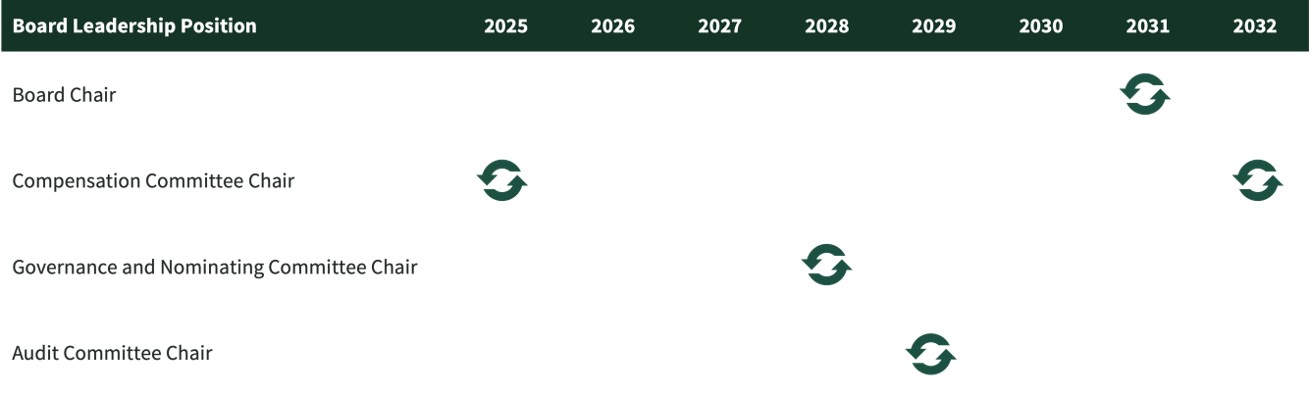

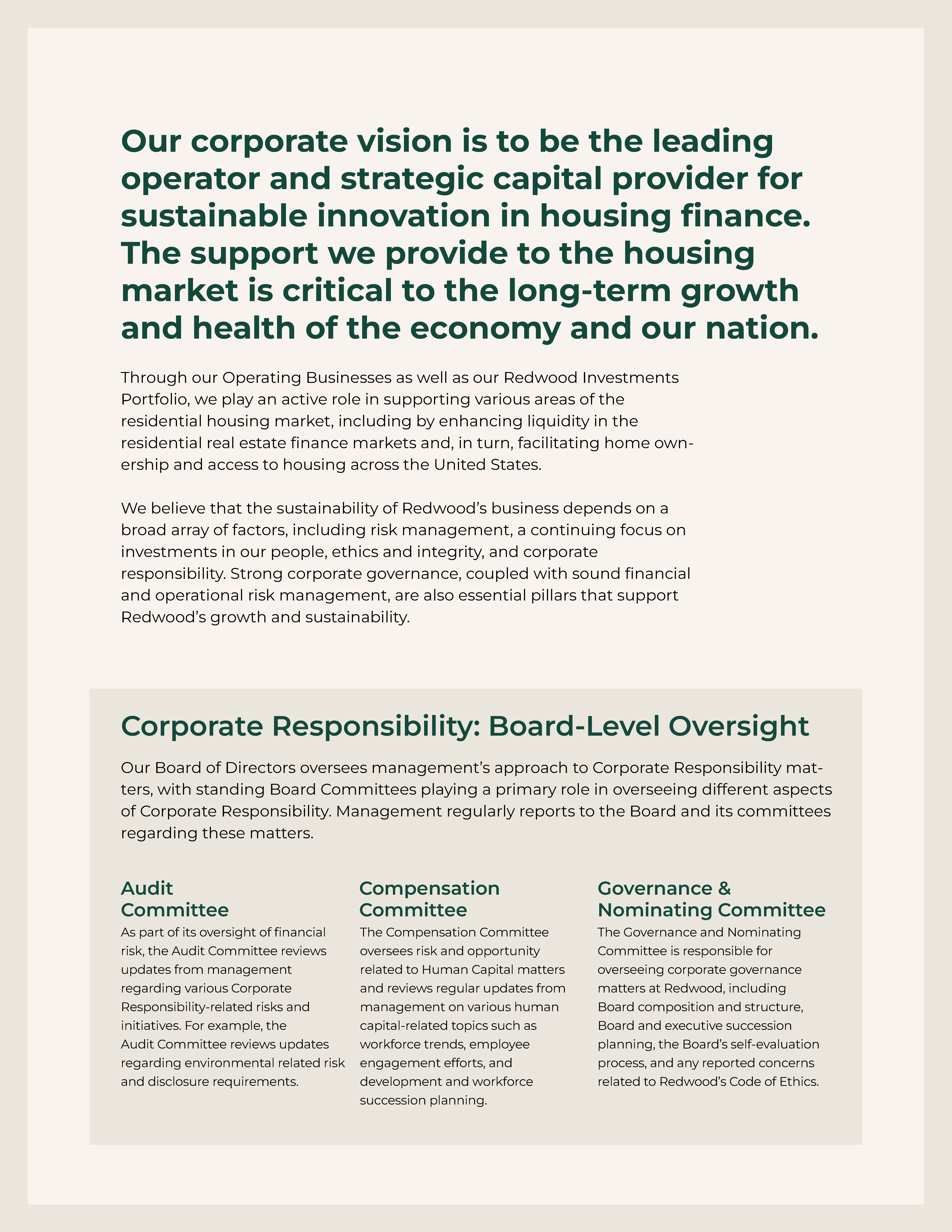
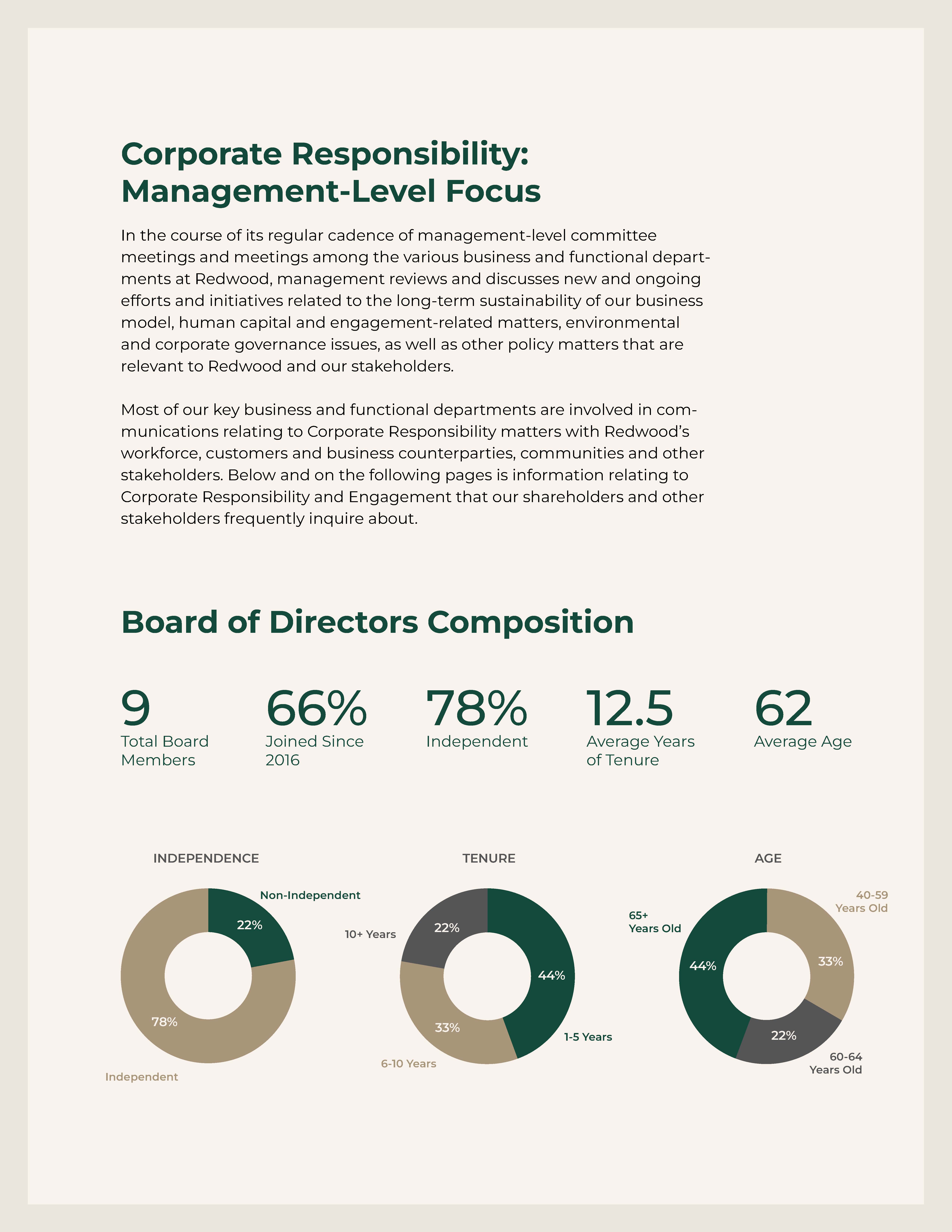

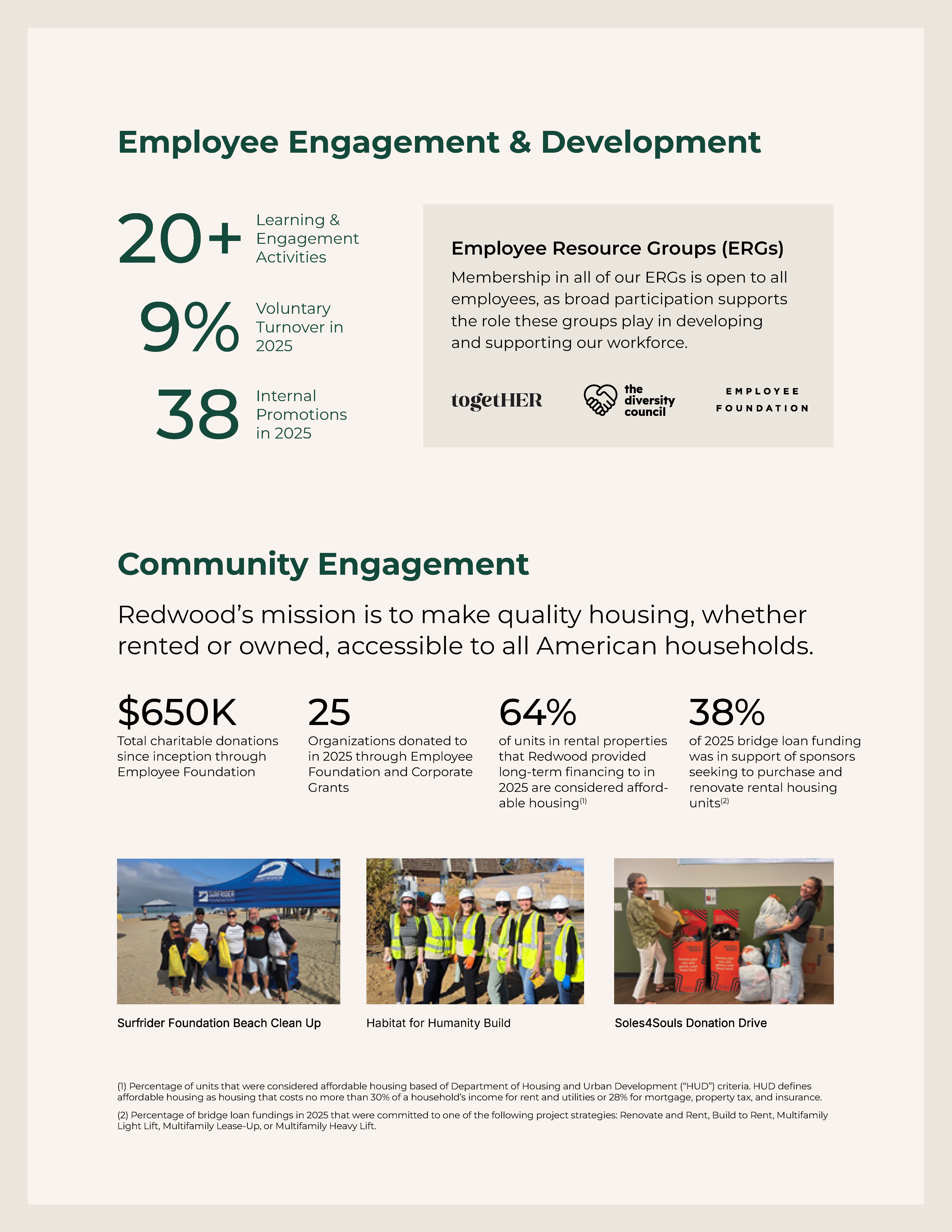
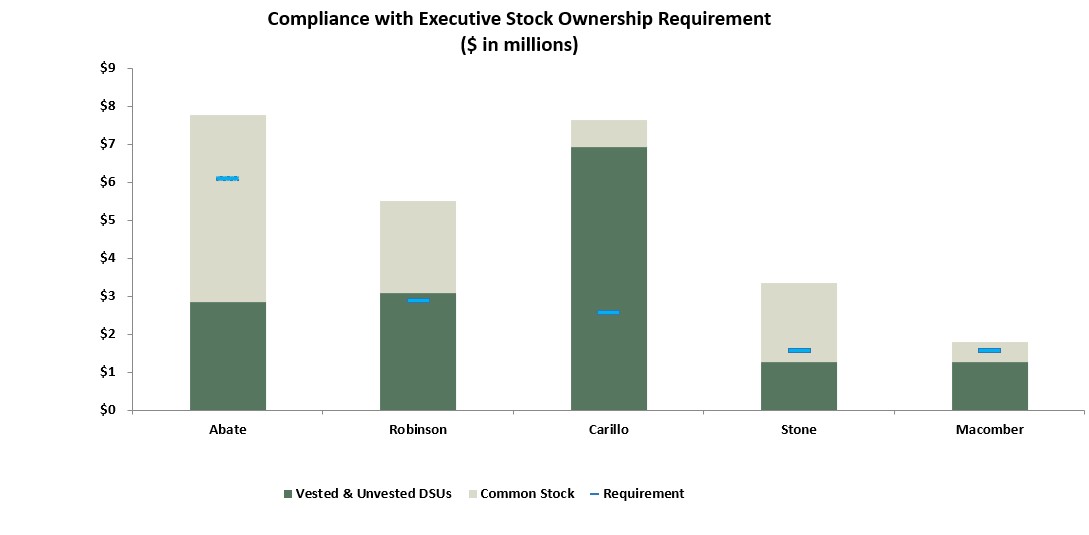
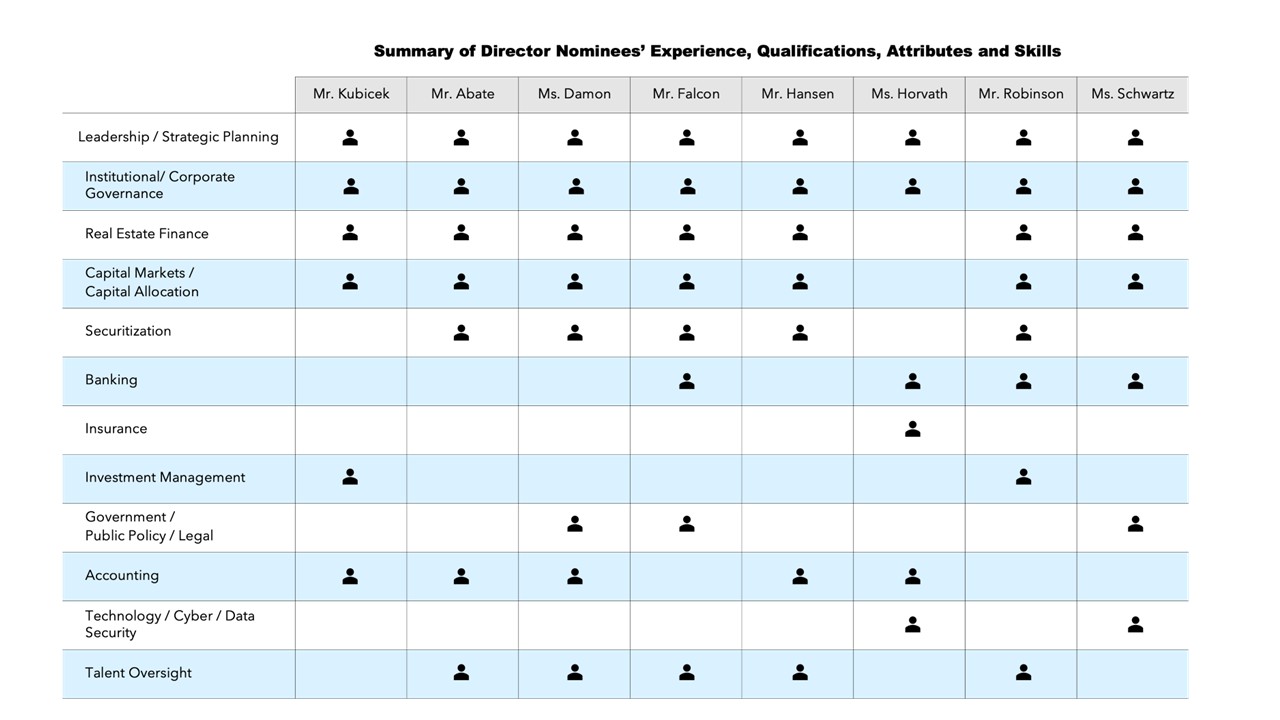






![1.20.2020.Faith Schwartz Headshot (1)].jpg](rwt-20260330_g18.jpg)