| NASDAQ: DWTX Halneuron® for the Treatment of Chronic Neuropathic Pain November 2026 Exhibit 99.2 |
| 2 Forward-Looking Statements Statements in this presentation contain “forward-looking statements,” within the meaning of the U.S. Private Securities Litigation Reform Act of 1995, that are subject to substantial risks and uncertainties. All statements, other than statements of historical fact, contained in this presentation are forward-looking statements. Forward-looking statements contained in this presentation may be identified by the use of words such as “anticipate,” “believe,” “contemplate,” “could,” “estimate,” “expect,” “intend,” “seek,” “may,” “might,” “plan,” “potential,” “predict,” “project,” “suggest,” “target,” “aim,” “should,” "will,” “would,” or the negative of these words or other similar expressions, although not all forward-looking statements contain these words. Forward-looking statements are based on the current expectations of Dogwood Therapeutics, Inc. (“Dogwood”) and are subject to inherent uncertainties, risks and assumptions that are difficult to predict, including risks related to the completion, timing and results of future clinical studies relating to Dogwood’s product candidates. Further, certain forward-looking statements are based on assumptions as to future events that may not prove to be accurate. These and other risks and uncertainties are described more fully in the section titled “Risk Factors” in the Annual Report on Form 10-K for the year ended December 31, 2025, filed with the Securities and Exchange Commission. Forward-looking statements contained in this presentation are made as of this date, and Dogwood undertakes no duty to update such information except as required under applicable law. |
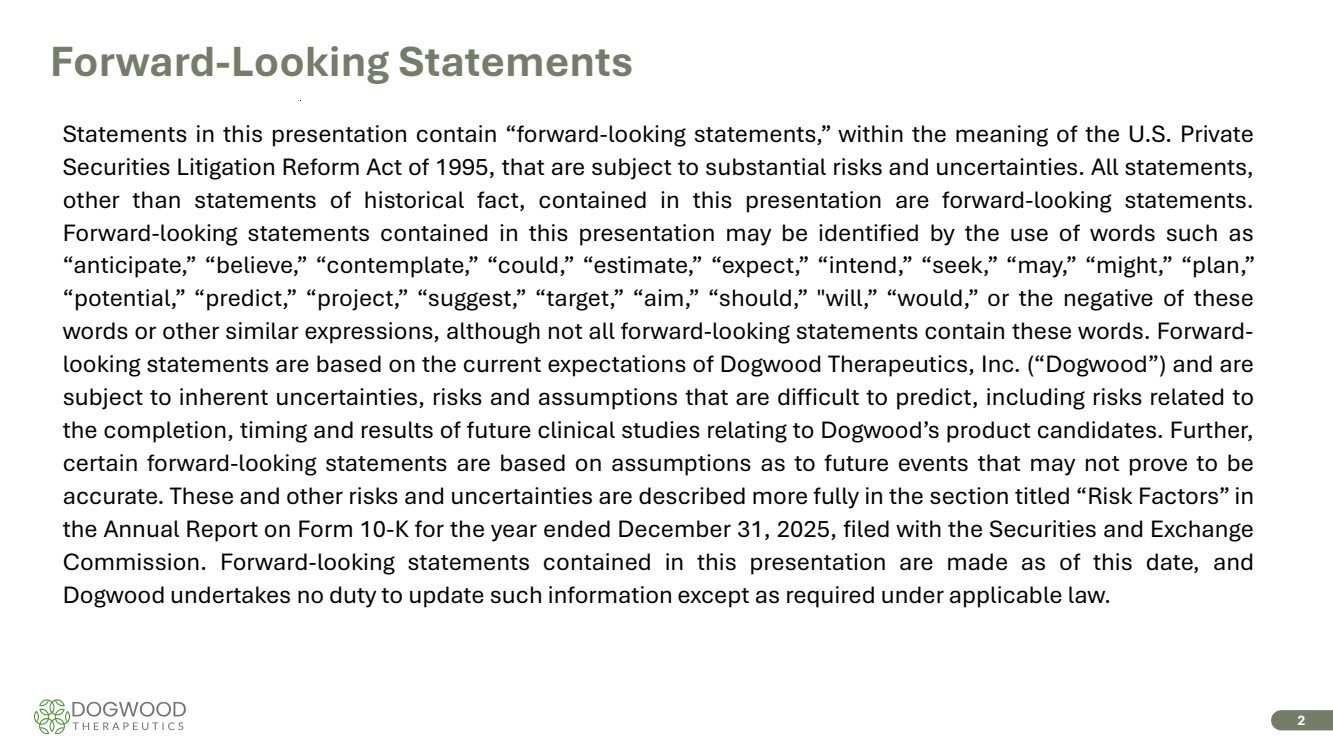
| 3 Therapeutic Pain and Neuropathy Pipeline Candidate Indication Preclinical Phase 1 Phase 2 Phase 3 2026 Milestones Halneuron® Injection Chemotherapy Induced Neuropathic Pain (CINP) Q4’26 EOP2 FDA Submission Applying for Breakthrough Status based on statistically significant outcomes in an indication with no approved therapy General Cancer Pain Completed P2 Study Demonstrated Statistically Significant Pain Reduction SP16 IV CIPPN IND Accepted by FDA P1b Commences Enrollment Q1 2027 Fast Track Designation NCI Funded Chemotherapy induced neuropathic pain (CINP), Chemotherapy Induced Neuropathic Peripheral Neuropathy (CIPPN) |
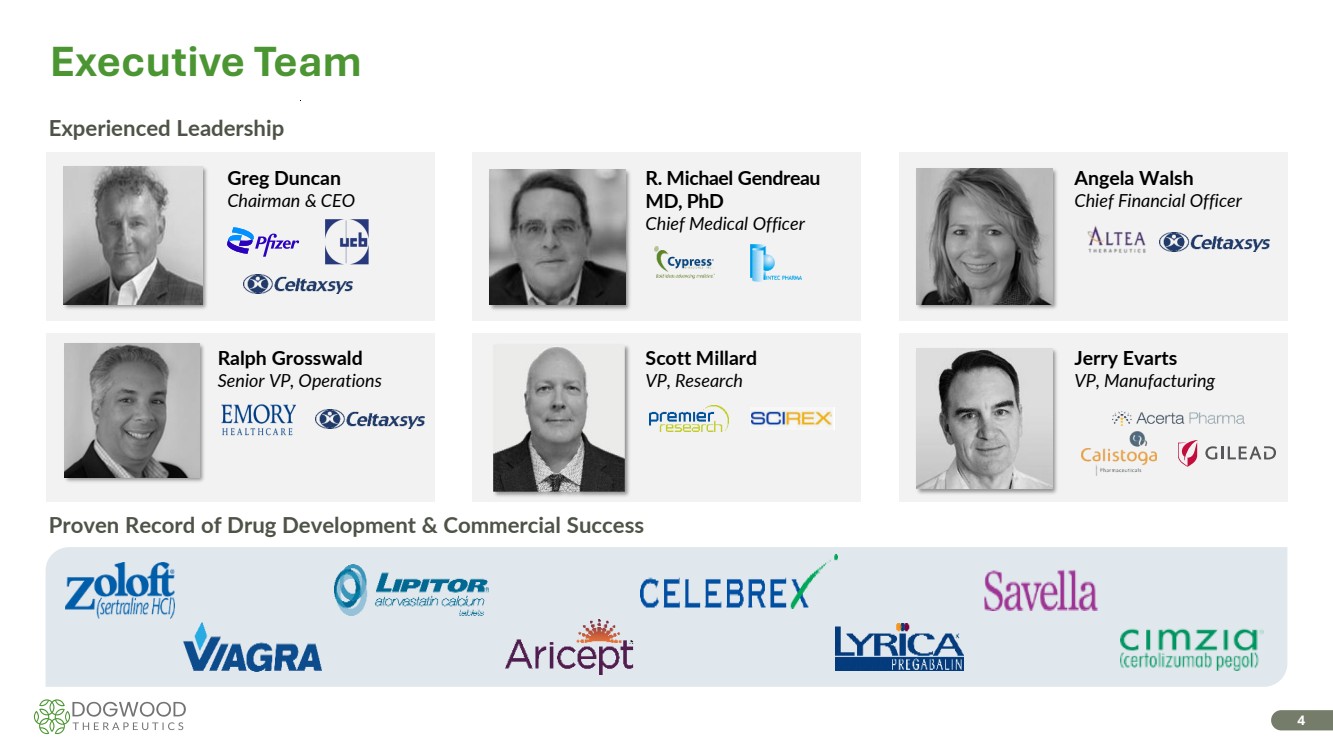
| 4 Executive Team Greg Duncan Chairman & CEO R. Michael Gendreau MD, PhD Chief Medical Officer Ralph Grosswald Senior VP, Operations Angela Walsh Chief Financial Officer Proven Record of Drug Development & Commercial Success Jerry Evarts VP, Manufacturing Scott Millard VP, Research Experienced Leadership |
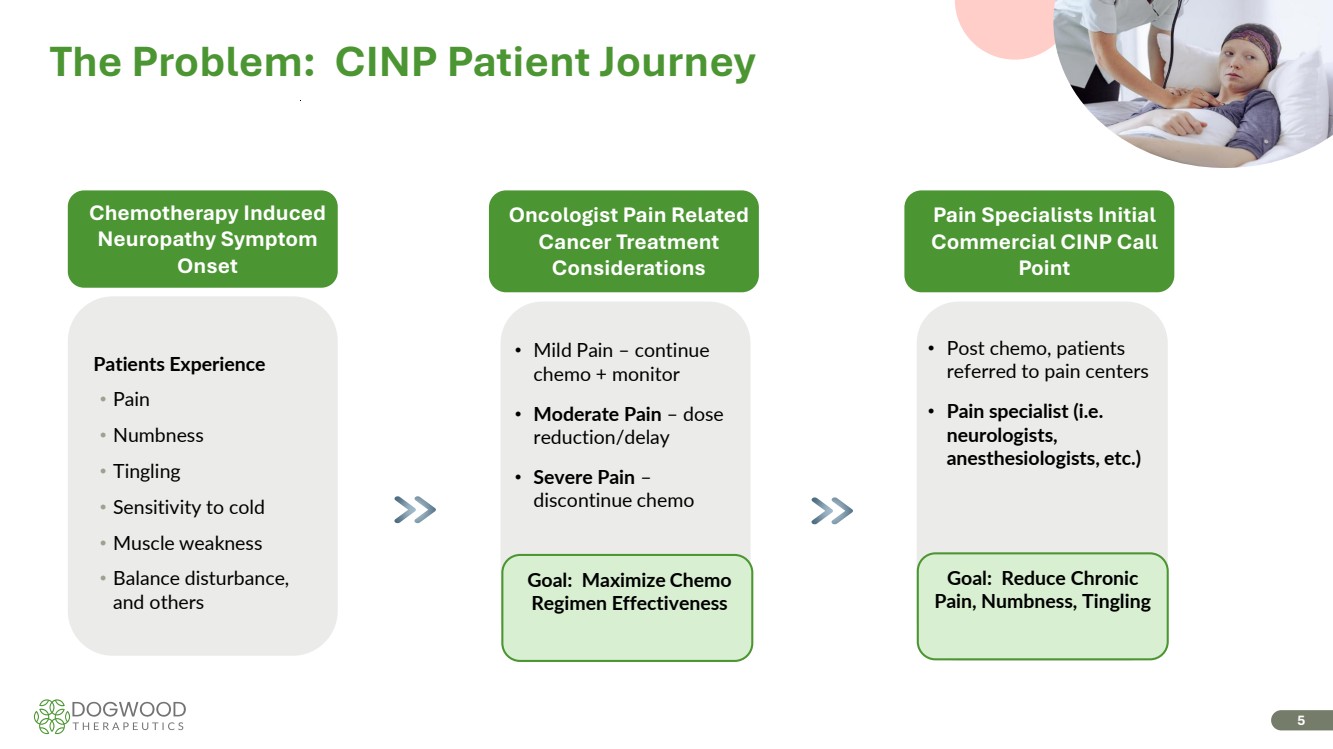
| 5 The Problem: CINP Patient Journey Patients Experience • Pain • Numbness • Tingling • Sensitivity to cold • Muscle weakness • Balance disturbance, and others Chemotherapy Induced Neuropathy Symptom Onset • Mild Pain – continue chemo + monitor • Moderate Pain – dose reduction/delay • Severe Pain – discontinue chemo Goal: Maximize Chemo Regimen Effectiveness Oncologist Pain Related Cancer Treatment Considerations Pain Specialists Initial Commercial CINP Call Point • Post chemo, patients referred to pain centers • Pain specialist (i.e. neurologists, anesthesiologists, etc.) Goal: Reduce Chronic Pain, Numbness, Tingling |
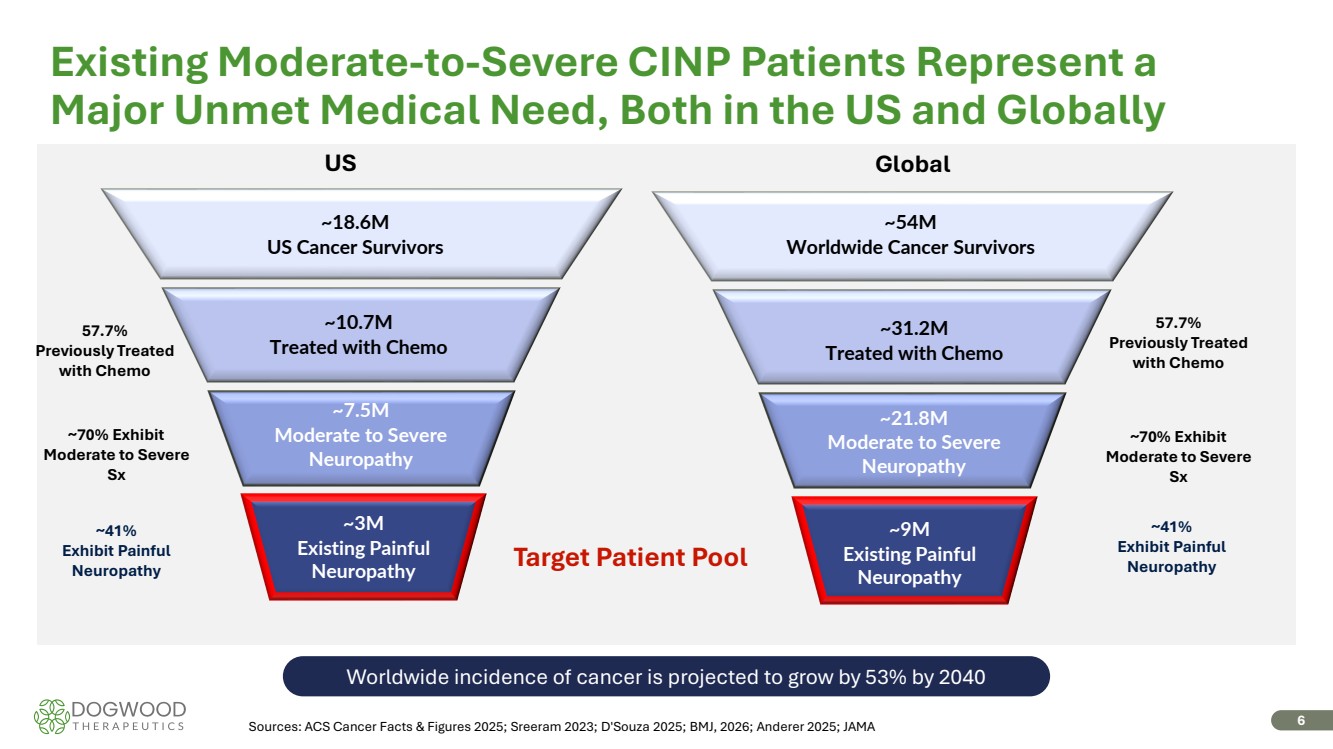
| 6 Existing Moderate-to-Severe CINP Patients Represent a Major Unmet Medical Need, Both in the US and Globally Sources: ACS Cancer Facts & Figures 2025; Sreeram 2023; D'Souza 2025; BMJ, 2026; Anderer 2025; JAMA Worldwide incidence of cancer is projected to grow by 53% by 2040 Target Patient Pool 57.7% Previously Treated with Chemo ~41% Exhibit Painful Neuropathy ~31.2M Treated with Chemo ~21.8M Moderate to Severe Neuropathy ~9M Existing Painful Neuropathy ~54M Worldwide Cancer Survivors ~70% Exhibit Moderate to Severe Sx US Global 57.7% Previously Treated with Chemo ~41% Exhibit Painful Neuropathy ~70% Exhibit Moderate to Severe Sx ~18.6M US Cancer Survivors ~10.7M Treated with Chemo ~7.5M Moderate to Severe Neuropathy ~3M Existing Painful Neuropathy |
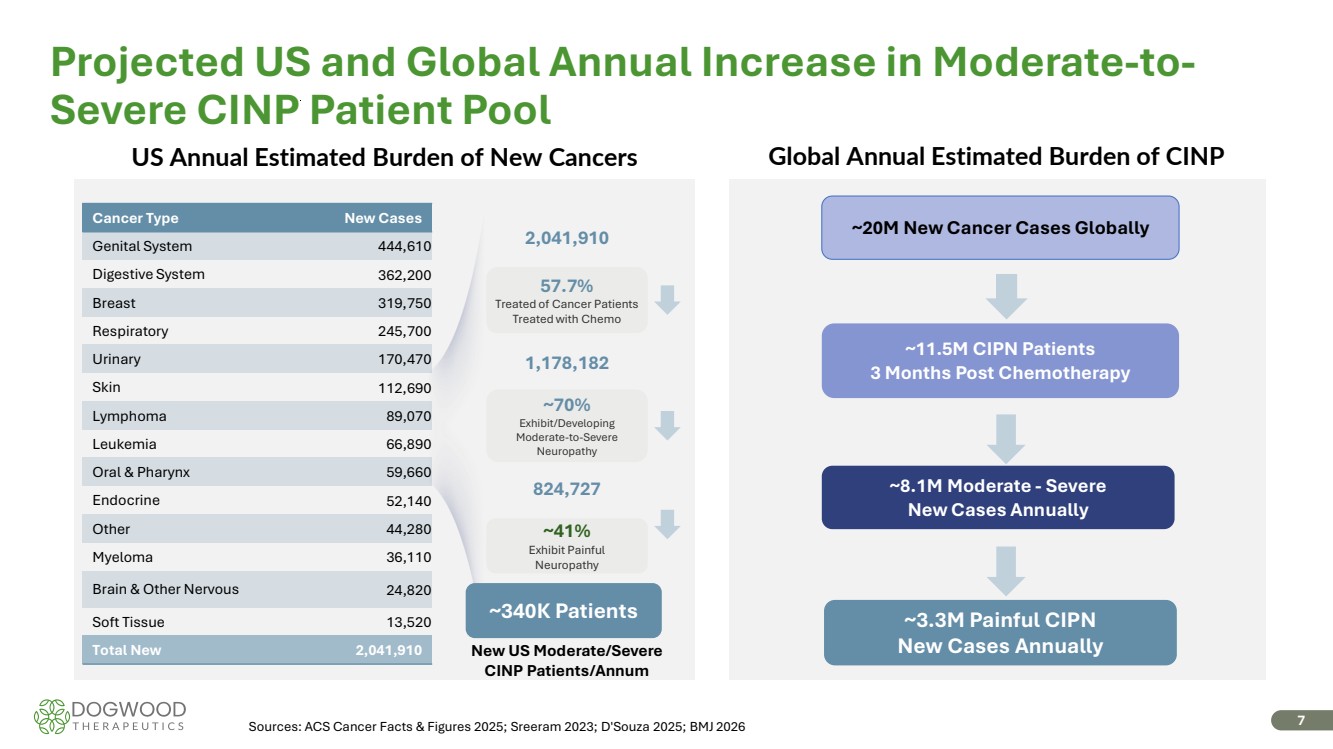
| 7 Projected US and Global Annual Increase in Moderate-to-Severe CINP Patient Pool Sources: ACS Cancer Facts & Figures 2025; Sreeram 2023; D'Souza 2025; BMJ 2026 US Annual Estimated Burden of New Cancers 57.7% Treated of Cancer Patients Treated with Chemo ~70% Exhibit/Developing Moderate-to-Severe Neuropathy ~41% Exhibit Painful Neuropathy New US Moderate/Severe CINP Patients/Annum Cancer Type New Cases Genital System 444,610 Digestive System 362,200 Breast 319,750 Respiratory 245,700 Urinary 170,470 Skin 112,690 Lymphoma 89,070 Leukemia 66,890 Oral & Pharynx 59,660 Endocrine 52,140 Other 44,280 Myeloma 36,110 Brain & Other Nervous 24,820 Soft Tissue 13,520 Total New 2,041,910 2,041,910 1,178,182 824,727 ~340K Patients ~20M New Cancer Cases Globally ~11.5M CIPN Patients 3 Months Post Chemotherapy ~3.3M Painful CIPN New Cases Annually Global Annual Estimated Burden of CINP ~8.1M Moderate - Severe New Cases Annually |
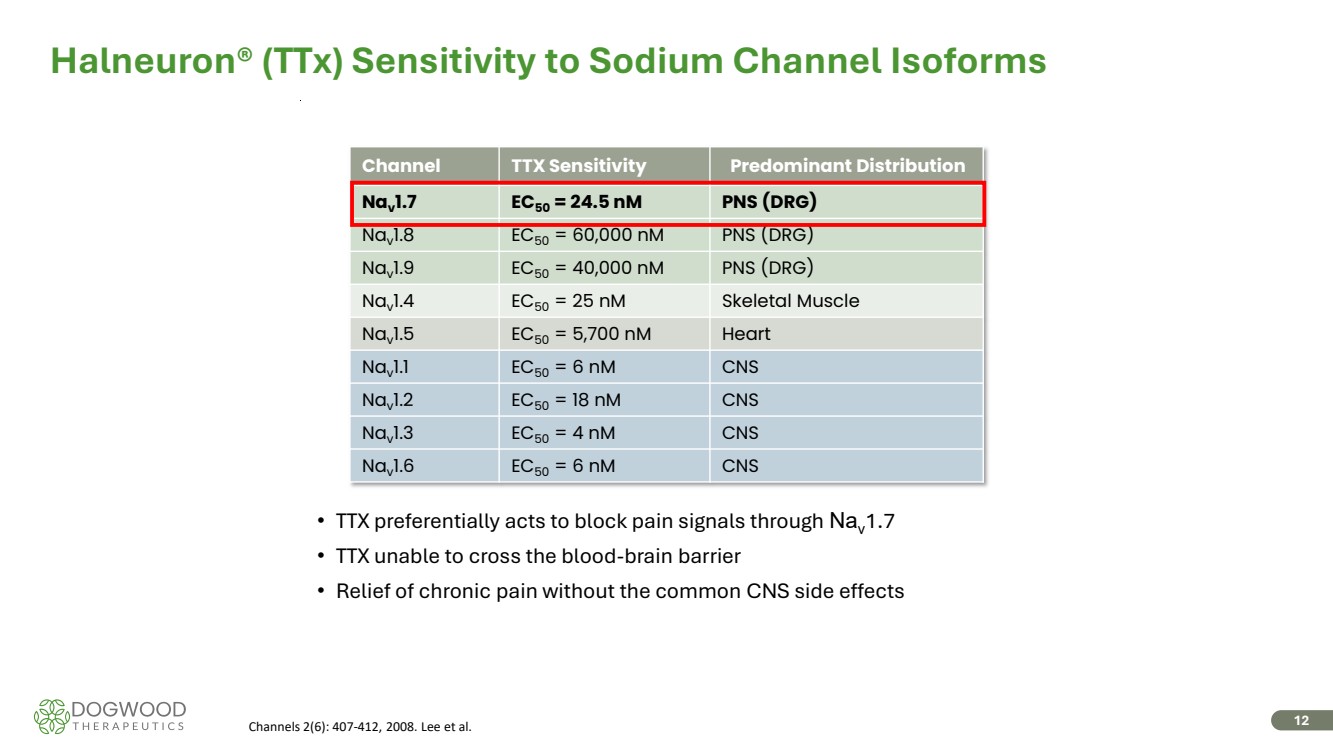
| 8 Significant CINP Treatment Market Across 7 Major Markets (7MM), Despite No FDA Approved Treatments Source: Delve Insight, 2025 $542 $347 $126 2025 US EU4/UK Japan 25% 46% 14% 7% 5% 3% SNRI (e.g. duloxetine) Alpha-2-delta (e.g. Lyrica) Opioids Topical Analgesic Tricyclic Antidepressant Vitamin/Calcium $1.015B Total Market Sales ($M) Market Share (%) by Therapy in the 7MM, 2026 |
| Halneuron® Background CONFIDEN TIAL |

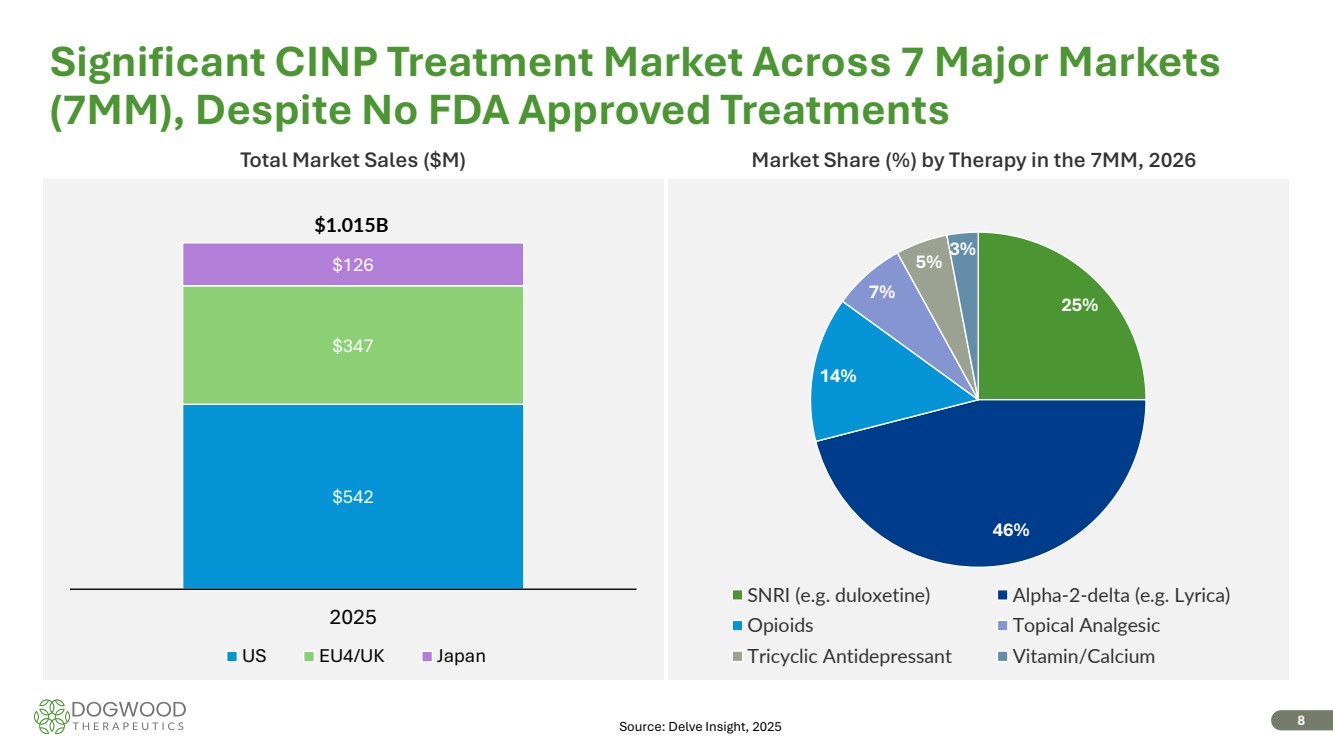
| 10 Our Solution Halneuron® Halneuron® is Tetrodotoxin (TTX), a voltage-gated sodium channel blocker and potent small molecule found in puffer fish and several other marine animals (not a peptide or protein) o Prevents or relieves pain by interrupting nerve conduction o Modulates pain transmission in the peripheral nerves, no CNS effects o Administered as a sub-Q injection o Halneuron® treatment has demonstrated statistically significant, durable pain reduction, with acceptable safety profile, in cancer and chemotherapy related clinical pain studies to date o New synthetic TTX manufacturing patents, if granted, enable intellectual property protection to 2046 How Does Halneuron® Work? • Halneuron® works as an analgesic by binding to the Nav1.7, channel, a sodium channel responsible for pain signal transmission • Genetic Loss of NAV 1.7 Function Leads to Congenital Insensitivity to Pain Syndrome |
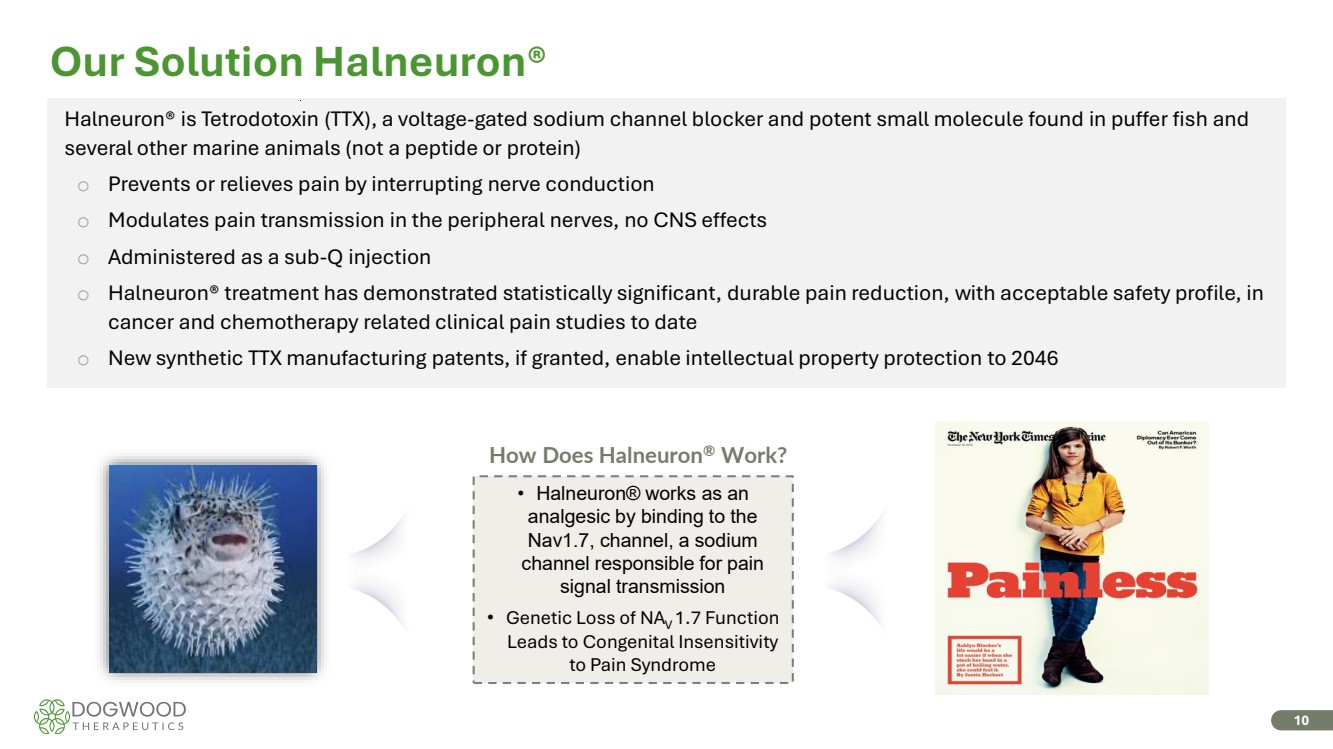
| 11 Nerve Damage from Chemotherapy Triggers Pain Signaling Halneuron Nav1.7 Inhibition What makes Halneuron® different? • Selectively inhibits Nav 1.7 sodium channel signaling rather than Nav 1.8 • Preclinical data demonstrates: • Pain reduction > Nav 1.8 inhibitor in preclinical rat model • No additional pain reduction effect when combining a Nav 1.8 inhibitor with Halneuron®, highlighting importance of the Nav 1.7 target Nav Sodium Channel Signaling The Role of Nav Sodium Channels Nav 1.7 Critical to setting the depolarization threshold, and therefore the probability of triggering an electrical signal required to transmit pain signals (“on/off switch“) Nav 1.8 Acts as a "dimmer or amplifier “ thought to increase pain signaling duration or intensity Nav 1.9 Thought to be involved in cold pain sensing and small fiber neuropathy. 1.7 1.8 1.9 Signal strength 1.7 1.8 1.9 Signal strength |
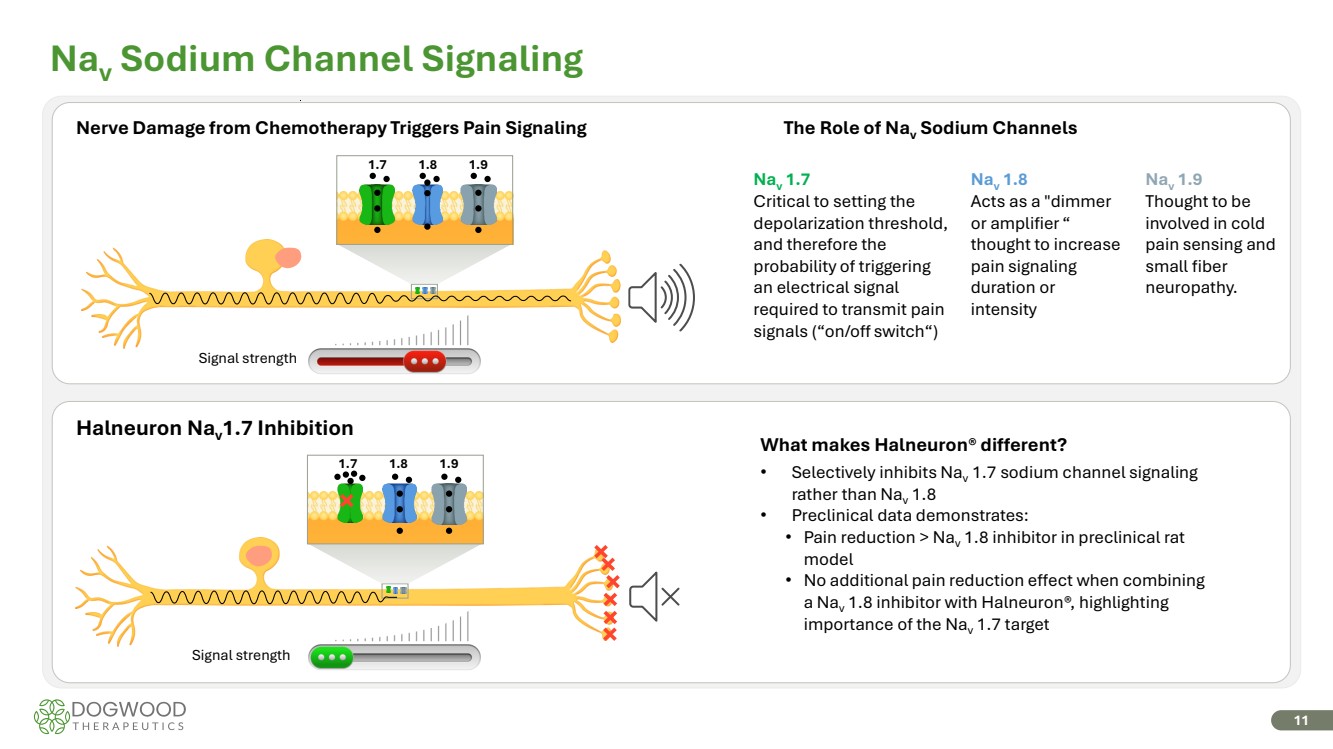
| 12 Halneuron® (TTx) Sensitivity to Sodium Channel Isoforms Channels 2(6): 407-412, 2008. Lee et al. • TTX preferentially acts to block pain signals through Nav1.7 • TTX unable to cross the blood-brain barrier • Relief of chronic pain without the common CNS side effects Channel TTX Sensitivity Predominant Distribution Nav 1.7 EC50 = 24.5 nM PNS (DRG) Nav 1.8 EC50 = 60,000 nM PNS (DRG) Nav 1.9 EC50 = 40,000 nM PNS (DRG) Nav 1.4 EC50 = 25 nM Skeletal Muscle Nav 1.5 EC50 = 5,700 nM Heart Nav 1.1 EC50 = 6 nM CNS Nav 1.2 EC50 = 18 nM CNS Nav 1.3 EC50 = 4 nM CNS Nav 1.6 EC50 = 6 nM CNS |
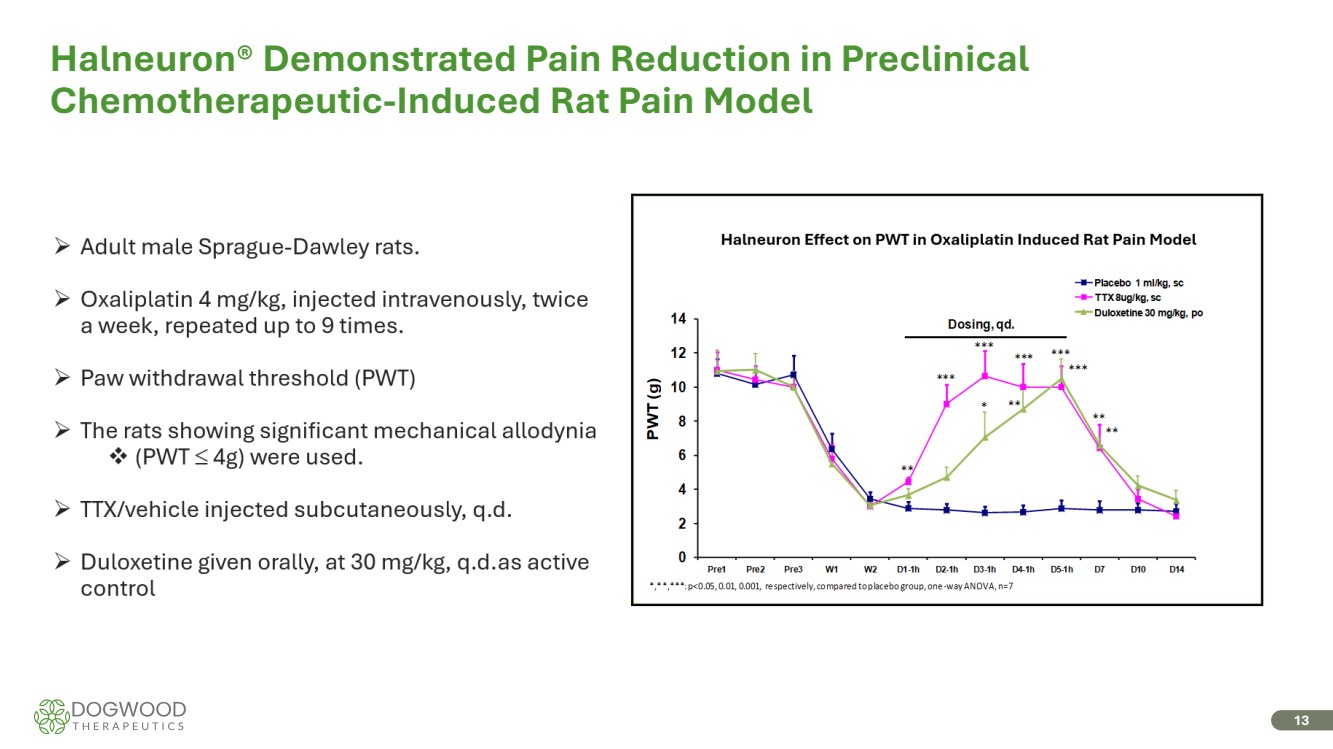
| 13 Halneuron® Demonstrated Pain Reduction in Preclinical Chemotherapeutic-Induced Rat Pain Model |
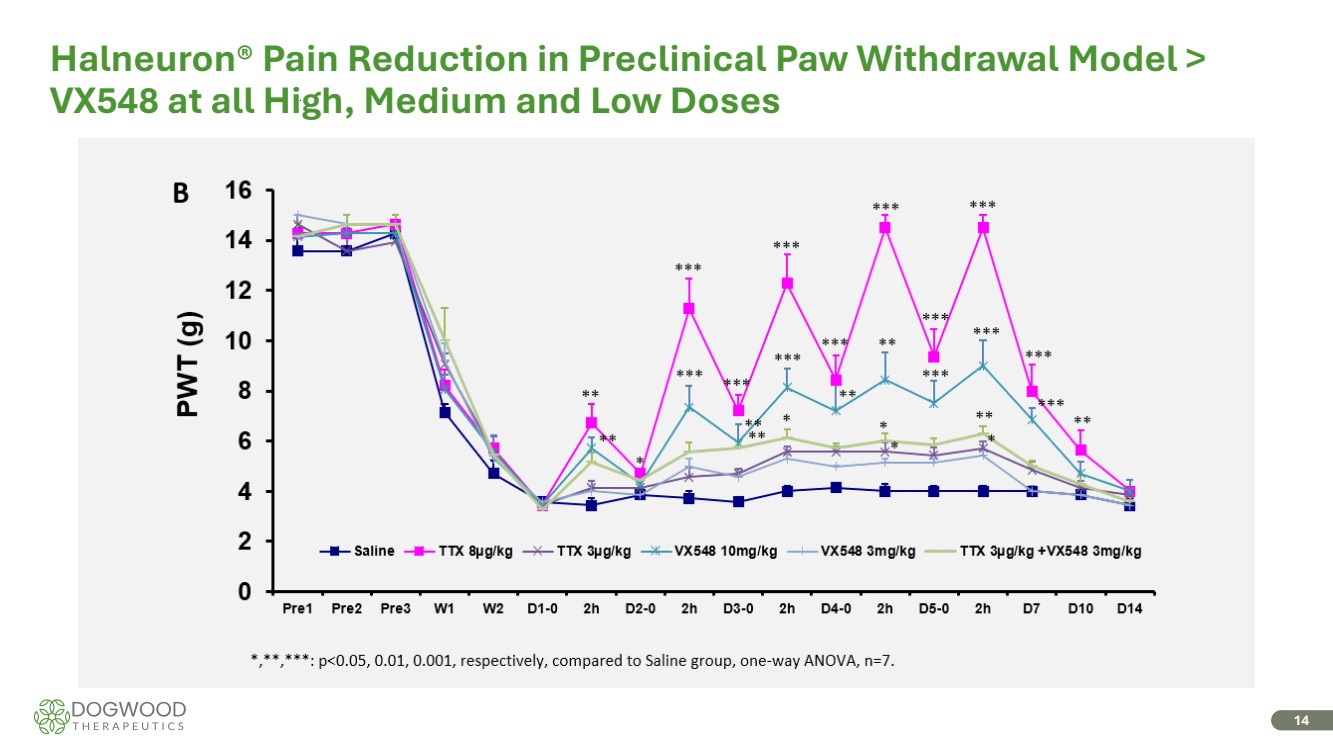
| 14 Halneuron® Pain Reduction in Preclinical Paw Withdrawal Model > VX548 at all High, Medium and Low Doses |
| Halneuron® Phase 2b Study CONFIDEN TIAL |
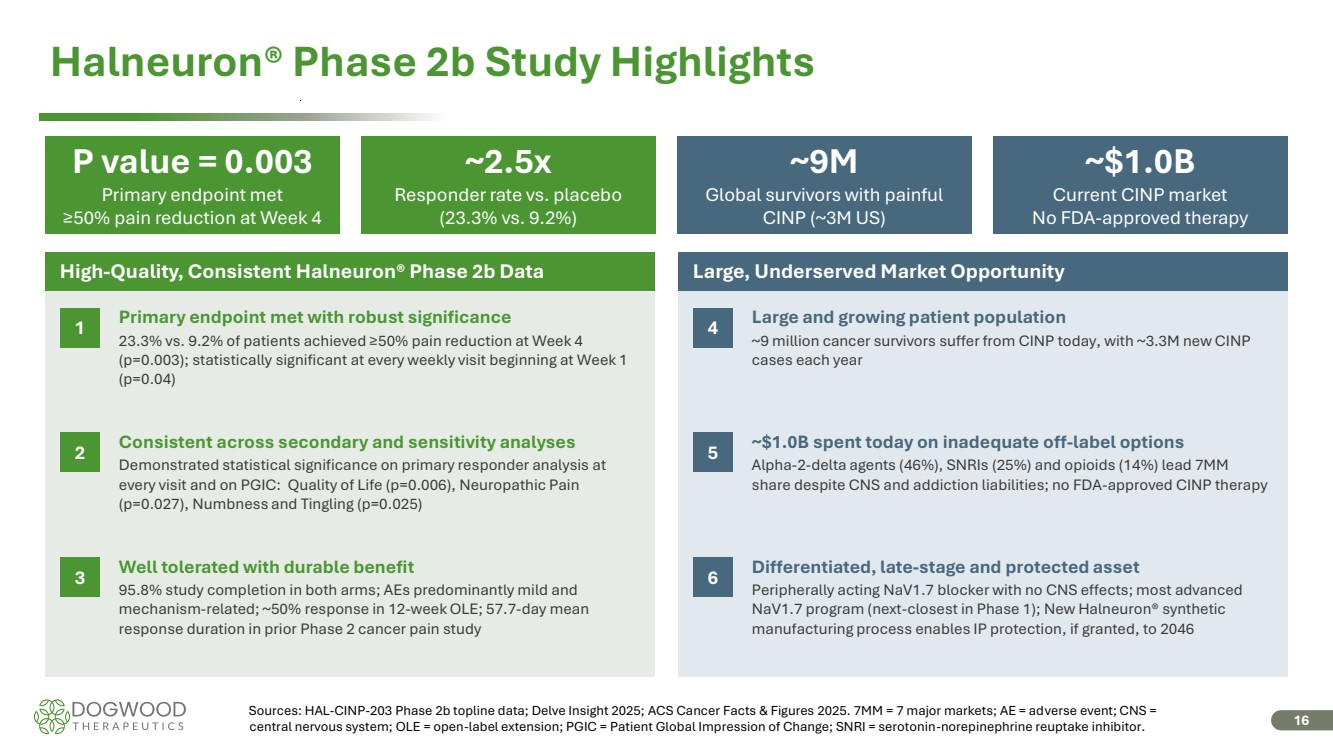
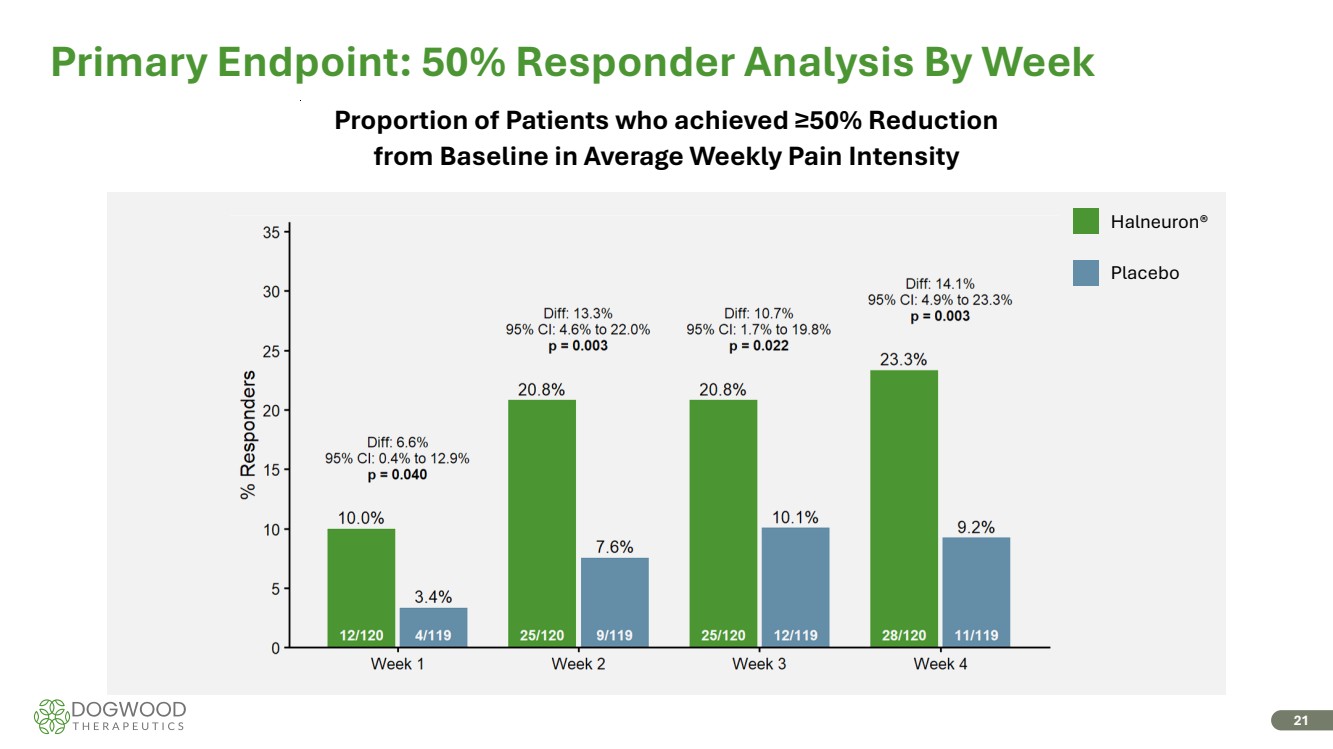
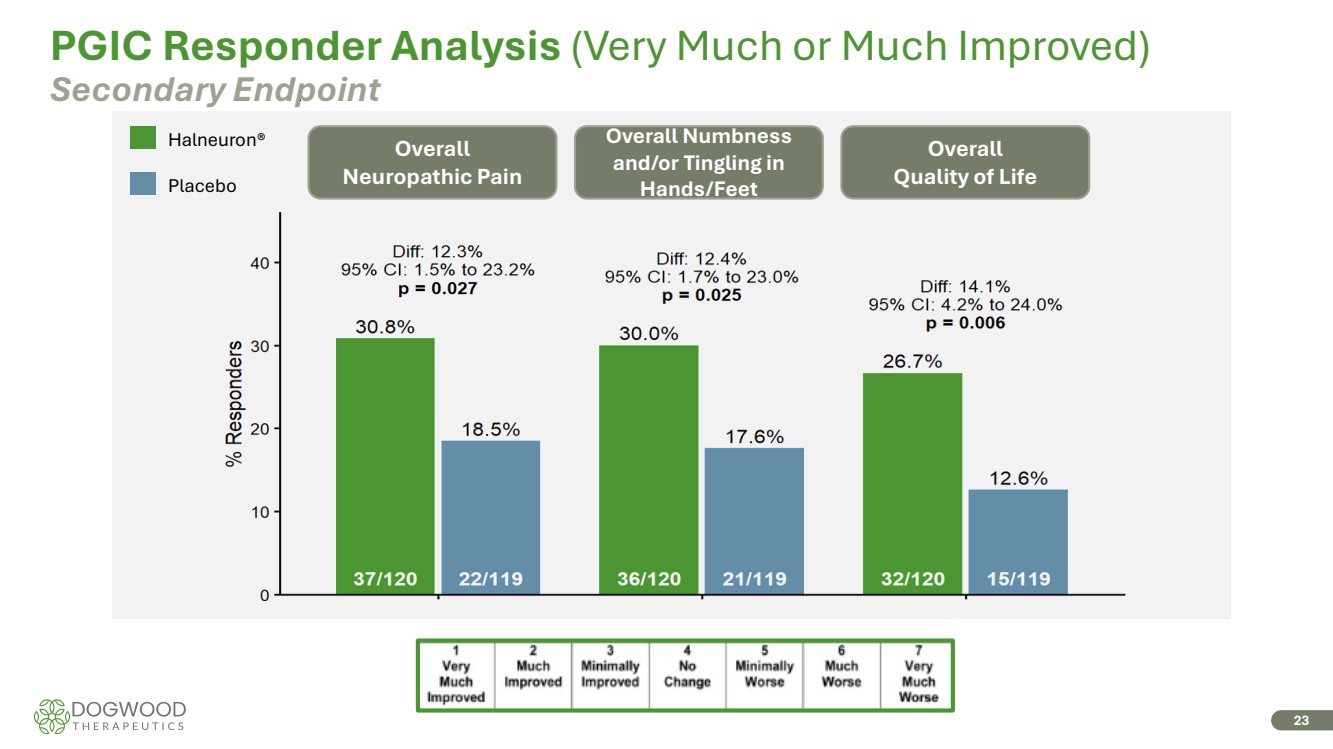
| 16 P value = 0.003 Primary endpoint met ≥50% pain reduction at Week 4 ~2.5x Responder rate vs. placebo (23.3% vs. 9.2%) ~9M Global survivors with painful CINP (~3M US) ~$1.0B Current CINP market No FDA-approved therapy High-Quality, Consistent Halneuron® Phase 2b Data 1 Primary endpoint met with robust significance 23.3% vs. 9.2% of patients achieved ≥50% pain reduction at Week 4 (p=0.003); statistically significant at every weekly visit beginning at Week 1 (p=0.04) 2 Consistent across secondary and sensitivity analyses Demonstrated statistical significance on primary responder analysis at every visit and on PGIC: Quality of Life (p=0.006), Neuropathic Pain (p=0.027), Numbness and Tingling (p=0.025) 3 Well tolerated with durable benefit 95.8% study completion in both arms; AEs predominantly mild and mechanism-related; ~50% response in 12-week OLE; 57.7-day mean response duration in prior Phase 2 cancer pain study Large, Underserved Market Opportunity 4 Large and growing patient population ~9 million cancer survivors suffer from CINP today, with ~3.3M new CINP cases each year 5 ~$1.0B spent today on inadequate off-label options Alpha-2-delta agents (46%), SNRIs (25%) and opioids (14%) lead 7MM share despite CNS and addiction liabilities; no FDA-approved CINP therapy 6 Differentiated, late-stage and protected asset Peripherally acting NaV1.7 blocker with no CNS effects; most advanced NaV1.7 program (next-closest in Phase 1); New Halneuron® synthetic manufacturing process enables IP protection, if granted, to 2046 Halneuron® Phase 2b Study Highlights Sources: HAL-CINP-203 Phase 2b topline data; Delve Insight 2025; ACS Cancer Facts & Figures 2025. 7MM = 7 major markets; AE = adverse event; CNS = central nervous system; OLE = open-label extension; PGIC = Patient Global Impression of Change; SNRI = serotonin-norepinephrine reuptake inhibitor. |
| 17 Primary Objective was to explore the safety and efficacy of Halneuron® in the treatment of patients with moderate-to-severe CINP Screening & Randomization 8 injections administered over 2 weeks • Change from Baseline in the weekly average of daily 24-hour pain • Incidence of SAEs, AEs, and AESIs Halneuron® 30 ug QD x 8 Placebo QD x 8 Run in Period R BL Halneuron® 4-Week Phase 2b (HAL-CINP-203) Study Design Days -7 to -1 Week 1 Week 2 Week 3 Week 4 EOS Enrollment : 239 patients meeting CINP criteria Treatment Phase Endpoints (Week 4) |
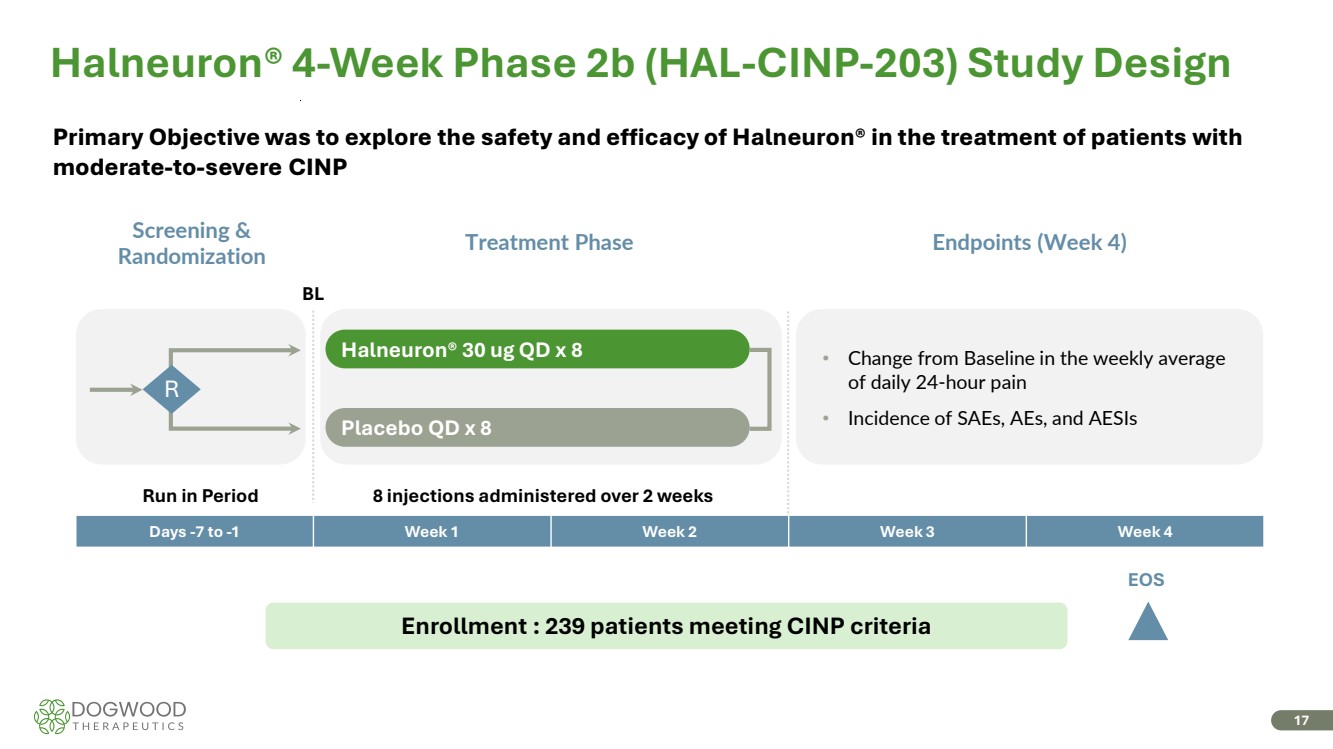
| 18 HAL-CINP-203: Disposition Disposition Halneuron® Placebo Total Randomized 120 119 239 Completed 115 (95.8%) 114 (95.8%) 229 (95.8%) Discontinued Early 5 (4.2%) 5 (4.2%) 10 (4.2%) Discontinued Study due to AE 3 (2.5%) 2 (1.7%) 5 (2.1%) Only 5 (2.1%) of the patients who completed the study did not receive all 8 injections |
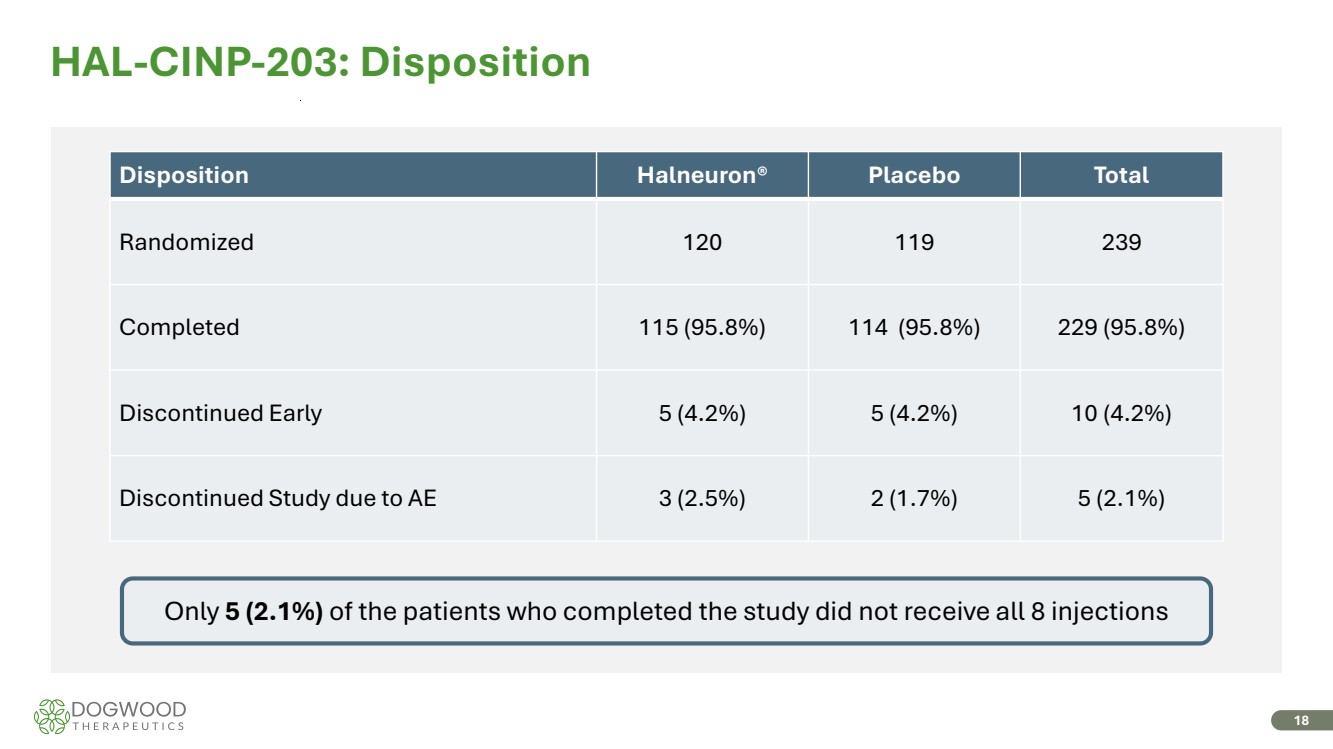
| 19 HAL-CINP-203: Baseline Characteristics Characteristic Halneuron® (N=120) Placebo (N=119) Age 65.4 64.9 % Female 83.3% 78.2% Baseline Pain Score 6.1 6.0 On Any Concomitant Pain Medication 51.7% 57.1% Duloxetine/TCAs 20.0% 21.8% Gabapentinoids 39.2% 42.9% Opioids 13.3% 10.9% Years since CINP Onset 5.6 4.4 Prior Platinum Use 38.3% 42.0% Prior Taxane Use 32.5% 34.4% Prior Platinum and Taxane Use 29.2% 23.5% Cancer Hx 49% Breast 26% Colorectal 6% Ovarian 5% Pancreas 4% Lung 10% Other |
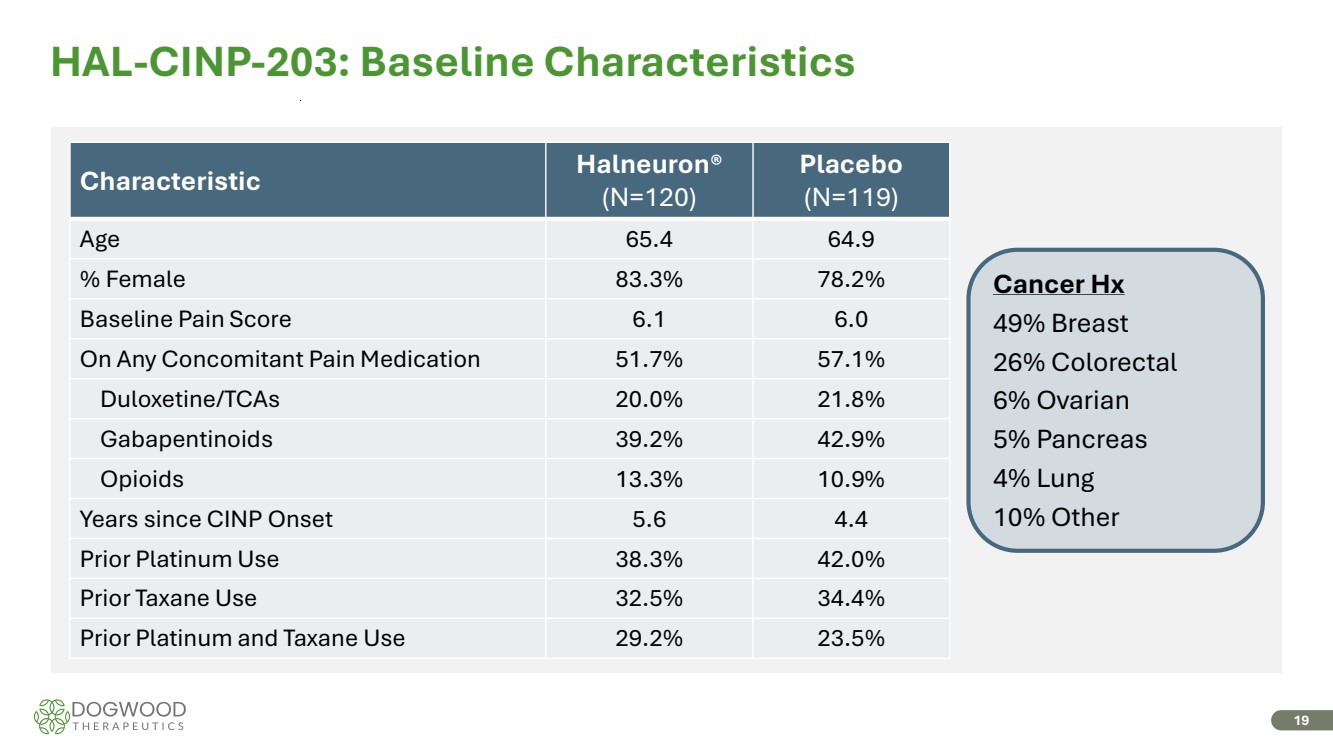
| 20 Primary Endpoint: 50% Responder Analysis for Pain Intensity Proportion of Patients who achieved ≥50% Reduction at Week 4 from Baseline in Average Weekly Pain Intensity Halneuron® Placebo |
| 21 Primary Endpoint: 50% Responder Analysis By Week Proportion of Patients who achieved ≥50% Reduction from Baseline in Average Weekly Pain Intensity Halneuron® Placebo |
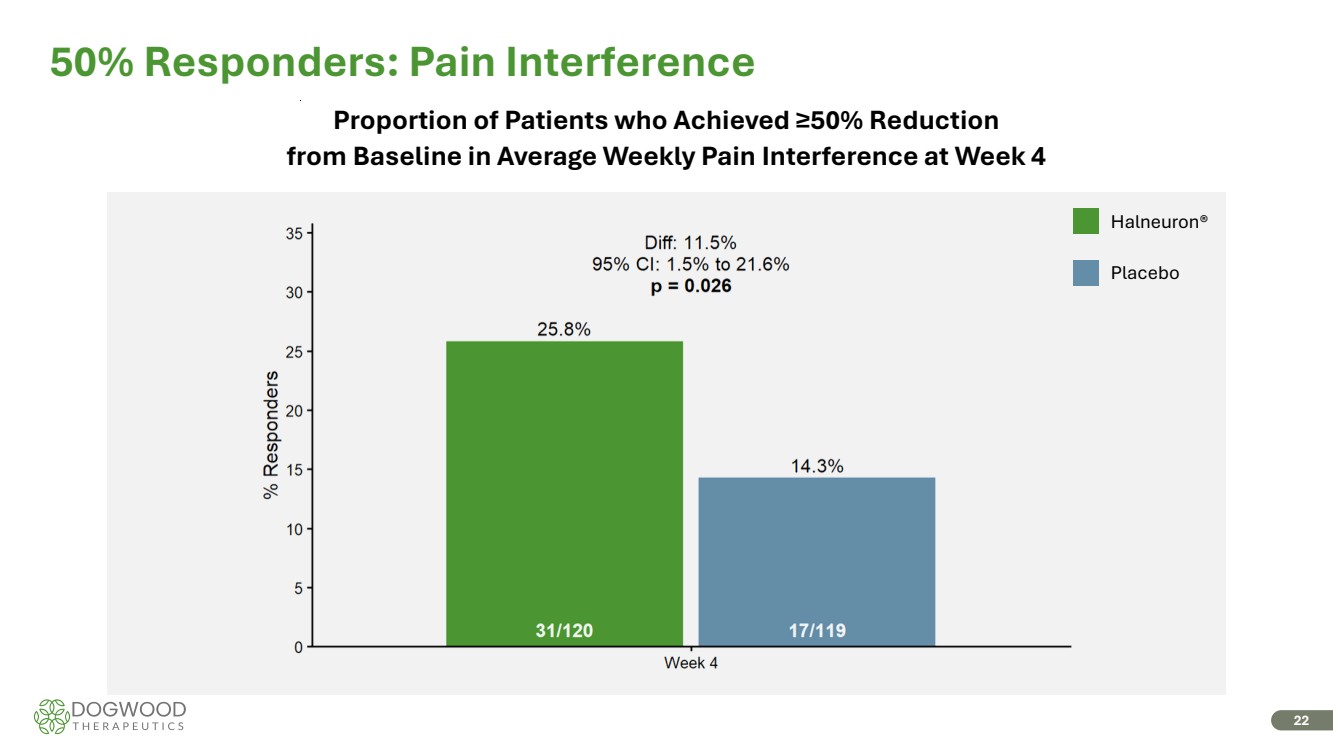
| 22 Halneuron® Placebo 50% Responders: Pain Interference Proportion of Patients who Achieved ≥50% Reduction from Baseline in Average Weekly Pain Interference at Week 4 |
| 23 PGIC Responder Analysis (Very Much or Much Improved) Secondary Endpoint Halneuron® Placebo Overall Neuropathic Pain Overall Numbness and/or Tingling in Hands/Feet Overall Quality of Life |
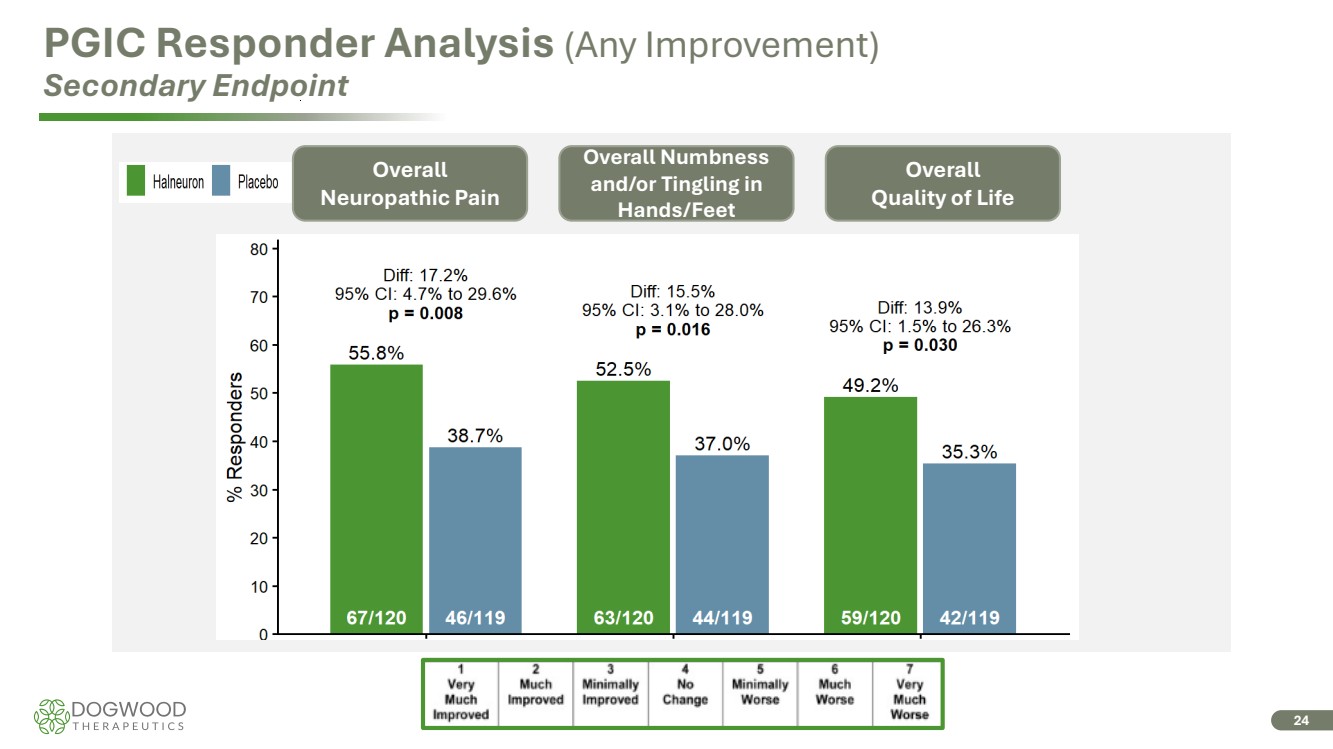
| 24 PGIC Responder Analysis (Any Improvement) Secondary Endpoint Overall Neuropathic Pain Overall Numbness and/or Tingling in Hands/Feet Overall Quality of Life |
| 25 Halneuron® Treatment Improved CINP Patient Depression Comparison of Group Mean Change from Baseline in the Hospital Anxiety & Depression Score BY MMRM (Baseline Scores 4.9 vs 4.8) Halneuron® (n=120) Placebo (n=119) -1 -0.8 -0.6 -0.4 -0.2 0 0.2 0 1 2 3 4 LS Mean CHange from Baseline Week P=0.11 P=0.06 P=0.002 |
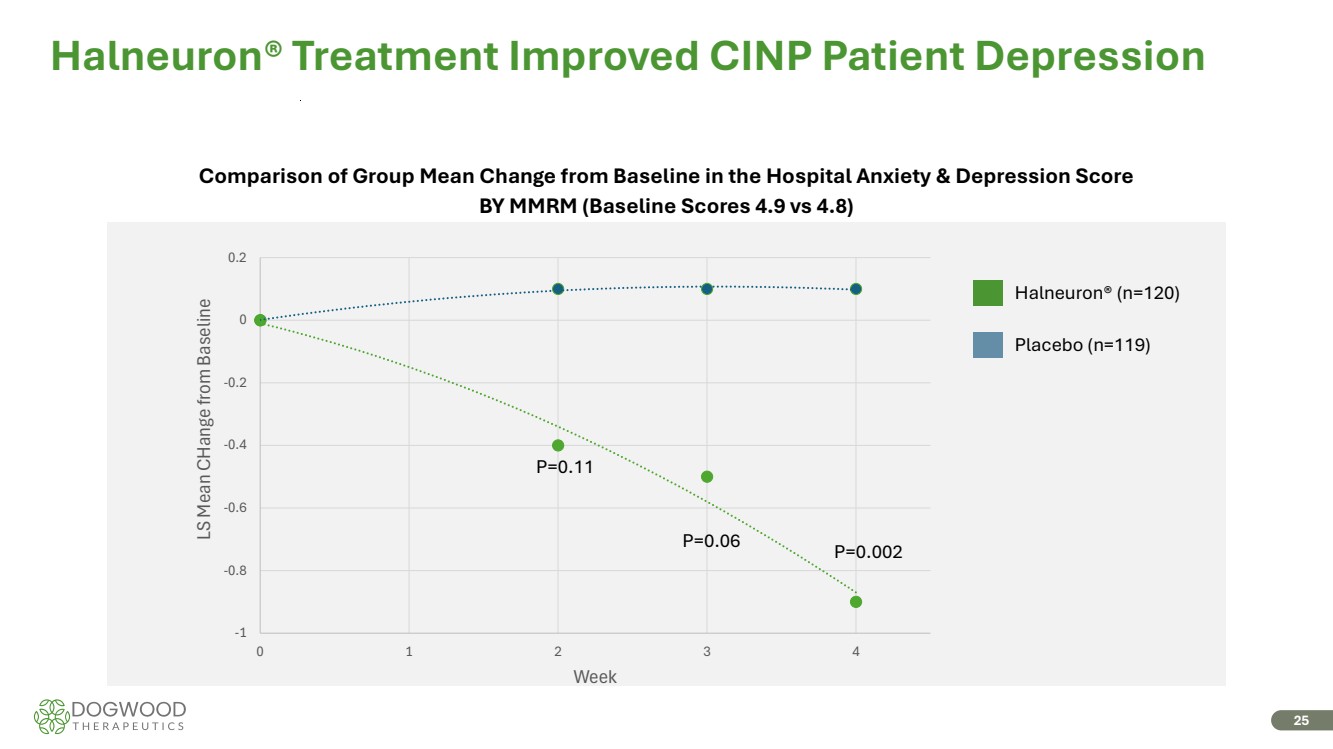
| 26 Subset Analysis of Primary Endpoint By Baseline Pain Score Halneuron® Placebo Moderate Baseline Pain (4 to 6) Severe Baseline Pain (>6 to 9) |
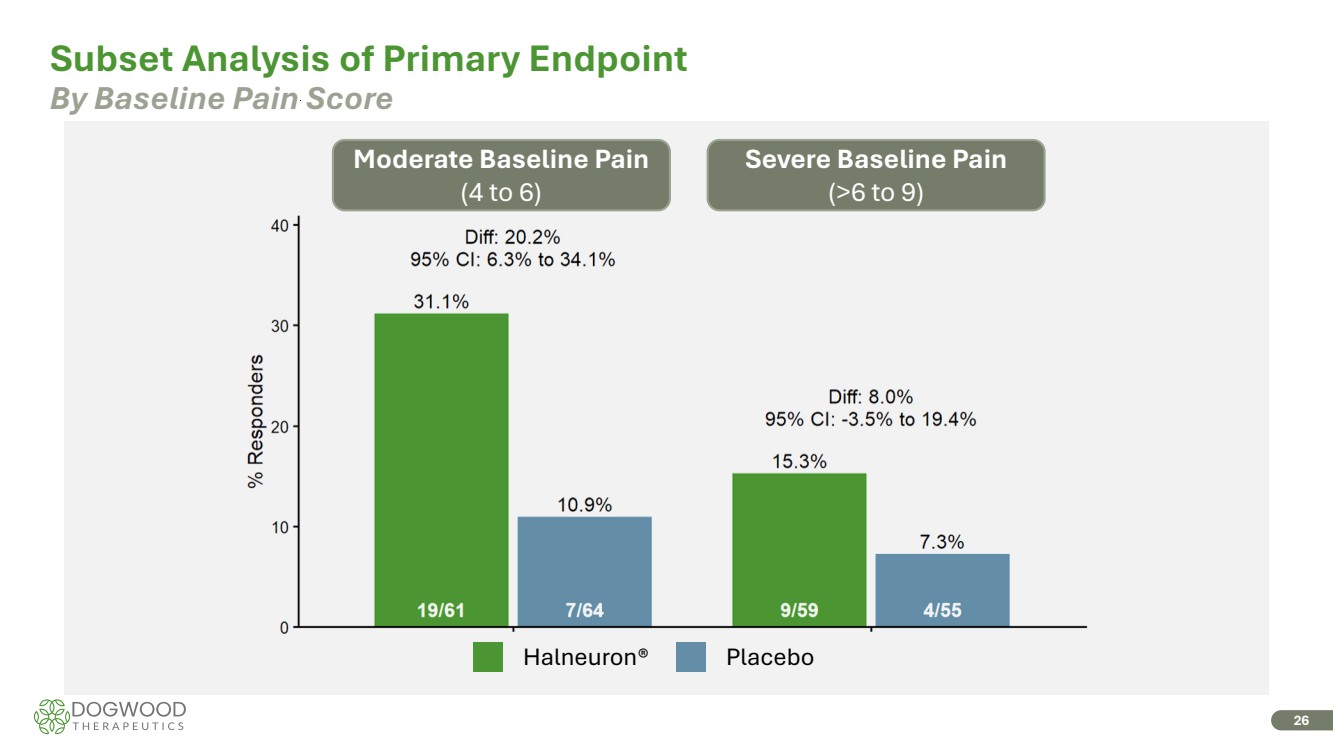
| 27 Subset Analysis of Primary Endpoint By Concomitant Analgesic By CINP Duration Medication Usage By Chemotherapy Type |
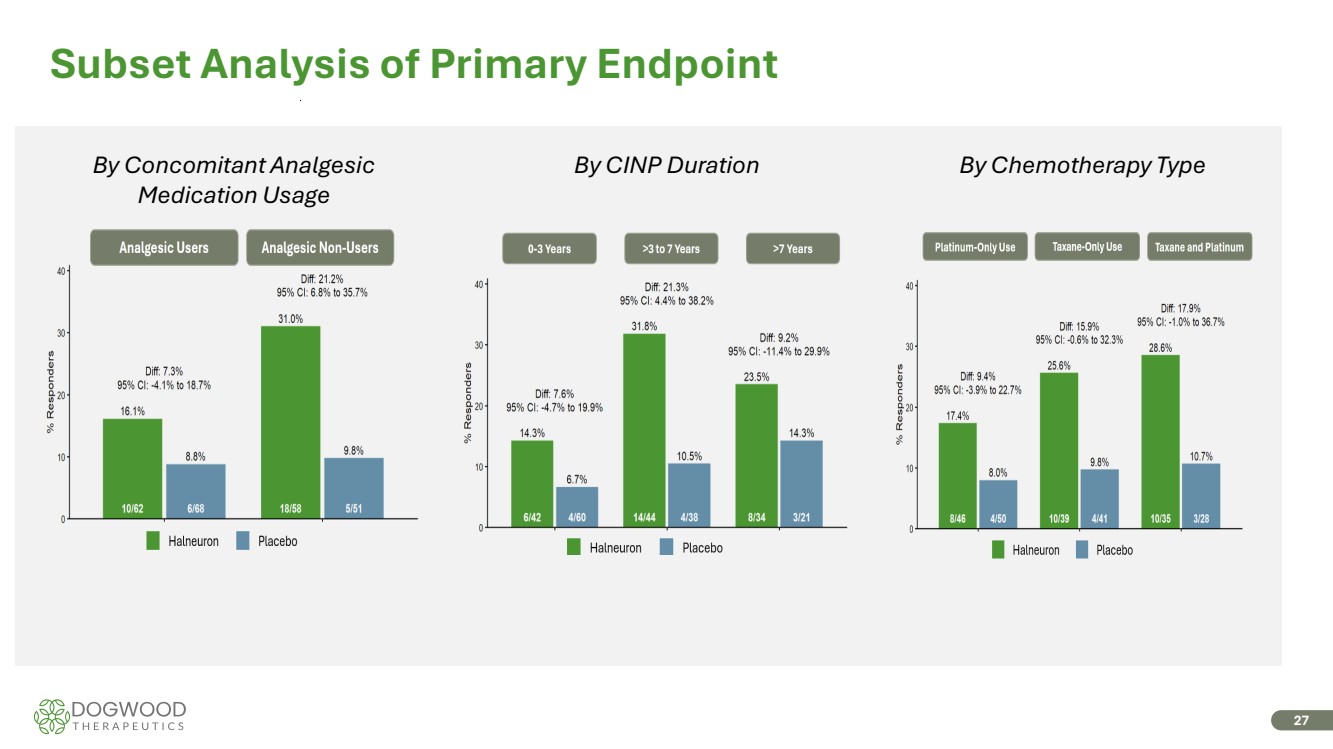
| 28 Treatment-Emergent Adverse Events ≥5% with Halneuron® and Higher than Placebo TEAE Preferred Term Halneuron® (N=120) Placebo (N=119) Paraesthesia oral (lips, tongue, mouth tingling) 70.0% 7.6% Hypoesthesia oral (numbness in oral cavity) 35.0% 1.7% Paraesthesia 23.3% 8.4% Headache 15.8% 9.2% Nausea 15.0% 6.7% Hypoesthesia 11.7% 2.5% Fatigue 9.2% 1.7% Dizziness 8.3% 3.4% Blood pressure increased 6.7% 0.8% Dysgeusia (taste distortion) 6.7% 1.7% Somnolence 5.8% 0.8% |
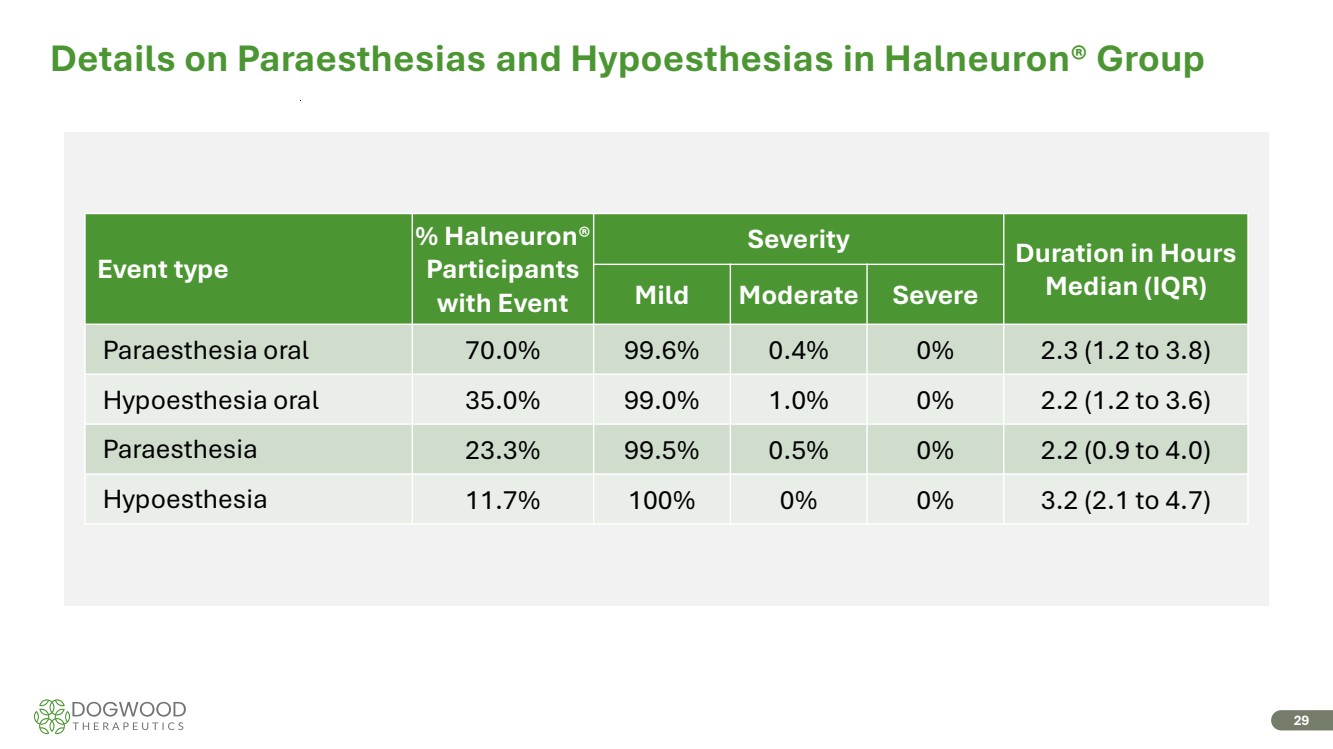
| 29 Details on Paraesthesias and Hypoesthesias in Halneuron® Group Event type % Halneuron® Participants with Event Severity Duration in Hours Mild Moderate Median (IQR) Severe Paraesthesia oral 70.0% 99.6% 0.4% 0% 2.3 (1.2 to 3.8) Hypoesthesia oral 35.0% 99.0% 1.0% 0% 2.2 (1.2 to 3.6) Paraesthesia 23.3% 99.5% 0.5% 0% 2.2 (0.9 to 4.0) Hypoesthesia 11.7% 100% 0% 0% 3.2 (2.1 to 4.7) |
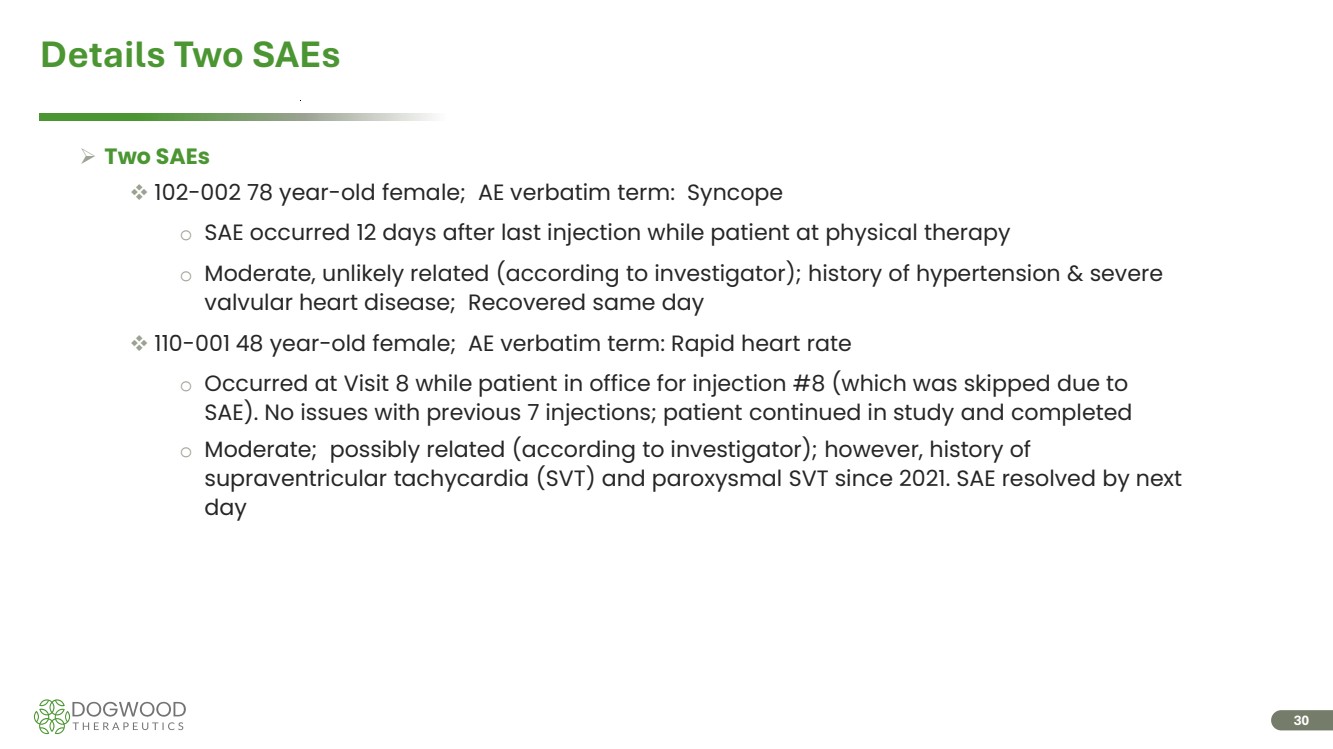
| 30 Details Two SAEs ➢ Two SAEs ❖ 102-002 78 year-old female; AE verbatim term: Syncope o SAE occurred 12 days after last injection while patient at physical therapy o Moderate, unlikely related (according to investigator); history of hypertension & severe valvular heart disease; Recovered same day ❖ 110-001 48 year-old female; AE verbatim term: Rapid heart rate o Occurred at Visit 8 while patient in office for injection #8 (which was skipped due to SAE). No issues with previous 7 injections; patient continued in study and completed o Moderate; possibly related (according to investigator); however, history of supraventricular tachycardia (SVT) and paroxysmal SVT since 2021. SAE resolved by next day |
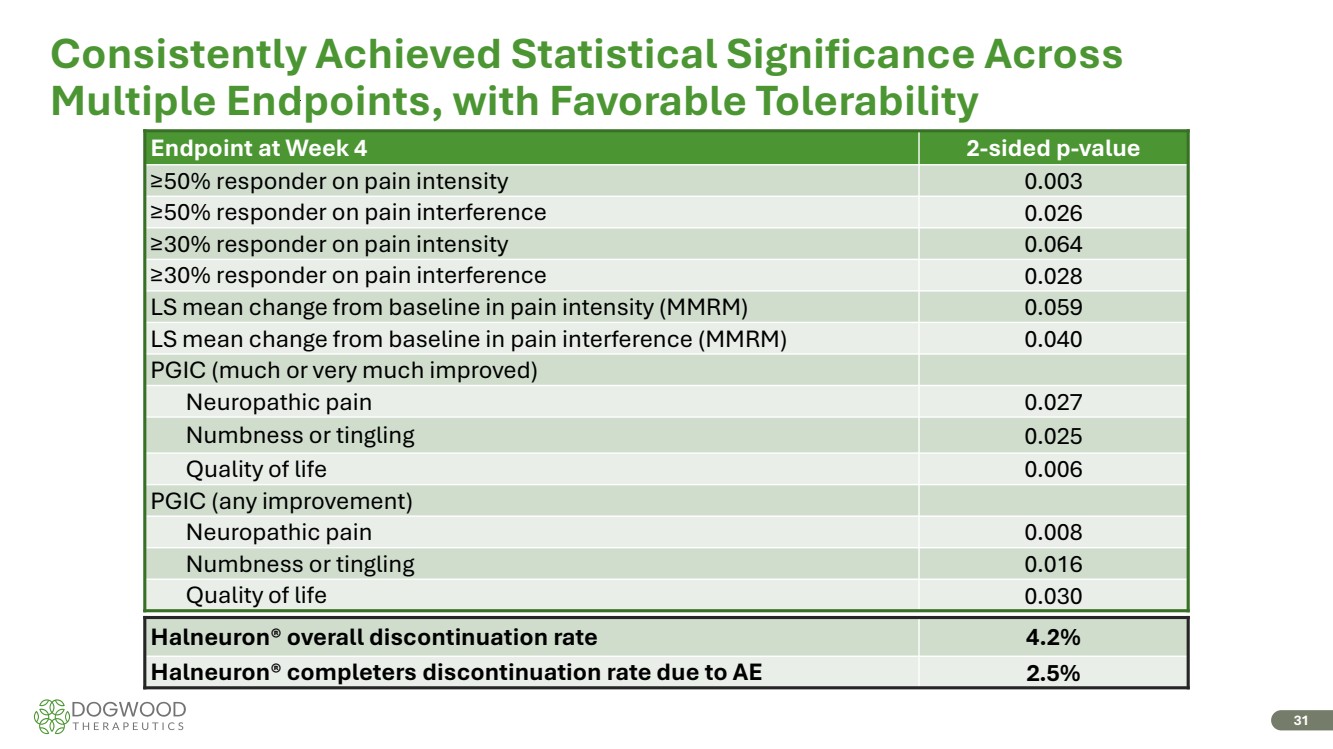
| 31 Consistently Achieved Statistical Significance Across Multiple Endpoints, with Favorable Tolerability Endpoint at Week 4 2-sided p-value ≥50% responder on pain intensity 0.003 ≥50% responder on pain interference 0.026 ≥30% responder on pain intensity 0.064 ≥30% responder on pain interference 0.028 LS mean change from baseline in pain intensity (MMRM) 0.059 LS mean change from baseline in pain interference (MMRM) 0.040 PGIC (much or very much improved) Neuropathic pain 0.027 Numbness or tingling 0.025 Quality of life 0.006 PGIC (any improvement) Neuropathic pain 0.008 Numbness or tingling 0.016 Quality of life 0.030 Halneuron® overall discontinuation rate 4.2% Halneuron® completers discontinuation rate due to AE 2.5% |
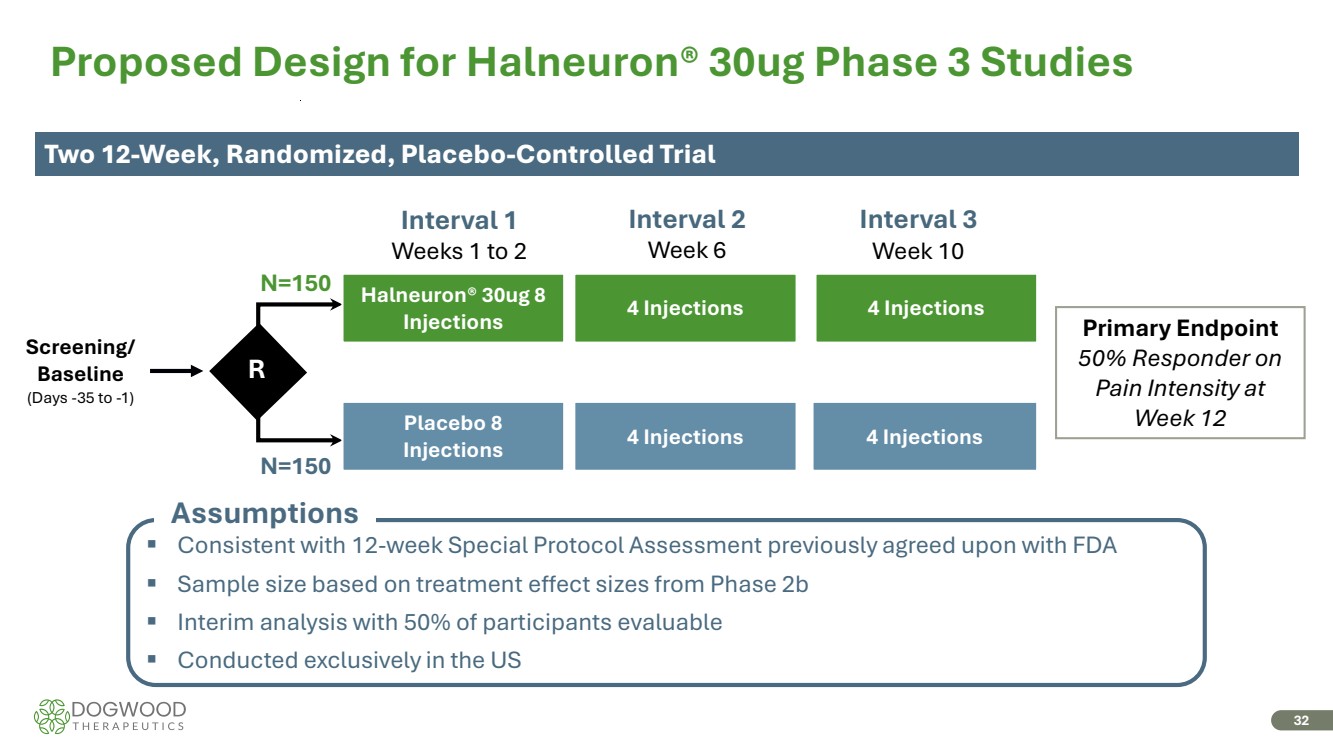
| 32 Two 12-Week, Randomized, Placebo-Controlled Trial Screening/ Baseline (Days -35 to -1) 4 Injections 4 Injections 4 Injections 4 Injections Placebo 8 Injections Halneuron® 30ug 8 Injections Interval 1 Weeks 1 to 2 Interval 2 Week 6 Interval 3 Week 10 Primary Endpoint 50% Responder on Pain Intensity at Week 12 R N=150 N=150 ▪ Consistent with 12-week Special Protocol Assessment previously agreed upon with FDA ▪ Sample size based on treatment effect sizes from Phase 2b ▪ Interim analysis with 50% of participants evaluable ▪ Conducted exclusively in the US Assumptions Proposed Design for Halneuron® 30ug Phase 3 Studies |
| 33 Key Next Steps 1 FDA End-of-Phase 2 meetings: confirm Week 12 ≥50% responder endpoint, Phase 3 design (consistent with prior SPA) and CMC / PK bridging plan 2 Initiate US Phase 3 Study 1 (Q3’27): interim analysis expected 2028 3 Initiate US Phase 3 Study 2 (Q2’28): potentially not required if FDA accepts a single pivotal study 4 NDA submission: targeted for 2030 Next Steps: Projected Path to Halneuron® 30ug Phase 3 & NDA Note: Timeline is a company projection. CMC = chemistry, manufacturing and controls; PK = pharmacokinetic bridging study; SPA = Special Protocol Assessment. 5 Breakthrough submission: targeted Q1’27 |
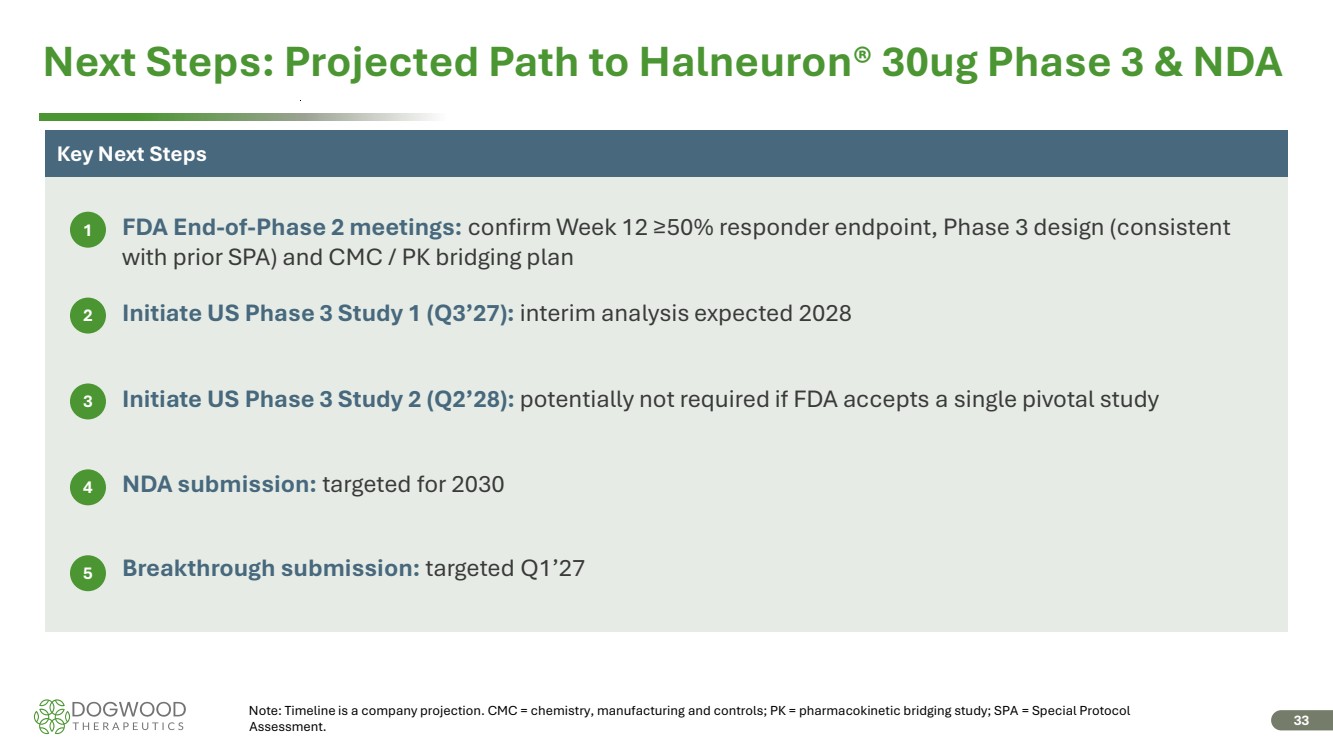
| 34 Key Takeaways: Halneuron® Phase 2b Top-Line Results 1 Primary endpoint met, with clear separation from placebo 23.3% of Halneuron patients vs 9.2% on placebo achieved a ≥50% reduction in pain intensity at Week 4 (14.1-point difference; 95% CI 4.9–23.3; p=0.003), with separation from placebo at every weekly assessment (p≤0.04). 2 Pain relief translated into improved daily function ≥50% pain-interference responders 25.8% vs 14.3% (p=0.026); ≥30% responders 37.5% vs 24.4% (p=0.028); MMRM mean change favored Halneuron (p=0.04). Pain-intensity MMRM and ≥30% responder trended the same direction (p=0.059, 0.064). 3 Patients reported feeling better across all three PGIC domains Significant improvement: quality of life 26.7% vs 12.6% (p=0.006), neuropathic pain 30.8% vs 18.5% (p=0.027), numbness/tingling 30.0% vs 17.6% (p=0.025). Any improvement was also significant on all three domains (p=0.008–0.030). 4 Effect was consistent regardless of analgesic use, CINP duration, or chemotherapy type All 8 subgroups numerically favored Halneuron on the primary endpoint. Largest responses in analgesic non-users (31.0% vs 9.8%) and 3–7 years since onset (31.8% vs 10.5%); patients with CINP >7 years (23.5% vs 14.3%) and every chemotherapy type also favored Halneuron. 5 Well tolerated: AEs were predominantly mild and transient Discontinuation 4.2% overall and 2.5% due to AEs. Oral and peripheral paraesthesia / hypoesthesia were ≥99% mild with a median duration of 2–3 hours, and no severe events. Two SAEs (syncope; rapid heart rate), both in patients with pre-existing cardiac history, resolved within 24 hours. 6 Data support Halneuron®’s potential as the first approved therapy for CINP |
| Halneuron® Phase 2 Cancer Related Pain Study CONFIDEN TIAL |
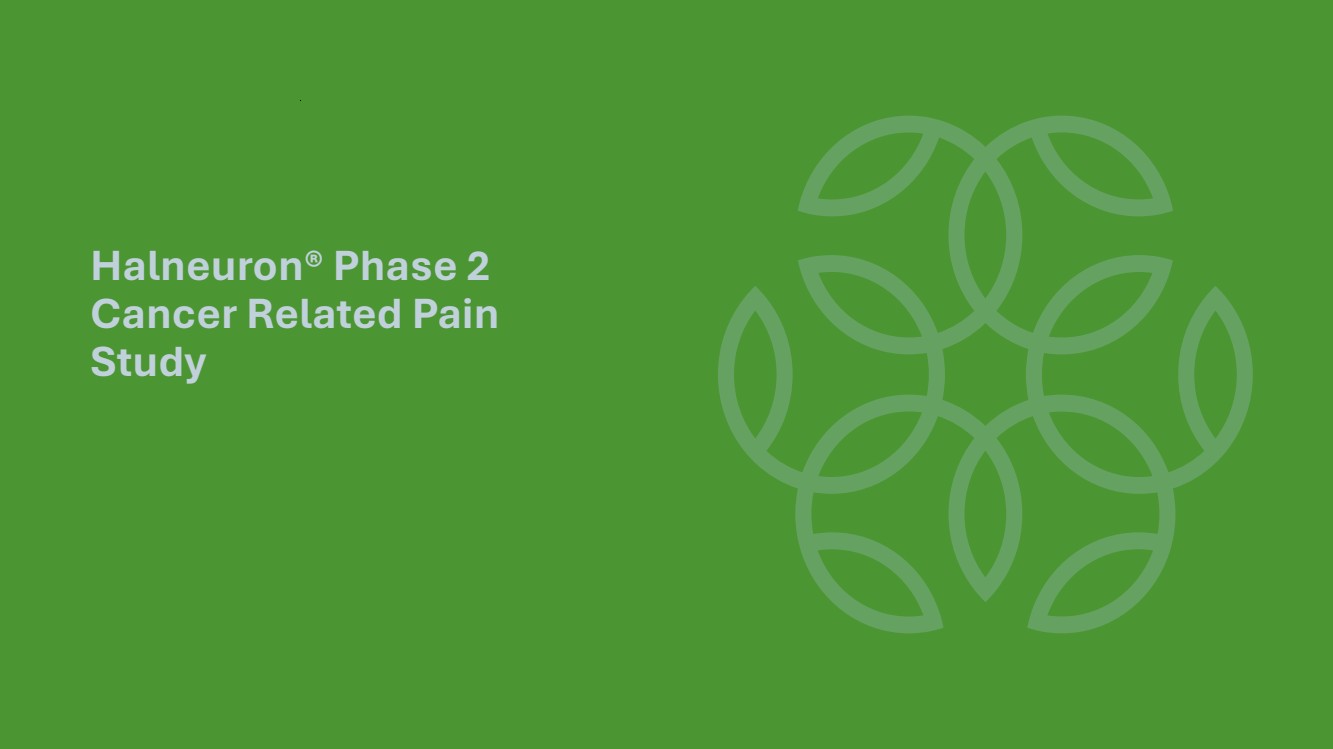
| 36 CRP Phase 2 Study Design All Comers with inadequately controlled moderate to severe cancer-related pain of at least two weeks’ duration Treatment Phase Screening & Randomization Endpoint (Day 15) 8 injections over 4 days • Brief Pain Inventory and Patient Diary • Incidence of SAEs, AEs, and AESIs Halneuron 30 ug BID x 4 Placebo BID x 4 Run in Period BL EOS Day 15 Weekly Follow-up • Brief Pain Inventory and Patient Diary weekly Days -7 Days 1 - 4 Days 5 - 8 Days 9 - 15 Weekly Follow-up until pain returned EPIP LPIP R EOS Day 15 Enrollment: 165 Cancer Patients |
| 37 Halneuron® Demonstrated Statistically Significant Pain Reduction in Phase 2 Study A “Responder” was defined as a patient who had a mean reduction in pain intensity of ≥ 30%; or ≥ 50% reduction in opioid use Compared 30 µg BID x 4 days Placebo BID x 4 days Halneuron® treatment demonstrated statistically significant reduction in cancer related pain Halneuron® treatment reduced both neuropathic and non-neuropathic pain Conclusions |
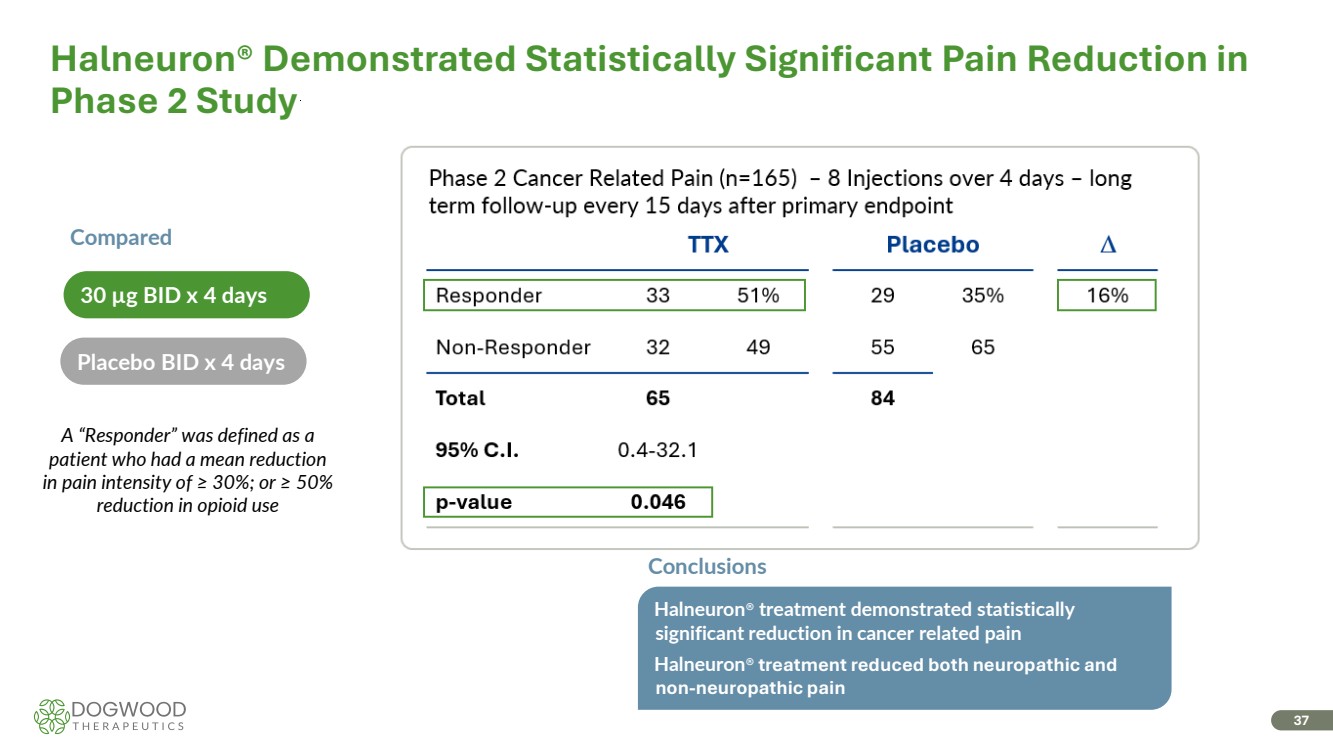
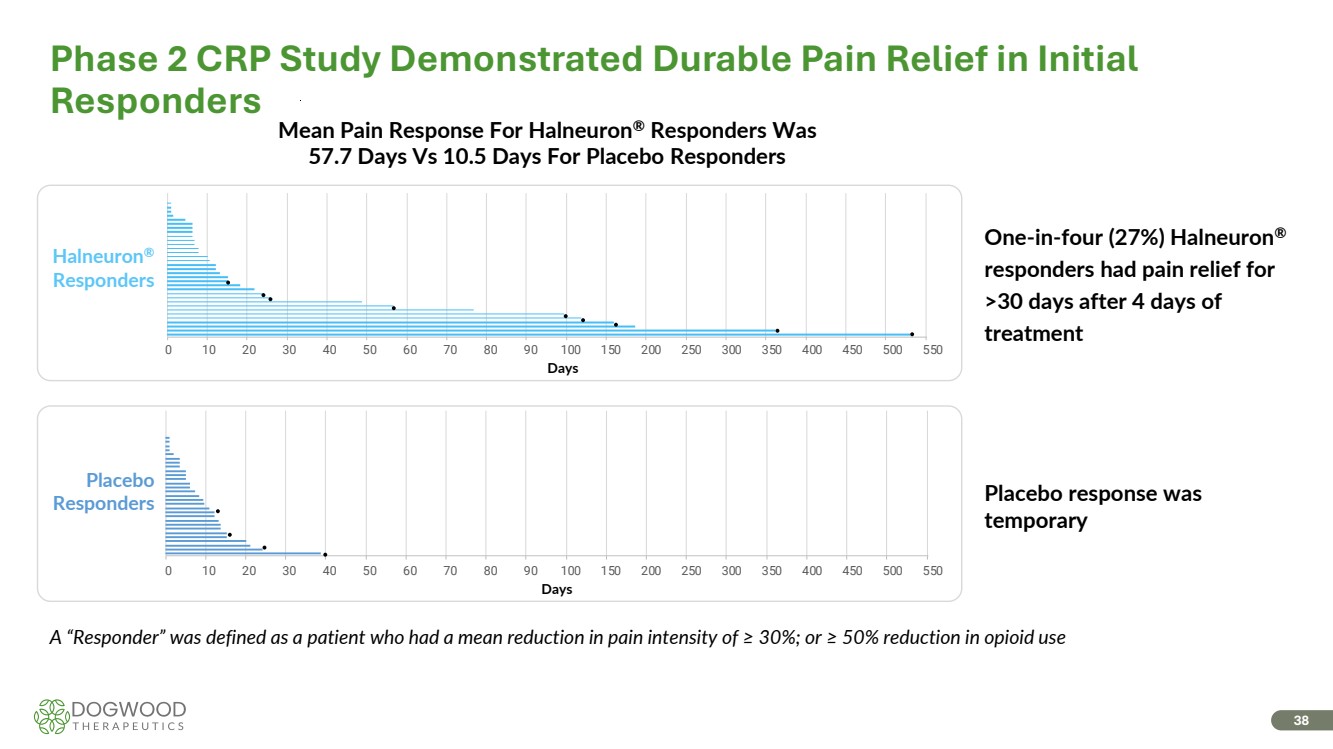
| 38 Phase 2 CRP Study Demonstrated Durable Pain Relief in Initial Responders One-in-four (27%) Halneuron® responders had pain relief for >30 days after 4 days of treatment Mean Pain Response For Halneuron® Responders Was 57.7 Days Vs 10.5 Days For Placebo Responders Placebo response was temporary Halneuron® Responders Placebo Responders 0 10 20 30 40 50 60 70 80 90 100 150 200 250 300 350 400 450 500 550 0 10 20 30 40 50 60 70 80 90 100 150 200 250 300 350 400 450 500 550 Days Days A “Responder” was defined as a patient who had a mean reduction in pain intensity of ≥ 30%; or ≥ 50% reduction in opioid use CONFIDEN TIAL |
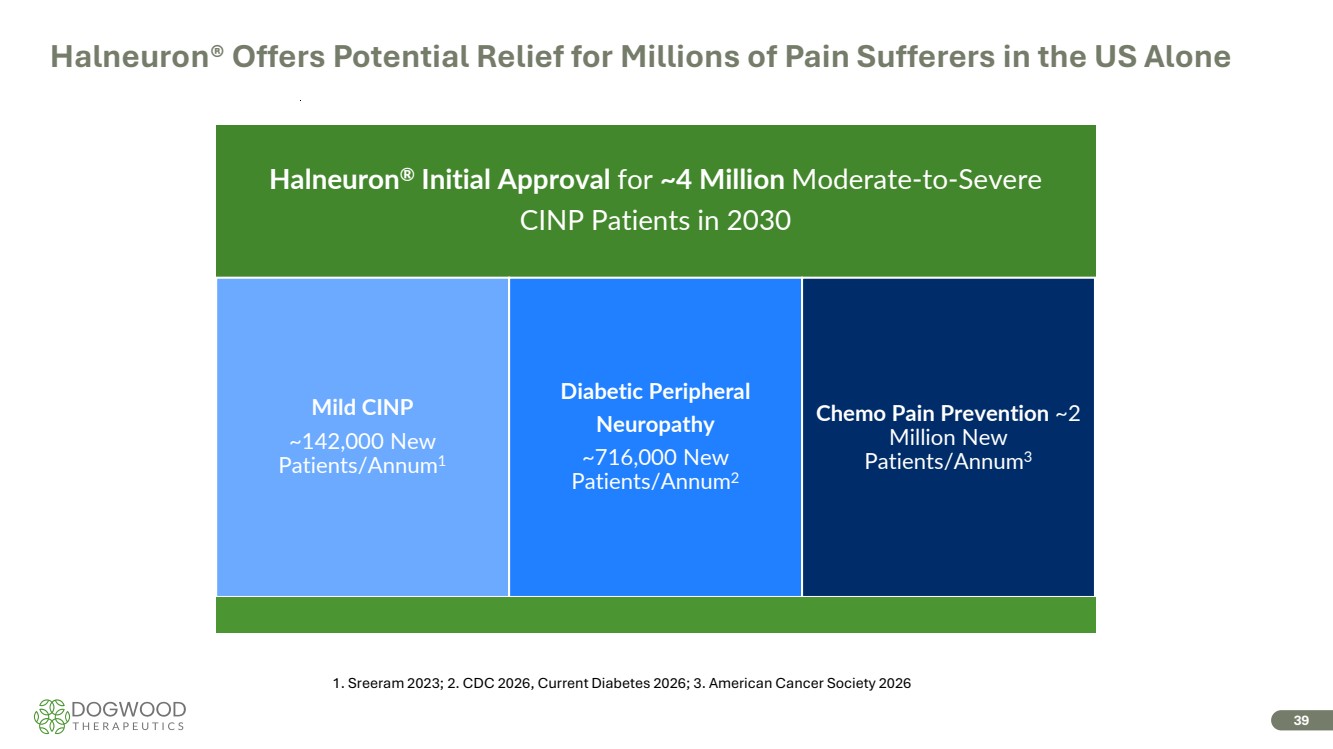
| 39 Halneuron® Offers Potential Relief for Millions of Pain Sufferers in the US Alone 1. Sreeram 2023; 2. CDC 2026, Current Diabetes 2026; 3. American Cancer Society 2026 Halneuron® Initial Approval for ~4 Million Moderate-to-Severe CINP Patients in 2030 Mild CINP ~142,000 New Patients/Annum1 Diabetic Peripheral Neuropathy ~716,000 New Patients/Annum2 Chemo Pain Prevention ~2 Million New Patients/Annum3 |
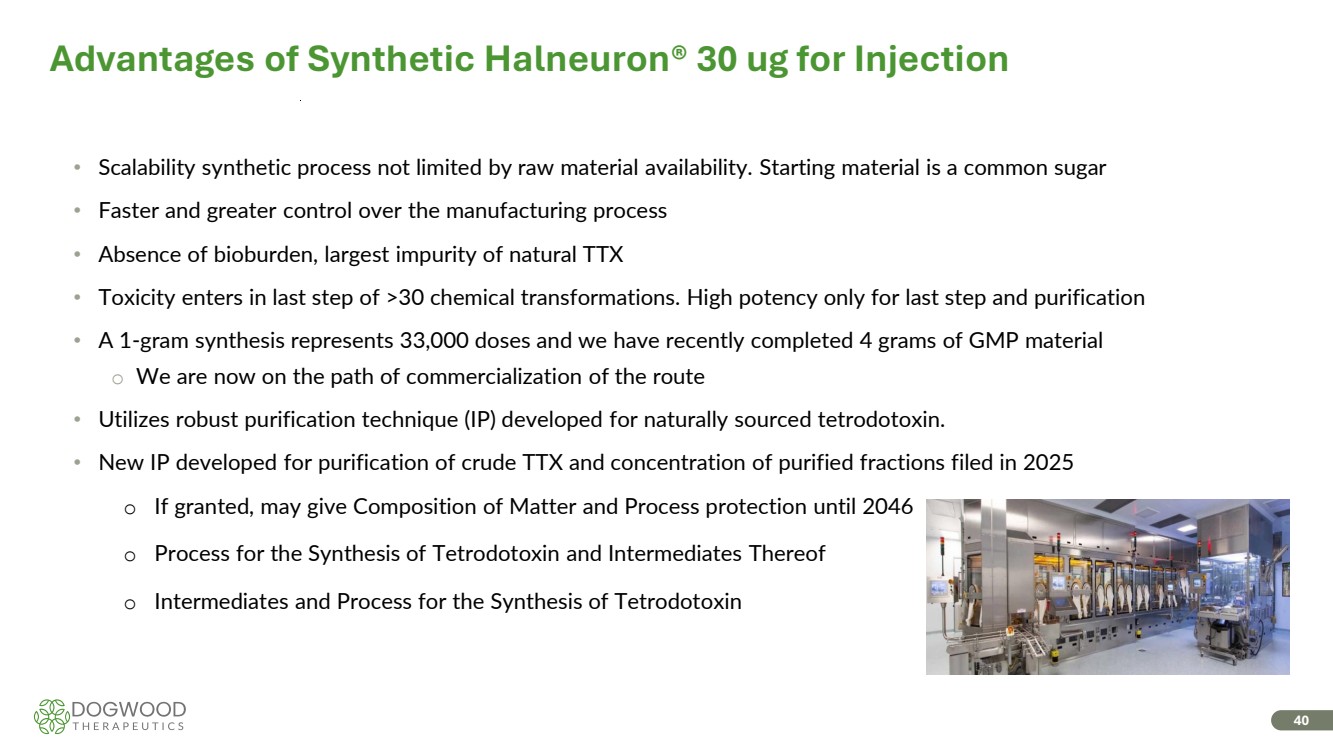
| 40 Advantages of Synthetic Halneuron® 30 ug for Injection • Scalability synthetic process not limited by raw material availability. Starting material is a common sugar • Faster and greater control over the manufacturing process • Absence of bioburden, largest impurity of natural TTX • Toxicity enters in last step of >30 chemical transformations. High potency only for last step and purification • A 1-gram synthesis represents 33,000 doses and we have recently completed 4 grams of GMP material o We are now on the path of commercialization of the route • Utilizes robust purification technique (IP) developed for naturally sourced tetrodotoxin. • New IP developed for purification of crude TTX and concentration of purified fractions filed in 2025 o If granted, may give Composition of Matter and Process protection until 2046 o Process for the Synthesis of Tetrodotoxin and Intermediates Thereof o Intermediates and Process for the Synthesis of Tetrodotoxin |
| SP16 IV Therapy Chemotherapy Induced Pain & Peripheral Neuropathy (CIPPN) Program Overview |
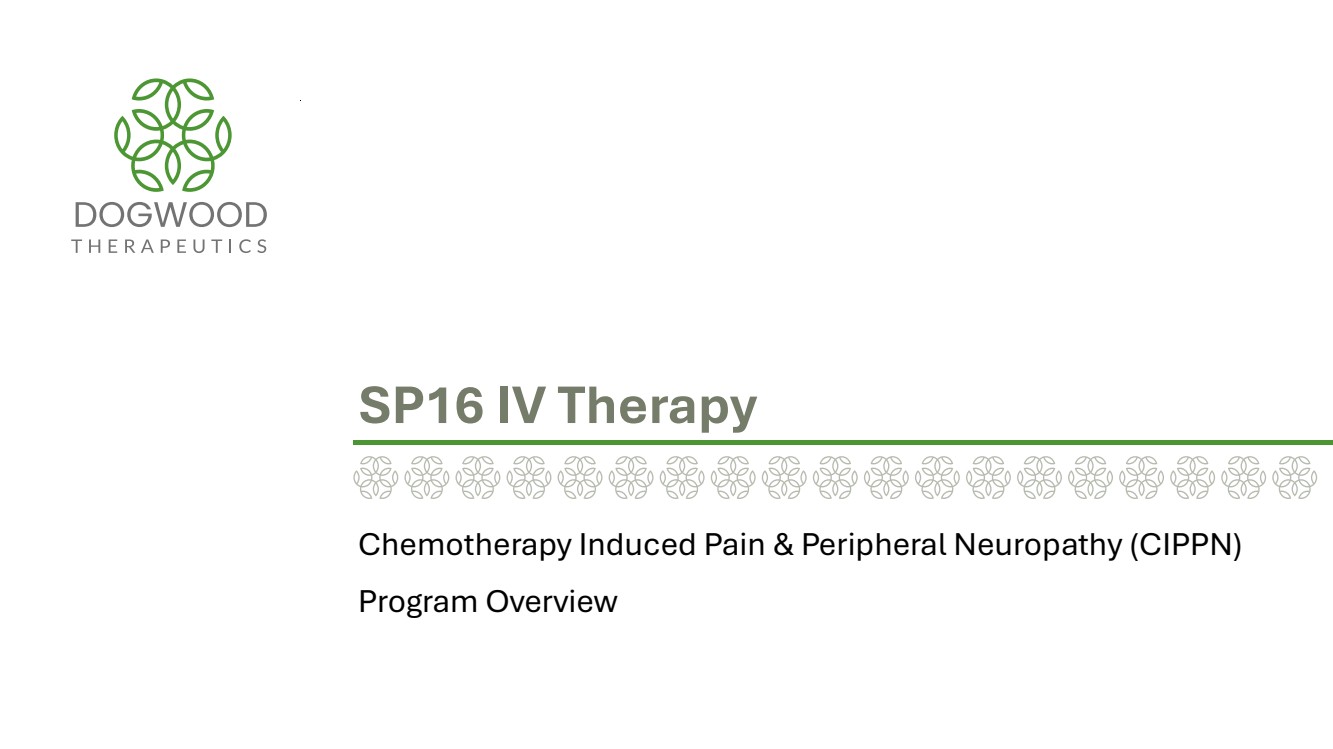
| 42 SP16 Mechanism Allows for Healing During Inflammation A1AT Target • A1AT (serine protease inhibitor family) regulates proteases to protect healthy tissue • Dysregulated protease activity drives inflammation and tissue damage SP16 Design • 17–amino acid peptide derived from active region of A1AT • Selectively activates LRP1 (LDL-receptor related protein 1) to drive anti-inflammatory and reparative signaling to restore immune balance Hypothesized Outcomes: • Anti-inflammatory: reduces IL-6, IL-8, IL-1β, TNF-α to decrease inflammation and pain • Tissue repair: increases pAKT / pERK signaling to support cell growth 42 Dual mechanism anticipated to reduce inflammation while promoting tissue repair SP16 is a natural solution to inflammatory disease Apoptosis DAMPs LRP1 Cell Survival Inflammatory Resolution Cell Regeneration SP16 pAKT/ pERK Anti-inflammatory IL-10 NFkB signaling Pro-inflammatory Mediators IL-6, TNF-α IL-8, IL-1β Signaling and endocytosis |
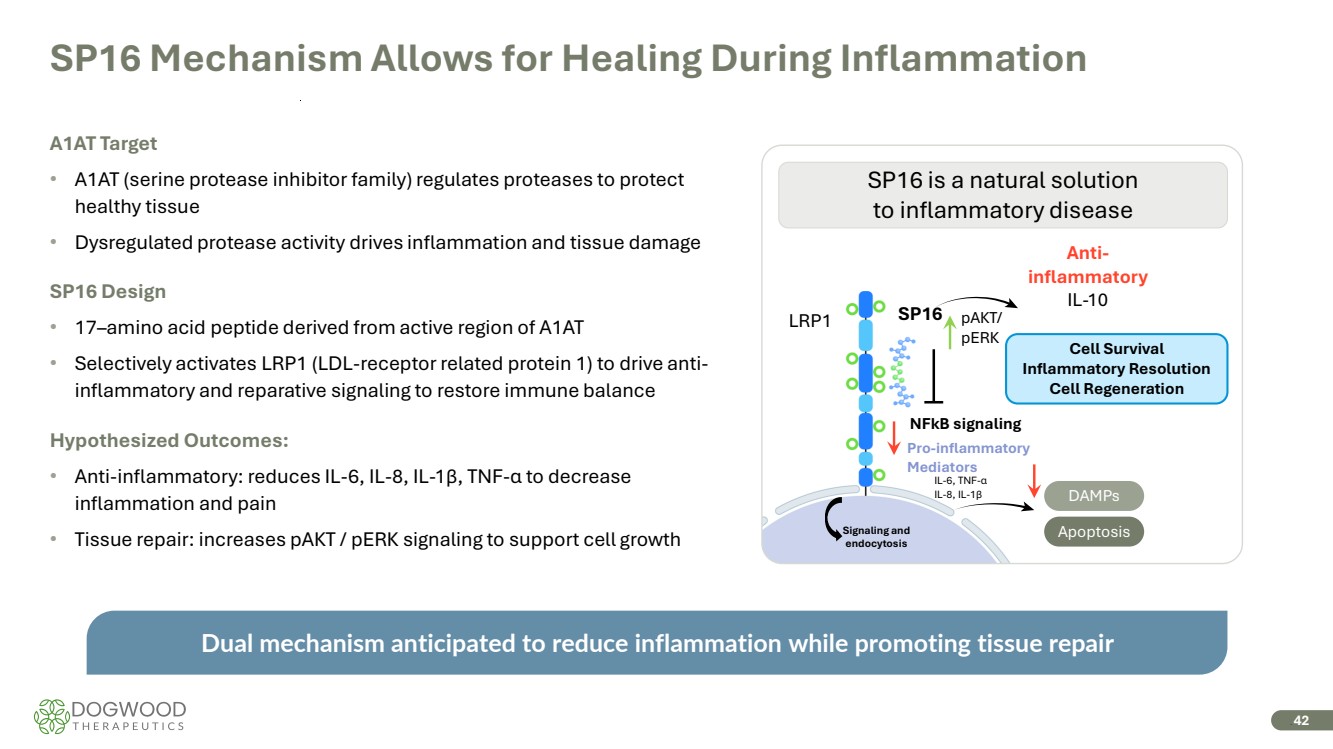
| 43 SP16 LRP1 Agonism Exhibits Potential to Prevent and/or Repair Nerve Damage Associated with Chemotherapy • In collaboration with Dr. Wendy Campana at the University of California San Diego, SP16 was tested for its regenerative effects on neurons • Neurotrophic effects of SP16 and associated increase in regenerative genes in neurons (Wang, 2022) • SP16 was neuroprotective, activating neurite survival and growth, pro-regenerative genes and proteins, and protective signaling pathways • SP16 significantly increased neurite growth in the presence of paclitaxel *Source: Wang et al., 2021 FASEB J *Reparative Function of SP16 By activation of LRP1 dependent pathways (pAkt and pERK), SP16 treatment induces neurite survival and growth LRP1 SP16 P AKT P ERK P |
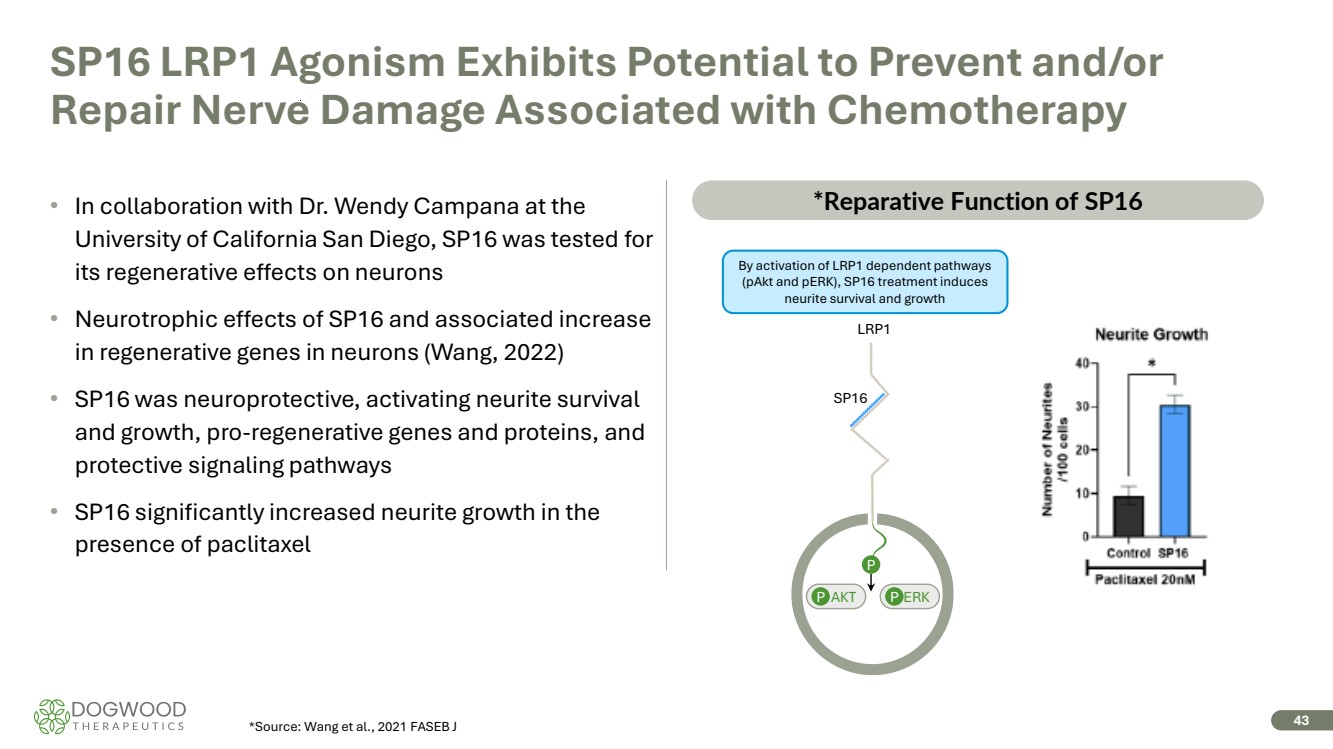
| 44 • SP 16 Safety • SP 16 Prevention of CIPN • SP16 Pharmacokinetics • Chemotherapy Adherence NCI Funded SP16 Research Plan to be Finalized with FDA and Executed at University of VA SP16 IV Phase 2a Eligible for NCI Funding SP-16 Placebo SP16 Low Dose n=8 SP16 Mid Dose n=8 SP16 High Dose n=8 Placebo n=8 Baseline Chemotherapy Up to 32 Metastatic Cancer Patients Experiencing Neuropathy from their Concurrent Chemotherapy Patient Population SP16 IV Phase 1b Phase 1b Study Endpoints |
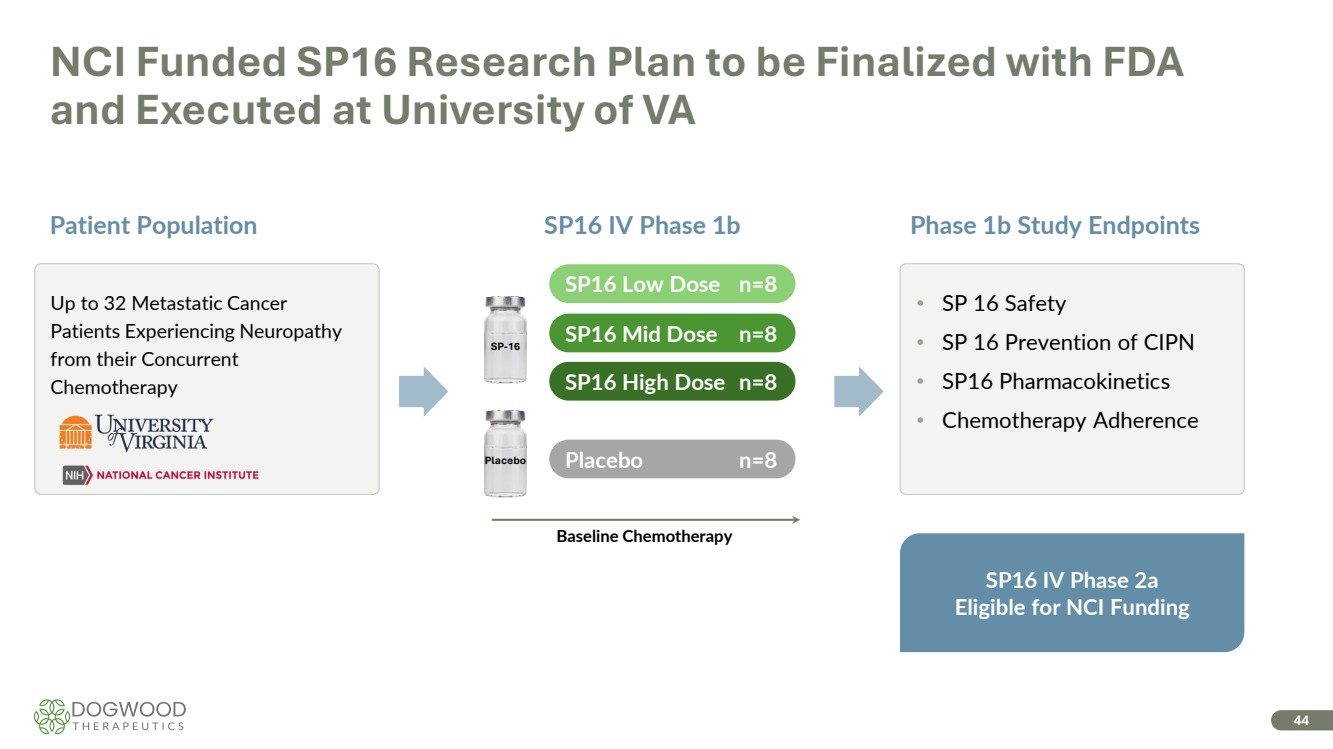
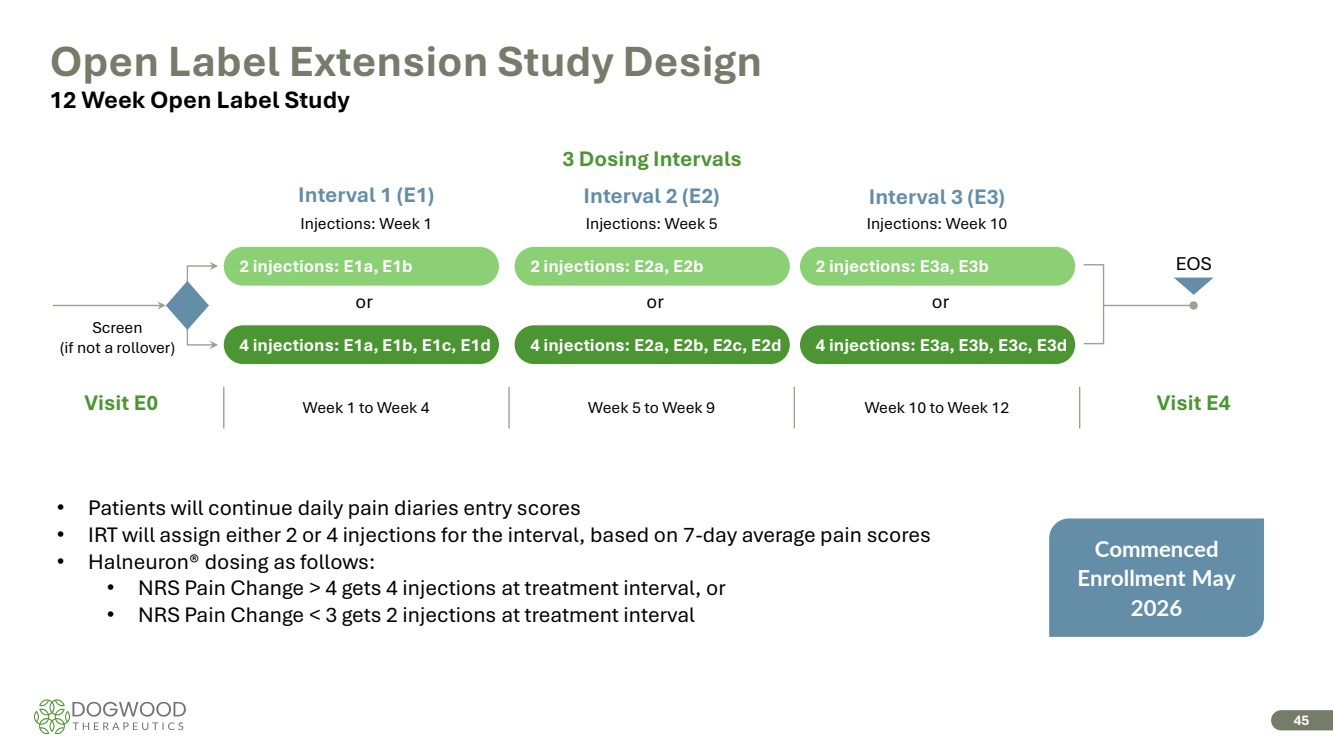
| 45 Open Label Extension Study Design 12 Week Open Label Study Week 1 to Week 4 Week 5 to Week 9 Week 10 to Week 12 Injections: Week 1 Injections: Week 5 Injections: Week 10 • Patients will continue daily pain diaries entry scores • IRT will assign either 2 or 4 injections for the interval, based on 7-day average pain scores • Halneuron® dosing as follows: • NRS Pain Change > 4 gets 4 injections at treatment interval, or • NRS Pain Change < 3 gets 2 injections at treatment interval Commenced Enrollment May 2026 2 injections: E1a, E1b 4 injections: E1a, E1b, E1c, E1d or Screen (if not a rollover) Interval 1 (E1) Interval 2 (E2) Interval 3 (E3) 2 injections: E2a, E2b 4 injections: E2a, E2b, E2c, E2d or 2 injections: E3a, E3b 4 injections: E3a, E3b, E3c, E3d or EOS Visit E0 Visit E4 3 Dosing Intervals |
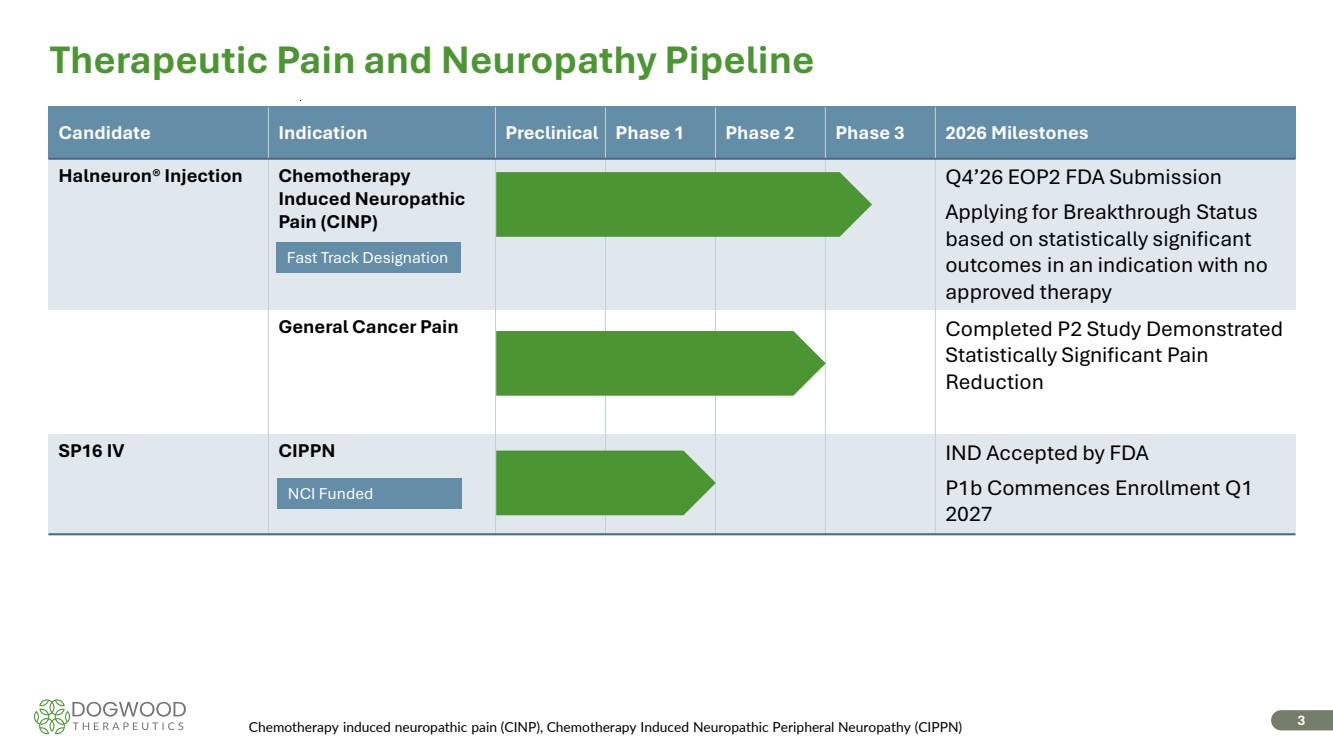
| 46 A First-in-Class Approach to Pain and Neuropathy 1Delve Insight 2Allied Market Research • Neuropathy includes chronic pain, numbness, tingling, and poor coordination, with significant impact on QoL • ~3 million US patients suffer from painful chemotherapy induced neuropathic pain (CINP) • Life-cycle management opportunity (mild CINP, CRP and DPN) expands to ~ 3 million additional US patients The Problem of Neuropathic Pain • Halneuron® poised to progress to Phase 3 development in CINP • SP16 CIPPN Phase 1b enrollment anticipated Q1 2027 • Lead asset Halneuron® inhibits the NaV 1.7 sodium channel critical for pain signaling • SP16 activates LDL-receptor related protein 1 (LRP1) to drive pain reduction (anti-inflammatory) and reparative signaling to restore immune balance • CINP treatment market $1B in US/UK/EU4/Japan, projected to increase to ~$3B by 20361 • Expand into larger ~$7.5B Cancer Related Pain (CRP) market2 • Halneuron® demonstrated statistically significant and durable pain reduction, with acceptable safety profile, in cancer and chemotherapy related clinical pain studies to date Lead Assets Establish Beachhead Clinically Validated 2026 Catalysts Significant Opportunity |